Rustic Zucchini And Tomato Basil Soup: The Ultimate Healthy Harvest Bowl
Zucchini And Tomato Basil Soup Healthy Recipe
This vibrant Zucchini and Tomato Basil Soup is the perfect way to use up your summer garden harvest. Bursting with fresh flavors, low in calories, and ready in under 45 minutes, it is a heartwarming yet light meal that pairs perfectly with crusty bread.
15 minutes
30 minutes
45 minutes
4 servings
Soup
Stovetop
Italian-American
Vegan
There is something undeniably magical about the transition from late summer to early autumn. The air gets a little crisper, the evenings a bit shorter, but the garden is often still overflowing with the final, glorious bounty of the season. This Zucchini and Tomato Basil Soup is my love letter to that specific moment in time. It captures the sun-ripened sweetness of red tomatoes and the earthy, tender crunch of fresh zucchini in a bowl that feels like a warm hug. As a food blogger, I have tested dozens of vegetable soup variations, but this specific combination holds a special place in my heart because it balances simplicity with profound depth of flavor. Unlike heavy cream-based bisques, this soup relies on the natural juices of the vegetables and a high-quality broth to create a base that is light yet incredibly satisfying. It is the kind of recipe that fits seamlessly into a healthy lifestyle, offering a nutrient-dense meal without sacrificing the comfort food factor we all crave. The aroma of garlic and onions sautéing in olive oil, followed by the bright, herbaceous scent of fresh basil, will fill your kitchen and draw everyone to the table. Whether you are looking for a quick weeknight dinner, a meal-prep lunch solution, or a way to tackle that mountain of zucchini on your counter, this recipe is your answer. It is naturally gluten-free, vegan-friendly, and packed with vitamins, making it a guilt-free indulgence that tastes like a gourmet Italian classic.
History & Origins
The culinary history of pairing zucchini and tomatoes is deeply rooted in the traditions of the Mediterranean, specifically within the framework of Italian ‘Cucina Povera’ or ‘peasant cooking.’ While we often associate these ingredients quintessentially with Italian cuisine, their origins tell a story of global exploration. Both zucchini (a variety of summer squash) and tomatoes are native to the Americas and were brought to Europe during the Columbian Exchange in the 15th and 16th centuries. Initially, tomatoes were viewed with suspicion in Europe, often grown merely as ornamental plants because they were thought to be poisonous. It wasn’t until the 17th and 18th centuries that they became a staple in Southern European diets. Zucchini, or ‘courgette’ as it is known in many parts of the world, was developed in Italy much later, in the late 19th century, bred from earlier squash varieties brought back from the New World. The genius of Italian cooks lay in their ability to take these humble, locally grown ingredients and transform them into dishes that were greater than the sum of their parts. Vegetable soups like Minestrone or Ciambotta (a southern Italian vegetable stew) became staples because they were economical, nutritious, and adaptable to whatever was growing in the garden. This specific Zucchini and Tomato Basil Soup draws inspiration from these rustic traditions. It honors the method of slow-cooking vegetables to extract their natural sugars, a technique passed down through generations of home cooks who understood that patience is just as important an ingredient as the vegetables themselves. Today, this dish represents a bridge between historical subsistence cooking and modern health-conscious gastronomy.
Why This Recipe Works
This recipe succeeds where many other vegetable soups fail because of its focus on texture and layering flavors. A common pitfall with zucchini soups is that the squash becomes mushy and disintegrates into the broth, resulting in an unappealing texture. In this recipe, we add the zucchini in two stages or cook it just until tender-crisp, preserving its structural integrity and bright green color. Furthermore, the flavor profile works due to the scientific balance of acidity and sweetness. Tomatoes are naturally acidic, which can sometimes be harsh on the palate. The zucchini, which has a mild, slightly sweet, and nutty flavor when cooked, acts as the perfect counterpoint to the acidity of the tomatoes. We also utilize a ‘soffritto’ base—sautéing onions, carrots, and celery (optional, but recommended for depth) alongside garlic—to build a savory foundation before any liquid is added. The addition of fresh basil at the very end, rather than cooking it the entire time, ensures that the volatile oils in the herb remain potent, providing a fresh, peppery aromatic punch that lifts the entire dish. Finally, the choice of using a mix of crushed tomatoes for body and broth for lightness creates a consistency that is spoonable and substantial without being heavy.
Why You’ll Love This Recipe
- ✓Under 300 calories per serving
- ✓Uses fresh, seasonal ingredients
- ✓Ready in less than 45 minutes
- ✓Naturally Vegan and Gluten-Free
- ✓High in Vitamin C and antioxidants
- ✓Freezes beautifully for meal prep
Equipment You’ll Need
- ✓Large Dutch oven or heavy-bottomed soup pot
- ✓Chef’s knife
- ✓Cutting board
- ✓Wooden spoon
- ✓Measuring cups and spoons
- ✓Immersion blender (optional, for creamier texture)
Ingredients
- ✓2 tbsp Extra Virgin Olive Oil
- ✓1 large Yellow Onion, diced
- ✓3 cloves Garlic, minced
- ✓2 lbs Zucchini, ends trimmed and chopped into half-moons
- ✓1 can (28 oz) Crushed Tomatoes (San Marzano preferred)
- ✓3 cups Vegetable Broth (low sodium)
- ✓1 tsp Dried Oregano
- ✓1/2 tsp Red Pepper Flakes (optional for heat)
- ✓1 tsp Salt (adjust to taste)
- ✓1/2 tsp Black Pepper
- ✓1 cup Fresh Basil leaves, roughly chopped
- ✓1 tbsp Lemon Juice (freshly squeezed)
Instructions
- Prepare your vegetables: Wash the zucchini and chop them into bite-sized half-moons. Dice the onion and mince the garlic.
- Heat the olive oil in a large Dutch oven or soup pot over medium heat. Once the oil is shimmering, add the diced onion. Sauté for about 5-6 minutes until the onion is translucent and soft.
- Add the minced garlic, dried oregano, and red pepper flakes to the pot. Cook for another minute, stirring constantly, until the garlic is fragrant. Be careful not to burn the garlic.
- Stir in the chopped zucchini. Cook for about 3-4 minutes, allowing the zucchini to soften slightly and absorb some of the aromatic flavors.
- Pour in the crushed tomatoes and the vegetable broth. Stir well to combine all ingredients. Season with salt and black pepper.
- Increase the heat to bring the soup to a gentle boil, then reduce the heat to low. Cover the pot partially with a lid and let it simmer for 20 minutes. The zucchini should be tender but not falling apart.
- Remove the pot from the heat. Stir in the fresh lemon juice to brighten the flavors.
- Just before serving, stir in the fresh chopped basil. If you prefer a thicker soup, you can use an immersion blender to pulse the soup 2-3 times, but leave it chunky for texture.
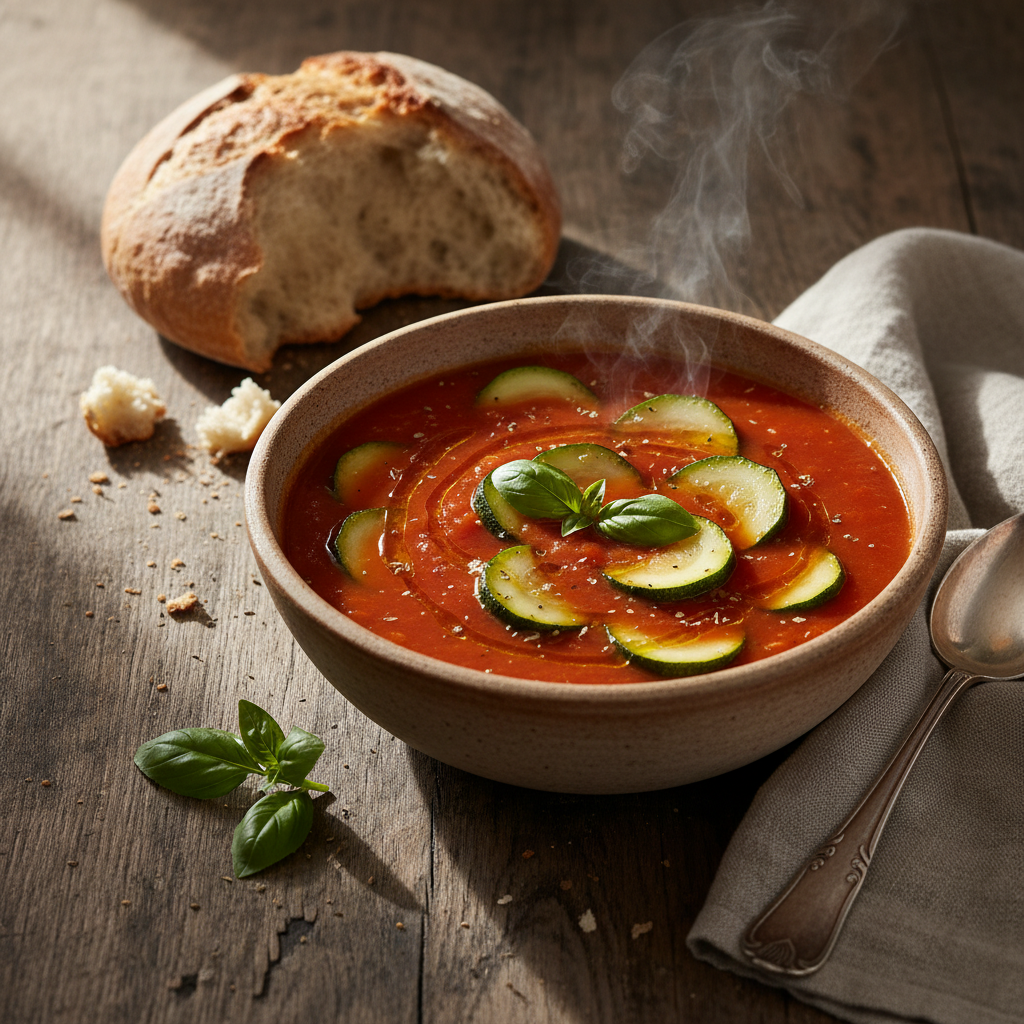
- Ladle into bowls and garnish with extra fresh basil and a drizzle of high-quality olive oil.
Expert Cooking Tips
- ✓Use San Marzano tomatoes for the sweetest, least acidic flavor base.
- ✓Don’t overcook the zucchini; it should offer a slight resistance when bitten.
- ✓Add a parmesan rind to the simmering broth for a rich, umami depth (remove before serving).
- ✓Toast the dried oregano in the oil with the garlic to wake up its flavor oils.
- ✓If using fresh garden tomatoes instead of canned, peel and seed them first for a smoother texture.
- ✓Finish with a high-quality extra virgin olive oil drizzle for a luxurious mouthfeel.
Substitutions and Variations
This recipe is incredibly versatile and forgiving, allowing for numerous substitutions based on what you have in your pantry. If you don’t have yellow onions, white onions, sweet onions, or even leeks work beautifully as a base. For the zucchini, yellow summer squash is a direct 1:1 substitute that adds a lovely color contrast. If you want to bulk up the soup, you can add diced potatoes, carrots, or even white beans like Cannellini or Great Northern beans for extra protein. In terms of liquid, chicken broth can be used if you are not strictly vegetarian or vegan, though vegetable broth keeps the flavor profile cleaner. If fresh basil isn’t available, you can use frozen basil cubes or a swirl of pesto at the end, though the flavor will be slightly different. For the tomatoes, if you don’t have crushed tomatoes, you can use diced tomatoes for a chunkier soup or tomato purée for a smoother consistency. Lastly, if you are out of dried oregano, Italian seasoning or dried thyme are excellent alternatives.
Common Mistakes to Avoid
The most common mistake when making this Zucchini and Tomato Basil Soup is overcooking the vegetables. Zucchini has a high water content, and if boiled too vigorously or for too long, it turns into a mushy, unappetizing pulp. Keep the simmer gentle and check the texture frequently. Another mistake is under-seasoning. Tomatoes require a good amount of salt to bring out their sweetness; if the soup tastes bland, it likely just needs another pinch of salt or a splash of acid like lemon juice. Adding the fresh basil too early is another error; basil is a delicate herb that turns black and loses its flavor if cooked for a long time. Always add it at the very end, off the heat. Finally, using low-quality canned tomatoes can result in a metallic taste. Splurging a little on a high-quality brand or using ripe, fresh tomatoes makes a significant difference in a soup with so few ingredients.
Serving Suggestions
This soup shines as a light lunch or a starter for a larger dinner, but it can easily be the main event. Serve it piping hot with a side of crusty artisanal bread, sourdough, or garlic ciabatta for dipping. For a protein boost, serve it alongside a grilled cheese sandwich or a crisp salad with grilled chicken or chickpeas. If you are not vegan, a generous grating of Parmigiano-Reggiano or Pecorino Romano cheese on top adds a salty, savory finish that is irresistible. You can also top it with homemade croutons, a dollop of ricotta cheese, or a swirl of heavy cream or coconut milk for a richer version. A glass of crisp white wine, such as a Pinot Grigio or Sauvignon Blanc, pairs wonderfully with the acidity of the tomatoes and fresh herbs.
Storage and Reheating Tips
This soup stores exceptionally well, making it a prime candidate for meal prep. Allow the soup to cool completely to room temperature before transferring it to an airtight container. It will keep in the refrigerator for up to 4-5 days. In fact, the flavors often meld and improve the next day. For freezing, place the cooled soup in freezer-safe bags or containers, leaving about an inch of space at the top for expansion. It can be frozen for up to 3 months. To reheat, thaw the soup in the refrigerator overnight if frozen. Warm it gently on the stovetop over medium-low heat, stirring occasionally. If the soup has thickened too much in the fridge, you can add a splash of water or broth to reach your desired consistency. Avoid boiling it vigorously when reheating to prevent the zucchini from becoming too soft.
Nutrition Facts (Estimated)
| Serving Size | 1.5 cups |
| Calories | 145 |
| Fat | 5g |
| Saturated Fat | 1g |
| Unsaturated Fat | 4g |
| Trans Fat | 0g |
| Cholesterol | 0mg |
| Sodium | 450mg |
| Carbohydrates | 18g |
| Fiber | 5g |
| Sugar | 9g |
| Protein | 4g |
Frequently Asked Questions
Can I use frozen zucchini for this recipe?
Yes, you can use frozen zucchini, but be aware that the texture will be much softer than fresh. It is best to add frozen zucchini later in the cooking process, as it cooks very quickly.
Is it necessary to peel the zucchini?
No, peeling is not necessary. The skin of the zucchini contains many nutrients and adds a nice pop of color and texture to the soup. Just wash it thoroughly.
How can I make this soup creamier without dairy?
To make it creamy without dairy, you can blend about half of the soup and mix it back in, or add a can of coconut milk or a pureed white potato.
Can I make this in a slow cooker?
Absolutely. Sauté the onions and garlic first for the best flavor, then add all ingredients (except basil) to the slow cooker. Cook on low for 4-6 hours or high for 2-3 hours.
What kind of tomatoes are best?
San Marzano canned tomatoes are the gold standard for soups due to their low acidity and natural sweetness. If using fresh, Roma tomatoes are a great choice.
Is this soup keto-friendly?
Yes, this soup is relatively low in carbohydrates. To make it strictly keto, reduce the amount of onions and ensure your tomato product doesn’t have added sugar.
Can I add meat to this soup?
Yes, Italian sausage, ground turkey, or shredded rotisserie chicken make excellent additions if you want a non-vegetarian protein source.
Why does my soup taste sour?
If the tomatoes are too acidic, the soup can taste sour. You can balance this by adding a pinch of sugar or baking soda (start with 1/4 tsp) to neutralize the acid.
Conclusion
I truly hope this Zucchini and Tomato Basil Soup becomes a staple in your kitchen rotation just as it has in mine. It is the perfect example of how simple, wholesome ingredients can come together to create something truly spectacular. Whether you are harvesting the last of your garden vegetables or picking up fresh produce from the farmer’s market, this recipe celebrates the best of the season in every spoonful. Don’t forget to snap a picture of your beautiful bowl and tag me on social media—I love seeing your recreations! Happy cooking, and enjoy the cozy, nourishing goodness of this homemade soup.