The Ultimate Mediterranean Chickpea Salad With Feta
Mediterranean Chickpea Salad With Feta Recipe
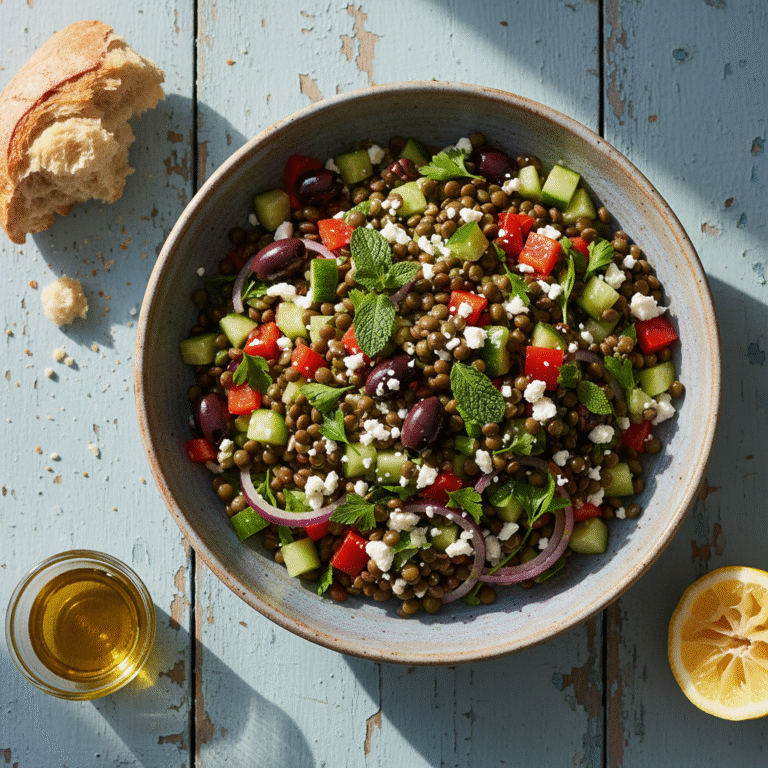
This vibrant, protein-packed Mediterranean Chickpea Salad is the cure for the sad desk lunch. Bursting with crisp cucumbers, juicy tomatoes, and creamy feta, it comes together in just 15 minutes and actually tastes better after marinating, making it the ultimate meal-prep champion.
15 minutes
0 minutes
15 minutes
6 servings
Salad
No-Cook
Mediterranean
Gluten-Free
If there is one recipe that perfectly encapsulates the philosophy of ‘high reward, low effort,’ it is this Mediterranean Chickpea Salad with Feta. As a food blogger who is constantly juggling recipe testing, photography, and the chaos of daily life, I often find myself craving something that feels nourishing and restorative without requiring me to turn on the oven or spend an hour chopping. This salad is the answer. It is a celebration of texture and color, a confetti of fresh produce that looks as good as it tastes.
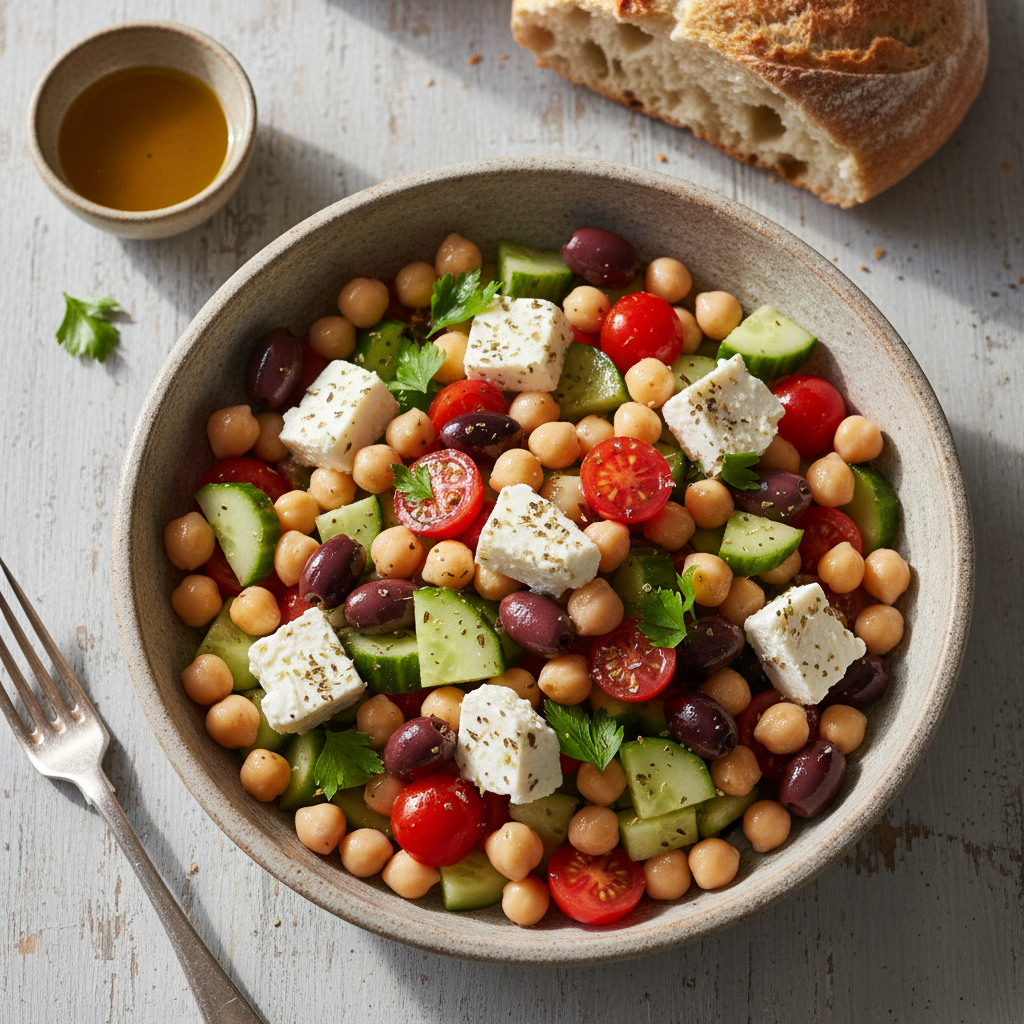
At its heart, this dish is about the interplay of contrasting elements. You have the earthy, creamy bite of the chickpeas, which act as the perfect canvas for the bright, acidic punch of the lemon-oregano dressing. Then comes the crunch: cool English cucumbers, sweet red bell peppers, and the sharp bite of red onion provide a satisfying snap in every mouthful. But the real star, the ingredient that ties it all together, is the feta. We aren’t talking about those dry, pre-crumbled bits here; we are using a block of high-quality feta, crumbled by hand, creating pockets of salty, tangy creaminess that emulsify slightly with the olive oil dressing to coat every bean and vegetable.
Whether you are looking for a light vegetarian main course, a robust side dish for grilled meats, or a reliable potluck contribution that won’t wilt in the sun, this salad delivers. It is naturally gluten-free, packed with fiber and plant-based protein, and vibrant enough to brighten up even the gloomiest Tuesday afternoon. Plus, unlike leafy green salads that turn into a soggy mess within an hour, the hardy vegetables and legumes in this mix stand up beautifully to the dressing, making it a meal prep staple that you will actually look forward to eating all week long.
History & Origins
To understand the roots of this Mediterranean Chickpea Salad, we have to look at the deep culinary history of the Levant and Greece. The chickpea, or garbanzo bean, is one of the earliest cultivated legumes in human history, with archaeological evidence suggesting its domestication in the Middle East around 7,500 years ago. Ancient civilizations prized the chickpea for its durability, nutritional density, and versatility. It became a staple protein source that fueled empires, traveling across the Mediterranean via trade routes established by the Phoenicians and Romans.
On the other side of the bowl, we have feta cheese, arguably Greece’s most famous culinary export. The method of making cheese from sheep’s and goat’s milk in brine dates back thousands of years. In fact, a primitive form of feta is famously described in Homer’s ‘Odyssey,’ where the Cyclops Polyphemus prepares cheese in his cave. For centuries, the combination of fresh, local vegetables, olives cured in brine, and local cheese has been the standard ‘village salad’ (Horiatiki) across Greece.
However, the specific iteration of the ‘Mediterranean Chickpea Salad’ as we know it today is somewhat of a modern fusion, popularized in American food culture as interest in the Mediterranean Diet surged in the late 20th century. It borrows the vegetable base of a traditional Greek salad—tomatoes, cucumbers, onions, and olives—but swaps or augments the traditional base with chickpeas to create a more substantial, protein-rich dish that serves as a standalone meal rather than just a side. It represents the evolution of ancient ingredients adapted for modern, health-conscious lifestyles that prioritize plant-forward eating without sacrificing the bold, historical flavors of the Mediterranean basin.
Why This Recipe Works
This recipe works because it is engineered around the principles of flavor balancing and textural contrast. First, let’s talk about the dressing absorption. Chickpeas, while delicious, can be somewhat bland and starchy on their own. By tossing them with the dressing while they are room temperature (or slightly warmed, if you like), the porous skin of the legume absorbs the acid from the lemon juice and red wine vinegar, seasoning the bean from the inside out. This is why the salad tastes significantly better after sitting for 30 minutes.
Secondly, the ‘chop size’ is crucial to the success of this dish. By cutting the cucumbers, peppers, and tomatoes into pieces that are roughly the same size as the chickpeas, you ensure that every single forkful contains a perfect ratio of ingredients. You don’t end up with a mouthful of just onion or a lonely slice of pepper.
Finally, the fat-to-acid ratio in the dressing is higher in acid than a standard vinaigrette. Because the chickpeas and feta are rich and creamy, the dressing needs that extra sharp kick of lemon and vinegar to cut through the richness and keep the palate refreshed. The addition of dried oregano rather than fresh in the dressing base is also intentional; dried herbs have a more concentrated, earthy flavor that blooms when mixed with oil, providing that signature Greek taverna flavor profile that fresh herbs alone sometimes lack.
Why You’ll Love This Recipe
- ✓Ready in under 20 minutes with no cooking required
- ✓High in plant-based protein and fiber
- ✓Perfect for meal prep—tastes better the next day
- ✓Naturally Gluten-Free and Vegetarian
- ✓Budget-friendly ingredients found in any supermarket
- ✓Versatile: serves as a main, side, or dip
Equipment You’ll Need
- ✓Large mixing bowl
- ✓Small jar or whisk for dressing
- ✓Sharp chef’s knife
- ✓Cutting board
- ✓Colander
- ✓Measuring spoons and cups
Ingredients
- ✓2 cans (15 oz each) chickpeas, rinsed and thoroughly drained
- ✓1 large English cucumber, diced (keep skin on for crunch)
- ✓1 red bell pepper, cored and diced
- ✓1/2 red onion, finely chopped
- ✓1 cup cherry tomatoes, halved
- ✓1/2 cup Kalamata olives, pitted and sliced
- ✓4 oz block feta cheese, crumbled (about 1 cup)
- ✓1/2 cup fresh parsley, chopped
- ✓1/4 cup fresh mint, chopped (optional)
- ✓1/3 cup Extra Virgin Olive Oil
- ✓3 tbsp Red Wine Vinegar
- ✓1 tbsp fresh lemon juice
- ✓1 clove garlic, pressed or minced
- ✓1 tsp dried oregano
- ✓1/2 tsp salt (adjust to taste depending on feta saltiness)
- ✓1/2 tsp black pepper
Instructions
- Begin by preparing the chickpeas. Pour them into a colander and rinse thoroughly under cold water until the foam disappears. Let them drain completely while you chop the vegetables. Wet chickpeas will water down your dressing.
- Prepare the vegetables. Dice the English cucumber, red bell pepper, and red onion into small, uniform pieces roughly the size of a chickpea. Halve the cherry tomatoes and slice the Kalamata olives.
- In a large mixing bowl, combine the drained chickpeas, cucumber, bell pepper, red onion, tomatoes, olives, chopped parsley, and mint.
- Prepare the dressing. In a small jar or bowl, whisk together the extra virgin olive oil, red wine vinegar, lemon juice, pressed garlic, dried oregano, salt, and black pepper until the mixture is emulsified and creamy.
- Pour the dressing over the salad mixture. Toss gently to coat everything evenly.
- Add the crumbled feta cheese last. Give the salad one final, gentle toss. Adding the feta last prevents it from breaking down too much and turning the salad milky.
- Taste and adjust seasoning. Add more salt or lemon juice if needed. For the best flavor, let the salad sit in the refrigerator for at least 30 minutes before serving to allow the flavors to meld.
Expert Cooking Tips
- ✓Use English cucumbers (hothouse) to avoid tough skins and watery seeds; if using regular cucumbers, peel and seed them first.
- ✓Buy a block of feta in brine rather than pre-crumbled feta; the block retains moisture better and has a superior tangy flavor.
- ✓Soak the chopped red onion in a bowl of ice water for 10 minutes before adding to the salad to tame its raw bite.
- ✓Dry the chickpeas thoroughly with a paper towel after rinsing to ensure the dressing clings to them.
- ✓Use high-quality Extra Virgin Olive Oil, as its flavor is prominent in this raw preparation.
- ✓If you want a creamier texture, mash a small handful of the chickpeas against the side of the bowl before mixing.
Substitutions and Variations
This recipe is incredibly forgiving and easy to adapt based on what you have in your pantry or your dietary needs. If you are vegan or dairy-free, you can simply omit the feta or swap it for a high-quality vegan feta alternative or even diced avocado for that creamy element. No chickpeas? Cannellini beans or Great Northern beans make excellent substitutes, offering a softer, creamier texture. If you don’t have red wine vinegar, apple cider vinegar or white balsamic are great alternatives that provide a similar acidity. For the veggies, feel free to swap the red bell pepper for roasted red peppers for a smokier flavor, or add artichoke hearts for more Mediterranean flair. If you aren’t a fan of parsley, fresh dill or basil works beautifully in this dish.
Common Mistakes to Avoid
The most common mistake people make with this salad is not draining and drying the chickpeas enough. If the beans are wet from the can, the dressing will slide right off, and the salad will pool with water at the bottom of the bowl. Another pitfall is over-mixing after adding the feta. You want distinct chunks of cheese, not a coating of cheese slime, so always fold the feta in at the very end. Using low-quality olive oil is also a missed opportunity here; since the dressing isn’t cooked, the flavor of the oil really stands out, so avoid ‘light’ olive oils or vegetable oils. Finally, don’t chop the vegetables too large; the magic of this salad is getting a mix of everything in one bite, which is impossible if the cucumber chunks are huge.
Serving Suggestions
This salad is a chameleon on the dining table. It is substantial enough to be eaten on its own as a light lunch, perhaps with some warm pita bread or crusty baguette to soak up the juices. It also serves as the perfect side dish for grilled proteins—try it alongside lemon-herb grilled chicken, lamb kebabs, or seared salmon. For a fun appetizer twist, serve it with sturdy tortilla chips or pita chips as a ‘Mediterranean salsa.’ It’s also fantastic stuffed inside a pita pocket with some hummus for a quick, portable sandwich.
Storage and Reheating Tips
One of the best features of this Mediterranean Chickpea Salad is its durability. It can be stored in an airtight container in the refrigerator for up to 4 days. In fact, the flavors often improve on day two as the marinade penetrates the vegetables and beans. If you plan to keep it for more than two days, you might notice the cucumber releasing a bit of water; simply give the salad a good stir before serving. Because of the high water content in the fresh vegetables and the texture of the feta, this salad does not freeze well. Freezing will result in mushy vegetables and grainy cheese upon thawing.
Nutrition Facts (Estimated)
| Serving Size | 1 cup |
| Calories | 320 |
| Fat | 18g |
| Saturated Fat | 5g |
| Unsaturated Fat | 12g |
| Trans Fat | 0g |
| Cholesterol | 25mg |
| Sodium | 680mg |
| Carbohydrates | 28g |
| Fiber | 8g |
| Sugar | 4g |
| Protein | 12g |
Frequently Asked Questions
Can I make this salad ahead of time?
Absolutely! In fact, it is recommended. Making it 2 to 24 hours in advance allows the chickpeas to marinate and the flavors to meld together beautifully.
Is this recipe vegan?
As written, it contains feta cheese (dairy). To make it vegan, simply omit the feta or use a plant-based feta alternative. Avocado chunks also work well as a creamy substitute.
Do I have to peel the cucumber?
If you are using an English (hothouse) cucumber, the skin is thin and sweet, so you don’t need to peel it. If you are using a standard slicing cucumber, the skin can be thick and bitter, so peeling is recommended.
Can I use dried herbs instead of fresh?
For the dressing, dried oregano is preferred. However, for the parsley and mint mixed into the salad, fresh herbs are much better for flavor and texture. If you must use dried, use 1/3 of the amount, but the result won’t be as vibrant.
Can I use dried chickpeas instead of canned?
Yes, but you must cook them first. Soak dried chickpeas overnight, boil them until tender (about 1-2 hours), and let them cool completely before using in the salad. You will need about 3 cups of cooked chickpeas.
Is this salad gluten-free?
Yes, all the ingredients in this salad are naturally gluten-free. Just ensure your feta cheese is not processed with any additives containing gluten (which is rare).
What can I do with leftovers?
Leftovers are great for lunch the next day. You can also mash the leftovers slightly and spread them on toast or a wrap for a Mediterranean-style sandwich filling.
Can I add meat to this?
Definitely. Chopped grilled chicken breast, diced salami, or even canned tuna mix in very well if you want to boost the protein content.
Why is my salad watery?
This usually happens if the chickpeas weren’t dried properly or if the cucumbers released water over time. Scooping the salad with a slotted spoon when serving can help leave the excess liquid behind.
Conclusion
This Mediterranean Chickpea Salad with Feta is more than just a collection of ingredients; it’s a reliable, delicious tool in your culinary arsenal. It proves that healthy food doesn’t have to be bland and that fast food doesn’t have to come from a drive-thru. whether you are prepping lunches for a busy work week, looking for a crowd-pleasing side for your next barbecue, or just want a fresh, crisp meal on a hot day, this recipe delivers every time. Give it a try, and don’t be surprised if it earns a permanent spot in your weekly rotation. Happy chopping!