Crunchy Asian Sesame Chicken Salad With Cabbage & Ginger Dressing
Asian Sesame Chicken Salad With Cabbage Recipe
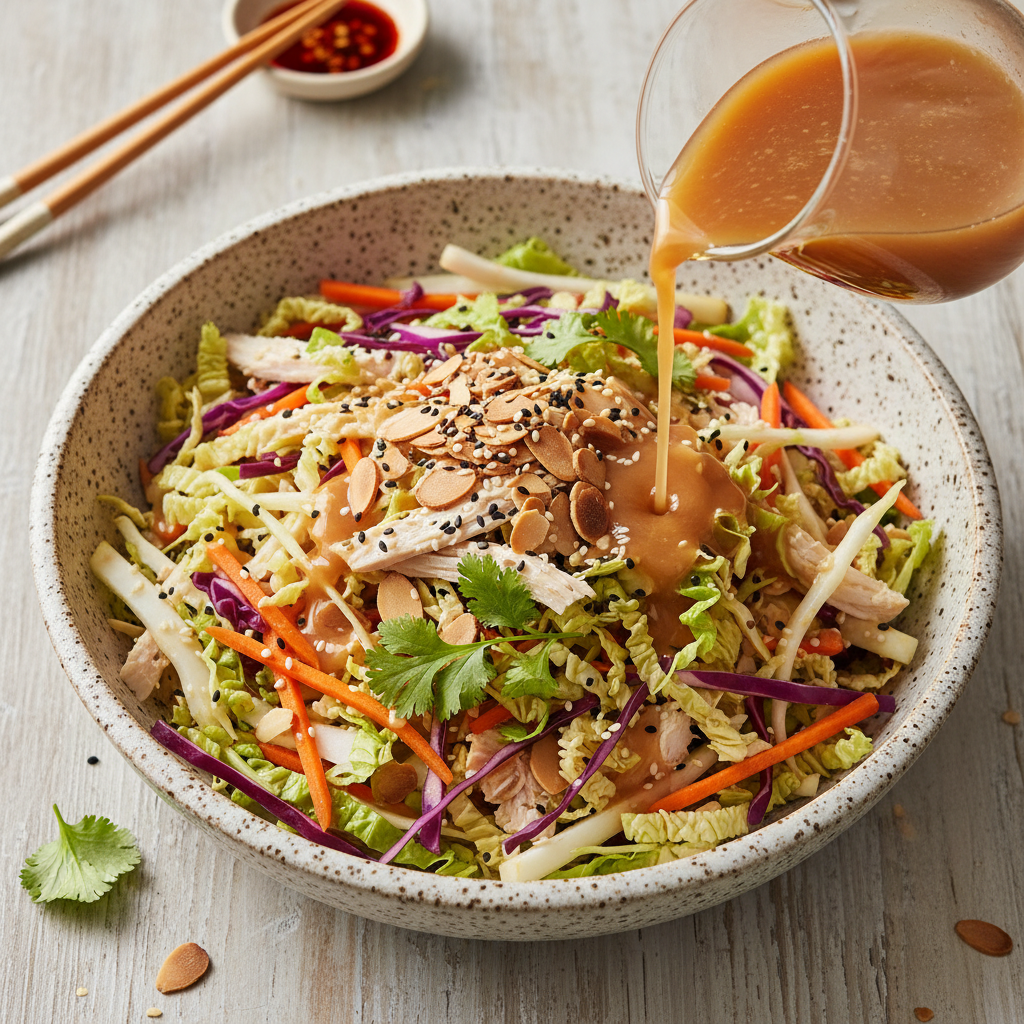
Fresh, vibrant, and satisfyingly crunchy, this Asian Sesame Chicken Salad is the ultimate healthy meal that doesn’t sacrifice flavor. Packed with shredded chicken, colorful cabbage, and a sweet-savory ginger sesame dressing, it’s a restaurant-quality dish perfect for lunch or a light dinner.
25 minutes
15 minutes
40 minutes
4 servings
Main Course Salad
Poaching & Chopping
Asian-American Fusion
Dairy-Free
In the world of salads, texture is everything, and this Asian Sesame Chicken Salad delivers an absolute symphony of crunch. Move over, sad wilted lettuce; this dish champions the robust, crisp texture of fresh cabbage and carrots, paired perfectly with tender, juicy shredded chicken. It is the kind of salad that you actually crave—a perfect balance of savory, sweet, nutty, and tangy flavors that dance on the palate. The star of the show is undoubtedly the dressing. It is an emulsion of toasted sesame oil, soy sauce, rice vinegar, and fresh aromatics like ginger and garlic that coats every strand of cabbage without making it soggy immediately.
This recipe is designed for the home cook who wants a nutritious meal that feels indulgent. It is incredibly versatile, serving as a protein-packed post-workout meal, a stunning side dish for a potluck, or a meal-prep lunch that holds up surprisingly well in the fridge. Unlike leafy green salads that turn to mush within minutes of dressing, the hardy nature of Napa and red cabbage means this salad retains its integrity longer, allowing the flavors to meld beautifully. We also incorporate toasted almonds and sesame seeds to amplify the nutty profile, ensuring that every bite is interesting. Whether you are looking to replicate that famous restaurant salad you love or simply want to inject more colorful vegetables into your diet, this recipe is your new go-to standard for fresh Asian-fusion cuisine at home.
History & Origins
The ‘Chinese Chicken Salad’ or Asian Sesame Chicken Salad is a fascinating example of Asian-American fusion cuisine rather than a traditional dish found in China. Its roots are firmly planted in the culinary landscape of mid-20th century California. While cold chicken dishes with sauces exist in Chinese cuisine (such as ‘Bang Bang Chicken’), the salad as we know it—heaps of lettuce or cabbage, crunchy fried noodles, and a sweet soy-sesame vinaigrette—is a distinctly American invention.
Most food historians trace the popularity of this dish to the 1960s and 70s. Two legendary figures often get credit: Madame Wu of ‘Madame Wu’s Garden’ in Santa Monica, who reportedly created a version at the request of Cary Grant, and Wolfgang Puck, who cemented the salad’s iconic status at his restaurant ‘Chinois on Main’ in the 1980s. Puck’s version, which focused heavily on the fusion of European techniques with Asian ingredients like Napa cabbage, hot mustard, and sesame oil, sparked a nationwide trend.
Throughout the 90s and 2000s, this salad became a staple in American casual dining chains, from The Cheesecake Factory to California Pizza Kitchen, introducing millions to the flavor profile of toasted sesame oil and rice vinegar. It represents a time when American palates began opening up to global flavors, bridging the gap between the familiar structure of a tossed salad and the exotic tastes of the East. Today, it remains a beloved classic, celebrated for its health benefits and its addictive flavor profile.
Why This Recipe Works
This recipe succeeds because it meticulously balances the five basic tastes: salty (soy sauce), sweet (honey), sour (rice vinegar), bitter (cabbage/scallions), and umami (chicken/sesame). Many home versions of this salad fail because they use the wrong base. We specifically choose a blend of Napa cabbage and Red cabbage. Napa cabbage provides a delicate, watery crunch that is less fibrous than standard green cabbage, acting almost like a sturdy lettuce, while the red cabbage adds earthiness and vibrant color.
Furthermore, the method of preparing the chicken is crucial. Rather than grilling, which can dry out the breast meat, we poach the chicken gently with ginger and garlic. This ensures the meat remains moist and shreds easily, absorbing the dressing much better than cubed meat would. The dressing itself uses a specific ratio of oil to acid to ensure it clings to the vegetables. By toasting the sesame seeds and almonds immediately before serving, we release their essential oils, maximizing the aroma. Finally, the omission of heavy mayonnaise-based binders keeps the dish light and refreshing, allowing the clean flavors of the fresh vegetables and the high-quality sesame oil to shine through without being masked.
Why You’ll Love This Recipe
- ✓High-protein and packed with vitamins A and C.
- ✓Stays crunchy longer than lettuce-based salads.
- ✓The dressing doubles as a delicious marinade.
- ✓Dairy-free and easily adaptable to gluten-free.
- ✓Perfect for meal prep lunch boxes.
- ✓Ready in under 45 minutes.
Equipment You’ll Need
- ✓Large pot for poaching chicken
- ✓Meat thermometer
- ✓Large mixing bowl
- ✓Small whisk and jar
- ✓Sharp chef’s knife
- ✓Cutting board
- ✓Small skillet for toasting nuts
Ingredients
- ✓1 lb boneless, skinless chicken breasts
- ✓2 slices fresh ginger (for poaching)
- ✓1 clove garlic, smashed (for poaching)
- ✓4 cups Napa cabbage, shredded
- ✓2 cups Red cabbage, shredded
- ✓1 cup carrots, julienned or grated
- ✓1 red bell pepper, thinly sliced
- ✓3 green onions, thinly sliced
- ✓1/2 cup cilantro leaves, roughly chopped
- ✓1/4 cup sliced almonds or roasted peanuts
- ✓1 tbsp toasted sesame seeds
- ✓DRESSING: 3 tbsp soy sauce (or Tamari)
- ✓DRESSING: 2 tbsp rice vinegar
- ✓DRESSING: 1 tbsp toasted sesame oil
- ✓DRESSING: 3 tbsp olive oil or neutral oil
- ✓DRESSING: 1 tbsp honey or maple syrup
- ✓DRESSING: 1 tsp fresh ginger, grated
- ✓DRESSING: 1 clove garlic, minced
Instructions
- 1. Poach the Chicken: Place the chicken breasts in a pot and cover with water by about an inch. Add the smashed garlic clove, ginger slices, and a pinch of salt. Bring to a boil, then immediately reduce heat to low, cover, and simmer for 12-15 minutes until the internal temperature reaches 165°F (74°C).
- 2. Cool and Shred: Remove chicken from the water and let it rest on a cutting board for 10 minutes. Once cool enough to handle, shred the chicken into bite-sized pieces using two forks. Set aside to cool completely.
- 3. Prepare the Veggies: While the chicken cooks, wash and dry your vegetables thoroughly. Shred the Napa and red cabbage thinly. Julienne the carrots and slice the bell pepper and green onions.
- 4. Make the Dressing: In a small jar or bowl, combine soy sauce, rice vinegar, toasted sesame oil, olive oil, honey, grated ginger, and minced garlic. Whisk or shake vigorously until the dressing is emulsified and creamy looking.
- 5. Toast the Nuts: In a small dry skillet over medium heat, toast the sliced almonds for 2-3 minutes, stirring constantly until they are golden brown and fragrant. Watch closely as they burn quickly. Remove from heat immediately.
- 6. Assemble: In a very large mixing bowl, combine the shredded cabbages, carrots, bell pepper, green onions, cilantro, and cooled shredded chicken.
- 7. Dress and Toss: Pour the dressing over the salad mixture. Toss well with tongs to ensure every leaf and piece of chicken is coated.
- 8. Garnish and Serve: Transfer to serving bowls. Top with the toasted almonds and sesame seeds. Serve immediately for the best crunch.
Expert Cooking Tips
- ✓Dry the Cabbage: After washing your cabbage, use a salad spinner or pat it very dry with paper towels. Excess water will dilute the flavorful dressing.
- ✓Toasting is Key: Do not skip toasting the almonds and sesame seeds; it releases the oils and adds a depth of flavor raw nuts lack.
- ✓Let the Chicken Cool: Adding hot chicken to the cabbage will wilt it prematurely. Ensure the meat is room temperature or cold.
- ✓Massage the Kale: If you substitute kale for cabbage, massage the leaves with a little oil first to soften them.
- ✓Grate the Ginger: Use a microplane for the ginger in the dressing to avoid biting into large spicy chunks.
- ✓Double the Dressing: The dressing keeps well in the fridge for a week; make a double batch for quick salads later.
Substitutions and Variations
This salad is incredibly flexible. **Protein:** If you are short on time, store-bought rotisserie chicken works perfectly. For a vegetarian version, swap chicken for edamame beans, crispy tofu cubes, or chickpeas. **Greens:** While Napa cabbage is traditional, you can use Savoy cabbage, iceberg lettuce (for less nutrition but more crunch), or a mix of romaine and kale. **Crunch:** If you have a nut allergy, substitute the almonds with sunflower seeds or pumpkin seeds (pepitas). You can also add crispy wonton strips or chow mein noodles for that classic restaurant style. **Dressing:** If you are gluten-free, ensure you use Tamari or Coconut Aminos instead of standard soy sauce. Maple syrup or agave can replace honey for a vegan option. **Spiciness:** Add a teaspoon of Sriracha or a pinch of red pepper flakes to the dressing if you like a kick.
Common Mistakes to Avoid
The most common mistake is **overdressing the salad**. Cabbage is non-porous compared to lettuce, so the dressing sits on top. Start with three-quarters of the dressing, toss, and taste before adding the rest. Another error is **using the thick white ribs of the cabbage**. While edible, they can be watery and bitter; try to use mostly the leafy parts and the thinner ribs for the best texture. Finally, **boiling the chicken too hard** results in rubbery meat. A gentle simmer (poach) yields the tender texture that makes this salad enjoyable.
Serving Suggestions
This salad is substantial enough to stand alone as a main course for lunch or dinner. However, it pairs beautifully as a side dish with Asian-inspired entrees like steamed dumplings, potstickers, or miso-glazed salmon. For a fun party appetizer, serve the salad inside lettuce cups (San Choy Bow style) or wrap it in a warm flour tortilla for an Asian chicken wrap. It also goes well with a side of hot miso soup to contrast the cold, crunchy salad.
Storage and Reheating Tips
If you plan to have leftovers, **store the dressing and the salad separately**. Undressed, the chopped vegetable and chicken mix can stay fresh in an airtight container in the refrigerator for up to 3 days. Once dressed, the cabbage will stay crunchy for about 24 hours, but will eventually soften. The dressing can be stored in a jar in the fridge for up to 1 week; just give it a good shake before using as the oil and vinegar will separate.
Nutrition Facts (Estimated)
| Serving Size | 1 large bowl |
| Calories | 420 |
| Fat | 22g |
| Saturated Fat | 3g |
| Unsaturated Fat | 18g |
| Trans Fat | 0g |
| Cholesterol | 75mg |
| Sodium | 680mg |
| Carbohydrates | 18g |
| Fiber | 6g |
| Sugar | 9g |
| Protein | 32g |
Frequently Asked Questions
Can I make this salad ahead of time?
Yes! This is a great meal prep salad. You can chop all the vegetables and shred the chicken up to 2 days in advance. Store them in a sealed container. Keep the dressing in a separate jar and the nuts in a baggie. Toss everything together right before serving.
Is this recipe Gluten-Free?
The ingredients are naturally gluten-free with the exception of Soy Sauce. To make it 100% gluten-free, you must use Tamari or Coconut Aminos in place of the soy sauce.
What is Napa Cabbage and where can I find it?
Napa cabbage (also called Chinese cabbage) is oblong with crinkly, pale green leaves and white ribs. It has a milder, sweeter flavor than round green cabbage. It is available in the produce section of almost all major grocery stores.
Can I use precooked chicken?
Absolutely. Rotisserie chicken is a fantastic time-saver. Leftover roasted chicken or even canned chicken breast (drained well) can work in a pinch.
Is this salad spicy?
No, as written, this salad is savory and sweet, not spicy. The ginger adds a little warmth, but no heat. If you want spice, add chili paste or Sriracha to the dressing.
How do I shred the cabbage finely?
Cut the cabbage head in half, remove the core, and place the flat side down. Use a sharp chef’s knife to slice across the leaves as thinly as possible. Alternatively, a mandoline slicer works great for uniform thin shreds.
Can I use peanut butter in the dressing?
Yes! For a creamier, Thai-style dressing, whisk in 1 tablespoon of creamy peanut butter or almond butter. You may need a splash of warm water to thin it out.
Why is my dressing too salty?
Soy sauce brands vary in sodium content. Always use ‘Low Sodium’ soy sauce if possible, or taste as you go. If it’s too salty, add a bit more rice vinegar or a teaspoon of water to balance it out.
Conclusion
There you have it—the perfect Asian Sesame Chicken Salad that brings color, crunch, and incredible flavor to your table. It’s a recipe that proves healthy eating doesn’t have to be boring or bland. The combination of the nutty sesame dressing with the cool, crisp cabbage and tender chicken creates a meal that feels satisfying and light all at once. Whether you are meal-prepping for the week or hosting a summer lunch, this salad is sure to impress. Don’t forget to share your creations on Pinterest and tag us so we can see your beautiful bowls!