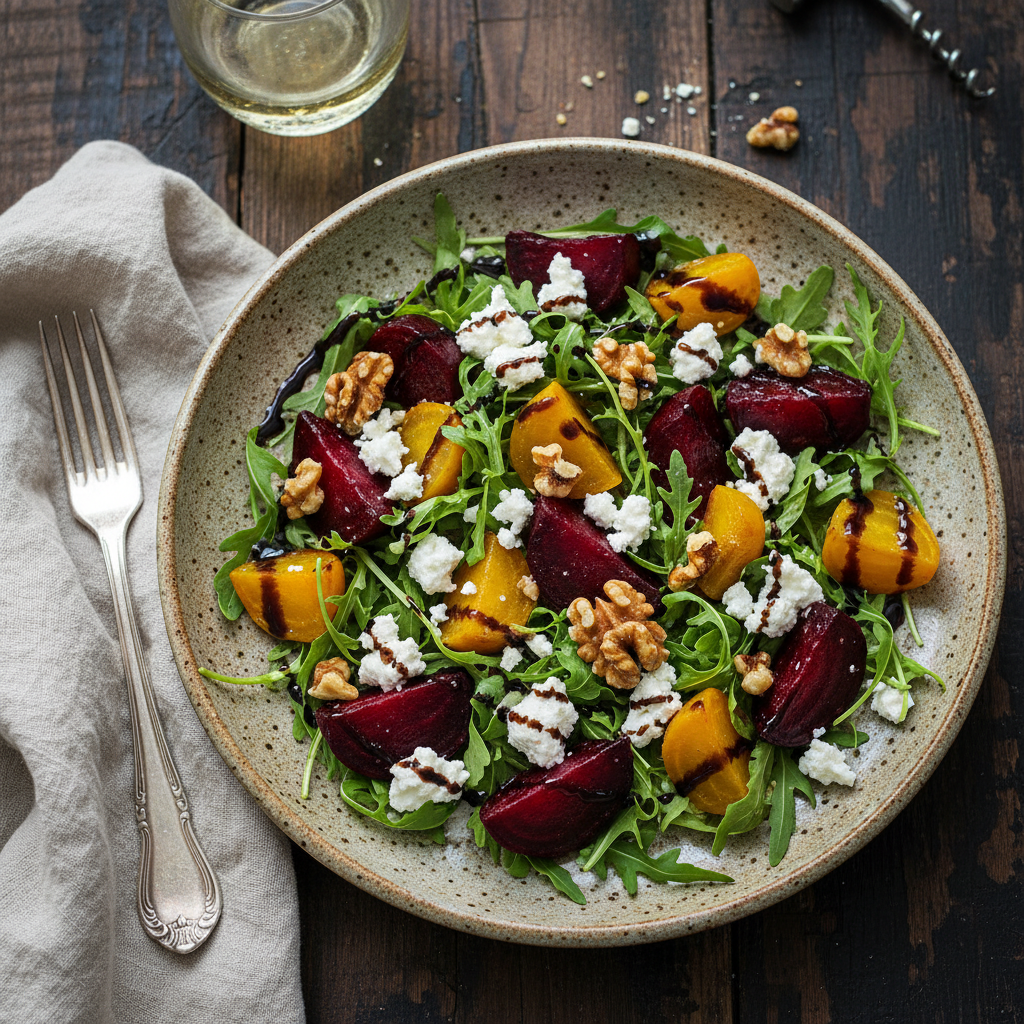
Ultimate Roasted Beet and Goat Cheese Salad with Arugula & Balsamic Glaze
Roasted Beet And Goat Cheese Salad With Arugula Recipe
Elevate your lunch or dinner with this stunning Roasted Beet and Goat Cheese Salad. Featuring tender, earth-sweet roasted beets, creamy crumbled chèvre, and peppery arugula tossed in a homemade balsamic vinaigrette, this salad is a masterclass in flavor balance and texture.
20 minutes
50 minutes
1 hour 10 minutes
4 servings
Salad
Roasting
Modern American / Mediterranean
Gluten-Free
There are few combinations in the culinary world as harmonious as earthy roasted beets, tangy goat cheese, and peppery arugula. This Roasted Beet and Goat Cheese Salad is more than just a side dish; it is a vibrant celebration of textures and flavors that can easily stand as the centerpiece of a light lunch or a sophisticated starter for a dinner party. The magic begins with the beets. While raw beets can be crunchy and somewhat metallic, roasting them transforms their cellular structure, concentrating their natural sugars and rendering them tender and candy-sweet. This sweetness provides the perfect foil to the sharp, acidic bite of fresh goat cheese (chèvre).
But a salad is defined by its greens, and here, arugula is the star. Its inherent spiciness cuts through the richness of the cheese and the density of the root vegetables, ensuring every bite is lively and fresh. To add a necessary crunch, we incorporate toasted walnuts or pecans, which bring a nutty depth that bridges the gap between the sweet beets and the savory dressing. Speaking of dressing, the balsamic vinaigrette used here is an emulsion of high-quality balsamic vinegar, Dijon mustard, honey, and olive oil. It coats the leaves without weighing them down, tying all the components together in a glossy, flavorful embrace. Whether you are a seasoned home cook looking to impress guests or someone seeking a healthy, nutrient-dense meal that doesn’t compromise on taste, this recipe delivers on all fronts. It is visually striking with its deep reds, bright whites, and vibrant greens, making it as beautiful to look at as it is to eat.
History & Origins
The consumption of beets dates back to ancient times, with evidence suggesting they were grown in the Hanging Gardens of Babylon. However, for centuries, it was primarily the beet greens that were consumed, while the roots were used medicinally or as animal fodder. It wasn’t until the Roman era that the roots began to be appreciated for their culinary value, and later, in the 19th century, they became a significant source of sugar in Europe. The pairing of beets with cheese has roots in European peasant cuisine, where root cellars kept beets preserved through winter, and fresh cheeses were a staple of spring and summer.
The specific modern iteration of the Roasted Beet and Goat Cheese Salad, particularly featuring arugula (or rocket), gained massive popularity in the United States during the ‘California Cuisine’ movement of the 1980s and 1990s. Chefs like Alice Waters championed the ‘farm-to-table’ philosophy, highlighting fresh, local ingredients. The contrasting colors and sophisticated flavor profile made it a staple on bistro menus from San Francisco to New York. It represented a shift away from the iceberg lettuce salads of the mid-century towards darker, nutrient-dense greens and gourmet toppings. Goat cheese, specifically French-style chèvre, saw a boom in American production during this same period, led by pioneers like Laura Chenel in Sonoma County. This salad became iconic of that era—a symbol of fresh, elegant, and health-conscious American dining that has since become a timeless classic found in restaurants and homes worldwide.
Why This Recipe Works
This recipe works because it is built on the fundamental culinary principle of contrasting flavors and textures. The primary success factor lies in the roasting technique. Many recipes suggest boiling beets, which leaches out flavor and color into the water. Roasting them whole in foil packets creates a steam chamber that cooks them gently while their juices caramelize, resulting in a significantly more intense, sweet flavor and a superior, firm-tender texture.
Secondly, the balance of the five tastes is meticulously calibrated. You have sweetness from the beets and honey, acidity from the balsamic vinegar and goat cheese, bitterness from the arugula and walnuts, saltiness from the seasoning, and umami from the nuts and cheese. This engages the entire palate, making the dish incredibly satisfying. The temperature contrast also plays a role; serving the beets slightly warm over the cool, crisp greens wilts the arugula ever so slightly, changing its texture and releasing its aromatic oils, which melds beautifully with the creamy, melting goat cheese. Finally, the emulsified dressing clings to the ingredients rather than pooling at the bottom of the bowl, ensuring flavor distribution in every forkful.
Why You’ll Love This Recipe
- ✓Perfect balance of sweet roasted beets and tangy goat cheese.
- ✓High in fiber, antioxidants, and healthy fats.
- ✓Visually stunning presentation ideal for entertaining.
- ✓Versatile dressing that doubles as a marinade.
- ✓Can be prepped ahead for easy assembly.
- ✓Gluten-free and vegetarian-friendly.
Equipment You’ll Need
- ✓Baking sheet
- ✓Aluminum foil
- ✓Small mixing bowl or jar
- ✓Whisk
- ✓Vegetable peeler or paring knife
- ✓Large salad bowl
- ✓Chef’s knife
- ✓Cutting board
Ingredients
- ✓4 medium red or golden beets, scrubbed clean and greens removed
- ✓5 oz fresh arugula (baby arugula preferred)
- ✓4 oz soft goat cheese (chèvre), crumbled
- ✓1/2 cup walnuts or pecans, roughly chopped and toasted
- ✓3 tbsp extra virgin olive oil
- ✓2 tbsp balsamic vinegar
- ✓1 tsp Dijon mustard
- ✓1 tsp honey or maple syrup
- ✓1 small shallot, minced (optional)
- ✓Salt and freshly cracked black pepper to taste
Instructions
- Preheat your oven to 400°F (200°C).
- Wash the beets thoroughly to remove any dirt. Trim the tops and tails, but leave the skins on.
- Place the beets on a large piece of aluminum foil. Drizzle with a teaspoon of olive oil and sprinkle with a pinch of salt. Fold the foil up to create a sealed packet and place it on a baking sheet.
- Roast in the oven for 45 to 60 minutes. The time will vary based on the size of the beets. They are done when a paring knife slides easily into the center.
- While the beets roast, prepare the vinaigrette. In a small jar or bowl, combine the balsamic vinegar, Dijon mustard, honey, minced shallot, salt, and pepper. Whisk together, then slowly drizzle in the extra virgin olive oil while whisking constantly until the dressing is emulsified and creamy.
- Toast the walnuts in a dry skillet over medium heat for 3-5 minutes until fragrant, being careful not to burn them. Set aside to cool.
- Remove the beets from the oven and carefully open the foil packet to let steam escape. Let them cool until they are safe to handle.
- Using a paper towel or your fingers (wear gloves to prevent staining), rub the skins off the beets. They should slip off easily. Slice the beets into wedges or cubes.
- In a large salad bowl, place the arugula. Drizzle about half of the dressing over the greens and toss gently to coat.
- Arrange the dressed arugula on a serving platter or individual plates. Top with the warm or room-temperature beet wedges.
- Sprinkle the crumbled goat cheese and toasted walnuts over the salad.
- Drizzle the remaining dressing over the top of the beets and cheese. Finish with a final crack of black pepper and serve immediately.
Expert Cooking Tips
- ✓Wear latex or nitrile gloves when peeling red beets to avoid staining your hands pink for days.
- ✓Roast the beets a day in advance to make salad assembly a 5-minute task on busy weeknights.
- ✓If using both red and golden beets, store them separately after roasting so the red juice doesn’t bleed into the golden beets.
- ✓Toast your nuts immediately before serving for the best crunch; stale nuts can ruin the texture.
- ✓Don’t overdressing the arugula; it is delicate and will become soggy quickly if drowned in vinaigrette.
- ✓For a milder onion flavor, let the minced shallots sit in the vinegar for 10 minutes before adding the oil.
Substitutions and Variations
This salad is incredibly flexible and adapts well to various dietary needs and pantry staples. If you are not a fan of goat cheese, which can be polarizing due to its distinct tang, feta cheese is an excellent alternative that provides a similar salty kick, though with a firmer texture. For a dairy-free or vegan version, you can use a high-quality almond-based ricotta or simply omit the cheese and add avocado for creaminess.
In terms of greens, while arugula offers a signature peppery bite, baby spinach or a spring mix works well for a milder flavor profile. Mixed baby kale is another hearty option that holds up well to the dressing. If walnuts aren’t your favorite or you have an allergy, pecans, pistachios, or even toasted pumpkin seeds (pepitas) make wonderful crunchy toppings. For the dressing, if you find balsamic too strong, try a white balsamic vinegar, apple cider vinegar, or lemon juice for a lighter, citrus-forward vinaigrette.
Common Mistakes to Avoid
The most common mistake with this salad is undercooking the beets. If the beets offer resistance when pierced with a knife, they will be crunchy and unpleasant in the salad; they need to be buttery soft. Another frequent error is dressing the salad too early. Arugula is a tender green that wilts rapidly once it comes into contact with acid and salt. Always toss the dressing right before you intend to eat.
Additionally, many people skip toasting the nuts. Raw walnuts can be slightly bitter and waxy, whereas toasting releases their natural oils and enhances their crunch significantly. Lastly, be careful with the ‘bleed’ of red beets. If you toss the beets directly with the goat cheese in the bowl, the entire salad will turn a muddy pink color. It is best to layer the ingredients: greens first, then beets, then cheese on top to maintain distinct colors.
Serving Suggestions
This salad is robust enough to be a light main course, especially if you add a protein like grilled chicken breast, seared salmon, or sliced steak. It pairs beautifully with crusty sourdough bread or a warm baguette to soak up the leftover vinaigrette. As a side dish, it complements roasted meats such as pork tenderloin, roast chicken, or a holiday prime rib perfectly. For a complete vegetarian meal, serve it alongside a hearty grain bowl involving quinoa or farro, or with a warm bowl of vegetable soup. In terms of wine pairing, a crisp Sauvignon Blanc or a light Pinot Noir works exceptionally well, cutting through the richness of the cheese and matching the earthiness of the beets.
Storage and Reheating Tips
This salad is best enjoyed fresh, but components can be prepped in advance. The roasted beets can be stored in an airtight container in the refrigerator for up to 5 days. The dressing can be made up to a week in advance and stored in a jar; just give it a vigorous shake before using as the oil and vinegar will separate. The toasted nuts should be stored in a sealed container at room temperature to maintain crispness.
Once assembled, the salad does not store well as the arugula will wilt and become soggy within an hour. If you anticipate leftovers, store the dressing, beets, cheese, and greens in separate containers and assemble individual portions as needed. Do not freeze the roasted beets as their texture will become spongy upon thawing.
Nutrition Facts (Estimated)
| Serving Size | 1 plate |
| Calories | 380 |
| Fat | 28g |
| Saturated Fat | 7g |
| Unsaturated Fat | 19g |
| Trans Fat | 0g |
| Cholesterol | 20mg |
| Sodium | 420mg |
| Carbohydrates | 22g |
| Fiber | 6g |
| Sugar | 14g |
| Protein | 10g |
Frequently Asked Questions
Can I use canned beets instead of roasting fresh ones?
Yes, you can use canned beets to save time. However, the flavor will be milder and the texture softer. Rinse them thoroughly to remove excess sodium and tinny flavor before using.
How do I stop the red beets from staining the goat cheese?
To keep the presentation clean, layer the salad rather than tossing everything together. Place the greens, then the beets, and sprinkle the cheese on top last.
Is this salad gluten-free?
Yes, as written, this recipe is naturally gluten-free. Just ensure your mustard and balsamic vinegar are certified gluten-free if you have severe sensitivity.
Can I eat the beet skins?
Technically yes, beet skins are edible, especially on young beets. However, roasting tends to make the skins tough, and they can have a bitter, earthy taste, so peeling is recommended for this salad.
What is the best way to reheat roasted beets?
You can eat the beets cold in the salad, but if you prefer them warm, microwave them for 30-45 seconds or warm them in a skillet with a drop of oil over low heat.
Can I use golden beets instead?
Absolutely. Golden beets have a slightly sweeter, mellower flavor and the added benefit of not staining your hands or the other salad ingredients.
Why is my dressing separating?
Vinaigrettes naturally separate over time. The mustard and honey act as emulsifiers to hold it together, but if it separates, just whisk or shake it vigorously right before serving.
Can I replace arugula with kale?
Yes, but kale is tougher. If using kale, massage the leaves with a little olive oil and salt first to soften them before adding the other ingredients.
Conclusion
The Roasted Beet and Goat Cheese Salad is a testament to the power of simple, high-quality ingredients coming together to create something greater than the sum of their parts. It balances the rustic, grounded nature of root vegetables with the elegance of fine cheese and delicate greens. Whether you are looking to add more vegetables to your diet, impress guests at a dinner party, or simply enjoy a delicious and colorful meal, this recipe is a reliable and delightful choice. Don’t be intimidated by the roasting process; the effort pays off in spades with flavor depth that canned beets simply cannot match. Give this recipe a try, and it is sure to become a regular in your seasonal rotation.