The Ultimate Vegan Kale Caesar Salad with Crispy Roasted Chickpeas
Kale Caesar Salad With Roasted Chickpeas Vegan Recipe
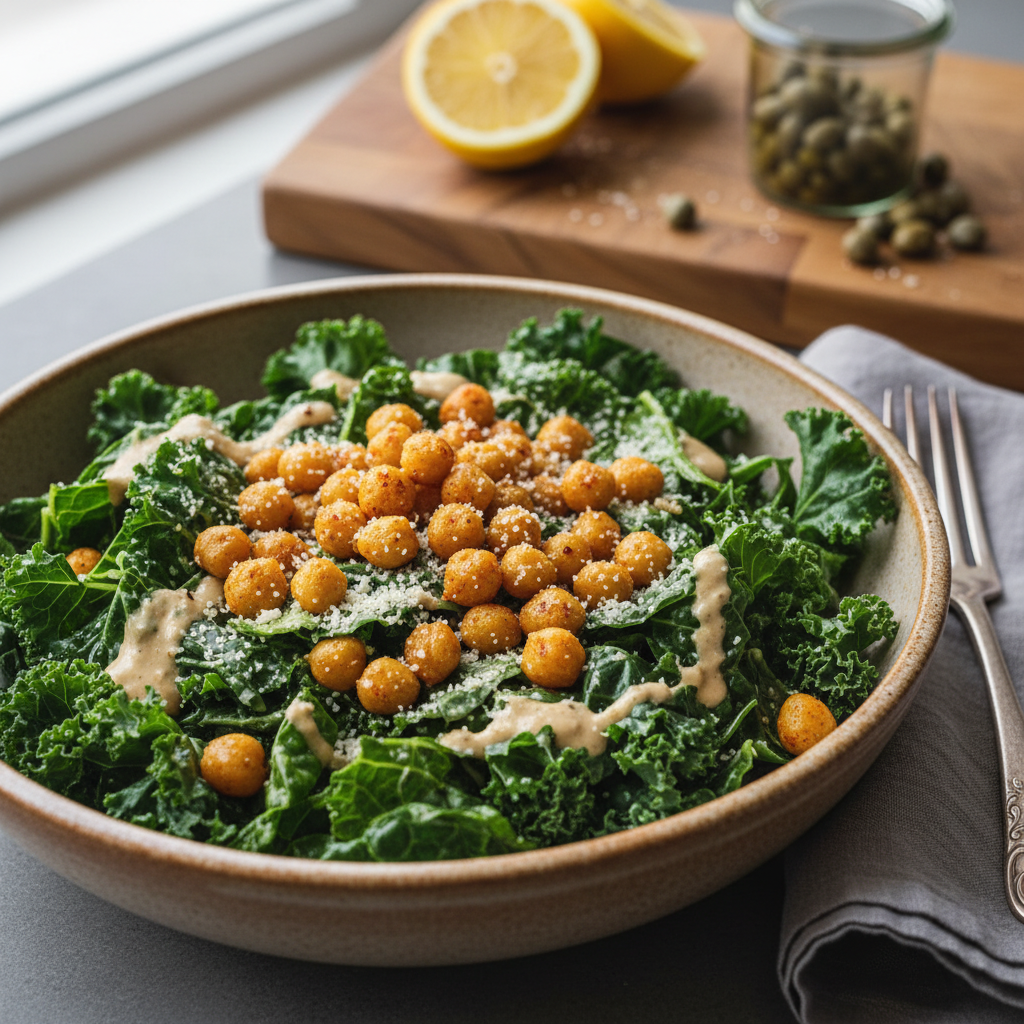
This isn’t just a salad; it’s a textural masterpiece featuring tender massaged kale, crunchy garlic-roasted chickpeas, and a luxuriously creamy cashew dressing. This nutrient-dense, vegan twist on the classic Caesar is hearty enough for a main course and packed with savory umami flavor.
20 minutes
25 minutes
45 minutes
4 servings
Main Course / Salad
Roasting & Blending
American Fusion
Vegan
If you have ever held the misconception that vegan salads are lackluster rabbit food, prepare to have your world turned upside down. This Vegan Kale Caesar Salad with Roasted Chickpeas is a triumph of texture and flavor, designed to satisfy even the most devoted dairy lovers. The magic lies in the balance of elements: the earthy, robust base of dark leafy greens, the satisfying crunch of protein-packed chickpeas that act as gluten-free croutons, and the absolute star of the show—the dressing.
Traditional Caesar dressing relies heavily on egg yolks, parmesan cheese, and anchovies to achieve its signature creamy, salty, and savory profile. In this plant-based rendition, we achieve that same velvety richness using soaked raw cashews and a touch of Dijon mustard. To mimic the oceanic saltiness of anchovies, we employ capers and a splash of brine, while nutritional yeast provides that quintessential cheesy nuttiness.
But let’s talk about the kale. Many people avoid raw kale because of its tough texture, but the secret weapon here is the ‘massage.’ By physically working the dressing or a bit of olive oil into the leaves, we break down the fibrous cellulose structures, transforming the greens into tender, palatable bites that hold up beautifully against the heavy dressing without becoming soggy. This dish is more than a side; it is a substantial, vibrant meal that leaves you feeling energized rather than weighed down. Whether you are meal-prepping for a busy week or hosting a dinner party where dietary restrictions vary, this salad is a crowd-pleaser that bridges the gap between indulgent comfort food and high-vibrational nutrition.
History & Origins
The Caesar salad is one of the most iconic dishes in the American culinary canon, yet its origins are often misunderstood. Contrary to popular belief, it was not named after Julius Caesar, the Roman Emperor. It was actually created by Caesar Cardini, an Italian immigrant who operated restaurants in Mexico and the United States. The legend goes that on July 4, 1924, at his restaurant in Tijuana, Mexico, Cardini was overwhelmed by a holiday rush and depleted of kitchen supplies. Improvising with what he had left—romaine lettuce, garlic, croutons, Parmesan cheese, boiled eggs, olive oil, and Worcestershire sauce—he prepared the salad tableside to add a flair of dramatic presentation. It was an instant hit, originally eaten as finger food with whole romaine leaves.
Fast forward nearly a century, and the Caesar salad has seen countless iterations. The introduction of kale into the mainstream American diet in the early 2010s marked a significant shift in how we approach raw salads. Once reserved for garnishing salad bars (literally used to cover the ice), kale was rebranded as a superfood. As the wellness movement grew, so did the desire for nutrient-dense alternatives to iceberg and romaine lettuce. The ‘Kale Caesar’ became a staple in trendy bistros from Brooklyn to Los Angeles, symbolizing a modern fusion of classic comfort and health-conscious eating.
Simultaneously, the rise of plant-based diets challenged chefs to recreate classic flavors without animal products. The substitution of chickpeas for bread croutons is a relatively modern innovation, born out of the gluten-free movement and the desire to add whole-food plant protein to salads. This recipe represents the culmination of these culinary evolutions: honoring Cardini’s flavor profile while embracing the modern demand for functional, plant-based nutrition.
Why This Recipe Works
This recipe succeeds where many vegan imitations fail because it prioritizes the chemistry of flavor and texture. First, the ‘crouton’ problem: traditional bread croutons often get soggy or are nutritionally void. By roasting chickpeas with smoked paprika and garlic powder, we create a crunchy element that provides fiber and protein, ensuring the salad is satiating. The roasting process dehydrates the exterior of the chickpea while keeping the inside slightly creamy, offering a complex mouthfeel.
Secondly, the dressing uses a ‘fat-for-fat’ swap that mimics dairy emulsion. Cashews, when soaked and blended, release starches and fats that create an incredibly smooth suspension, similar to heavy cream or egg yolks. The addition of capers and miso paste (or soy sauce) provides natural glutamates—the compounds responsible for the ‘umami’ taste usually derived from parmesan and anchovies. This triggers the same savory receptors on the tongue, making the brain register the food as rich and satisfying.
Finally, the choice of Lacinato (Dino) kale over curly kale is strategic. Its surface area is flatter and slightly more tender, allowing the dressing to coat it evenly without getting trapped in tight curls where it might clump. Massaging the kale with lemon and salt beforehand creates a chemical reaction that softens the leaves, making them easier to chew and digest, removing the barrier to entry that many people face with raw kale.
Why You’ll Love This Recipe
- ✓100% Vegan and Dairy-Free
- ✓High-Protein Gluten-Free ‘Croutons’
- ✓Nutrient-Dense Superfood Base
- ✓Creamy, Umami-Rich Cashew Dressing
- ✓Perfect for Meal Prep (Won’t Get Soggy)
- ✓Rich in Fiber and Healthy Fats
Equipment You’ll Need
- ✓High-speed blender or food processor
- ✓Large baking sheet
- ✓Parchment paper
- ✓Large mixing bowl
- ✓Salad spinner (optional)
- ✓Chef’s knife
- ✓Cutting board
Ingredients
- ✓2 large bunches Lacinato (Dino) kale, stems removed and chopped
- ✓1 (15 oz) can chickpeas, rinsed and drained
- ✓1 tbsp olive oil (for chickpeas)
- ✓1 tsp smoked paprika
- ✓1/2 tsp garlic powder
- ✓1/2 tsp sea salt
- ✓1/2 cup raw cashews (soaked in hot water for 20 mins)
- ✓1/4 cup water (plus more to thin)
- ✓3 tbsp fresh lemon juice
- ✓1 tbsp capers (with a splash of brine)
- ✓1 tsp Dijon mustard
- ✓1 clove garlic, peeled
- ✓2 tbsp nutritional yeast
- ✓Black pepper to taste
- ✓Vegan Parmesan (optional garnish)
Instructions
- 1. Preheat your oven to 400°F (200°C) and line a baking sheet with parchment paper.
- 2. Thoroughly rinse and drain the chickpeas. Pat them completely dry with a clean kitchen towel or paper towels. This step is crucial for crunchiness.
- 3. Toss the dried chickpeas in a bowl with 1 tablespoon olive oil, smoked paprika, garlic powder, and sea salt until evenly coated.
- 4. Spread the chickpeas in a single layer on the baking sheet. Roast for 20-25 minutes, shaking the pan halfway through, until golden and crispy. Let them cool completely on the pan (they crisp up more as they cool).
- 5. While chickpeas roast, prepare the dressing. Drain the soaked cashews and add them to a high-speed blender.
- 6. Add water, lemon juice, capers, Dijon mustard, garlic clove, nutritional yeast, and a pinch of pepper to the blender. Blend on high until completely smooth and creamy. Add small amounts of water if needed to reach your desired consistency.
- 7. Prepare the kale by removing the tough stems and chopping the leaves into bite-sized ribbons. Place in a large bowl.
- 8. Add a tiny squeeze of lemon juice and a pinch of salt to the kale. Using your clean hands, massage the kale for 1-2 minutes until it turns a darker green and feels tender.
- 9. Pour the desired amount of dressing over the kale and toss to coat every leaf evenly.
- 10. Top with the cooled, roasted chickpeas and a sprinkle of vegan parmesan or hemp seeds before serving.
Expert Cooking Tips
- ✓Dry the chickpeas thoroughly before roasting; any moisture will result in steaming rather than crisping.
- ✓Soak your cashews in boiling water for at least 20 minutes if you don’t have a high-powered blender to ensure a gritty-free dressing.
- ✓Don’t skip the massage! Massaging the kale breaks down the fibrous cell walls, making it easier to digest and much more pleasant to eat.
- ✓Allow the roasted chickpeas to cool completely on the baking sheet; this final resting period sets the crunch.
- ✓Use Lacinato (Dino) kale instead of curly kale for a smoother texture that mimics romaine lettuce more closely.
Substitutions and Variations
This recipe is highly adaptable to whatever you have in your pantry. If you have a nut allergy, you can substitute the cashews with raw sunflower seeds or hemp seeds; just be sure to soak the sunflower seeds longer. Alternatively, tahini can be used as a base for a nut-free, sesame-forward dressing, though the flavor profile will shift slightly. If you don’t have capers, a teaspoon of white miso paste or a splash of soy sauce/tamari works wonders to add that necessary umami depth. For the greens, while Lacinato kale is preferred, curly kale works well if massaged thoroughly. You can also do a 50/50 mix of kale and romaine lettuce if you want a lighter crunch. If you are not strictly gluten-free, you can use traditional sourdough croutons instead of chickpeas, or use crispy tofu cubes for a different protein source.
Common Mistakes to Avoid
The most common mistake is under-drying the chickpeas. If they are wet when they go into the oven, they will never get crispy. Another pitfall is overdressing the salad immediately; while kale is robust, drowning it can make the dish heavy. Start with less dressing and add more as needed. Many people also fail to season the kale itself; massaging it with a pinch of salt before adding the dressing ensures the flavor permeates the leaf, not just the surface. Finally, avoid burning the garlic in the oven—if you add minced fresh garlic to the chickpeas before roasting, it will likely burn and turn bitter. Use garlic powder for roasting and save the fresh garlic for the blender dressing.
Serving Suggestions
This salad is substantial enough to be a standalone main course, especially for lunch. However, it pairs beautifully with a warm bowl of tomato basil soup or roasted butternut squash soup for a cozy dinner combo. If you want to add even more protein, top it with grilled tempeh, lemon-herb tofu steaks, or, for non-vegans, grilled salmon or chicken. It also works exceptionally well as a side dish for pasta nights, cutting through the richness of a marinara or alfredo sauce. Serve it with a wedge of lemon on the side for an extra zing of freshness right before eating.
Storage and Reheating Tips
Unlike delicate lettuce salads, kale holds up incredibly well in the fridge. You can store the dressed kale in an airtight container for up to 2 days; in fact, the flavors often meld better the next day. However, the roasted chickpeas are best stored separately at room temperature in a jar to maintain their crunch. If you refrigerate the chickpeas, they will soften. To reheat/re-crisp chickpeas, pop them in a toaster oven or air fryer for 3-4 minutes. The dressing can be stored in a sealed jar in the refrigerator for up to 5-7 days.
Nutrition Facts (Estimated)
| Serving Size | 1 large bowl |
| Calories | 485 |
| Fat | 28g |
| Saturated Fat | 4g |
| Unsaturated Fat | 22g |
| Trans Fat | 0g |
| Cholesterol | 0mg |
| Sodium | 420mg |
| Carbohydrates | 38g |
| Fiber | 12g |
| Sugar | 4g |
| Protein | 18g |
Frequently Asked Questions
Can I make this recipe nut-free?
Yes! You can substitute the cashews with raw sunflower seeds (soaked) or use a base of tahini (sesame seed paste) for the dressing. The flavor will be slightly nuttier with tahini but still delicious.
Why do I need to massage the kale?
Kale has a tough fibrous structure containing cellulose. Massaging it with salt and acid breaks down these fibers, making the leaves tender, darker in color, and much less bitter.
Can I use canned chickpeas?
Absolutely. In fact, canned chickpeas are preferred for this recipe for convenience. Just ensure you rinse and dry them very well.
Is this salad gluten-free?
Yes, the recipe as written is naturally gluten-free, provided you use certified gluten-free oats or ensure your condiments (like mustard) are GF certified.
How long does the dressing last?
The cashew Caesar dressing will keep in an airtight container in the refrigerator for 5 to 7 days. It may thicken when cold, so stir in a splash of water before using.
Can I use curly kale instead of Lacinato?
Yes, curly kale works fine. It is tougher than Lacinato, so you may need to massage it a bit longer to get the desired tenderness.
Does the dressing taste like coconut?
No, this recipe uses cashews, not coconut milk. Cashews have a very neutral, creamy flavor that absorbs the garlic, lemon, and savory notes perfectly.
What can I use instead of nutritional yeast?
Nutritional yeast adds a cheesy flavor. If you don’t have it, you can add a teaspoon of white miso paste for umami, or simply use a store-bought vegan parmesan cheese.
Is this recipe keto-friendly?
Chickpeas are higher in carbs, so strict keto dieters might want to swap the chickpeas for walnuts or pecans and be mindful of the cashew count in the dressing.
Conclusion
This Kale Caesar Salad with Roasted Chickpeas proves that plant-based eating doesn’t mean sacrificing the creamy, savory comfort foods we all love. It’s a dish that nourishes your body with raw greens and fiber while delighting your taste buds with garlic, lemon, and crunch. Whether you are a lifelong vegan or just trying to eat more vegetables, this recipe is bound to become a staple in your weekly rotation. Give it a try, massage that kale with love, and don’t forget to leave a comment letting us know how it turned out!