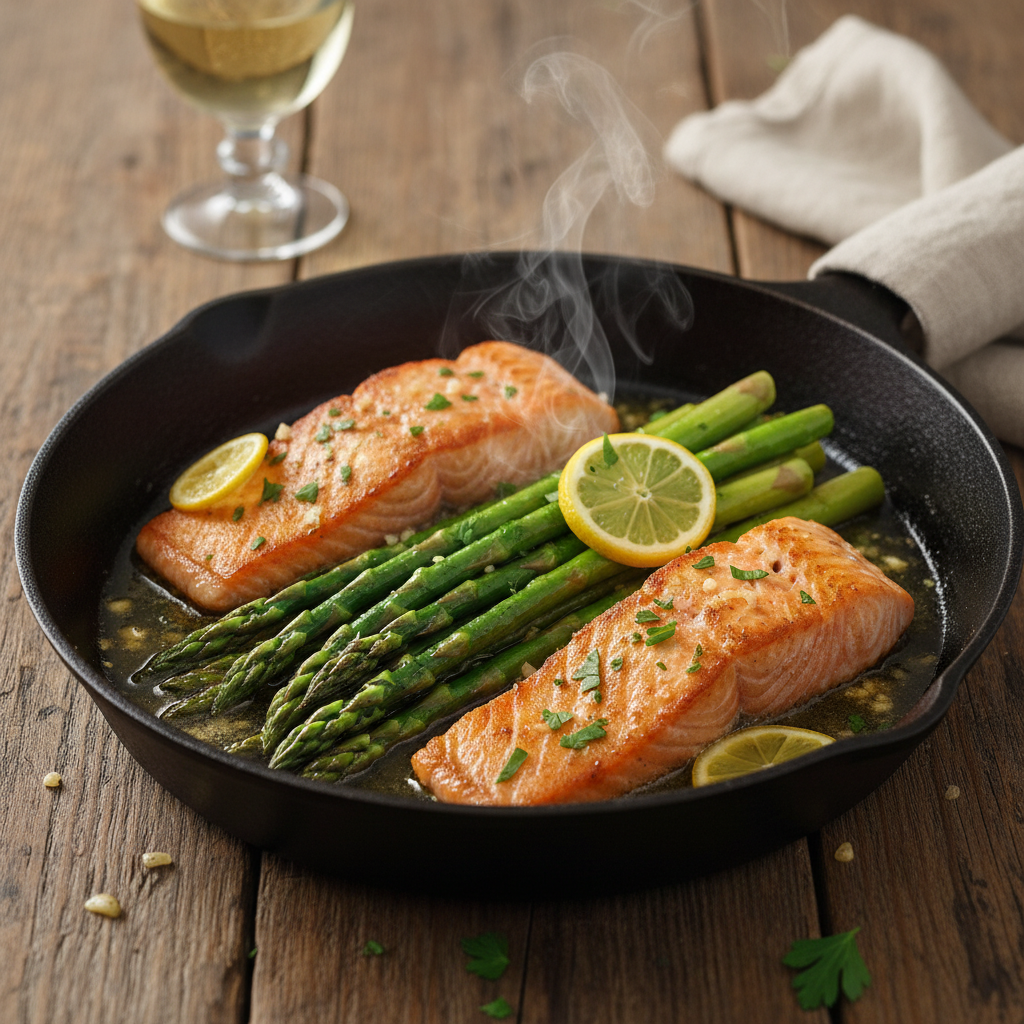
One-Pan Garlic Butter Salmon With Asparagus (Low Carb & Keto)
Garlic Butter Salmon With Asparagus Low Carb Recipe
This restaurant-quality Garlic Butter Salmon with Asparagus comes together in a single skillet in under 20 minutes. Featuring flaky, perfectly seared salmon fillets and crisp-tender asparagus swimming in a rich, lemon-garlic butter sauce, it is the ultimate healthy weeknight dinner that creates zero fuss and maximum flavor.
10 minutes
15 minutes
25 minutes
4 servings
Main Course
Stovetop / Pan-Sear
American / Continental
Gluten-Free
In the world of weeknight cooking, finding the holy grail of recipes—one that is nutritious, incredibly fast, low in carbohydrates, and yet tastes like a cheat meal—can be a challenge. This Garlic Butter Salmon with Asparagus recipe is precisely that culinary unicorn. Imagine coming home after a long, exhausting day to the aroma of sizzling garlic and rich butter, knowing that a gourmet-level meal will be on the table in less time than it takes to order delivery. This dish celebrates the natural richness of Atlantic salmon, enhancing its buttery texture with a sauce that punches well above its weight class. The combination of lemon, garlic, and fresh herbs cuts through the natural oils of the fish, creating a balanced palate that is both bright and savory. Beyond the incredible flavor profile, this recipe is a champion of the low-carb and Keto lifestyles, proving that dietary restrictions do not mean sacrificing culinary joy. The asparagus acts as the perfect vessel for the excess garlic butter, providing a satisfying crunch that contrasts beautifully with the tender, flaky fish. Whether you are cooking for a romantic date night, a family dinner, or meal-prepping for a healthy week ahead, this one-pan wonder minimizes cleanup while maximizing satisfaction. It is not just a recipe; it is a strategy for eating well without the stress.
History & Origins
While the specific combination of ‘Garlic Butter Salmon with Asparagus’ as a named dish is a product of modern, health-conscious home cooking, its roots run deep into the history of coastal cuisines and classical French techniques. Salmon has been a staple protein for indigenous populations across the Northern Hemisphere for thousands of years, revered for its sustenance and flavor. In the Pacific Northwest of America, salmon was the lifeblood of the ecosystem and the people, often roasted over open fires on cedar planks. However, the technique utilized in this recipe—pan-searing in butter—borrows heavily from the French culinary tradition of ‘Sole Meunière,’ where fish is dredged and cooked in brown butter, lemon, and parsley. This method of using fat and acid to highlight the delicate taste of seafood is timeless. Asparagus, on the other hand, has a history as rich as the sauce in this dish. Cultivated by the Romans and Greeks, it was often prized as a delicacy and an aphrodisiac. The pairing of asparagus with hollandaise or butter sauces is a European classic that dates back centuries. The modern iteration of combining these two distinct elements into a ‘one-pan’ or ‘sheet pan’ meal is a result of the late 20th and early 21st-century American desire for convenience. As dual-income households became the norm, the elaborate multi-course meals of the past gave way to efficient, nutritious, and consolidated cooking methods. This recipe represents the perfect marriage of ancient ingredients, classical French flavor profiles, and the modern American demand for speed and low-carbohydrate nutrition.
Why This Recipe Works
This recipe succeeds because it masters the delicate balance of texture, temperature, and flavor chemistry. First, the cooking method: pan-searing the salmon in a hot skillet creates the Maillard reaction, a chemical reaction between amino acids and reducing sugars that gives browned food its distinctive flavor. This seared crust provides a necessary textural contrast to the fatty, tender interior of the fish. Unlike baking, which can sometimes result in steamed or soggy fish, searing locks in moisture immediately. Secondly, the fat usage is strategic. Salmon is an oily fish, rich in omega-3s. By cooking it in butter, we are matching fat with fat, which might seem excessive, but the addition of lemon juice is the scientific key. The citric acid cuts through the lipid richness, cleansing the palate and making the dish feel lighter than it actually is. The garlic acts as an aromatic bridge, uniting the vegetal, grassy notes of the asparagus with the savory depth of the salmon. Furthermore, asparagus and salmon have very similar cooking times when the asparagus is medium-thickness. This allows for the ‘one-pan’ technique to work flawlessly; by the time the asparagus is crisp-tender, the salmon is resting and finishing its carry-over cooking, ensuring that neither component is overdone. It is a symphony of timing and flavor balancing that yields consistent, restaurant-quality results every time.
Why You’ll Love This Recipe
- ✓Ready in under 25 minutes from fridge to table.
- ✓One-pan cooking means minimal cleanup.
- ✓Packed with heart-healthy Omega-3 fatty acids.
- ✓Keto, Low-Carb, and Gluten-Free compliant.
- ✓Restaurant-quality presentation with simple ingredients.
- ✓Versatile sauce that works with various vegetables.
Equipment You’ll Need
- ✓Large Cast Iron Skillet or Non-Stick Pan
- ✓Kitchen Tongs
- ✓Chef’s Knife
- ✓Cutting Board
- ✓Garlic Press
- ✓Measuring Spoons
Ingredients
- ✓4 Salmon fillets (approx 6oz each), skin-on or off
- ✓1 lb Asparagus, woody ends trimmed
- ✓1 tablespoon Olive Oil
- ✓4 tablespoons Unsalted Butter, divided
- ✓4 cloves Garlic, minced
- ✓1/4 cup Vegetable Broth or Dry White Wine
- ✓1 tablespoon Fresh Lemon Juice
- ✓1 teaspoon Lemon Zest
- ✓Salt and Freshly Cracked Black Pepper to taste
- ✓1 tablespoon Fresh Parsley, chopped
- ✓Optional: Red pepper flakes for heat
Instructions
- 1. PREPARE THE SALMON: Remove salmon from the refrigerator about 15 minutes before cooking to let it come closer to room temperature. Pat the fillets completely dry with paper towels. Season generously with salt and black pepper on all sides.
- 2. SEAR THE SALMON: Heat the olive oil and 1 tablespoon of butter in a large cast-iron skillet over medium-high heat. Once the butter is foaming and hot, place the salmon fillets in the pan, flesh-side down (if skin-on, start skin-side up). Sear for 3-4 minutes until a golden crust forms. Flip carefully and cook for another 2-3 minutes on the skin side until the salmon is opaque and flakes easily. Remove salmon from the pan and set aside on a plate.
- 3. COOK THE ASPARAGUS: In the same pan (do not wipe it out), add the remaining 3 tablespoons of butter. Once melted, add the minced garlic and sauté for 30 seconds until fragrant, being careful not to burn it. Add the asparagus spears and toss to coat in the garlic butter. Season with a pinch of salt and pepper.
- 4. DEGLAZE AND SIMMER: Pour in the vegetable broth (or white wine) and lemon juice. Allow the liquid to bubble and reduce slightly while the asparagus cooks, about 3-5 minutes depending on thickness, until crisp-tender.
- 5. COMBINE AND SERVE: Push the asparagus to the side or arrange it to make room. Return the salmon fillets to the pan, nesting them among the asparagus to reheat slightly and soak up the sauce. Spoon the garlic butter sauce over the fish. Garnish with lemon zest, fresh parsley, and red pepper flakes if using. Serve immediately straight from the skillet.
Expert Cooking Tips
- ✓Pat the salmon very dry before searing; moisture creates steam and prevents that delicious golden crust from forming.
- ✓Don’t overcrowd the pan; if your skillet is too small, cook the salmon in two batches to ensure it sears rather than steams.
- ✓Snap the asparagus ends naturally; bend the spear near the bottom and it will snap exactly where the woody part ends.
- ✓Use fresh garlic instead of jarred; the flavor difference in a simple sauce like this is monumental.
- ✓If using skin-on salmon, sear the skin side last if you want to serve it crispy side up, or sear it first to render the fat. Most prefer searing flesh side first for presentation.
- ✓Watch the heat when adding garlic; burnt garlic tastes bitter and can ruin the entire sauce.
- ✓To check for doneness, press the salmon gently; it should separate into flakes along the white lines.
Substitutions and Variations
This recipe is highly adaptable to your pantry and dietary needs. If you are strictly dairy-free or Paleo, you can swap the butter for Ghee or additional high-quality olive oil, though the flavor profile will be less rich. For the protein, this garlic butter method works exceptionally well with other firm fish like Trout, Halibut, Cod, or even Shrimp (adjust cooking times accordingly). If asparagus isn’t in season or you simply aren’t a fan, fresh green beans, broccoli florets, or zucchini slices make excellent low-carb vegetable substitutes. For the liquid component, dry white wine (like Pinot Grigio or Sauvignon Blanc) adds a sophisticated depth, but vegetable or chicken broth works perfectly for an alcohol-free version. You can also omit the broth entirely and just use extra lemon juice for a tarter finish.
Common Mistakes to Avoid
The most common mistake with this dish is overcooking the salmon. Salmon continues to cook even after you take it off the heat (carry-over cooking). If you see white albumin (protein) oozing out heavily, it is likely overdone. Take it off the heat when the center is still slightly translucent pink. Another error is burning the garlic. Garlic burns very quickly in hot fat; ensure you add it only after the salmon is removed and the heat is managed, or add it with the asparagus rather than into the empty hot oil. Finally, using wet asparagus can water down your sauce. Ensure your vegetables are washed and thoroughly dried before they hit the pan to maintain the integrity of the rich butter sauce.
Serving Suggestions
While this dish is a complete meal on its own, it pairs beautifully with a variety of sides. To keep it low-carb and Keto, serve it over a bed of cauliflower rice, mashed cauliflower, or zucchini noodles to soak up the extra garlic butter sauce. A crisp green salad with a vinaigrette dressing offers a nice cold contrast to the warm, rich fish. If you are not restricting carbs, this is divine served alongside roasted baby potatoes, fluffy jasmine rice, or crusty baguette slices to mop up the pan juices. For a beverage, a chilled glass of Sauvignon Blanc or Chardonnay complements the buttery lemon flavors perfectly.
Storage and Reheating Tips
This dish is best enjoyed fresh, but leftovers can be stored in an airtight container in the refrigerator for up to 3 days. To reheat, do not use the microwave if possible, as it tends to dry out the fish and make the asparagus rubbery. Instead, warm it gently in a skillet over low heat with a splash of water or broth to re-emulsify the butter sauce. If you must use a microwave, use 50% power in short bursts. Freezing is not recommended for this specific recipe, as the texture of cooked asparagus becomes mushy upon thawing and the creaminess of the butter sauce may separate.
Nutrition Facts (Estimated)
| Serving Size | 1 fillet with asparagus |
| Calories | 440 |
| Fat | 32g |
| Saturated Fat | 14g |
| Unsaturated Fat | 15g |
| Trans Fat | 0g |
| Cholesterol | 110mg |
| Sodium | 480mg |
| Carbohydrates | 6g |
| Fiber | 3g |
| Sugar | 2g |
| Protein | 34g |
Frequently Asked Questions
Can I use frozen salmon for this recipe?
Yes, absolutely. Just ensure the salmon is completely thawed in the refrigerator overnight and patted extremely dry before cooking. Cooking from frozen will result in uneven textures.
How do I know when the salmon is fully cooked?
The salmon is done when it turns opaque pink and flakes easily with a fork. The internal temperature should reach 125°F to 130°F for medium-cooked salmon. The FDA recommends 145°F, but this often results in dry fish.
Is this recipe suitable for a Keto diet?
Yes, this is a perfect Keto recipe. It is high in healthy fats and protein while being very low in carbohydrates.
What is the white stuff coming out of the salmon?
That is albumin, a protein that coagulates when heated. It is harmless and safe to eat. It appears more frequently if the fish is cooked too quickly or overcooked.
Can I bake this instead of using the stovetop?
Yes. You can arrange the salmon and asparagus on a sheet pan, drizzle with the butter mixture, and bake at 400°F (200°C) for 10-12 minutes.
Can I use dried herbs instead of fresh?
Fresh parsley is best for the finish, but you can use dried herbs. Use 1/3 of the amount called for if using dried, as they are more potent.
Why is my sauce separating?
Butter sauces can break if the heat is too high. Keep the heat at medium-low when making the sauce, and the lemon juice helps emulsify it.
Should I remove the skin before cooking?
It is personal preference. The skin helps hold the fish together and protects the flesh from the high heat. You can easily peel it off after cooking if you don’t like eating it.
Conclusion
There are few recipes that manage to check every box: healthy, fast, delicious, and beautiful. This Garlic Butter Salmon with Asparagus is a testament to the fact that eating well doesn’t require hours in the kitchen or a culinary degree. It brings the sophistication of a seafood restaurant right into your home kitchen with minimal effort. Whether you are a seasoned Keto veteran or just looking for a lighter way to enjoy dinner without the carb coma, this dish is sure to become a regular in your weekly rotation. So, grab that skillet, melt that butter, and get ready to enjoy a meal that nourishes both your body and your taste buds.