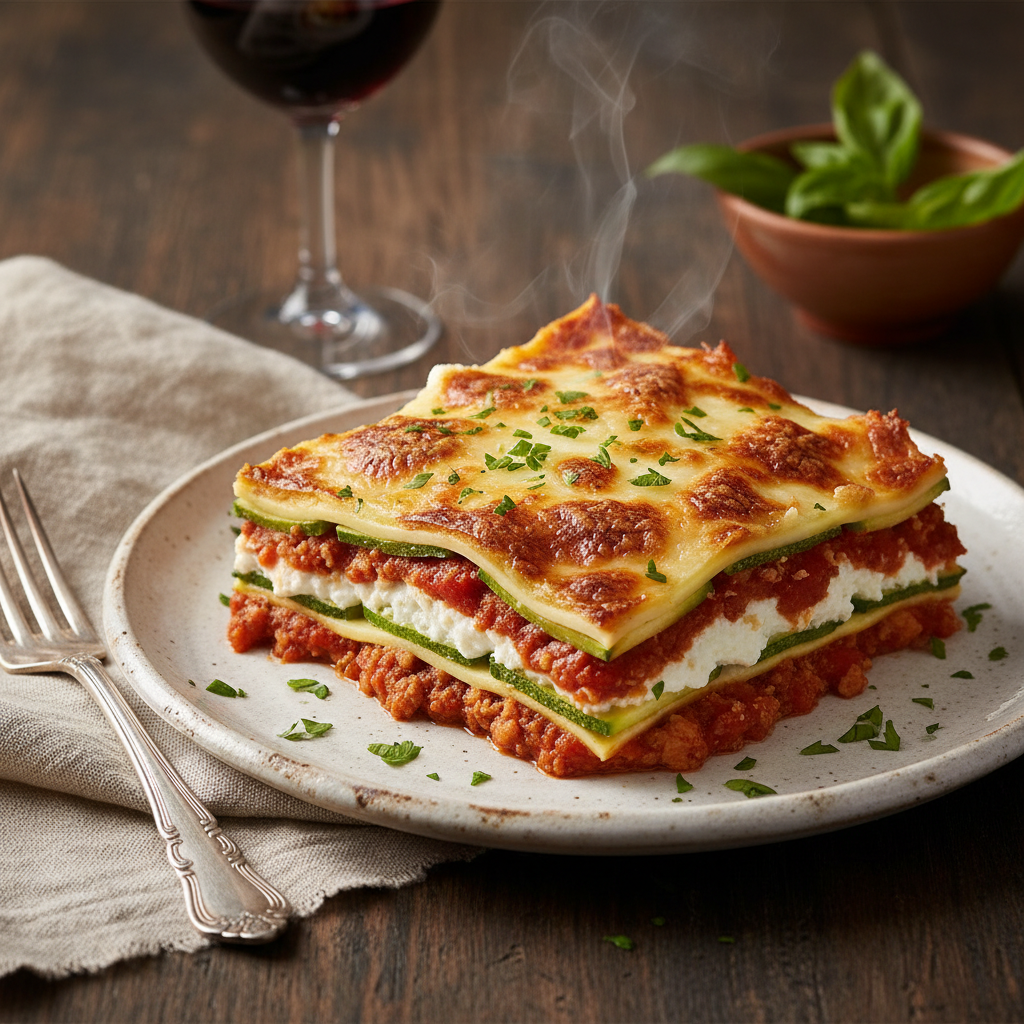
The Ultimate Keto Zucchini Lasagna with Savory Turkey Meat Sauce
Zucchini Lasagna With Turkey Meat Sauce Keto Recipe
Craving Italian comfort food without the carbs? This Keto Zucchini Lasagna features layers of tender roasted zucchini noodles, rich turkey meat sauce, and gooey melted cheese. It is the perfect gluten-free dinner that delivers all the classic lasagna flavors you love.
45 minutes
45 minutes
1 hour 30 minutes
9 servings
Main Course
Baking
Italian-American
Keto
There is something undeniably comforting about a bubbling pan of lasagna fresh out of the oven. The aroma of roasting tomatoes, melting mozzarella, and savory herbs fills the kitchen, promising a meal that warms the soul. However, for those of us following a ketogenic or low-carb lifestyle, traditional pasta sheets are off the table. Enter the zucchini lasagna, a brilliant culinary innovation that transforms the humble summer squash into the star of the show. By replacing wheat noodles with thinly sliced zucchini, we not only slash the carbohydrate count drastically but also introduce a fresh, light texture that perfectly balances the richness of the cheese and meat sauce. This specific recipe elevates the standard low-carb lasagna by utilizing a robust turkey meat sauce. Ground turkey, often considered a leaner alternative to beef, acts as a blank canvas, absorbing the bold flavors of garlic, onions, basil, and oregano. When prepared correctly, it mimics the heartiness of traditional Bolognese without the heavy grease. The result is a dish that feels indulgent and satisfying yet leaves you feeling energized rather than weighed down. Whether you are cooking for a strict keto dieter, someone with gluten sensitivity, or just trying to sneak more vegetables onto your family’s plates, this zucchini lasagna is a guaranteed winner. It captures the essence of Italian home cooking—love, patience, and quality ingredients—while aligning perfectly with modern dietary needs. Get ready to redefine what lasagna means to you.
History & Origins
The history of lasagna is as layered as the dish itself. Its origins can be traced back to Ancient Greece, where a dish called ‘laganon’ consisted of flat sheets of pasta dough sliced into strips. However, the lasagna we recognize today is distinctly Italian, originating from the region of Emilia-Romagna during the Middle Ages. Traditionally, ‘Lasagne al Forno’ involves layers of egg pasta, ragù (meat sauce), béchamel sauce, and Parmigiano-Reggiano cheese. As Italian immigrants brought their culinary traditions to America in the late 19th and early 20th centuries, the recipe evolved. The American version often substituted the delicate béchamel for ricotta cheese and mozzarella, creating the gooey, cheesy profile many of us grew up with. The shift towards vegetable-based ‘noodles’ is a much more recent phenomenon, born out of the health-conscious movements of the late 20th and early 21st centuries. With the rise of the Atkins diet in the 90s and the subsequent explosion of the Keto and Paleo lifestyles, home cooks and chefs began experimenting with alternatives to wheat pasta. Vegetables like eggplant and zucchini became natural substitutes due to their shape and mild flavor. Zucchini lasagna, specifically, gained traction as a lighter, summer-friendly alternative that allowed people to enjoy the structure and flavors of lasagna without the gluten or high carb content. Today, it stands on its own not just as a substitute, but as a beloved dish in the modern low-carb canon.
Why This Recipe Works
The biggest challenge with zucchini lasagna is moisture management. Zucchini is composed of approximately 95% water, and if treated like dry pasta, it will release that liquid during baking, resulting in a soupy, unappetizing mess. This recipe works because it employs a crucial two-step process to extract moisture before assembly: salting and pre-baking. By thinly slicing the zucchini and salting it, we draw out excess water through osmosis. We then take it a step further by roasting the slices briefly in the oven. This not only dries them out, ensuring distinct, firm layers in the final dish, but also concentrates the zucchini flavor, adding a subtle sweetness that pairs beautifully with the acidic tomato sauce. Furthermore, the choice of turkey for the meat sauce is strategic. Turkey has a lighter profile than beef, which prevents the dish from becoming overly heavy, a common complaint with meat-heavy keto casseroles. We aggressively season the turkey with fennel seeds and Italian herbs to replicate the savory punch of Italian sausage. The cheese mixture uses a combination of ricotta for creaminess, an egg for binding, and plenty of mozzarella for that essential cheese pull. The ratios in this recipe are meticulously calculated to ensure every bite has the perfect balance of vegetable, meat, and cheese, proving that low-carb cooking does not require sacrificing texture or flavor.
Why You’ll Love This Recipe
- ✓Low-carb and Keto-friendly with only 8g net carbs per serving
- ✓High-protein turkey sauce keeps you full for longer
- ✓Gluten-free and grain-free for sensitive stomachs
- ✓Uses a special method to prevent watery lasagna
- ✓Perfect for meal prep and freezes beautifully
- ✓Hidden vegetables make it great for picky eaters
Equipment You’ll Need
- ✓Mandoline slicer or sharp chef’s knife
- ✓Large baking sheet
- ✓Paper towels
- ✓9×13 inch baking dish
- ✓Large skillet or sauté pan
- ✓Mixing bowls
- ✓Aluminum foil
Ingredients
- ✓4 large zucchini (approx. 2.5 lbs), ends trimmed
- ✓1 tbsp kosher salt (for sweating zucchini)
- ✓1 lb ground turkey (93% lean)
- ✓1 tbsp olive oil
- ✓1 small yellow onion, diced
- ✓3 cloves garlic, minced
- ✓24 oz marinara sauce (no sugar added for Keto)
- ✓1 tsp dried oregano
- ✓1 tsp dried basil
- ✓1/2 tsp fennel seeds (optional, for sausage flavor)
- ✓15 oz ricotta cheese (whole milk)
- ✓1 large egg
- ✓1/4 cup grated Parmesan cheese
- ✓1/4 cup fresh parsley, chopped
- ✓3 cups shredded mozzarella cheese, divided
- ✓Salt and black pepper to taste
Instructions
- Preheat your oven to 400°F (200°C). Line two large baking sheets with parchment paper.
- Slice the zucchini lengthwise into 1/8-inch thick strips using a mandoline slicer for uniformity. Lay the strips out on paper towels and sprinkle strictly with the kosher salt. Let them sit for 15-20 minutes to sweat out the moisture.
- While the zucchini sweats, prepare the meat sauce. Heat olive oil in a large skillet over medium-high heat. Add the diced onion and cook until softened, about 3-4 minutes. Add the garlic and cook for another minute until fragrant.
- Add the ground turkey to the skillet. Break it apart with a spatula and cook until browned and no longer pink. Drain any excess fat if necessary.
- Stir in the marinara sauce, oregano, basil, fennel seeds, salt, and pepper. Simmer on low heat for 10-15 minutes to thicken the sauce. It should be thick, not watery.
- Pat the zucchini slices dry with fresh paper towels to remove the salt and water. Arrange them in a single layer on the prepared baking sheets. Bake for 10-15 minutes to dry them out further. Remove and reduce oven temperature to 375°F (190°C).
- In a medium bowl, mix the ricotta cheese, egg, Parmesan cheese, and chopped parsley until well combined.
- To assemble: Spread a thin layer of meat sauce on the bottom of a 9×13 inch baking dish. Top with a layer of roasted zucchini slices, overlapping slightly.
- Spread half of the ricotta mixture over the zucchini. Top with about 1 cup of mozzarella cheese and half of the remaining meat sauce.
- Repeat the layers: zucchini, remaining ricotta, 1 cup mozzarella, remaining meat sauce. Finish with a final layer of zucchini (if you have any left) and top generously with the remaining 1 cup of mozzarella cheese.
- Cover the dish with foil (tent it slightly so it doesn’t stick to the cheese) and bake for 30 minutes.
- Remove the foil and bake for another 15 minutes, or until the cheese is bubbly and golden brown. For extra browning, broil for 2-3 minutes at the end.
- Let the lasagna rest for at least 15-20 minutes before cutting. This is crucial for the layers to set.
Expert Cooking Tips
- ✓Use a mandoline slicer to ensure all zucchini noodles are the same thickness, which helps them cook evenly.
- ✓Do not skip the sweating and roasting steps for the zucchini; this is the secret to avoiding a watery dish.
- ✓Use a marinara sauce with no added sugar to keep the carb count low.
- ✓If you prefer a crispier top, broil the lasagna for the last 2-3 minutes, but watch it closely to prevent burning.
- ✓Letting the lasagna rest is mandatory; if you cut into it immediately, the layers will slide apart.
Substitutions and Variations
This recipe is incredibly versatile. If you are not a fan of ground turkey, you can easily swap it for ground beef, ground chicken, or even mild Italian sausage for a more traditional flavor. For a vegetarian version, simply omit the meat and bulk up the sauce with chopped mushrooms or spinach. If you are dairy-free, you can use almond milk ricotta and a high-quality vegan mozzarella that melts well. Those who do not strictly follow keto can use low-fat cottage cheese instead of ricotta for a higher protein punch, though blend it first for a smoother texture. You can also substitute the zucchini with thinly sliced eggplant, though you will need to follow the same sweating process to remove bitterness and moisture. Fresh herbs can always be used in place of dried; just remember the ratio is generally 3:1 (fresh to dried).
Common Mistakes to Avoid
The most common mistake is under-preparing the zucchini. Many people try to save time by using raw zucchini slices, which releases a cup or more of water into the casserole dish, turning the lasagna into soup. Another mistake is using a sauce that is too thin; ensure you simmer your marinara long enough to be robust and thick. Over-salting can also occur since we salt the zucchini to sweat it; make sure to wipe off the excess salt or reduce the salt added to the sauce. Finally, slicing into the lasagna the moment it comes out of the oven is a recipe for disaster. The cheese and juices need time to redistribute and solidify slightly, or you will end up with a messy plate rather than a clean slice.
Serving Suggestions
This rich and cheesy lasagna pairs perfectly with a crisp, acidic side salad to cut through the heaviness. A simple arugula salad with lemon vinaigrette and shaved parmesan is an excellent choice. For a keto-friendly bread option, serve with garlic butter fathead dough breadsticks or roasted broccoli rabe with chili flakes. If you are not strictly keto, a slice of crusty garlic bread is the traditional accompaniment. A glass of medium-bodied red wine, such as a Chianti or Sangiovese, complements the tomato and turkey flavors beautifully.
Storage and Reheating Tips
Leftover zucchini lasagna stores wonderfully and often tastes even better the next day as the flavors meld. Store leftovers in an airtight container in the refrigerator for up to 4 days. To reheat, place a slice in the microwave for 2-3 minutes or warm it in the oven at 350°F covered with foil until heated through. This dish is also freezer-friendly. You can freeze the baked lasagna (cooled completely) in individual portions wrapped in plastic wrap and foil for up to 3 months. Thaw overnight in the fridge before reheating. Alternatively, you can assemble the lasagna, freeze it unbaked, and then bake it from frozen, adding about 20-30 minutes to the cooking time.
Nutrition Facts (Estimated)
| Serving Size | 1 slice |
| Calories | 340 |
| Fat | 22g |
| Saturated Fat | 10g |
| Unsaturated Fat | 0g |
| Trans Fat | 0g |
| Cholesterol | 95mg |
| Sodium | 680mg |
| Carbohydrates | 10g |
| Fiber | 2g |
| Sugar | 4g |
| Protein | 28g |
Frequently Asked Questions
Can I use yellow squash instead of zucchini?
Yes, yellow summer squash has a very similar texture and water content to zucchini and works perfectly in this recipe. You can even mix both for a colorful dish.
Why is my zucchini lasagna watery?
Watery lasagna is usually caused by skipping the sweating and roasting steps for the zucchini. Zucchini releases a lot of water when cooked, so you must extract it beforehand.
Can I make this recipe ahead of time?
Absolutely. You can assemble the entire lasagna and refrigerate it for up to 24 hours before baking. You may need to add 5-10 minutes to the baking time if it goes into the oven cold.
Is marinara sauce keto-friendly?
Most store-bought marinara sauces contain added sugar. Look for brands labeled ‘no sugar added’ or ‘keto-friendly’, or check the label to ensure the carb count fits your macros.
How do I make the ricotta filling smoother?
If you find ricotta too grainy, you can whip it in a food processor for a few seconds before mixing in the egg and parmesan. This creates a luxurious, creamy texture.
Can I leave out the egg?
The egg acts as a binder for the cheese layer, helping it stay in place when sliced. If you have an egg allergy, you can omit it, but the cheese layer might be slightly looser.
Do I have to peel the zucchini?
No, peeling is not necessary. The skin provides texture, color, and nutrients. It softens sufficiently during baking.
What is the best way to slice zucchini thinly?
A mandoline slicer is the best tool for consistent, thin slices. If you don’t have one, a very sharp chef’s knife and a steady hand will work, but try to keep them uniform.
Can I use ground beef instead of turkey?
Yes, ground beef is a 1:1 substitution. Use 85/15 or 90/10 lean beef to avoid excessive grease, or drain the fat well after browning.
Is this recipe gluten-free?
Yes, as long as you ensure your marinara sauce and spices are certified gluten-free, this recipe is naturally gluten-free since it uses vegetables instead of wheat pasta.
Conclusion
This Keto Zucchini Lasagna with Turkey Meat Sauce proves that you don’t need processed carbs to enjoy a hearty, soul-satisfying meal. By taking the extra care to prep the zucchini properly and building robust flavors into the turkey sauce, you create a dish that stands tall against any traditional pasta lasagna. It is a meal that brings people together, offering warmth and comfort without compromising your health goals. Whether for a Sunday family dinner or a week of meal-prepped lunches, this recipe is sure to become a staple in your kitchen rotation. Enjoy the layers of cheesy goodness!