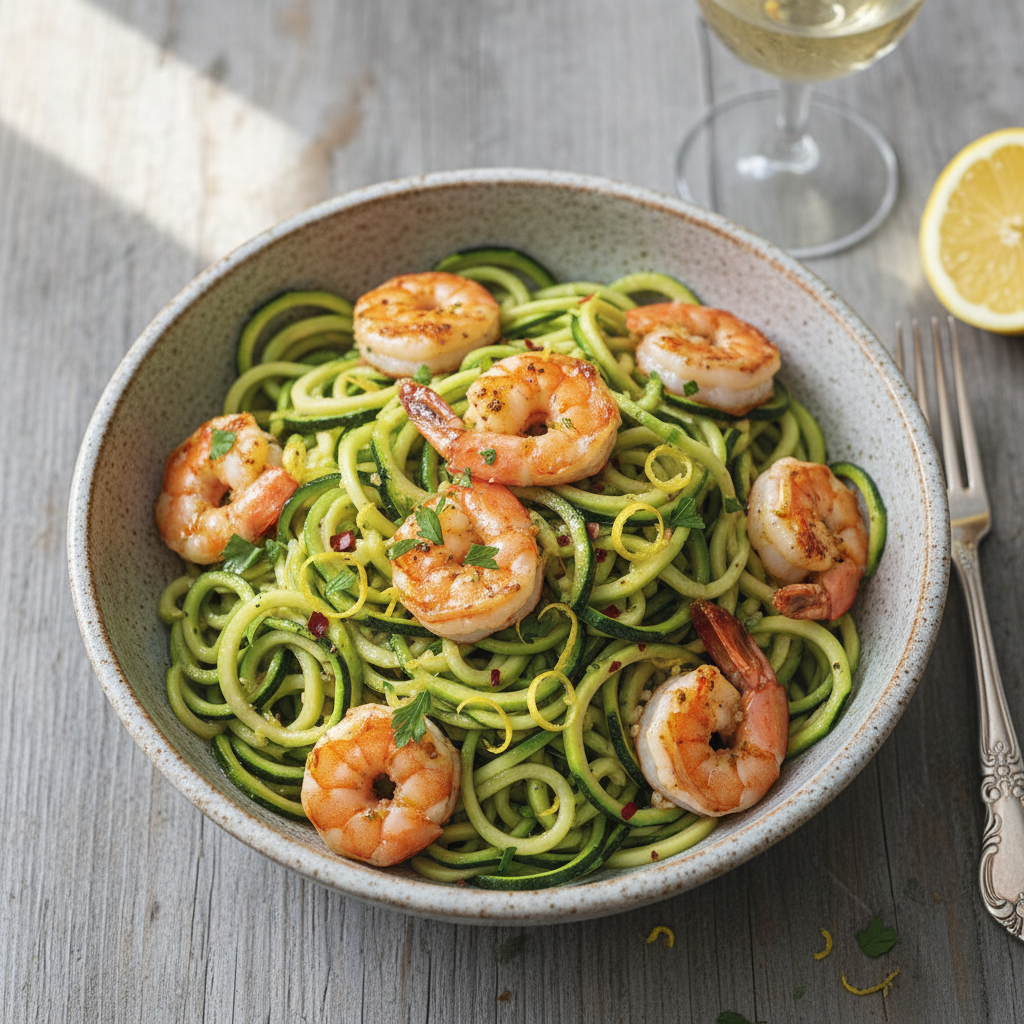
Garlic Butter Low Carb Shrimp Scampi with Zucchini Noodles
Low Carb Shrimp Scampi With Zucchini Noodles Recipe
This vibrant Low Carb Shrimp Scampi with Zucchini Noodles offers all the garlicky, buttery indulgence of the Italian-American classic without the heavy pasta. Ready in under 30 minutes, it is a fresh, keto-friendly dinner that pairs succulent shrimp with tender-crisp vegetable spirals for a guilt-free meal.
15 minutes
10 minutes
25 minutes
4 servings
Main Course
Stovetop
Italian-American
Gluten-Free
There are few aromas in the culinary world as instantly captivating as garlic sizzling in butter. It is a scent that promises comfort, richness, and a touch of indulgence. For many, Shrimp Scampi is the ultimate expression of this flavor profile—a dish defined by its bright lemon acidity, the depth of dry white wine, and the luxurious mouthfeel of emulsified butter coating tender shellfish. However, traditional pasta can leave you feeling heavy and sluggish, not to mention the carbohydrate load that doesn’t align with keto or low-carb lifestyles. Enter this Low Carb Shrimp Scampi with Zucchini Noodles, a recipe designed to satisfy those deep cravings for Italian comfort food while keeping your meal light, fresh, and nutrient-dense. The magic lies in the zucchini noodles, or ‘zoodles,’ which act as the perfect vessel for the rich scampi sauce. unlike wheat pasta which absorbs sauce, zucchini noodles get coated in it, offering a juicy crunch that balances the richness of the butter. This dish is not just a compromise for dieters; it is a celebration of fresh produce and high-quality seafood. We build flavor in layers, starting with searing the shrimp to preserve their snap, then deglazing the pan to lift those caramelized bits, and finally tossing the noodles just long enough to warm them through without turning them mushy. Whether you are strictly keto, gluten-free, or just looking to incorporate more vegetables into your diet, this recipe transforms a weeknight dinner into a restaurant-quality experience that feels elegant yet remains incredibly simple to execute.
History & Origins
The history of Shrimp Scampi is a fascinating tale of culinary evolution and immigrant adaptation. The word ‘scampi’ actually refers to a specific crustacean, the Nephrops norvegicus, also known as the Dublin Bay Prawn or the Norway Lobster (langoustine). In Italy, these small, lobster-like creatures were traditionally prepared simply—sautéed with olive oil, garlic, onion, and white wine. When Italian immigrants began arriving in the United States in the late 19th and early 20th centuries, they sought to recreate the comforting tastes of home. However, langoustines were not readily available in American markets. Instead, they found an abundance of shrimp in the waters of the Gulf Coast and Atlantic. Adapting to their new environment, these cooks substituted shrimp for scampi, but kept the name, eventually leading to the redundant but affectionate moniker ‘Shrimp Scampi.’ Over decades, the dish evolved from a simple sauté into a richer, butter-heavy pasta sauce, becoming a staple of Italian-American cuisine alongside dishes like Chicken Parmesan. The introduction of zucchini noodles is a much more modern twist, born out of the health-conscious movements of the early 21st century. As the spiralizer became a must-have kitchen gadget around 2014, home cooks discovered that zucchini could mimic the texture of spaghetti al dente. This fusion of a century-old Italian-American classic with modern low-carb ingenuity represents the best of food culture: respecting tradition while adapting to contemporary nutritional needs.
Why This Recipe Works
This recipe succeeds where many low-carb imitations fail because it specifically addresses the high water content of zucchini. A common pitfall with zoodles is that they release moisture when cooked, turning a rich sauce into a watery soup. To combat this, our method involves salting the zucchini spirals beforehand to draw out excess liquid, or cooking them very briefly over high heat. By searing the shrimp separately and removing them from the pan, we ensure they remain plump and juicy, avoiding the rubbery texture that comes from overcooking. The sauce itself relies on a classic French technique called ‘monter au beurre,’ where cold butter is whisked into the hot wine and lemon reduction at the end. This creates a glossy, emulsified sauce that clings to the vegetables rather than separating into a greasy pool. The acidity of the lemon juice and white wine cuts through the fat of the butter, while the red pepper flakes add a necessary background heat that wakes up the palate. The result is a dish that feels cohesive, with textures that complement rather than fight each other—the snap of the shrimp, the slight crunch of the zucchini, and the velvet finish of the sauce.
Why You’ll Love This Recipe
- ✓Ready in under 30 minutes, perfect for busy weeknights.
- ✓Low carb and keto-friendly with only 6g net carbs per serving.
- ✓High in protein and packed with vitamins from fresh zucchini.
- ✓Uses a classic emulsification technique for a restaurant-quality sauce.
- ✓Versatile—can be made spicy or mild depending on preference.
Equipment You’ll Need
- ✓Spiralizer or julienne peeler
- ✓Large skillet or sauté pan
- ✓Tongs
- ✓Chef’s knife
- ✓Cutting board
- ✓Measuring spoons and cups
Ingredients
- ✓4 medium zucchini, ends trimmed
- ✓1.5 lbs large shrimp, peeled and deveined (tails on or off)
- ✓3 tablespoons olive oil, divided
- ✓4 tablespoons unsalted butter, divided
- ✓4 cloves garlic, minced
- ✓1/4 teaspoon red pepper flakes (optional)
- ✓1/2 cup dry white wine (like Pinot Grigio or Sauvignon Blanc)
- ✓1/4 cup fresh lemon juice
- ✓1 teaspoon lemon zest
- ✓Salt and freshly ground black pepper to taste
- ✓1/4 cup chopped fresh parsley
- ✓Freshly grated Parmesan cheese (optional, for garnish)
Instructions
- Using a spiralizer, process the zucchini into noodle shapes. If you do not have a spiralizer, use a julienne peeler. Place the zoodles in a colander and sprinkle lightly with salt. Let them sit for 10 minutes to release excess water, then pat them very dry with paper towels.
- While the zucchini sits, pat the shrimp dry with paper towels and season generously with salt and black pepper.
- Heat 1 tablespoon of olive oil and 1 tablespoon of butter in a large skillet over medium-high heat. Once the butter foams, add the shrimp in a single layer. Cook for 1-2 minutes per side until pink and opaque. Do not overcrowd the pan; cook in batches if necessary. Remove shrimp and set aside on a plate.
- In the same skillet, add the remaining 2 tablespoons of olive oil. Add the minced garlic and red pepper flakes. Sauté for about 30-60 seconds until the garlic is fragrant but not browned.
- Pour in the white wine and lemon juice to deglaze the pan, scraping up any browned bits from the bottom with a wooden spoon. Let the liquid simmer and reduce by half, which should take about 2-3 minutes.
- Reduce the heat to low. Whisk in the remaining 3 tablespoons of cold butter, one tablespoon at a time, until melted and the sauce is glossy and thickened.
- Add the zucchini noodles to the skillet and toss with tongs to coat in the sauce. Cook for only 1-2 minutes—just enough to warm them through. Overcooking will make them watery.
- Return the cooked shrimp and any accumulated juices to the pan. Toss everything together gently to combine.
- Remove from heat immediately. Stir in the lemon zest and fresh parsley.
- Serve immediately, garnished with extra lemon wedges and freshly grated Parmesan cheese if desired.
Expert Cooking Tips
- ✓Pat the shrimp very dry before searing to ensure they get a nice golden color rather than steaming.
- ✓Do not overcook the zucchini noodles; they should retain a slight ‘al dente’ crunch.
- ✓Use cold butter when finishing the sauce to help create a stable, creamy emulsion.
- ✓If you prefer a non-alcoholic version, substitute the white wine with chicken broth or vegetable broth.
- ✓Prep all your ingredients before you start cooking, as this dish comes together very quickly.
Substitutions and Variations
This recipe is quite flexible. If you are not a fan of zucchini or want to switch things up, you can use yellow summer squash, butternut squash noodles (though these require a slightly longer cook time), or even shirataki noodles for a zero-carb option. For the protein, while shrimp is traditional, this scampi sauce works beautifully with scallops, diced chicken breast, or even chickpeas for a vegetarian version. If you are dairy-free, you can substitute the butter with a high-quality vegan butter alternative or simply use more olive oil, though the sauce will be less creamy. For those avoiding alcohol, chicken stock with a splash of white wine vinegar is an excellent substitute for the dry white wine. Finally, if you don’t have fresh parsley, fresh basil or dill can offer a different but equally delicious herbal note.
Common Mistakes to Avoid
The most common mistake with zucchini noodles is overcooking them. Zucchini is roughly 95% water, and heat breaks down its cell walls, releasing that water into your sauce. Treat them like delicate fresh pasta and only cook them for a minute or two. Another mistake is burning the garlic. Garlic turns bitter very quickly when browned too much, so keep a close eye on it and have your liquids ready to deglaze the pan immediately. Lastly, using low-quality cooking wine can ruin the dish. The rule of thumb is to never cook with a wine you wouldn’t drink. The flavor concentrates as it reduces, so a bad wine will result in a harsh, acidic sauce.
Serving Suggestions
This dish is a complete meal on its own, but it pairs wonderfully with a crisp green salad tossed in a balsamic vinaigrette to cut through the richness of the butter. If you aren’t strictly low-carb, a side of crusty garlic bread is perfect for mopping up the extra sauce. For a beverage pairing, serve the same dry white wine you used in the cooking process—a Pinot Grigio, Sauvignon Blanc, or an un-oaked Chardonnay complements the citrus and garlic notes perfectly. A light starter of caprese salad with fresh tomatoes, mozzarella, and basil also sets the stage nicely for this Italian-inspired main.
Storage and Reheating Tips
Zucchini noodles are best eaten fresh, as they tend to release more water as they sit, which can dilute the sauce. However, if you have leftovers, store them in an airtight container in the refrigerator for up to 2 days. When reheating, do so gently in a skillet over medium heat rather than in the microwave, which tends to steam the zucchini and make it mushy. If you are meal prepping, it is best to store the cooked shrimp and sauce in one container and the raw zucchini noodles in another. When you are ready to eat, simply heat the sauce and shrimp, then toss the raw noodles in the hot sauce for a minute before serving.
Nutrition Facts (Estimated)
| Serving Size | 1 bowl |
| Calories | 340 |
| Fat | 22g |
| Saturated Fat | 10g |
| Unsaturated Fat | 10g |
| Trans Fat | 0g |
| Cholesterol | 215mg |
| Sodium | 680mg |
| Carbohydrates | 8g |
| Fiber | 2g |
| Sugar | 4g |
| Protein | 28g |
Frequently Asked Questions
Can I use frozen shrimp for this recipe?
Yes, absolutely. Just ensure they are fully thawed and patted very dry before cooking. Thaw them overnight in the fridge or under cold running water for the best texture.
How do I stop my zucchini noodles from getting soggy?
The key is to salt them beforehand to draw out moisture, pat them dry, and cook them very briefly (1-2 minutes max) over relatively high heat.
Can I make this recipe ahead of time?
It is best served fresh. However, you can prep the zucchini noodles and the ingredients ahead of time. The actual cooking process is so fast that it’s better to cook it right before serving.
Is this dish spicy?
It has a very mild kick from the red pepper flakes. If you are sensitive to spice, you can reduce the amount or omit them entirely without losing the core flavor.
Do I need to peel the zucchini?
No, the skin adds color, texture, and nutrients. Just wash the zucchini thoroughly before spiralizing.
What is the best wine to use for scampi?
A dry, crisp white wine is best. Sauvignon Blanc, Pinot Grigio, or Pinot Blanc are excellent choices. Avoid sweet wines like Riesling or Moscato.
Can I use pre-cooked shrimp?
You can, but fresh raw shrimp will have a better texture and absorb more flavor. If using pre-cooked, add them at the very end just to warm through so they don’t become rubbery.
Is this recipe gluten-free?
Yes, naturally! Since we are replacing wheat pasta with zucchini and using no flour thickeners, it is 100% gluten-free.
Conclusion
This Low Carb Shrimp Scampi with Zucchini Noodles proves that healthy eating doesn’t mean sacrificing flavor or satisfaction. It brings together the zest of fresh lemon, the warmth of garlic, and the richness of butter in a way that feels decadent yet leaves you feeling light. It is a testament to how simple, fresh ingredients can be transformed into something spectacular with just a little technique. Whether you are cooking for a special date night or a quick Tuesday dinner, this recipe is sure to become a regular in your rotation. Enjoy the process of cooking, the aroma that fills your kitchen, and most importantly, the delicious meal that awaits.