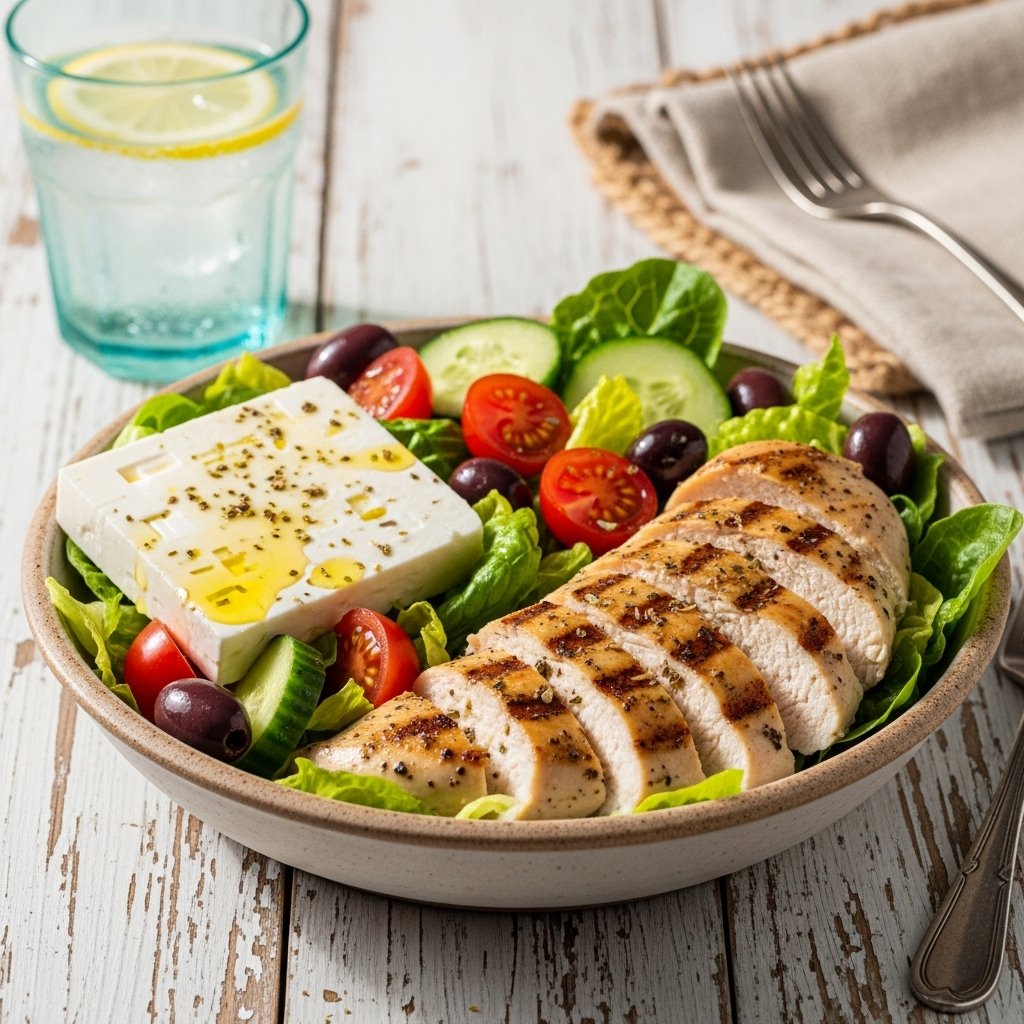
The Ultimate Low Carb Greek Salad With Grilled Chicken
Low Carb Greek Salad With Grilled Chicken Recipe
Fresh, vibrant, and packed with protein, this Low Carb Greek Salad with Grilled Chicken is the perfect healthy meal. Featuring juicy lemon-herb marinated chicken, crisp vegetables, and creamy feta, it offers all the flavors of the Mediterranean in a keto-friendly bowl.
15 minutes
15 minutes
30 minutes
4 servings
Main Course
Grilling
Greek
Gluten-Free
In the world of healthy eating, few dishes manage to strike the perfect balance between nutritional value and pure, unadulterated flavor quite like a Greek Salad. However, when you transform this classic side dish into a robust main course by adding perfectly grilled, marinated chicken, you elevate it to an entirely new level of culinary satisfaction. This Low Carb Greek Salad with Grilled Chicken is not just a salad; it is a celebration of fresh ingredients, vibrant colors, and bold textures that will leave you feeling energized rather than weighed down. Designed specifically for those following a low-carb or ketogenic lifestyle, this recipe omits the starchy fillers often found in modern salads and focuses strictly on nutrient-dense vegetables and high-quality proteins. The magic begins with the chicken. We don’t just toss plain breast meat on top; we marinate it in a zesty blend of lemon juice, olive oil, garlic, and oregano, ensuring that every bite is tender and bursting with Greek flair. The salad base pays homage to the traditional Horiatiki but adds a bed of crisp romaine to provide volume and crunch without the carb load. Whether you are meal-prepping for a busy work week or looking for a refreshing dinner to enjoy al fresco on a warm summer evening, this dish delivers. It is a testament to the fact that eating healthy doesn’t mean sacrificing flavor. The combination of the warm, savory chicken against the cool, crisp cucumbers and juicy tomatoes, all tied together with a tangy vinaigrette and salty feta, creates a symphony of flavors that is simply irresistible.
History & Origins
The Greek Salad, known in Greece as ‘Horiatiki Salata,’ which translates roughly to ‘village salad’ or ‘peasant salad,’ has deep roots in the culinary history of the Mediterranean. Historically, this dish was a staple for Greek farmers who would take a break in the fields to eat a simple meal comprising the raw ingredients they had on hand. The traditional version is distinctively rustic, typically consisting of large chunks of tomatoes, cucumbers, onions, Kalamata olives, and a slab of feta cheese, all dressed simply with high-quality olive oil and oregano. Interestingly, the authentic Horiatiki does not contain lettuce; the addition of leafy greens is largely an American or Western European adaptation designed to stretch the dish and lower the calorie density while increasing volume. The integration of grilled chicken is also a modern, Western twist. In traditional Greek dining, the salad is served as a side dish or a shared appetizer (meze) to accompany roasted meats or fish, rather than being a vessel for the protein itself. However, as the Mediterranean diet gained global popularity for its heart-health benefits in the late 20th century, the concept of the ‘entree salad’ emerged. Adding grilled chicken transformed the humble village salad into a nutritionally complete meal, satisfying the growing demand for high-protein, low-carb options. This evolution reflects a blending of traditional Mediterranean ingredients with the modern desire for convenient, one-bowl meals that align with fitness-conscious lifestyles.
Why This Recipe Works
This recipe succeeds because it relies on the fundamental principles of flavor balancing and textural contrast. First, the marinade for the chicken serves a dual purpose: the acid from the lemon juice tenderizes the meat by breaking down fibers, while the olive oil and herbs infuse it with flavor before it even hits the heat. This ensures the chicken remains juicy, avoiding the common pitfall of dry, rubbery poultry in salads. Second, the salad itself is a masterclass in texture. You have the snap of the fresh cucumber, the burst of acidity from the cherry tomatoes, the sharp bite of the red onion, and the creamy, salty richness of the feta cheese. By keeping the vegetables chunky, we prevent the salad from becoming a soggy mess, a common issue with chopped salads. Furthermore, the dressing is an emulsion based on the ‘golden ratio’ of oil to acid, enhanced with dried oregano which blooms in the oil, releasing more aroma than fresh herbs would in this context. Nutritionally, the high fat content from the olives, feta, and olive oil makes this incredibly satiating, which is crucial for low-carb diets where fat is the primary fuel source. The result is a dish that feels indulgent yet is perfectly aligned with health goals.
Why You’ll Love This Recipe
- ✓High Protein: Packed with over 30g of protein per serving to keep you full.
- ✓Keto & Low Carb: Perfect for ketogenic diets with low net carbs.
- ✓Meal Prep Friendly: Ingredients stay fresh and crisp for days.
- ✓Gluten-Free: Naturally free from gluten and grains.
- ✓30-Minute Meal: Quick and easy preparation for busy weeknights.
- ✓Nutrient Dense: Loaded with vitamins, minerals, and healthy fats.
Equipment You’ll Need
- ✓Indoor Grill Pan or Outdoor Grill
- ✓Large Mixing Bowl
- ✓Small Whisk
- ✓Chef’s Knife
- ✓Cutting Board
- ✓Meat Thermometer
- ✓Tongs
Ingredients
- ✓1.5 lbs Boneless skinless chicken breasts
- ✓1/4 cup Extra virgin olive oil (for marinade)
- ✓3 tbsp Fresh lemon juice
- ✓3 cloves Garlic, minced
- ✓1 tbsp Dried oregano
- ✓1 tsp Kosher salt
- ✓1/2 tsp Black pepper
- ✓1 head Romaine lettuce, chopped
- ✓1 large English cucumber, diced
- ✓1 cup Cherry tomatoes, halved
- ✓1/2 cup Red onion, thinly sliced
- ✓1/2 cup Kalamata olives, pitted
- ✓4 oz Feta cheese, crumbled or cubed
- ✓1/3 cup Extra virgin olive oil (for dressing)
- ✓2 tbsp Red wine vinegar
- ✓1 tsp Dijon mustard
Instructions
- In a small bowl, whisk together 1/4 cup olive oil, lemon juice, minced garlic, dried oregano, salt, and pepper to create the marinade.
- Place the chicken breasts in a large zip-top bag or shallow dish. Pour the marinade over the chicken, ensuring it is well coated. Let it marinate for at least 15 minutes, or up to 2 hours in the refrigerator for deeper flavor.
- Preheat your outdoor grill or indoor grill pan over medium-high heat. Brush the grates lightly with oil to prevent sticking.
- Place the chicken on the hot grill. Cook for 6-7 minutes on one side without moving it to achieve nice char marks. Flip and cook for another 5-7 minutes, or until the internal temperature reaches 165°F (74°C).
- Remove the chicken from the grill and let it rest on a cutting board for 5 minutes. This allows the juices to redistribute. Once rested, slice the chicken into strips or bite-sized cubes.
- While the chicken rests, assemble the salad. In a large bowl, combine the chopped romaine lettuce, diced cucumber, halved cherry tomatoes, sliced red onion, and Kalamata olives.
- In a small jar or bowl, whisk together the dressing ingredients: 1/3 cup olive oil, red wine vinegar, Dijon mustard, and a pinch of dried oregano.
- Pour the dressing over the salad veggies and toss gently to coat.
- Divide the dressed salad among four bowls. Top each bowl with the warm sliced chicken and a generous portion of feta cheese. Serve immediately.
Expert Cooking Tips
- ✓Don’t skip the resting time for the chicken; cutting it too soon will result in dry meat.
- ✓Soak the sliced red onions in ice water for 10 minutes before adding them to the salad to mellow out their harsh bite.
- ✓Use English cucumbers or Persian cucumbers as they have thinner skins and fewer seeds, making them crunchier and less watery.
- ✓For the best flavor, buy a block of feta in brine and crumble it yourself rather than buying pre-crumbled cheese.
- ✓If using an outdoor grill, ensure the grates are very hot before adding the chicken to get those professional sear marks.
- ✓Marinate the chicken for no longer than 2 hours; the lemon juice can start to ‘cook’ the texture of the meat if left too long.
Substitutions and Variations
This recipe is incredibly versatile. If you prefer not to use chicken breast, boneless skinless chicken thighs are a fantastic, juicier alternative that grills beautifully. For a vegetarian option, you can substitute the chicken with grilled halloumi cheese or chickpeas, though chickpeas will increase the carb count. If you are strictly dairy-free or Paleo, you can omit the feta cheese or use a high-quality almond-based vegan feta alternative. In terms of vegetables, bell peppers add a nice crunch and sweetness if you want more variety. If you don’t have romaine lettuce, a mix of arugula and spinach provides a peppery bite that pairs well with the lemon dressing. For the dressing, apple cider vinegar can be used in place of red wine vinegar, though the flavor profile will be slightly fruitier.
Common Mistakes to Avoid
A common mistake is over-marinating the chicken. Because the marinade contains lemon juice, leaving it for overnight can break down the protein fibers too much, resulting in a mushy texture. Another frequent error is dressing the salad too early. The acid in the vinaigrette will wilt the lettuce and draw moisture out of the cucumbers and tomatoes if let to sit for too long, leading to a watery bottom of the bowl. Always dress the salad right before serving. Additionally, avoid using ‘light’ olive oil; for a Greek salad, you want the robust flavor of extra virgin olive oil. Finally, do not overcook the chicken; use a meat thermometer to pull it off the heat exactly when it hits 165°F.
Serving Suggestions
This salad is a complete meal on its own, but if you aren’t strictly low-carb, it pairs wonderfully with warm, whole-wheat pita bread or crusty artisan bread to soak up the dressing. A side of tzatziki sauce is also a great addition for dipping the chicken. For a beverage pairing, a crisp, dry white wine like a Sauvignon Blanc or a Greek Assyrtiko complements the acidity and herbs of the salad perfectly. If serving for a dinner party, present the salad on a large platter with the chicken arranged on top for a stunning family-style presentation.
Storage and Reheating Tips
If you plan to store leftovers, it is crucial to store the salad components, the chicken, and the dressing separately. The dressed salad will become soggy within a few hours. Undressed chopped vegetables can be stored in an airtight container in the refrigerator for up to 3 days. The grilled chicken will keep well for 3-4 days in the fridge. The dressing can be made in a batch and stored in a jar for up to a week; just give it a good shake before using as the oil and vinegar will separate. To reheat the chicken, do so gently in a skillet or microwave to avoid drying it out, or simply eat it cold, which is delicious in this salad.
Nutrition Facts (Estimated)
| Serving Size | 1 large bowl |
| Calories | 480 |
| Fat | 32g |
| Saturated Fat | 9g |
| Unsaturated Fat | 21g |
| Trans Fat | 0g |
| Cholesterol | 95mg |
| Sodium | 950mg |
| Carbohydrates | 10g |
| Fiber | 3g |
| Sugar | 5g |
| Protein | 35g |
Frequently Asked Questions
Is this recipe suitable for a Keto diet?
Yes, this recipe is very keto-friendly. It focuses on low-carb vegetables, high-quality fats from olive oil and feta, and protein from the chicken, with minimal net carbs.
Can I bake the chicken instead of grilling it?
Absolutely. You can bake the marinated chicken breasts at 400°F (200°C) for about 20-25 minutes, or until the internal temperature reaches 165°F.
What kind of olives should I use?
Kalamata olives are the traditional choice for Greek salad. They have a distinct, rich flavor. However, you can use black olives if you prefer a milder taste.
Can I meal prep this salad?
Yes, this is excellent for meal prep. Just keep the dressing in a separate small container and don’t mix it with the greens until you are ready to eat.
Is the feta cheese necessary?
Feta adds a crucial salty and creamy element, but if you are dairy-free, you can omit it or use a vegan feta substitute. Avocado chunks can also provide a creamy texture substitute.
How do I make the onions less spicy?
Soaking sliced red onions in a bowl of ice water for 10-15 minutes before adding them to the salad removes the sulfur compounds that cause the sharp, spicy bite.
Can I use dried herbs instead of fresh?
This recipe calls for dried oregano because it has a more concentrated flavor that stands up well to the strong dressing. If using fresh oregano, use three times the amount called for.
What is the best cut of chicken to use?
Boneless, skinless chicken breasts are standard for a lean option, but boneless thighs are more flavorful and forgiving if you are worried about overcooking.
Conclusion
There you have it—a Low Carb Greek Salad with Grilled Chicken that is as nutritious as it is delicious. This recipe proves that healthy eating doesn’t have to be complicated or bland. With fresh ingredients, a simple homemade dressing, and perfectly grilled protein, you can create a restaurant-quality meal in the comfort of your own kitchen. It’s a dish that celebrates the vibrant flavors of the Mediterranean and fits seamlessly into a low-carb lifestyle. Give this recipe a try for your next lunch or dinner, and enjoy the fresh, zesty goodness in every bite. Don’t forget to share your creation on social media and tag us!