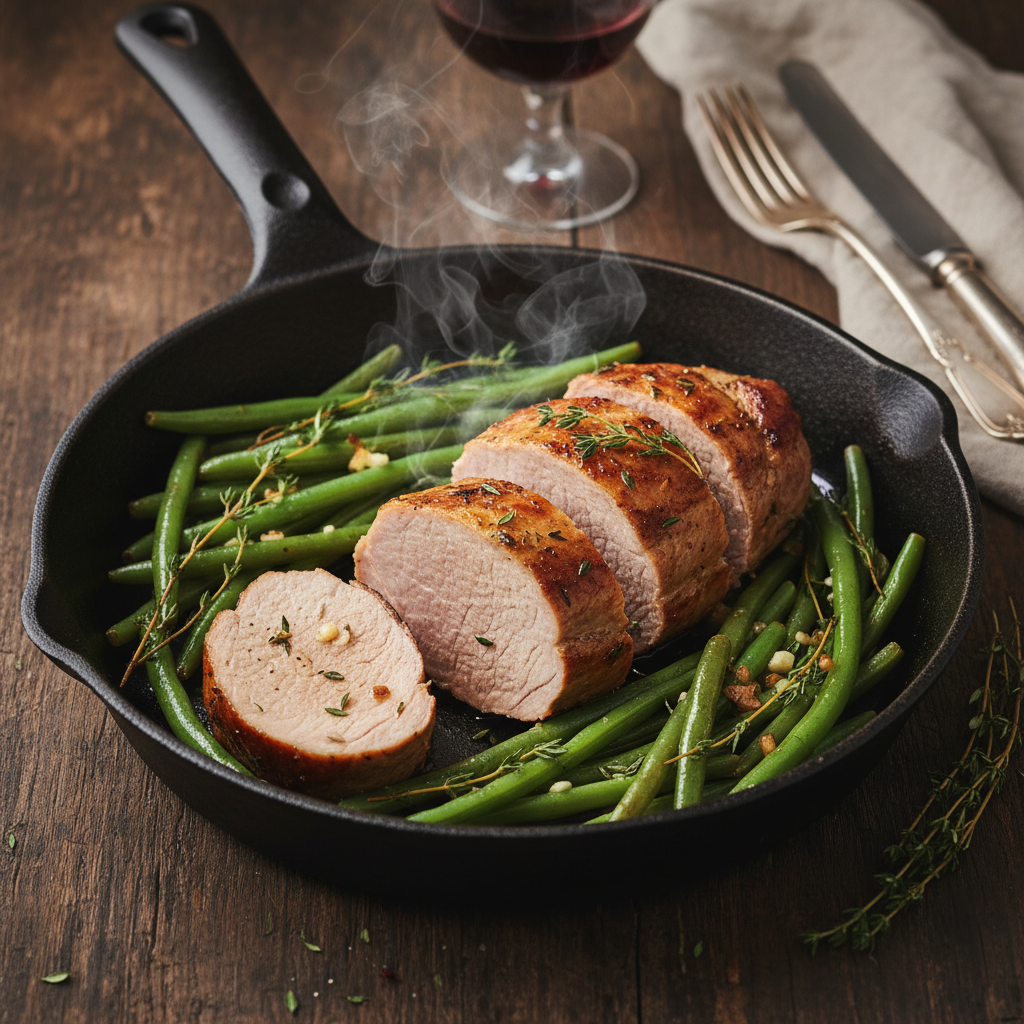
Garlic Butter Low Carb Pork Tenderloin With Green Beans
Low Carb Pork Tenderloin With Green Beans Recipe
This restaurant-quality dinner features succulent, pan-seared pork tenderloin finished in the oven with crisp, fresh green beans. Drenched in a savory garlic herb butter sauce, it is a complete low-carb, keto-friendly meal that comes together in under 30 minutes.
10 minutes
20 minutes
30 minutes
4 servings
Main Course
Stovetop / Oven Roast
American / Continental
Gluten-Free
In the realm of weeknight dinners, finding a recipe that balances health, speed, and genuine flavor can often feel like an impossible triangle. We often sacrifice one for the other, ending up with bland healthy food or quick but processed meals. This Low Carb Pork Tenderloin with Green Beans recipe shatters that compromise, offering a culinary experience that feels indulgent and sophisticated while remaining strictly keto-compliant and remarkably easy to prepare. Pork tenderloin is frequently referred to as the ‘filet mignon of pork’ for good reason; it is the most tender cut of the animal, lean yet capable of remaining incredibly juicy when cooked correctly. The magic of this dish lies in the dual-cooking method: starting with a high-heat sear on the stovetop to lock in moisture and create a golden, caramelized crust, and finishing with a gentle roast in the oven to ensure even cooking throughout. But the real star of the show is the garlic herb butter. As the pork roasts, the butter melts and mingles with the juices from the meat and the earthiness of the fresh thyme and rosemary, creating a natural sauce that coats the crisp green beans. The green beans roast alongside the pork, absorbing these flavors while retaining a perfect snap, avoiding the mushy texture that often plagues boiled vegetables. This one-pan approach not only builds layers of complex flavors but also minimizes cleanup, making it a hero recipe for busy parents, fitness enthusiasts, or anyone looking to impress guests without spending hours in the kitchen. Whether you are strictly following a low-carb diet or simply looking for a wholesome, high-protein dinner, this dish delivers on all fronts, proving that healthy eating does not have to be boring.
History & Origins
The history of the ingredients in this dish spans continents and millennia, converging to create a modern American classic. The domestic pig (Sus scrofa domesticus) was one of the first animals to be domesticated by humans, with evidence dating back to 9000 BC in the Near East and China. For centuries, pork has been a staple protein across Europe and Asia. However, the specific cut known as the tenderloin has always held a special status. Anatomically, the tenderloin is the psoas major muscle, located along the central spine. Because this muscle does very little work during the animal’s life—it is primarily used for posture rather than movement—it remains incredibly tender and fine-grained, lacking the tough connective tissue found in the shoulder or leg. In French butchery, this cut is revered, often prepared with rich sauces to compensate for its leanness. Meanwhile, the green bean (Phaseolus vulgaris) has a completely different origin story. Native to the Americas, specifically Peru and Mexico, green beans were cultivated for thousands of years by indigenous peoples before being introduced to Europe by Christopher Columbus in the late 15th century. Initially grown for their dried seeds, the French eventually began eating the immature pods in the 19th century, coining the term ‘haricots verts.’ The combination of roasted meat and vegetables in a single vessel is a technique born out of necessity and efficiency, evolving from hearth cooking in cast iron pots to the modern ‘sheet pan’ or ‘skillet’ dinner craze that took over American home cooking in the early 21st century. This specific recipe represents the fusion of Old World butchery appreciation and New World agricultural bounty, adapted for the modern, health-conscious kitchen.
Why This Recipe Works
This recipe succeeds because it is scientifically designed to maximize flavor development while managing the distinct cooking rates of the protein and the vegetable. First, using a cast-iron skillet allows for superior heat retention. When the room-temperature pork hits the hot pan, the Maillard reaction occurs almost instantly. This chemical reaction between amino acids and reducing sugars creates the brown, savory crust that is essential for depth of flavor—something you simply cannot achieve by baking alone. Secondly, the ‘sear-roast’ method is crucial for pork tenderloin. Because it is such a lean cut with very little intramuscular fat (marbling), it can dry out quickly if overcooked. By searing it first, we develop flavor, and by finishing it in the oven, we allow the heat to penetrate gently to the center without burning the outside. Thirdly, the timing of the green beans is perfect. A pork tenderloin typically takes about 15-20 minutes to finish in the oven after searing, which is exactly the amount of time fresh green beans need to become tender-crisp when roasted. If you were to cook a large roast, the beans would burn; if you cooked a steak, the beans would be raw. The tenderloin is the ‘Goldilocks’ protein for this vegetable pairing. Finally, the fat source—butter—acts as a flavor carrier. Fat-soluble flavor compounds in the garlic, rosemary, and thyme are released into the butter, which then bastes the meat and vegetables continuously as they roast, ensuring every bite is seasoned to perfection.
Why You’ll Love This Recipe
- ✓One-Pan Wonder: minimal cleanup required.
- ✓Keto & Low Carb: strictly compliant with less than 10g net carbs.
- ✓High Protein: excellent for muscle recovery and satiety.
- ✓Under 30 Minutes: perfect for busy weeknights.
- ✓Restaurant Quality: produces a juicy, tender result every time.
Equipment You’ll Need
- ✓Large Cast Iron Skillet (10-12 inch)
- ✓Tongs
- ✓Meat Thermometer
- ✓Sharp Chef’s Knife
- ✓Cutting Board
Ingredients
- ✓1.5 lb Pork Tenderloin (trimmed of silver skin)
- ✓1 lb Fresh Green Beans (trimmed)
- ✓2 tbsp Olive Oil (divided)
- ✓3 tbsp Unsalted Butter (cut into cubes)
- ✓4 cloves Garlic (minced)
- ✓1 tbsp Fresh Thyme (chopped)
- ✓1 tbsp Fresh Rosemary (chopped)
- ✓1 tsp Kosher Salt
- ✓1/2 tsp Black Pepper
- ✓1/2 tsp Garlic Powder
- ✓1/2 tsp Onion Powder
- ✓Optional: Red pepper flakes for heat
Instructions
- Preheat your oven to 400°F (200°C). Ensure your oven rack is in the center position.
- Prepare the pork: Pat the pork tenderloin completely dry with paper towels. This is crucial for a good sear. Remove the silver skin (the white, tough connective tissue) using a sharp knife.
- Season the meat: In a small bowl, mix the salt, pepper, garlic powder, and onion powder. Rub this mixture generously over all sides of the pork.
- Sear the pork: Heat 1 tablespoon of olive oil in a large cast-iron skillet over medium-high heat. Once the oil is shimmering, carefully place the tenderloin in the pan. Sear for about 2-3 minutes per side until golden brown on all sides.
- Prepare the beans: While the pork sears, toss the trimmed green beans in a bowl with the remaining 1 tablespoon of olive oil, a pinch of salt, and pepper.
- Combine: Once the pork is seared, turn off the stovetop heat. Arrange the green beans in the skillet around the pork. If the skillet is too crowded, you can place the beans on top of the pork momentarily, but try to get them in a single layer on the bottom.
- Add aromatics: Scatter the minced garlic, fresh thyme, and rosemary over the pork and beans. Place the cubes of butter directly on top of the pork and scattered among the beans.
- Roast: Transfer the skillet to the preheated oven. Roast for 15-20 minutes, or until the pork reaches an internal temperature of 145°F (63°C) and the beans are tender-crisp. Toss the beans halfway through cooking if desired to coat them in the melting butter.
- Rest: Remove the skillet from the oven. Transfer the pork to a cutting board and tent loosely with foil. Let it rest for at least 5-10 minutes. This allows the juices to redistribute.
- Serve: Slice the pork into medallions. Serve alongside the green beans, spooning the pan juices (the garlic butter mixture) over the meat and vegetables.
Expert Cooking Tips
- ✓Remove the silver skin: This tough membrane does not render down and can make the meat chewy and curl up during cooking.
- ✓Room temperature meat: Take the pork out of the fridge 20 minutes before cooking to ensure even roasting.
- ✓Don’t overcrowd: If your skillet is too small, the beans will steam instead of roast. Use a secondary baking sheet if necessary.
- ✓Use a thermometer: Pork tenderloin is lean and unforgiving. Pull it at 145°F for medium or 150°F for medium-well.
- ✓Pat it dry: Moisture is the enemy of a good sear. Use paper towels to get the meat bone-dry before seasoning.
- ✓Fresh herbs matter: While dried works, fresh thyme and rosemary provide a significantly better aroma and flavor profile.
- ✓Resting is mandatory: Cutting into the meat immediately will cause all the juices to run out, leaving you with dry pork.
Substitutions and Variations
This recipe is highly adaptable to whatever you have in your pantry or dietary needs. If you do not eat pork, boneless skinless chicken breasts or thighs work wonderfully; however, you may need to adjust the cooking time depending on the thickness of the chicken. For the vegetables, if green beans aren’t your favorite, fresh asparagus spears are the best 1:1 substitution as they have a similar roasting time. Brussels sprouts (halved) or broccoli florets also work, though they may require a few extra minutes in the oven. Regarding the fat, if you are dairy-free or Paleo, you can substitute the butter with ghee or additional olive oil, though you will lose some of that creamy richness. For the herbs, dried herbs can be used in place of fresh; the general rule is to use one-third the amount of dried herbs as fresh (e.g., 1 teaspoon dried thyme instead of 1 tablespoon fresh).
Common Mistakes to Avoid
The most common mistake with pork tenderloin is confusing it with pork loin. The loin is a much larger, thicker roast that requires significantly longer cooking times; substituting it here will result in raw meat or burnt beans. Another frequent error is overcooking the meat. Modern pork is safe to eat with a blush of pink in the center (145°F); cooking it to 165°F or higher will result in a tough, dry texture resembling shoe leather. Additionally, many home cooks skip the searing step to save time, but this results in a pale, lackluster roast that lacks the complex savory depth provided by the Maillard reaction. Finally, do not skip the resting period. It is tempting to slice immediately when it smells so good, but patience ensures a juicy result.
Serving Suggestions
While this dish is a complete meal on its own, it pairs beautifully with other low-carb sides if you are feeding a crowd. A creamy mashed cauliflower with roasted garlic is a fantastic keto alternative to mashed potatoes and soaks up the extra butter sauce perfectly. A crisp arugula salad with a lemon vinaigrette can cut through the richness of the pork. If you are not strictly low-carb, roasted sweet potatoes or a wild rice pilaf make excellent accompaniments. For wine, a light-bodied red like Pinot Noir or a dry white like Chardonnay pairs well with the herbal notes of the dish.
Storage and Reheating Tips
Leftovers should be stored in an airtight container in the refrigerator for up to 3-4 days. To reheat, it is best to avoid the microwave if possible, as it can make the lean pork rubbery. Instead, reheat gently in a skillet over low heat with a splash of water or broth to keep it moist, or in the oven at 300°F covered with foil until warm. The beans can be reheated in the same way. This dish is not ideal for freezing, as the cooked green beans will become mushy upon thawing, though the cooked pork freezes reasonably well for up to 2 months.
Nutrition Facts (Estimated)
| Serving Size | 1 serving (approx 6oz pork + beans) |
| Calories | 340 |
| Fat | 18g |
| Saturated Fat | 9g |
| Unsaturated Fat | 7g |
| Trans Fat | 0g |
| Cholesterol | 110mg |
| Sodium | 450mg |
| Carbohydrates | 8g |
| Fiber | 4g |
| Sugar | 2g |
| Protein | 36g |
Frequently Asked Questions
Is it safe to eat pork that is slightly pink?
Yes. The USDA revised their guidelines in 2011. Whole cuts of pork like tenderloin are safe to eat at an internal temperature of 145°F followed by a 3-minute rest time. At this temperature, the meat may still be slightly pink but is safe and much juicier.
Can I use frozen green beans?
It is not recommended. Frozen green beans release a lot of water when cooked, which will steam the pork rather than roast it, and the beans themselves will likely turn out mushy. Fresh beans are essential for the right texture.
What is the difference between pork loin and pork tenderloin?
They are completely different cuts. Pork tenderloin is long, narrow, and very lean. Pork loin is wide, thick, and has a fat cap. They cannot be used interchangeably in this recipe due to different cooking times.
Can I marinate the pork beforehand?
Absolutely. While the dry rub works great, marinating the pork in olive oil, lemon juice, garlic, and herbs for 2-4 hours can add even more flavor. Just be sure to pat it dry before searing.
Do I need a cast-iron skillet?
While cast iron is best for heat retention and stove-to-oven transfer, any large, oven-safe stainless steel skillet will work. Avoid non-stick pans if possible for high-heat searing, or check their temperature rating.
How do I know when the silver skin is removed?
The silver skin looks like a thin, pearlescent white membrane on the surface of the meat. When you slide your knife under it and cut it away, the red meat underneath should be exposed.
Is this recipe Whole30 compliant?
Yes, provided you swap the butter for Ghee or clarified butter, this recipe is fully Whole30 compliant.
Can I double the recipe?
You can, but you will likely need to use two skillets or sear the meat in batches and transfer everything to a large baking sheet to roast, as overcrowding one pan will ruin the texture.
Conclusion
This Low Carb Pork Tenderloin with Green Beans is the ultimate proof that healthy food doesn’t have to be complicated or flavorless. With just a handful of fresh ingredients and a trusty skillet, you can create a meal that looks and tastes like it came from a high-end bistro. The savory garlic butter sauce brings everything together, making vegetables appealing even to picky eaters. Whether you are a keto veteran or just trying to put a nutritious dinner on the table, this recipe is sure to become a regular in your rotation. Give it a try tonight, and don’t forget to share your results on Pinterest!