Berry Nutty Frozen Yogurt Bark: The Ultimate Healthy Summer Snack
Frozen Yogurt Bark With Berries And Nuts Recipe
Cool down with this refreshing, guilt-free frozen yogurt bark packed with antioxidant-rich berries and crunchy nuts. It is the perfect protein-packed snack or healthy dessert that takes just minutes to prep and satisfies every sweet craving without the sugar crash.
10 minutes
0 minutes
3 hours 10 minutes
8-10 servings
Snack / Dessert
Freezing
American Fusion
Gluten-Free
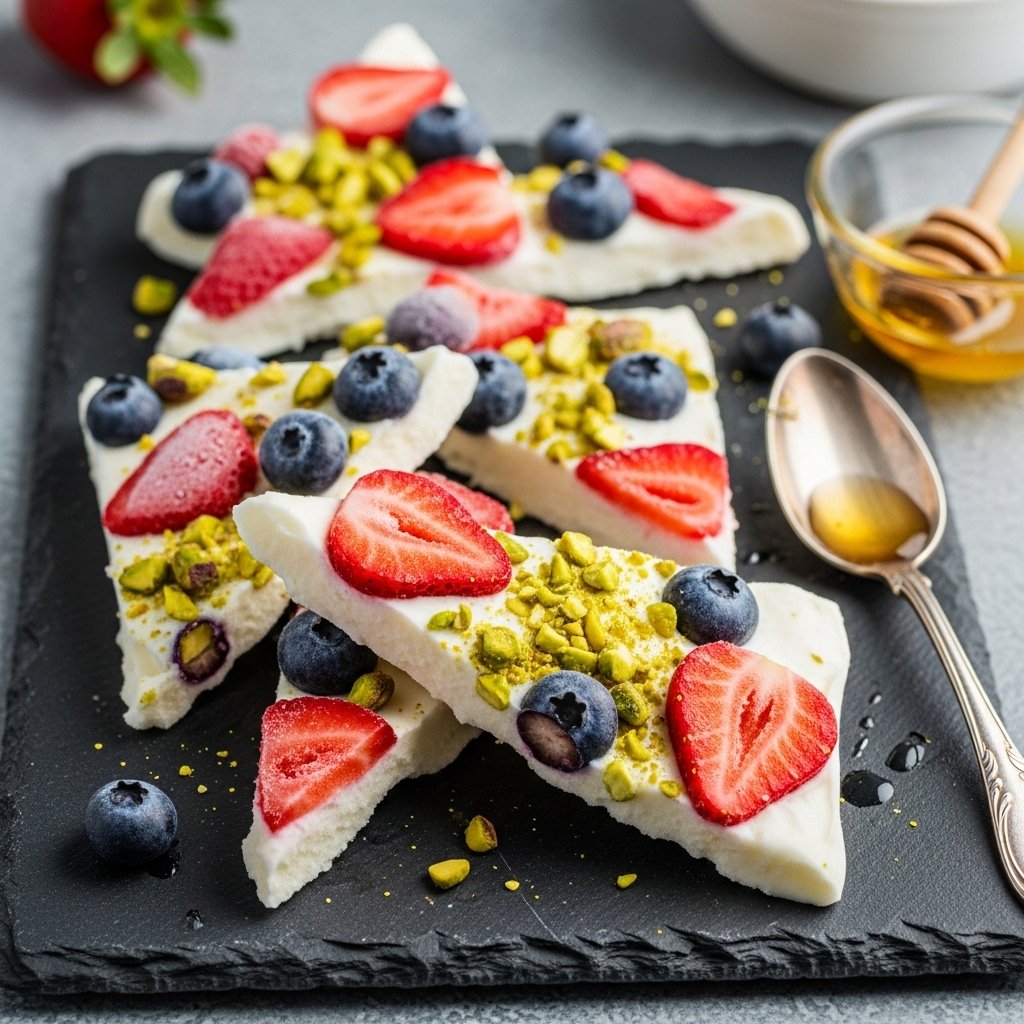
If you have spent any time scrolling through Pinterest looking for healthy snack inspiration, you have likely stumbled upon the vibrant, mosaic-like beauty of frozen yogurt bark. It is one of those rare culinary unicorns that looks incredibly impressive yet requires zero cooking skills. Imagine the creamy, tangy satisfaction of frozen yogurt combined with the satisfying ‘snap’ of a chocolate bar, all studded with nature’s candy—fresh berries—and the earthy crunch of toasted nuts. This recipe for Frozen Yogurt Bark with Berries and Nuts is not just a treat for the eyes; it is a textural masterpiece designed to get you through hot summer afternoons or late-night sweet cravings.
The beauty of this dish lies in its versatility and simplicity. At its core, it is sweetened Greek yogurt spread thin and frozen, but it eats like a decadent dessert. The tartness of the yogurt pairs beautifully with the floral sweetness of honey or maple syrup, while the berries provide bright bursts of acidity that cut through the richness. The nuts add a necessary savory element and a crunch that contrasts with the smooth, melting base. Unlike store-bought popsicles or ice creams that are often laden with stabilizers and high-fructose corn syrup, this homemade bark allows you to control exactly what goes into your body. It is a fantastic way to use up leftover fruit before it turns, and it is an engaging kitchen activity to do with kids. Whether you are a fitness enthusiast looking for a post-workout protein boost or simply someone who loves a cold treat, this recipe is about to become a staple in your freezer rotation.
History & Origins
While frozen yogurt bark is a relatively modern invention, born from the creative minds of the internet health-food community, its roots trace back thousands of years. Yogurt itself is an ancient food, with historians believing it originated in Mesopotamia around 5000 BC. It was a staple in the diets of Genghis Khan’s army and was later introduced to the US in the early 20th century, though it didn’t gain massive popularity until the ‘health food’ movements of the 1970s.
The concept of ‘bark’ in confectionery is traditionally associated with chocolate—specifically peppermint bark or fruit-and-nut chocolate shards often gifted during the holidays. The term refers to the rough, tree-bark-like appearance of the candy when broken into irregular pieces. The fusion of these two concepts—yogurt and confectionery bark—likely emerged in the early 2010s alongside the meteoric rise of Greek yogurt in the American market. As consumers shifted away from sugary, low-fat snacks toward high-protein, whole-food options, food bloggers began experimenting with freezing yogurt as a nutritious alternative to ice cream.
Social media platforms like Pinterest and Instagram played a pivotal role in cementing frozen yogurt bark as a cultural phenomenon. Its photogenic quality—white yogurt acting as a blank canvas for colorful toppings—made it instantly shareable. Over the last decade, it has evolved from a simple diet hack into a legitimate dessert category of its own, with variations ranging from matcha-infused bases to peanut butter swirls, proving that this modern classic is here to stay.
Why This Recipe Works
This recipe succeeds where many other frozen healthy treats fail because it meticulously addresses the issue of texture. One of the biggest complaints about homemade frozen yogurt is that it can become an icy, rock-hard block that is impossible to bite into. This recipe combats that physical reality in three specific ways.
First, we insist on using full-fat Greek yogurt. The higher fat content interferes with the formation of large ice crystals, ensuring that the bark remains creamy and brittle enough to snap, rather than shattering like an ice cube. Second, the addition of a liquid sweetener like honey or maple syrup does more than just add flavor; sugar molecules lower the freezing point of the mixture, keeping the texture softer and more palatable straight out of the freezer. Finally, the ratio of toppings to yogurt is calculated to ensure every bite has a mix of textures. By chopping the berries and nuts into smaller pieces, we ensure they freeze evenly and don’t turn into tooth-breaking boulders. The result is a harmonious balance of creamy, crunchy, and icy that melts delightfully on the tongue.
Why You’ll Love This Recipe
- ✓High in protein and probiotics for gut health
- ✓No-bake recipe that requires zero cooking skills
- ✓Completely customizable with your favorite fruits and toppings
- ✓Kid-friendly and fun to make as a family activity
- ✓Low-calorie alternative to traditional ice cream
- ✓Gluten-free and easily adaptable for vegan diets
Equipment You’ll Need
- ✓Large baking sheet (approx 9×13 inches)
- ✓Parchment paper or silicone baking mat
- ✓Medium mixing bowl
- ✓Silicone spatula
- ✓Measuring cups and spoons
- ✓Knife and cutting board
Ingredients
- ✓2 cups Plain Full-Fat Greek Yogurt (can substitute vanilla)
- ✓3 tbsp Honey or Maple Syrup (adjust to taste)
- ✓1 tsp Pure Vanilla Extract
- ✓1/2 cup Fresh Strawberries, washed, hulled, and sliced thin
- ✓1/3 cup Fresh Blueberries, washed and dried thoroughly
- ✓1/4 cup Raspberries, slightly crushed or halved
- ✓1/3 cup Chopped Nuts (Almonds, Pistachios, or Pecans)
- ✓1 tbsp Chia Seeds or Hemp Hearts (optional for garnish)
Instructions
- Prepare your workspace by clearing a flat surface in your freezer where the baking sheet can sit level. Line a large baking sheet with parchment paper or a silicone baking mat. Ensure the paper covers the edges to prevent sticking.
- In a medium mixing bowl, combine the 2 cups of Greek yogurt, 3 tablespoons of honey (or maple syrup), and 1 teaspoon of vanilla extract. Whisk or stir vigorously until the mixture is completely smooth and the sweetener is evenly incorporated.
- Pour the yogurt mixture onto the prepared baking sheet. Using a silicone spatula, spread the yogurt into an even layer, approximately 1/4 to 1/2 inch thick. Do not spread it too thin, or it will melt too quickly when serving; too thick, and it will be hard to bite.
- Scatter the sliced strawberries, blueberries, and raspberries evenly over the surface of the yogurt. Gently press the larger fruit pieces slightly into the yogurt base so they adhere well during freezing.
- Sprinkle the chopped nuts and optional seeds over the gaps between the fruit to ensure every section has a crunch.
- Carefully transfer the baking sheet to the freezer, keeping it level. Freeze for at least 3 hours, or until the yogurt is completely solid and snaps when lifted.
- Once frozen, remove the sheet from the freezer. Lift the parchment paper to remove the bark block. Using your hands or a sharp knife, break or cut the bark into irregular shards or squares.
- Serve immediately or transfer the pieces to a freezer-safe container or bag for long-term storage.
Expert Cooking Tips
- ✓Dry your fruit thoroughly after washing; excess water creates icy crystals that ruin the creamy texture.
- ✓Use full-fat yogurt (5% fat or higher) for the creamiest mouthfeel and easiest breaking.
- ✓If using roasted salted nuts, reduce the amount slightly as the salt can overpower the delicate yogurt flavor.
- ✓For perfectly clean slices instead of jagged shards, let the frozen block sit for 2 minutes before cutting with a sharp knife.
- ✓Line your pan with parchment paper, not foil, as foil can stick to the frozen yogurt and tear upon removal.
Substitutions and Variations
This recipe is a chameleon and adapts to almost any dietary need or pantry availability. If you are vegan or dairy-free, swap the Greek yogurt for a high-fat coconut yogurt or a thick almond milk yogurt; just be aware that coconut yogurt will freeze harder, so you may need to let it thaw slightly longer before eating. For sweeteners, agave nectar, stevia drops, or monk fruit syrup work excellent as low-glycemic alternatives to honey. In terms of toppings, the sky is the limit. Swap berries for tropical fruits like diced mango, kiwi, and pineapple for a summer vibe, or go decadent with dark chocolate chips, cacao nibs, and a swirl of peanut butter. If you have a nut allergy, replace the almonds and pistachios with pumpkin seeds (pepitas), sunflower seeds, or granola for that essential crunch.
Common Mistakes to Avoid
The most common mistake is using non-fat or 0% fat yogurt. While healthy, it lacks the milk solids and fat required to create a bite-able texture when frozen, resulting in a rock-hard, icy sheet that isn’t enjoyable to eat. Another frequent error is spreading the yogurt too thinly; if the layer is paper-thin, it will melt the second you touch it. Aim for at least 1/4 inch thickness. Additionally, overloading the bark with heavy toppings can cause it to break apart prematurely or not freeze into a cohesive sheet. Finally, patience is key—removing the bark from the freezer before it is fully set (usually under 3 hours) will result in a slushy mess that falls apart in your hands.
Serving Suggestions
Frozen yogurt bark is best served immediately after removing it from the freezer, as it begins to melt within minutes. Arrange the shards on a chilled platter for a beautiful presentation at a brunch or summer party. It pairs wonderfully with a glass of iced tea or a cold brew coffee. For a more dessert-like experience, serve a shard of bark alongside a slice of pound cake or crumble it over a bowl of fresh fruit salad for added texture. If serving to children, consider cutting the bark into smaller, bite-sized squares rather than large shards to minimize the mess as it melts.
Storage and Reheating Tips
Proper storage is crucial to prevent freezer burn and maintain the flavor quality of the fruit. Once the bark is broken into pieces, transfer them immediately into a freezer-safe bag or an airtight container. If stacking pieces in a container, place small squares of parchment paper between layers to prevent them from freezing together into a solid lump. The bark is best consumed within 2 weeks; after this time, the fruit may start to dehydrate and the yogurt may absorb odors from the freezer. Do not refreeze the bark if it has melted, as the texture will separate and become grainy.
Nutrition Facts (Estimated)
| Serving Size | 1 piece (approx 50g) |
| Calories | 85 |
| Fat | 3.5g |
| Saturated Fat | 1.5g |
| Unsaturated Fat | 2g |
| Trans Fat | 0g |
| Cholesterol | 5mg |
| Sodium | 15mg |
| Carbohydrates | 9g |
| Fiber | 1g |
| Sugar | 6g |
| Protein | 5g |
Frequently Asked Questions
Can I use regular yogurt instead of Greek yogurt?
It is not recommended. Regular yogurt has a much higher water content, which leads to an icy, crystalline texture when frozen. Greek yogurt is strained, making it thicker and creamier, which is essential for a good bark.
How long does frozen yogurt bark last in the freezer?
Ideally, it should be eaten within 2 weeks for the best taste and texture. It can technically last up to 2 months, but the fruit will likely become icy and the yogurt may develop freezer burn.
Why is my yogurt bark too hard to bite?
This usually happens if the yogurt used was too low in fat or if the bark was stored for too long. Let it sit at room temperature for 3-5 minutes before eating to soften it slightly.
Is this recipe keto-friendly?
It can easily be made keto-friendly! Use a full-fat, low-carb yogurt, swap the honey for a keto sweetener like powdered erythritol or stevia, and stick to low-sugar berries like raspberries and blackberries.
Can I add protein powder to the mixture?
Yes! You can whisk in a scoop of vanilla or unflavored protein powder. Just be sure to mix it thoroughly to avoid clumps, and you may need to add a splash of milk if the mixture becomes too thick to spread.
Does the fruit need to be fresh, or can I use frozen?
Fresh fruit is superior for this recipe. Frozen fruit releases water as it thaws and then re-freezes, which can create pockets of ice around the fruit pieces. If you must use frozen, thaw and drain it completely first.
How do I prevent the bark from melting so fast?
Because yogurt has a lower melting point than ice cream, it melts quickly. Keep the pieces in the freezer until the very second you are ready to eat. Serving on a chilled plate can also buy you a few extra minutes.
Can I dip the bark in chocolate?
Absolutely. After the bark is fully frozen and broken into pieces, you can quickly dip half of each shard into melted dark chocolate and place it back on the parchment paper to set for a decadent twist.
Conclusion
Frozen Yogurt Bark is the ultimate proof that healthy eating doesn’t have to be boring or complicated. With just a handful of wholesome ingredients and a few minutes of prep time, you can create a snack that is as nourishing as it is delicious. It is a canvas for your culinary creativity, allowing you to experiment with flavors, textures, and colors to suit your mood or the season. So, the next time the temperature rises or your sweet tooth calls, skip the store-bought ice cream aisle and whip up a batch of this delightful treat. Your body—and your taste buds—will thank you.