Healthy Grilled Turkey and Veggie Kabob Lunch Plate with Lemon-Herb Marinade
Grilled Turkey And Veggie Kabob Lunch Plate Recipe
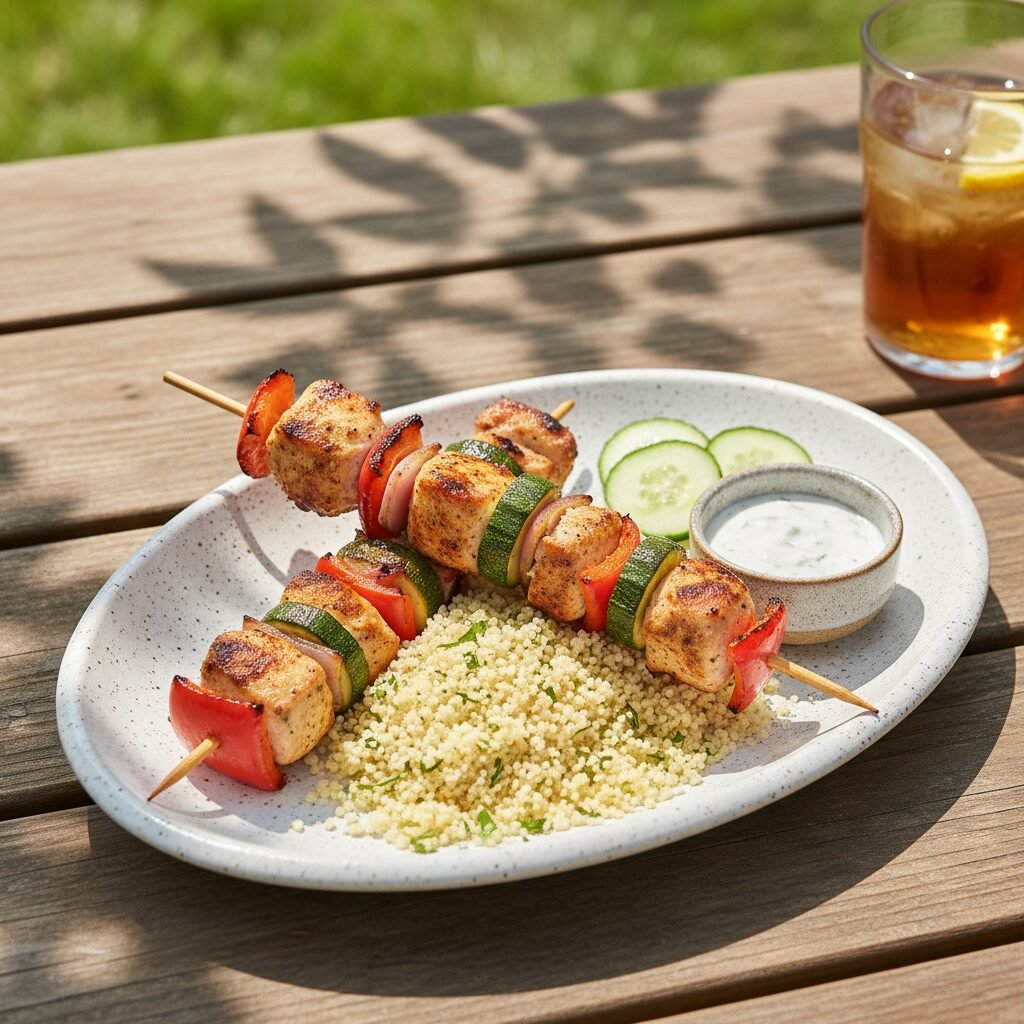
Transform your midday meal with these vibrant, protein-packed grilled turkey and vegetable kabobs. Marinated in a zesty blend of lemon, garlic, and fresh herbs, these skewers are served as a complete lunch plate that is as nutritious as it is delicious, perfect for meal prep or a sunny weekend lunch.
25 minutes
15 minutes
40 minutes
4 servings
Main Course
Grilling
American / Mediterranean Fusion
Gluten-Free
The midday lunch slump is a real phenomenon, often fueled by heavy, carbohydrate-laden meals or uninspired leftovers that leave us feeling sluggish rather than energized. Enter the Grilled Turkey and Veggie Kabob Lunch Plate—a recipe designed to revitalize your afternoon with a burst of fresh flavors, lean protein, and colorful antioxidants. There is something undeniably festive about food on a stick; it evokes memories of summer cookouts, street fairs, and communal dining. However, this recipe refines the rustic campfire concept into a sophisticated, balanced lunch plate suitable for a modern lifestyle.
By swapping the traditional beef or lamb for turkey breast, we drastically reduce the saturated fat content without sacrificing satisfaction. The secret lies in the marinade—a bright emulsion of olive oil, lemon juice, and Mediterranean herbs that tenderizes the turkey, ensuring it remains juicy even under the high heat of the grill. Paired with the natural sweetness of blistered bell peppers, the savory depth of red onions, and the earthiness of zucchini, every bite offers a complex interplay of textures and tastes.
This dish is more than just skewers; it is a complete ‘lunch plate’ concept. When served alongside a fluffy bed of quinoa or a crisp Greek salad, it becomes a macro-balanced meal that hits all the right nutritional notes. Whether you are firing up the outdoor grill on a warm day or using a cast-iron grill pan in the comfort of your kitchen, these kabobs promise a culinary escape from the mundane sandwich. They are visually stunning, incredibly aromatic, and perfectly portioned to keep you fueled and focused for the rest of the day.
History & Origins
The concept of cooking meat on skewers over an open fire is as old as the discovery of fire itself, but the specific lineage of the ‘kebab’ traces back to the Middle East and Eastern Mediterranean. The word ‘kebab’ is derived from the Arabic ‘kabāb,’ leading back to the Aramaic ‘kabbābā,’ which means to char or burn. Historical accounts suggest that medieval Persian soldiers, moving across the vast landscapes of the empire, would use their swords to skewer chunks of meat and grill them over open field fires. This practical method of cooking eventually evolved into a refined culinary art form, spreading through the Ottoman Empire and giving rise to countless regional variations, from the Turkish shish kebab to the Greek souvlaki and the South Asian seekh kebab.
However, the incorporation of turkey into this ancient format is a distinctly New World adaptation. Turkey is native to the Americas and was domesticated by indigenous peoples long before European contact. It wasn’t until the mid-20th century, and particularly the health-conscious movements of the 1980s and 90s in the United States, that turkey began to be viewed not just as a holiday roast, but as a versatile, year-round lean protein source. The ‘Turkey Kabob’ represents a culinary fusion, marrying the ancient Eastern technique of skewered grilling with the American poultry staple.
The ‘Lunch Plate’ presentation itself nods to the American diner culture of the ‘Blue Plate Special,’ where a main dish and sides were served together on a divided plate. In modern times, this has evolved into the ‘bowl’ or ‘bento’ trend seen on Pinterest and Instagram, where distinct components—protein, starch, and vegetables—are artfully arranged to create a visually appealing and nutritionally complete meal.
Why This Recipe Works
This recipe succeeds because it addresses the primary challenge of cooking turkey breast: dryness. Turkey breast is an exceptionally lean meat, which makes it healthy but also prone to becoming tough and rubbery if overcooked or not properly prepped. The success of this dish hinges on a two-pronged approach: chemical tenderization and physical cooking technique.
First, the marinade is scientifically formulated to enhance texture. The citric acid from the fresh lemon juice breaks down the tough muscle fibers on the surface of the turkey cubes, allowing the olive oil and aromatics to penetrate deeper. The oil is crucial; it coats the lean meat, creating a barrier that prevents immediate moisture loss when the raw protein hits the hot grill grates. This ensures that the inside remains succulent while the outside develops a flavorful Maillard reaction (browning).
Secondly, the ‘kabob’ method itself aids in cooking. By cutting the turkey and vegetables into uniform sizes, you ensure even heat distribution. The vegetables—specifically peppers and onions—have a higher water content. As they cook alongside the turkey on the skewer, they release steam and moisture that helps baste the meat adjacent to them, creating a micro-climate of humidity around the protein. Furthermore, using high direct heat allows for a quick sear, locking in juices before the interior dries out. The result is a perfectly balanced bite where the char of the grill complements the bright, acidic notes of the marinade.
Why You’ll Love This Recipe
- ✓High-protein and low-fat lunch option
- ✓Vibrant, colorful presentation perfect for hosting
- ✓Meal-prep friendly (keeps well for 3-4 days)
- ✓Gluten-free and Dairy-free
- ✓Quick cooking time of under 15 minutes
- ✓Versatile cooking methods (Grill or Oven)
Equipment You’ll Need
- ✓Bamboo or Metal Skewers
- ✓Outdoor Grill or Indoor Grill Pan
- ✓Large Mixing Bowl
- ✓Whisk
- ✓Chef’s Knife
- ✓Cutting Board
- ✓Tongs
- ✓Pastry Brush
Ingredients
- ✓1.5 lbs boneless, skinless turkey breast, cut into 1-inch cubes
- ✓2 medium zucchini, sliced into half-moons
- ✓1 large red bell pepper, cut into 1-inch pieces
- ✓1 large yellow bell pepper, cut into 1-inch pieces
- ✓1 large red onion, cut into 1-inch chunks
- ✓1 cup cherry tomatoes
- ✓1/4 cup extra virgin olive oil
- ✓3 tablespoons fresh lemon juice
- ✓3 cloves garlic, minced
- ✓1 tablespoon fresh oregano, chopped (or 1 tsp dried)
- ✓1 teaspoon smoked paprika
- ✓1/2 teaspoon salt
- ✓1/2 teaspoon black pepper
- ✓Lemon wedges and fresh parsley for garnish
Instructions
- If using bamboo skewers, soak them in water for at least 30 minutes prior to cooking to prevent burning.
- In a large mixing bowl, whisk together the olive oil, lemon juice, minced garlic, chopped oregano, smoked paprika, salt, and black pepper to create the marinade.
- Add the cubed turkey breast to the bowl and toss to coat thoroughly. Cover and refrigerate for at least 20 minutes (up to 2 hours for deeper flavor).
- While the turkey marinates, wash and chop the zucchini, bell peppers, and red onion into uniform 1-inch pieces tailored to match the size of the turkey cubes.
- Preheat your outdoor grill or indoor grill pan to medium-high heat (approx 400°F). Oil the grates lightly to prevent sticking.
- Thread the ingredients onto the skewers, alternating between turkey, onion, peppers, zucchini, and tomatoes. Aim for about 4-5 pieces of turkey per skewer. Do not pack them too tightly; leave a tiny bit of space for heat to circulate.
- Place the kabobs on the hot grill. Cook for 10-12 minutes total, turning every 3-4 minutes, until the turkey is fully cooked (internal temperature of 165°F) and the vegetables are tender-crisp with nice grill marks.
- Remove the kabobs from the heat and let them rest on a plate for 5 minutes. This allows the juices to redistribute within the meat.
- Serve immediately as a lunch plate with your choice of sides, garnished with fresh parsley and a squeeze of lemon.
Expert Cooking Tips
- ✓Uniformity is key: Cut your turkey and vegetables to the same size so they finish cooking at the same time.
- ✓Don’t skip the soak: If using wooden skewers, soaking is mandatory to prevent them from disintegrating over the fire.
- ✓Space it out: Crowding the pieces too tightly on the skewer promotes steaming rather than grilling. A little breathing room ensures a nice char.
- ✓Oil the grates: Turkey is lean and sticks easily. Ensure your grill grates are clean and well-oiled before adding the meat.
- ✓Use a thermometer: Turkey can dry out instantly if overcooked. Pull it off the heat exactly when it hits 165°F.
- ✓Marinate briefly: Unlike beef, poultry doesn’t need overnight marinating. The acid in lemon can actually make the meat mushy if left too long; 30 minutes to 2 hours is the sweet spot.
- ✓Double skewer: For easier flipping, use two thin skewers parallel to each other for each kabob. This prevents the ingredients from spinning around when you try to turn them.
Substitutions and Variations
This recipe is highly adaptable to whatever is in your fridge or pantry. If turkey breast is unavailable, boneless skinless chicken breast or thighs are the most direct substitute and work perfectly with the same marinade. For a red meat option, sirloin steak cubes are excellent, though you may want to reduce the cooking time slightly. Vegetarians can swap the meat for firm tofu (pressed to remove water) or large button mushrooms. Regarding the vegetables, feel free to use yellow squash instead of zucchini, or add eggplant cubes. If you don’t have fresh oregano, dried oregano works well, or you could swap the flavor profile entirely by using lime juice, cilantro, and cumin for a Tex-Mex variation. The smoked paprika can be replaced with sweet paprika or a pinch of cayenne if you prefer a spicy kick.
Common Mistakes to Avoid
The most common mistake with turkey kabobs is overcooking the meat. Because turkey is so lean, the window between ‘perfectly cooked’ and ‘dry sawdust’ is very small; always use a meat thermometer rather than guessing by time. Another frequent error is cutting the vegetables too small compared to the meat. If the veggies are tiny, they will burn to a crisp before the raw turkey is safe to eat. Conversely, if the turkey chunks are massive, the veggies will turn to mush before the meat is done. Aim for uniformity. Finally, many people forget to season the vegetables. While the turkey is marinated, the veggies are often threaded on raw. Brush the assembled skewers with a little extra marinade or olive oil before grilling to ensure the vegetables are flavorful and blister properly.
Serving Suggestions
To create the ultimate ‘Lunch Plate,’ serve these kabobs over a bed of complex carbohydrates like lemon-herb quinoa, brown rice, or farro to soak up any dripping juices. For a lower-carb option, cauliflower rice or a large Greek salad with feta and olives makes a wonderful base. A sauce is essential to tie the plate together; homemade tzatziki (yogurt and cucumber dip), hummus, or a garlic-dill sauce pairs beautifully with the lemon marinade. Add some warm pita bread or naan on the side for a complete meal. For a beverage, an iced tea or a sparkling water with a slice of cucumber complements the fresh, summery flavors.
Storage and Reheating Tips
These kabobs are excellent for meal prep. Store leftover skewers in an airtight container in the refrigerator for up to 4 days. For easier storage, you can remove the meat and veggies from the sticks before boxing them up. To reheat, avoid the microwave if possible, as it can make the turkey rubbery. Instead, reheat them in a skillet over medium heat with a splash of water or broth to keep them moist, or in an air fryer at 350°F for 3-4 minutes. If you must use a microwave, cover the dish with a damp paper towel. You can also freeze the cooked meat and vegetables for up to 3 months, though the texture of the zucchini may become softer upon thawing.
Nutrition Facts (Estimated)
| Serving Size | 2 Skewers |
| Calories | 285 |
| Fat | 12g |
| Saturated Fat | 2g |
| Unsaturated Fat | 9g |
| Trans Fat | 0g |
| Cholesterol | 75mg |
| Sodium | 320mg |
| Carbohydrates | 10g |
| Fiber | 3g |
| Sugar | 4g |
| Protein | 34g |
Frequently Asked Questions
Can I make these in the oven instead of a grill?
Absolutely. Preheat your oven to 400°F (200°C). Place the skewers on a baking sheet lined with parchment paper or a wire rack. Bake for 15-20 minutes, turning halfway through, until the turkey is cooked. You can broil them for the last 2 minutes to get a bit of char.
How do I keep the turkey from drying out?
The marinade is the first line of defense, but avoiding overcooking is crucial. Use a meat thermometer and remove the skewers when the turkey hits an internal temperature of 165°F (74°C).
Can I prep these skewers ahead of time?
Yes! You can cut the meat and veggies and marinate the turkey up to 24 hours in advance. You can even thread the skewers a few hours before cooking and keep them covered in the fridge until you are ready to grill.
What is the best cut of turkey to use?
Boneless, skinless turkey breast tenderloins are the best option as they are easy to cube and very tender. You can also use a turkey breast roast, just remove the skin and bone.
My bamboo skewers always burn, what am I doing wrong?
You likely aren’t soaking them long enough. They need to be fully submerged in water for at least 30 minutes before hitting the grill. Wrapping the exposed ends in foil is another trick if you have persistent issues.
Can I use frozen turkey?
You can, but it must be fully thawed in the refrigerator before cutting and marinating. Grilling frozen chunks of meat will result in an uneven cook with a raw center and burnt exterior.
Is this recipe keto-friendly?
Yes, the kabobs themselves are low-carb and high-protein, making them suitable for keto and paleo diets. Just be mindful of your side dishes.
Why do my vegetables spin when I try to flip the kabob?
This happens when the hole made by the skewer becomes too big or the skewer is round. Using flat metal skewers or using two bamboo skewers parallel to each other prevents this spinning.
Can I add fruit to these kabobs?
Yes, pineapple chunks work surprisingly well with turkey and peppers, adding a sweet and sour element that caramelizes beautifully on the grill.
Conclusion
The Grilled Turkey and Veggie Kabob Lunch Plate is a testament to the fact that healthy eating does not have to be boring or flavorless. By combining lean poultry with a rainbow of fresh vegetables and a bright, herbaceous marinade, you create a meal that satisfies the palate and nourishes the body. Whether you are looking to spice up your weekly meal prep routine or hosting a casual backyard gathering, this recipe delivers on all fronts—taste, nutrition, and presentation. Give these skewers a try, and you might just find that turkey deserves a permanent spot in your grilling rotation, far beyond the holiday season.