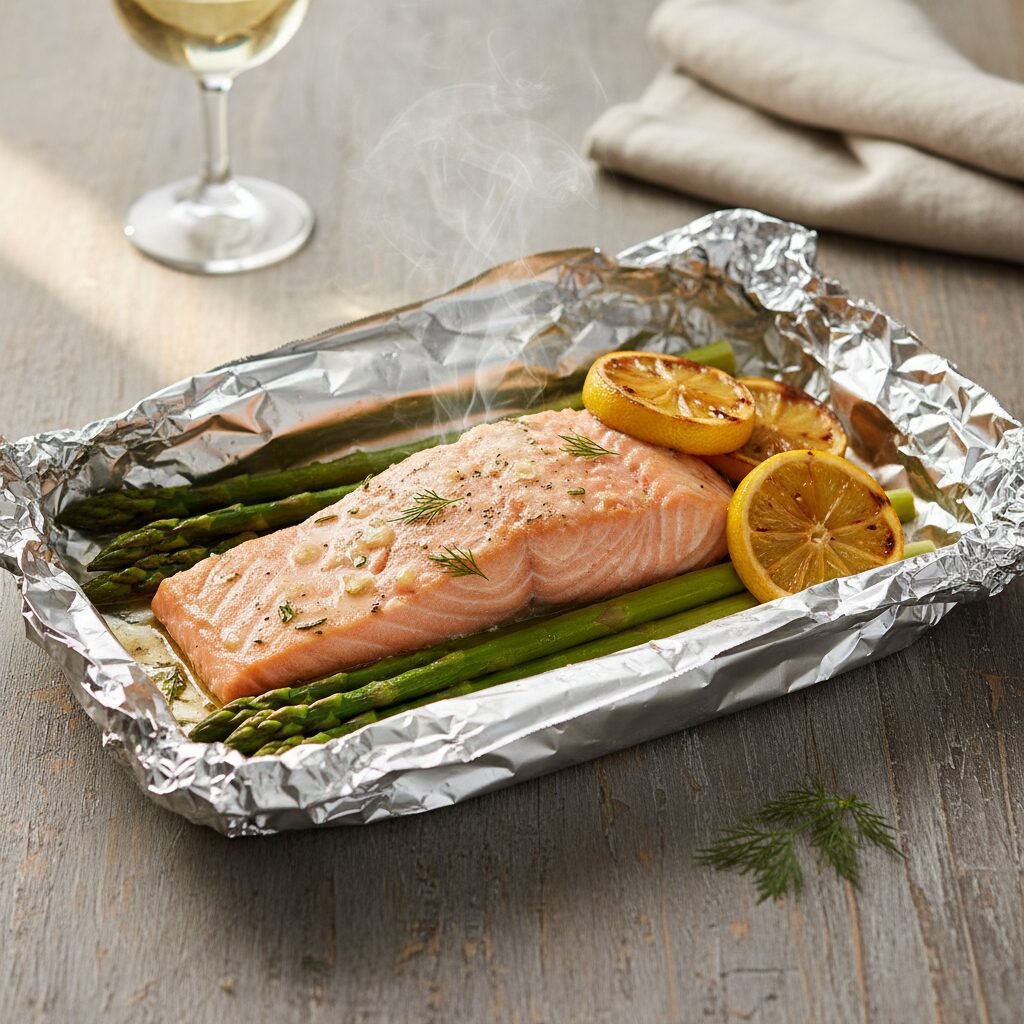
Garlic Butter Baked Salmon and Asparagus Foil Packs
Baked Salmon And Asparagus Lunch Foil Pack Recipe
This healthy, low-carb meal prep solution combines tender salmon fillets and crisp asparagus spears in individual foil packets. Ready in under 30 minutes with zero cleanup, it is the ultimate easy lunch or dinner for busy weekdays.
10 minutes
20 minutes
30 minutes
4 servings
Main Course
Baking
American
Gluten-Free
In the fast-paced world of modern home cooking, finding a recipe that ticks every box—healthy, delicious, quick, and easy to clean—can feel like searching for a culinary unicorn. Enter the Baked Salmon and Asparagus Foil Pack, a recipe that has taken the Pinterest community by storm and revolutionized the way we approach lunch and dinner meal prep. This dish is not just a meal; it is a masterclass in efficiency and flavor maximization. Imagine opening a steaming packet of food where the aroma of roasted garlic, zesty lemon, and rich butter immediately fills the air. The salmon, perfectly flaky and moist, sits atop a bed of vibrant, tender-crisp asparagus, all bathed in a sauce that created itself during the baking process. Because the ingredients are sealed tightly within aluminum foil, the natural juices of the fish and vegetables circulate continuously, steaming the contents to perfection while infusing them with the aromatics of fresh herbs and citrus. This method eliminates the need for heavy oils or constant stirring, making it a heart-healthy choice that doesn’t sacrifice an ounce of satisfaction. Whether you are a busy professional looking for a high-protein lunch to fuel your afternoon, or a parent seeking a nutritious dinner that won’t result in a sink full of dirty pots and pans, this foil pack recipe is your answer. It is elegant enough for a date night yet simple enough for a Tuesday, bridging the gap between gourmet dining and practical sustenance.
History & Origins
The technique used in this recipe is a modern adaptation of a classic French cooking method known as ‘en papillote’ (in parchment). Dating back to the 17th century, French chefs would wrap delicate proteins—typically fish or poultry—in parchment paper to preserve their moisture and subtle flavors during cooking. This technique was revered for its ability to steam food gently in its own juices, ensuring a tender result that roasting or frying could rarely match. As culinary trends crossed the Atlantic and evolved through the 20th century, the method found a rugged counterpart in American culture: the ‘hobo pack’ or ‘silver turtle.’ Popularized by Boy Scouts and camping enthusiasts in the 1950s and 60s, these foil-wrapped meals were cooked directly on hot coals. They were utilitarian, designed for durability and ease rather than culinary finesse. However, the last decade has seen a massive resurgence of this method in home kitchens, driven largely by the health-conscious ‘clean eating’ movement and the visual appeal of social media platforms like Pinterest. The modern foil pack serves as a hybrid of these two histories: it retains the gourmet, steam-cooked delicacy of the French ‘en papillote’ tradition while utilizing the durable, accessible aluminum foil of the American camping tradition. Today, it stands as a staple of the meal prep community, representing a shift towards home-cooked meals that fit into a busy, health-focused lifestyle.
Why This Recipe Works
The science behind why this Baked Salmon and Asparagus Foil Pack recipe works so well lies in the thermodynamics of the enclosed environment. When you seal the foil tightly, you are essentially creating a miniature pressure cooker. As the oven heats the packet, the water content in the asparagus and the salmon turns to steam. Because the steam cannot escape, it circulates rapidly around the food, cooking the asparagus to a perfect tender-crisp texture without drying it out, which is a common risk when roasting vegetables exposed. Simultaneously, this humid environment prevents the salmon from losing its moisture, a common pitfall with baked fish that often results in a rubbery texture. Furthermore, the compound butter mixture melts and emulsifies with the natural juices released by the salmon and asparagus. In an open pan, these juices would evaporate, leaving the flavor behind. In the foil pack, they concentrate, marinating the food continuously as it cooks. This means every bite is infused with the maximum amount of garlic, lemon, and herb flavor. The foil also acts as a thermal buffer, distributing heat evenly and preventing the delicate tips of the asparagus from burning before the thicker salmon fillet is cooked through.
Why You’ll Love This Recipe
- ✓Zero Cleanup: Simply toss the foil after eating.
- ✓High Protein & Low Carb: Perfect for Keto and Paleo diets.
- ✓Meal Prep Friendly: Packs can be assembled in advance.
- ✓Nutrient Dense: Rich in Omega-3s and fiber.
- ✓Foolproof Cooking: The steam method prevents dry fish.
- ✓Customizable: Easy to swap veggies or seasonings.
Equipment You’ll Need
- ✓Heavy-duty aluminum foil
- ✓Baking sheet
- ✓Chef’s knife
- ✓Cutting board
- ✓Small mixing bowl
- ✓Whisk or fork
Ingredients
- ✓4 salmon fillets (approx. 6oz each), skin-on or off
- ✓1 lb fresh asparagus, woody ends trimmed
- ✓1/2 cup unsalted butter, melted
- ✓4 cloves garlic, minced
- ✓1 tablespoon fresh lemon juice
- ✓1 tablespoon fresh parsley, chopped
- ✓1 teaspoon dried dill
- ✓1 teaspoon salt
- ✓1/2 teaspoon black pepper
- ✓1 lemon, sliced into rounds
- ✓1 tablespoon olive oil (for drizzling)
Instructions
- Preheat your oven to 400°F (200°C). Ensure the rack is positioned in the center of the oven.
- Cut four sheets of heavy-duty aluminum foil, each about 12-14 inches long.
- In a small bowl, whisk together the melted butter, minced garlic, lemon juice, chopped parsley, dried dill, salt, and pepper until well combined.
- Divide the trimmed asparagus spears evenly among the four sheets of foil, placing them in the center of each sheet to form a bed.
- Drizzle the asparagus lightly with olive oil and a pinch of salt.
- Place one salmon fillet directly on top of each bed of asparagus.
- Generously brush or spoon the garlic butter mixture over each salmon fillet and the surrounding asparagus, ensuring everything is well coated.
- Top each salmon fillet with two slices of fresh lemon.
- Fold the sides of the foil up over the salmon and asparagus. Fold the top and bottom edges together tightly to create a sealed packet. Ensure there is a little room inside for air to circulate, but seal the edges well to prevent steam from escaping.
- Place the foil packets onto a baking sheet.
- Bake for 15-20 minutes. The cooking time will depend on the thickness of your salmon. 15 minutes is usually sufficient for thinner fillets, while thick cuts may need 20 minutes.
- Carefully open one packet (watch out for hot steam!) to check for doneness. The salmon should flake easily with a fork and the asparagus should be tender.
- If you desire a charred top, open the packets carefully and broil for 1-2 minutes, watching closely to prevent burning.
- Serve immediately, garnished with extra fresh parsley if desired.
Expert Cooking Tips
- ✓Use heavy-duty foil to prevent tearing when folding or moving the packets.
- ✓Cut the asparagus spears to fit the length of the salmon for a uniform presentation.
- ✓Do not over-seal the packet so tightly that it crushes the food; leave a small tent of air space on top for the steam to circulate.
- ✓If using thick salmon fillets, you might want to par-cook the asparagus for 2 minutes or slice them thinner so they finish at the same time as the fish.
- ✓Always place the foil packs on a baking sheet rather than directly on the oven rack to catch any potential butter drips and keep your oven clean.
Substitutions and Variations
This recipe is incredibly versatile and welcomes substitutions based on dietary needs or pantry availability. If you are avoiding dairy, the butter can be replaced with high-quality olive oil, avocado oil, or a plant-based butter alternative; the result will be slightly less rich but equally flavorful. For the protein, while salmon is the star, this method works beautifully with other fish such as cod, halibut, or trout, though you may need to adjust cooking times slightly for thinner white fish. If asparagus isn’t in season or to your taste, green beans are the best direct substitute as they have a similar cooking time. Zucchini ribbons, broccoli florets, or bell pepper strips also work well, though broccoli may need to be cut into smaller pieces to ensure it becomes tender. For the aromatics, feel free to swap parsley and dill for basil, thyme, or rosemary depending on the flavor profile you prefer. Soy sauce and ginger can replace the lemon and herbs for an Asian-inspired twist.
Common Mistakes to Avoid
The most common mistake with foil packs is using thin, cheap foil that tears easily, leading to leaked juices and dry fish; always opt for heavy-duty foil or double-wrap standard foil. Another frequent error is overcooking the salmon. Because the fish continues to steam even after you pull it from the oven, it is best to remove it when it is just barely opaque in the center. Leaving it in too long will result in a dry, chalky texture. Additionally, failing to seal the packet properly allows the steam to escape, which defeats the purpose of this cooking method and can lead to unevenly cooked asparagus. Finally, be careful not to overcrowd the packet; if you try to fit two servings into one foil sheet, the heat won’t distribute evenly, and the center ingredients may remain undercooked.
Serving Suggestions
While these foil packs are a complete meal on their own, they pair wonderfully with a variety of sides to make a heartier dinner. For a low-carb option, serve alongside a fresh cauliflower rice pilaf or a crisp arugula salad with a balsamic vinaigrette. If you aren’t counting carbs, fluffy jasmine rice, quinoa, or roasted baby potatoes make excellent vehicles for soaking up the extra garlic butter sauce gathered at the bottom of the foil. A side of crusty sourdough bread or garlic knots is also fantastic for dipping. For a refreshing drink pairing, a crisp Sauvignon Blanc or a sparkling water with a twist of lime cuts through the richness of the butter perfectly.
Storage and Reheating Tips
These foil packs are excellent for meal prep. Store any leftovers in an airtight container in the refrigerator for up to 3 days. It is best to remove the food from the foil before storing to prevent the lemon rind from making the fish bitter over time. To reheat, avoid the microwave if possible, as it can make the salmon rubbery and the asparagus mushy. Instead, place the food back into a piece of foil or a covered baking dish and warm it in a 300°F oven for about 10-12 minutes until heated through. If you must use a microwave, use 50% power in short intervals. Freezing is not recommended for this specific recipe, as the texture of the cooked asparagus and the emulsion of the butter sauce tends to degrade upon thawing.
Nutrition Facts (Estimated)
| Serving Size | 1 foil pack |
| Calories | 420 |
| Fat | 28g |
| Saturated Fat | 10g |
| Unsaturated Fat | 15g |
| Trans Fat | 0g |
| Cholesterol | 95mg |
| Sodium | 380mg |
| Carbohydrates | 6g |
| Fiber | 3g |
| Sugar | 2g |
| Protein | 34g |
Frequently Asked Questions
Can I prepare these foil packs ahead of time?
Yes, you can assemble the foil packs up to 24 hours in advance. Keep them refrigerated on a baking sheet until you are ready to cook. You may need to add 2-3 minutes to the cooking time since you are starting with cold ingredients.
How do I know when the salmon is fully cooked?
The salmon is done when it turns an opaque pink color and flakes easily when pressed with a fork. The internal temperature should reach 145°F (63°C).
Can I cook this on a grill instead of an oven?
Absolutely! These foil packs are perfect for grilling. Place them over medium-high heat (approx 400°F) for 10-15 minutes. Close the grill lid to ensure even cooking.
Should I take the skin off the salmon?
It is a matter of personal preference. The skin will not get crispy in a foil pack, so many people prefer to remove it. However, keeping the skin on can help keep the fillet intact and moist. You can easily peel it off after cooking.
Can I use frozen salmon?
It is best to thaw the salmon completely before cooking. Cooking from frozen will release too much water, resulting in a watery sauce and potentially unevenly cooked asparagus.
Why did my asparagus turn out mushy?
This usually happens if the asparagus spears are very thin or if the packs were cooked too long. Try to use medium-thickness spears or reduce cooking time slightly.
Is this recipe Keto-friendly?
Yes, this recipe is naturally high in healthy fats and protein while being very low in carbohydrates, making it excellent for Keto diets.
What if I don’t have aluminum foil?
You can use parchment paper to create the packets (the traditional ‘en papillote’ method). However, parchment paper cannot be used on an open grill or under a broiler, only for standard oven baking.
Conclusion
The Baked Salmon and Asparagus Foil Pack is more than just a recipe; it is a lifestyle hack for anyone who values their time as much as their health. By combining fresh ingredients with a foolproof cooking method, you achieve a restaurant-quality meal with virtually no effort. The harmonious blend of rich garlic butter, bright lemon, and savory salmon creates a flavor profile that feels indulgent yet remains perfectly nutritious. Whether you are meal-prepping for a busy work week or throwing together a quick family dinner, this dish promises to deliver satisfaction without the stress. Give this recipe a try, and you might just find yourself saying goodbye to sink-loads of dishes forever.