The Ultimate Whole Grain Veggie Sushi Roll: A Nutrient-Packed Lunch Recipe
Whole Grain Veggie Sushi Roll Lunch Recipe
Revitalize your midday meal with these crisp, refreshing Whole Grain Veggie Sushi Rolls. Packed with nutty brown rice, creamy avocado, and crunchy vegetables, this recipe offers a wholesome twist on a Japanese classic that is perfect for meal prep.
30 minutes
45 minutes
1 hour 15 minutes
4 rolls (32 pieces)
Lunch
Stovetop / Rolling
Japanese-Fusion
Vegan
There is something undeniably sophisticated yet comforting about sushi. It is a food that engages all the senses—the vibrant colors of the vegetables, the sticky texture of the rice, the umami scent of the nori, and the refreshing crunch in every bite. However, the standard white rice sushi roll often leads to a sugar crash shortly after lunch due to the high glycemic index of polished rice. Enter the Whole Grain Veggie Sushi Roll, a robust and heart-healthy alternative that transforms a light snack into a sustaining, power-packed lunch.
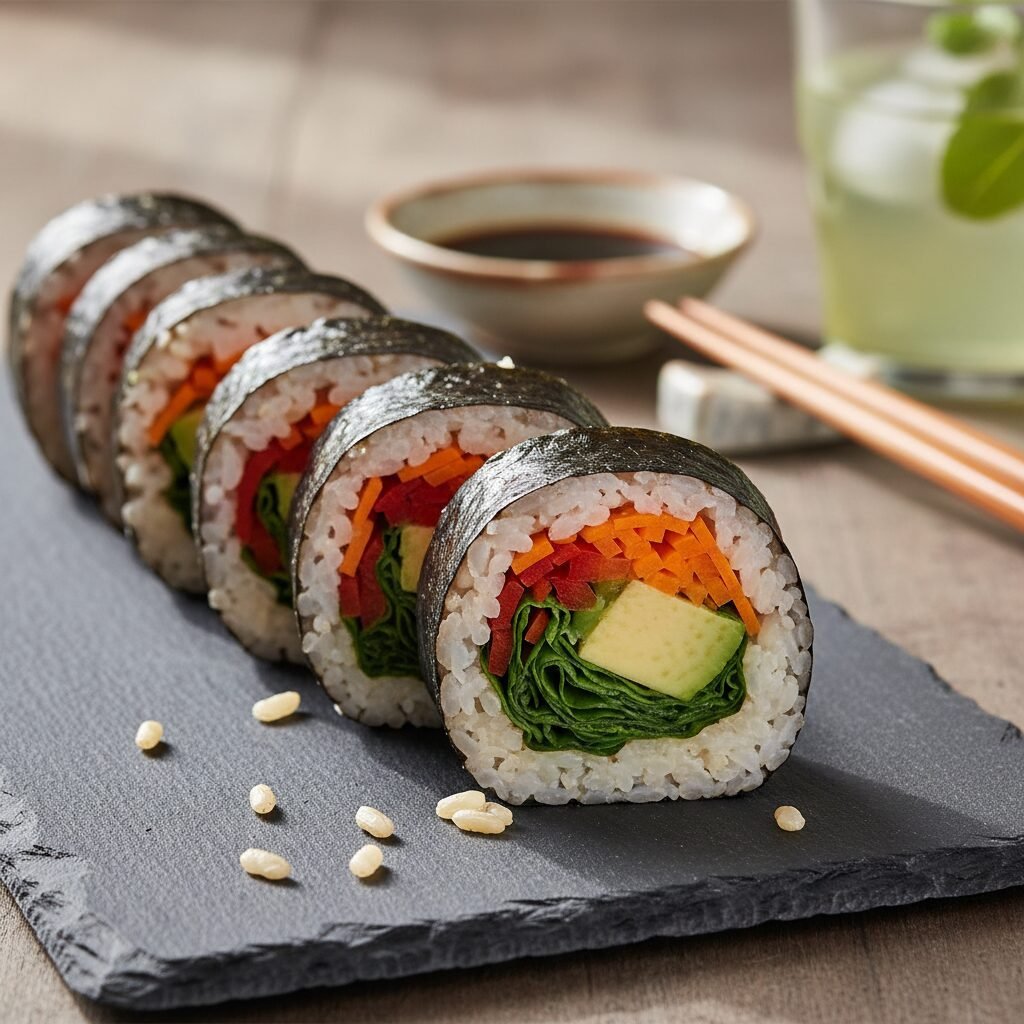
By swapping traditional white sushi rice for short-grain brown rice, we introduce a complex, nutty flavor profile and a significant boost of fiber that keeps you full for hours. This recipe isn’t just about substitution; it’s about elevation. The earthiness of the whole grains pairs beautifully with the bright acidity of seasoned rice vinegar and the fresh snap of cucumber and carrots. We incorporate creamy avocado to mimic the rich mouthfeel usually provided by fatty fish, ensuring that the roll feels indulgent despite being entirely plant-based.
Whether you are a seasoned sushi chef or a complete novice looking to break free from the monotony of sandwiches and salads, this recipe is designed for you. It is a celebration of fresh produce and wholesome grains, wrapped up in a convenient, portable package. Preparing sushi at home allows you to control the sodium levels and avoid the hidden sugars often found in restaurant takeout. Get ready to roll your way to a healthier, more exciting lunch routine that looks as good as it tastes.
History & Origins
Sushi, as we know it today, has a history that spans centuries, evolving significantly from its ancient roots. The concept originated in Southeast Asia and arrived in Japan around the 8th century as ‘narezushi’—fermented fish wrapped in sour rice. The rice was originally discarded, used solely for preservation. It wasn’t until the Edo period (1603–1867) in Japan that fresh fish was served over vinegared rice, creating ‘nigirizushi’, the precursor to modern fast food.
The ‘makizushi’ or rolled sushi, which this recipe emulates, became popular for its portability and artistic presentation. As sushi migrated to the West, particularly the United States in the mid-20th century, it underwent further transformation. The introduction of ingredients like avocado and cream cheese (hello, California Roll and Philadelphia Roll) bridged the gap for Western palates unfamiliar with raw fish.
The shift toward whole grain sushi is a relatively modern phenomenon, born out of the global health and wellness movement of the late 20th and early 21st centuries. As awareness of the nutritional benefits of whole grains grew—specifically their fiber content and lower glycemic impact—health-conscious chefs began experimenting with brown rice. While traditionalists initially scoffed at the texture of brown rice, which is less sticky and harder to mold than polished white rice, techniques were refined to achieve the perfect balance of stickiness and chew. Today, brown rice sushi is a staple in health food stores and modern Japanese fusion restaurants, representing the ongoing evolution of this dynamic cuisine.
Why This Recipe Works
This recipe succeeds where many healthy sushi attempts fail because it specifically addresses the texture and flavor challenges of brown rice. Brown rice has the bran layer intact, which prevents it from becoming as sticky as white rice. To counteract this, we use short-grain brown rice and a slightly higher water-to-rice ratio during cooking, ensuring the grains are tender and cohesive enough to hold the roll together without becoming mushy.
Furthermore, the flavor balance is meticulously calibrated. Brown rice has a distinct nuttiness that can overpower delicate fillings. To harmonize this, we use a slightly more robust seasoning blend of rice vinegar, sugar, and salt. The fillings are chosen for their contrasting textures: the creaminess of the avocado binds the flavors, while the julienned carrots and cucumber provide a necessary structural crunch that stands up to the chewy rice.
Finally, this recipe emphasizes the ‘over-stuffing’ technique. Since we are skipping the fish, we can afford to be generous with the vegetables. This not only makes the roll visually stunning, with a mosaic of colors in the center, but also ensures that every bite is moisture-rich and flavorful, preventing the dreaded dry mouthfeel that often accompanies whole grain dishes.
Why You’ll Love This Recipe
- ✓High in fiber and complex carbohydrates for sustained energy.
- ✓Completely vegan and gluten-free friendly.
- ✓Customizable with your favorite seasonal vegetables.
- ✓Much cheaper than store-bought sushi.
- ✓Perfect for meal prep and lunchboxes.
- ✓No raw fish handling required, making it safe for everyone.
Equipment You’ll Need
- ✓Bamboo sushi rolling mat (makisu)
- ✓Sharp chef’s knife
- ✓Rice cooker or heavy-bottomed pot
- ✓Wooden rice paddle or spatula
- ✓Large bowl (preferably wooden)
- ✓Plastic wrap
- ✓Small bowl for water
Ingredients
- ✓2 cups short-grain brown rice
- ✓3 1/2 cups water (for cooking rice)
- ✓4 sheets nori (dried seaweed)
- ✓1/3 cup rice vinegar
- ✓2 tablespoons organic cane sugar or maple syrup
- ✓1 teaspoon sea salt
- ✓1 large cucumber, julienned
- ✓1 large carrot, peeled and julienned
- ✓1 ripe avocado, sliced thinly
- ✓1/2 red bell pepper, julienned
- ✓1 cup baby spinach leaves
- ✓Sesame seeds (black or white) for garnish
- ✓Soy sauce or tamari for dipping
- ✓Pickled ginger and wasabi (optional)
Instructions
- Rinse the short-grain brown rice thoroughly under cold water until the water runs mostly clear. This removes excess starch and debris.
- Place the rice and 3 1/2 cups of water in a rice cooker or heavy pot. If using a pot, bring to a boil, then reduce heat to low, cover tightly, and simmer for about 40-45 minutes, or until water is absorbed and rice is tender. Let it steam off the heat for 10 minutes.
- While the rice is cooking, prepare the sushi vinegar. In a small saucepan or microwave-safe bowl, combine the rice vinegar, sugar, and salt. Heat gently until the sugar and salt dissolve completely. Let it cool.
- Transfer the cooked hot rice to a large, wide bowl (wooden is traditional). Pour the seasoned vinegar mixture over the rice.
- Using a rice paddle, gently fold the vinegar into the rice using a cutting motion. Fan the rice simultaneously to cool it down and create a glossy finish. Do not smash the grains. Cover with a damp cloth to keep warm and moist.
- Prepare your workstation. Wrap your bamboo mat in plastic wrap to prevent sticking. Place a sheet of nori on the mat, shiny side down.
- Wet your hands in a small bowl of water. Grab a handful of rice (about 3/4 cup) and spread it evenly over the nori, leaving a 1-inch border at the top edge. Sprinkle with sesame seeds.
- Arrange your fillings (cucumber, carrot, avocado, pepper, spinach) in a horizontal line across the center of the rice. Do not overfill.
- Lift the bottom edge of the bamboo mat and roll it over the fillings, tucking the edge of the nori under the ingredients. Squeeze gently to shape the roll.
- Continue rolling until you reach the top edge. Dab a little water on the bare nori border to seal the roll.
- Remove the mat and set the roll aside, seam side down. Repeat with remaining ingredients.
- Using a very sharp, wet knife, slice each roll into 8 pieces. Use a sawing motion and clean the knife between cuts for neat edges.
- Serve immediately with soy sauce, pickled ginger, and wasabi.
Expert Cooking Tips
- ✓Use short-grain brown rice specifically; long-grain varieties like Basmati will not stick together.
- ✓Keep a bowl of water mixed with a teaspoon of vinegar nearby to dip your hands; this prevents rice from sticking to your fingers.
- ✓Don’t skip the fanning step when seasoning the rice; it removes excess moisture and gives the rice a nice sheen.
- ✓If the brown rice is too tough, soak it in water for 30 minutes before cooking.
- ✓Wrap your bamboo mat in plastic wrap for easier cleanup and to prevent rice grains from getting stuck in the bamboo slats.
- ✓When cutting, let the weight of the knife do the work; pressing down too hard will squash the roll.
- ✓Place the heavier ingredients (like avocado) closest to you when layering to make rolling easier.
Substitutions and Variations
This recipe is incredibly versatile and welcomes substitutions based on dietary needs or pantry availability. If you cannot find short-grain brown rice, ‘Haiga’ rice (partially milled brown rice) is an excellent middle ground that retains the germ but has a texture closer to white rice. For a low-carb option, you can use cauliflower rice mixed with a little cream cheese to help it bind, though the rolling technique will be more delicate.
regarding fillings, the sky is the limit. Sweet potato (steamed or tempura-fried) adds a lovely sweetness and bulk. Tofu strips (marinated and baked) or tempeh can be added for extra protein. If you dislike nori or have an allergy to seaweed, you can use soy paper wrappers, which come in various colors and have a milder flavor. For the vinegar seasoning, apple cider vinegar can work in a pinch, though the flavor profile will be slightly fruitier than traditional rice vinegar. Maple syrup or agave can easily replace the cane sugar for a refined-sugar-free version.
Common Mistakes to Avoid
The most common mistake beginners make is using hot rice on the nori. If the rice is steaming hot, it will wilt the seaweed instantly, making it chewy and tough to bite through; always let the rice cool to body temperature. Another frequent error is overfilling the roll. It is tempting to pack in as many veggies as possible, but this often leads to the roll bursting open or not sealing properly. Start with less filling than you think you need.
Additionally, using the wrong type of rice is a dealbreaker. Long-grain brown rice simply does not have the starch content required to stick together, and your rolls will crumble apart the moment you pick them up. Finally, using a dull knife to cut the sushi will result in squashed, unappetizing rolls. Ensure your blade is razor-sharp and wet it before every single cut to glide through the sticky rice and crisp nori effortlessly.
Serving Suggestions
These Whole Grain Veggie Sushi Rolls are best served on a wooden board or a ceramic platter to highlight their vibrant colors. Accompaniments are key to the full experience: provide small dipping bowls of high-quality soy sauce or tamari (for gluten-free). A mound of pickled ginger (gari) acts as a palate cleanser between bites, and a dab of wasabi paste adds a spicy kick.
For a complete meal, serve these rolls alongside a bowl of hot miso soup with tofu and scallions. A side of edamame sprinkled with sea salt or a seaweed salad (wakame) complements the flavors perfectly. If you are packing this for lunch, consider a bento box presentation with fruit slices or berries in a separate compartment to offer a sweet finish to the meal.
Storage and Reheating Tips
Sushi is notoriously difficult to store because the rice hardens when refrigerated. However, because we are using brown rice and veggies (no raw fish), these rolls store better than traditional sushi. To store, wrap each roll tightly in plastic wrap before slicing to prevent air exposure. Place them in an airtight container in the refrigerator for up to 2 days.
When you are ready to eat, the rice might be hard. To revive it, let the container sit at room temperature for 30 minutes before eating. Alternatively, you can microwave the rolls for just 10-15 seconds—just enough to take the chill off and soften the grains without cooking the veggies. Do not freeze these rolls, as the vegetables will release water and become mushy upon thawing, ruining the texture.
Nutrition Facts (Estimated)
| Serving Size | 1 Roll (8 pieces) |
| Calories | 320 |
| Fat | 8g |
| Saturated Fat | 1g |
| Unsaturated Fat | 6g |
| Trans Fat | 0g |
| Cholesterol | 0mg |
| Sodium | 350mg |
| Carbohydrates | 58g |
| Fiber | 6g |
| Sugar | 4g |
| Protein | 7g |
Frequently Asked Questions
Can I use regular brown rice instead of short-grain?
It is highly recommended to use short-grain brown rice. Long-grain brown rice lacks the necessary starch to make the grains stick together, which is essential for holding the sushi roll intact.
Do I need a bamboo mat to make sushi?
While a bamboo mat (makisu) makes the process much easier and produces tighter rolls, you can use a thick kitchen towel covered in plastic wrap or even parchment paper in a pinch.
Is this recipe gluten-free?
Yes, the ingredients listed are naturally gluten-free. However, ensure you use Tamari instead of traditional soy sauce for dipping, as regular soy sauce contains wheat.
Can I make the rice ahead of time?
You can cook the rice a few hours ahead, but it is best seasoned and rolled while it is fresh (at room temperature). Refrigerated plain rice becomes hard and is difficult to season properly later.
Why is my nori chewy?
Nori becomes chewy if it absorbs moisture from hot rice or if the roll sits for too long before eating. Ensure your rice is cooled to body temperature before spreading it on the seaweed.
What other veggies work well in this?
Asparagus (blanched), purple cabbage, radish sprouts, shiitake mushrooms, and sweet potato are all excellent additions or substitutions.
How do I get the roll to stay closed?
Leave about an inch of bare nori at the top of the sheet. Before finishing the roll, dab a little water on this bare strip; it acts as a glue when you finish rolling.
Is brown rice sushi healthier than white rice sushi?
Generally, yes. Brown rice retains the bran and germ, providing more fiber, vitamins, and minerals, and has a lower glycemic index, which helps regulate blood sugar levels better than white rice.
Conclusion
Mastering the art of the Whole Grain Veggie Sushi Roll is a rewarding culinary adventure that pays dividends in both flavor and health. By taking the time to prepare your own sushi, you gain full control over the ingredients, ensuring a meal that is fresh, nutritious, and tailored exactly to your tastes. The nutty chew of the brown rice combined with the crisp, colorful vegetables creates a lunch that is satisfying without being heavy. Whether you are prepping for a busy work week or hosting a casual dinner with friends, these rolls are sure to impress. So grab your bamboo mat, sharpen your knife, and enjoy the process of creating beautiful, wholesome food right in your own kitchen.