Better-Than-Takeout Chicken Lettuce Wraps with Water Chestnuts: The Ultimate Healthy Recipe
Chicken Lettuce Wraps With Water Chestnuts Healthy Recipe
Skip the restaurant wait and whip up these irresistible Chicken Lettuce Wraps in under 30 minutes! Packed with savory minced chicken, crunchy water chestnuts, and a crave-worthy hoisin-ginger sauce, this healthy recipe delivers big flavor with minimal effort.
15 minutes
15 minutes
30 minutes
4 servings
Main Course
Stovetop
Asian-American
Dairy-Free
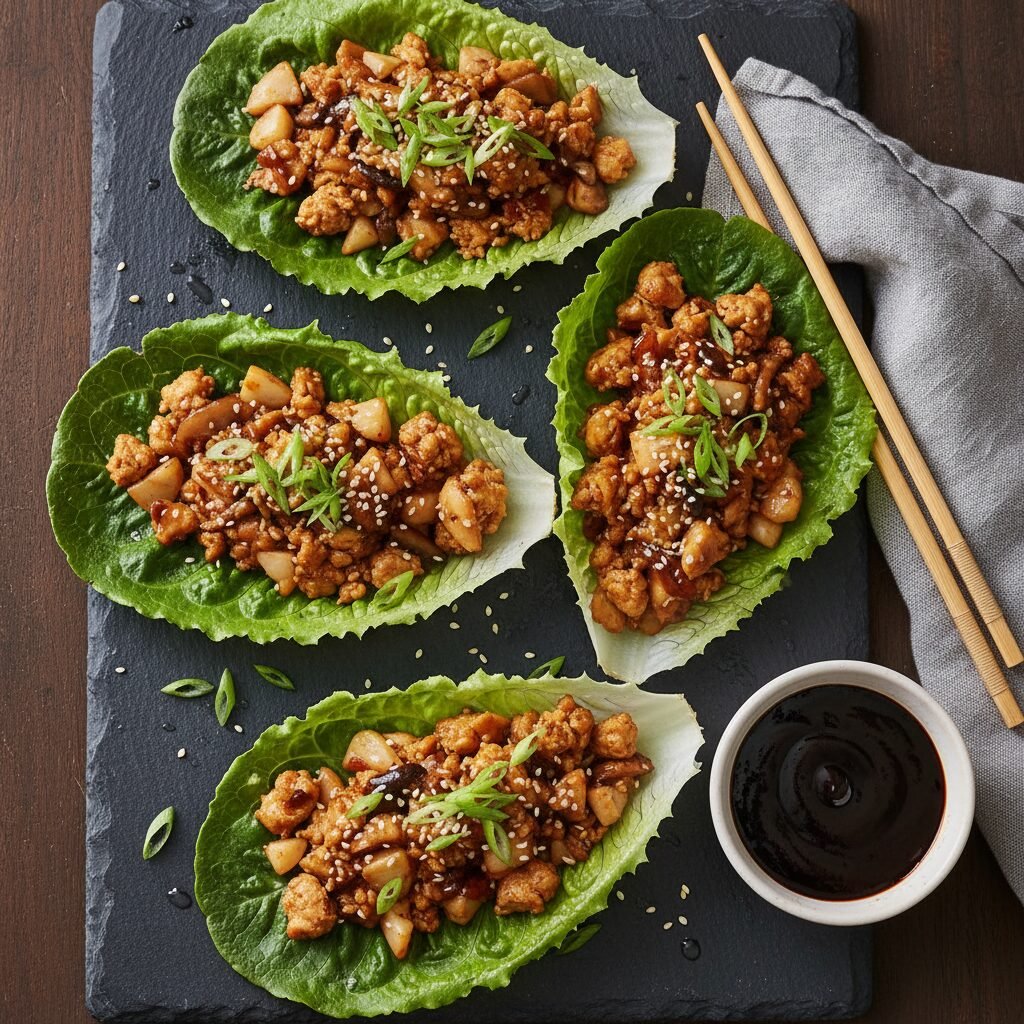
There is something undeniably magical about the combination of hot, savory meat and cool, crisp greens. These Chicken Lettuce Wraps with Water Chestnuts represent the pinnacle of texture contrast in the culinary world. Imagine taking a bite: first, the refreshing snap of chilled butter lettuce, followed immediately by the warmth of tender ground chicken, the deep umami of shiitake mushrooms, and the signature crunch of water chestnuts. It is a sensory experience that feels indulgent yet remains incredibly light and healthy.
For years, this dish has been a staple appetizer at Asian-fusion restaurants across the United States, most notably popularized by chains like P.F. Chang’s. However, making them at home unlocks a new level of freshness and customization that takeout simply cannot match. You control the sodium, the sweetness, and the quality of the ingredients. This recipe focuses on a balanced sauce—not too cloyingly sweet, but rich with hoisin, soy, and a hint of sesame—that coats every morsel of chicken perfectly.
Whether you are looking for a low-carb dinner option, a high-protein post-workout meal, or an impressive appetizer for your next dinner party, these wraps are the answer. They are naturally gluten-free adaptable, dairy-free, and packed with lean protein. Plus, the speed at which this comes together makes it a weeknight savior. We are talking about a restaurant-quality meal on your table in less time than it takes to order delivery. Get ready to add this to your permanent rotation; it is that good.
History & Origins
The origins of the lettuce wrap can be traced back to Cantonese cuisine, specifically a dish known as ‘San Choy Bow’ (or Sung Choy Bao). In Cantonese, ‘San Choy’ translates to lettuce, and ‘Bow’ refers to a bundle or wrap. Traditionally, this dish was often served as a starter or a second course during banquets, utilizing ingredients like minced pigeon, squab, or pork, mixed with bamboo shoots, water chestnuts, and crunchy vegetables. The use of pigeon was considered a delicacy, symbolizing prosperity and fortune, making it a popular choice for celebratory meals like Lunar New Year.
As Chinese cuisine migrated to the West and adapted to local palates and ingredient availability, the protein often shifted from squab to more accessible options like minced chicken or pork. In the United States, the dish experienced a massive surge in popularity in the 1990s, largely credited to the casual dining chain P.F. Chang’s China Bistro. Their version of chicken lettuce wraps became a cult favorite, introducing millions of Americans to the concept of eating savory, saucy meat inside a crisp lettuce leaf rather than a flour tortilla or bun.
Culturally, the dish represents the Chinese philosophy of balance—yin and yang. The cooling properties of the lettuce balance the heating properties of the fried meat and aromatics. Over the decades, it has evolved from a banquet delicacy to a global health-food staple, embraced by low-carb and keto communities for its ability to deliver satisfying flavors without the heaviness of grains.
Why This Recipe Works
This recipe succeeds where others fail because it meticulously balances texture and flavor intensity. Many home versions of lettuce wraps suffer from two common issues: a watery filling or a lack of that signature crunch. To combat the watery filling, this recipe calls for cooking the chicken in two stages and ensuring the sauce is reduced until it clings to the meat rather than pooling at the bottom of the pan. We also use a specific ratio of hoisin sauce to soy sauce and rice vinegar; the hoisin provides the necessary body and sweetness, while the vinegar cuts through the richness to keep the palate refreshed.
Furthermore, the inclusion of water chestnuts is non-negotiable for authenticity and texture. Their unique cellular structure allows them to remain crunchy even after cooking, providing a necessary counterpoint to the soft ground chicken. We also emphasize chopping all vegetables—mushrooms, onions, and water chestnuts—to a uniform size, roughly matching the grind of the chicken. This ensures that every single bite contains a perfect mix of all ingredients, so you never get a mouthful of just onion or just meat. Finally, using butter lettuce (Bibb or Boston) instead of iceberg offers a pliable, tender cup that holds the filling without shattering, making the eating experience much cleaner and more enjoyable.
Why You’ll Love This Recipe
- ✓Ready in under 30 minutes for a quick weeknight win.
- ✓High protein and low carb, perfect for healthy diets.
- ✓Authentic restaurant flavor with a balanced savory-sweet sauce.
- ✓Water chestnuts provide an addictive, signature crunch.
- ✓Easily customizable with turkey, beef, or tofu.
- ✓Kid-friendly and fun to assemble at the table.
Equipment You’ll Need
- ✓Large skillet or Wok
- ✓Chef’s Knife
- ✓Cutting Board
- ✓Small mixing bowl (for sauce)
- ✓Whisk
- ✓Wooden Spoon or Spatula
Ingredients
- ✓1 lb Ground Chicken (lean)
- ✓1 tbsp Olive Oil or Vegetable Oil
- ✓1 tbsp Sesame Oil
- ✓1 cup White Onion, finely diced
- ✓1 tbsp Fresh Ginger, minced
- ✓2 cloves Garlic, minced
- ✓8 oz Can Water Chestnuts, drained and finely chopped
- ✓4 oz Shiitake Mushrooms, finely chopped
- ✓3 Green Onions, chopped (green and white parts separated)
- ✓1 head Butter Lettuce (Bibb or Boston), leaves separated and washed
- ✓1/4 cup Hoisin Sauce
- ✓2 tbsp Soy Sauce (or Tamari for gluten-free)
- ✓1 tbsp Rice Wine Vinegar
- ✓1 tsp Sriracha (optional, for heat)
- ✓Salt and Black Pepper to taste
Instructions
- Prep the Sauce: In a small bowl, whisk together the hoisin sauce, soy sauce, rice wine vinegar, sesame oil, and Sriracha (if using). Set aside.
- Sauté Aromatics: Heat the olive oil in a large skillet or wok over medium-high heat. Add the diced white onion and cook for 3-4 minutes until softened and translucent.
- Cook Chicken: Add the ground chicken to the skillet. Break it apart with your wooden spoon or spatula into small crumbles. Cook for 5-6 minutes until the chicken is browned and cooked through. Drain any excess fat if necessary.
- Add Flavor & Veggies: Stir in the minced garlic, ginger, chopped shiitake mushrooms, and the white parts of the green onions. Cook for another 2-3 minutes until the mushrooms are tender and the aromatics are fragrant.
- Combine & Simmer: Pour the prepared sauce over the chicken mixture. Add the chopped water chestnuts. Stir well to coat everything evenly. Lower the heat to medium-low and let it simmer for 2-3 minutes. This allows the sauce to thicken and the flavors to meld. The mixture should be saucy but not soupy.
- Final Touches: Stir in the green parts of the green onions. Taste and season with a pinch of salt and pepper if needed (the sauce is usually salty enough). Remove from heat.
- Serve: Arrange the clean, dry butter lettuce leaves on a platter. Spoon a generous amount of the chicken filling into the center of each leaf. Serve immediately.
Expert Cooking Tips
- ✓Dry the Lettuce: Ensure your lettuce leaves are completely dry after washing. Wet lettuce dilutes the flavor and makes the wrap slippery.
- ✓Uniform Chopping: Take the time to chop the water chestnuts and mushrooms into small, uniform pieces roughly the size of the ground chicken for the best texture.
- ✓Don’t Overcook: Ground chicken can dry out quickly. Once it’s browned, move quickly to the next steps.
- ✓Toast the Nuts: If you garnish with peanuts or cashews (optional), toast them briefly in a dry pan to release their essential oils.
- ✓Sauce Consistency: If the sauce is too thick, add a splash of water. If too thin, let it simmer a minute longer.
- ✓Ginger Hack: Use a spoon to peel fresh ginger easily, then grate it for a finer texture that melts into the sauce.
- ✓Wok Flavor: If you have a wok, use it! The high sides and heat distribution are perfect for this stir-fry style dish.
Substitutions and Variations
This recipe is incredibly versatile. If you don’t have ground chicken, **ground turkey** is the closest substitute and works perfectly. **Ground pork** offers a richer, more traditional flavor, while **ground beef** provides a heartier meal. For a vegetarian or vegan version, substitute the meat with **firm tofu** (crumbled and pressed) or finely chopped **tempeh**. You can even use chopped cauliflower and walnuts for a plant-based meat alternative.
If you are gluten-free, ensure your hoisin sauce is certified gluten-free and swap the soy sauce for **Tamari** or **Coconut Aminos**. If you cannot find water chestnuts, **jicama** or **bamboo shoots** are excellent alternatives that provide a similar crunch. Can’t find butter lettuce? **Iceberg lettuce** is a classic substitute that offers more crunch, though it is harder to fold. **Romaine hearts** can also work as sturdy ‘boats’.
Common Mistakes to Avoid
The most common mistake is **overcrowding the pan**, which causes the chicken to steam rather than brown. If your pan is small, cook the chicken in batches to get that nice sear. Another pitfall is **skipping the water chestnuts**; while it might seem like a minor ingredient, omitting them results in a mushy texture that lacks excitement.
Additionally, **using wet lettuce** is a recipe for disaster; the water mixes with the hot oil and sauce, creating a messy drip. Always use a salad spinner or pat the leaves dry with paper towels. Finally, be careful with salt. Hoisin and soy sauce are high in sodium, so taste your filling before adding any extra salt.
Serving Suggestions
These lettuce wraps are fantastic on their own as a light meal, but they can also be part of a larger Asian-inspired feast. Serve them alongside **steamed jasmine or brown rice** to make the meal more filling. A side of **cucumber salad** with sesame dressing complements the warm chicken perfectly. For appetizers, consider pairing them with **edamame**, **spring rolls**, or **hot and sour soup**. If you are hosting a party, set up a ‘lettuce wrap bar’ with toppings like crushed peanuts, extra Sriracha, cilantro, and lime wedges so guests can customize their own.
Storage and Reheating Tips
Leftover filling stores beautifully and often tastes even better the next day as the flavors meld. Store the chicken mixture in an airtight container in the refrigerator for up to **4 days**. Store the lettuce separately, washed and wrapped in paper towels inside a ziplock bag to keep it crisp.
To reheat the filling, simply microwave it for 1-2 minutes or sauté it in a pan over medium heat until warmed through. You may need to add a splash of water if the sauce has thickened too much in the fridge. The cooked filling can also be **frozen for up to 3 months**. Thaw overnight in the fridge before reheating. Do not freeze the lettuce.
Nutrition Facts (Estimated)
| Serving Size | 2 wraps |
| Calories | 320 |
| Fat | 14g |
| Saturated Fat | 3g |
| Unsaturated Fat | 9g |
| Trans Fat | 0g |
| Cholesterol | 75mg |
| Sodium | 750mg |
| Carbohydrates | 18g |
| Fiber | 3g |
| Sugar | 8g |
| Protein | 26g |
Frequently Asked Questions
Can I make this recipe ahead of time?
Yes! This is an excellent meal-prep recipe. You can cook the chicken filling up to 3 days in advance. Store it in the fridge and simply reheat it when you are ready to eat. Wash and prep the lettuce leaves ahead of time too, keeping them in the fridge to stay crisp.
Is this recipe gluten-free?
It can easily be made gluten-free. You must use gluten-free Tamari instead of soy sauce, and double-check that your Hoisin sauce is labeled gluten-free, as many brands contain wheat thickeners.
What is the best lettuce for lettuce wraps?
Butter lettuce (also known as Bibb or Boston lettuce) is generally considered the best because the leaves are round, cup-shaped, and tender yet sturdy enough to hold the filling. Iceberg lettuce is a good runner-up if you prefer a colder, crunchier vessel.
Can I use powdered ginger and garlic?
Fresh is always best for this recipe because the aromatics provide a specific texture and pungent flavor profile. However, in a pinch, you can use 1/2 tsp of garlic powder and 1/2 tsp of ground ginger, though the flavor will be less vibrant.
Where can I find water chestnuts?
Water chestnuts are almost always found in the ‘International’ or ‘Asian’ aisle of major grocery stores. They usually come in a can, either sliced or whole. Buy them whole and chop them yourself for better texture control.
Is this recipe spicy?
As written, it is very mild. The Sriracha is optional. If you want it spicy, you can increase the Sriracha, add red pepper flakes, or mix in some chili garlic sauce (Sambal Oelek).
Can I use pre-cooked chicken?
While fresh ground chicken is best for flavor absorption, you can use leftover rotisserie chicken. Finely chop the cooked chicken and add it to the pan after sautéing the onions and mushrooms, just to warm it through and coat it in the sauce.
What can I do with leftover Hoisin sauce?
Hoisin sauce is a versatile condiment. Use it as a glaze for salmon, a dipping sauce for spring rolls, a marinade for pork chops, or add a spoonful to stir-fried noodles for extra depth.
Why are my wraps falling apart?
This usually happens if you overfill the lettuce leaf. Try using less filling per wrap. Also, ensure you are using the inner, cup-shaped leaves of the lettuce head rather than the large, flat outer leaves.
Can I add noodles to the filling?
Yes! Fried crispy rice noodles (maifun) are a popular addition. Puff them in hot oil for a few seconds and stir them in at the very end, or serve them on top for extra crunch.
Conclusion
These Chicken Lettuce Wraps with Water Chestnuts are truly the perfect intersection of health, flavor, and convenience. They prove that eating well doesn’t mean sacrificing taste or spending hours in the kitchen. With the satisfying crunch of fresh veggies and the savory depth of the Asian-inspired sauce, this dish is bound to become a family favorite. Whether you are cooking for a crowd or just prepping lunch for the week, give this recipe a try. It is fresh, fast, and absolutely delicious. Don’t forget to snap a photo and tag us on social media before you dig in!