The Ultimate Light Spinach and Ricotta Stuffed Shells: Comfort Food Without the Guilt
Spinach And Ricotta Stuffed Shells Light Recipe
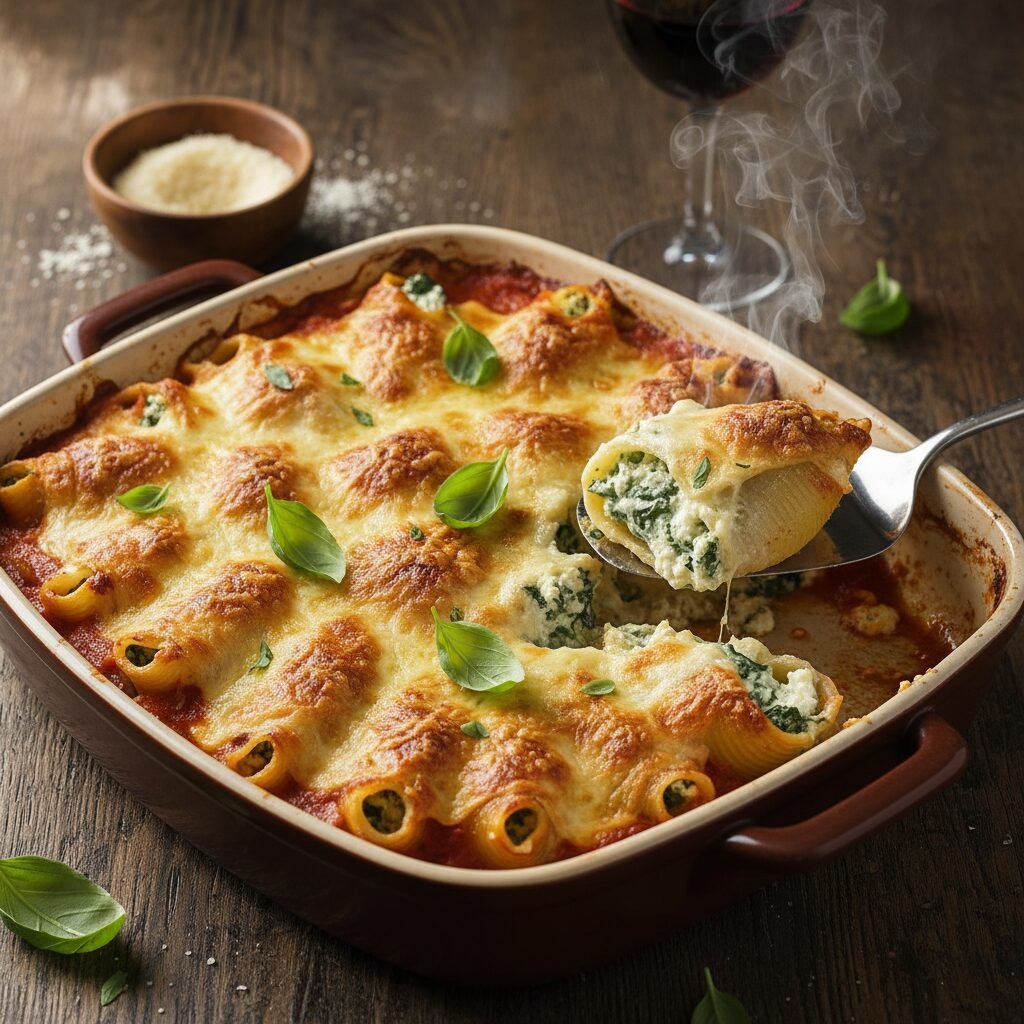
Craving classic Italian comfort food but want to keep things light? These Spinach and Ricotta Stuffed Shells use part-skim cheese and fresh greens to create a vibrant, cheesy masterpiece that satisfies the soul without weighing you down.
25 minutes
35 minutes
60 minutes
6 servings
Main Course
Baking
Italian-American
Vegetarian
There is something profoundly soothing about a bubbling casserole dish pulled fresh from the oven, the cheese golden and bubbling, the aroma of garlic and basil filling the kitchen. Stuffed shells, or conchiglioni, have long been a staple of Sunday family dinners and potlucks across America. However, traditional recipes often rely heavily on full-fat cheeses and heavy cream sauces that can leave you feeling sluggish. This Light Spinach and Ricotta Stuffed Shells recipe is my answer to that dilemma—a dish that refuses to compromise on flavor while offering a fresher, more wholesome profile. By utilizing part-skim ricotta and mozzarella, we significantly cut down on saturated fats, and by packing the filling with a generous amount of nutrient-dense spinach, we add fiber, vitamins, and a wonderful earthy texture that cuts through the richness of the dairy.
The magic of this dish lies in the balance. The marinara sauce provides a tangy, acidic counterpoint to the creamy filling, while the pasta shells offer that essential ‘al dente’ bite. It is a meal that feels indulgent and special, yet it fits perfectly into a balanced weeknight rotation. Whether you are cooking for picky eaters who need hidden veggies or hosting a dinner party where you want to impress without the heavy calorie count, this recipe delivers on all fronts. We are talking about a meal that warms you from the inside out, evoking memories of grandmother’s kitchen, but updated for the modern, health-conscious palate. It is vibrant, colorful, and undeniably delicious—proof that ‘light’ cooking does not have to mean boring or bland.
History & Origins
The history of stuffed pasta is a rich tapestry woven through centuries of Italian culinary tradition. While we often associate stuffed pasta with ravioli or tortellini, the large shell shape known as ‘conchiglioni’ (derived from the Italian word for conch shell) has a unique place in the pantheon of pasta shapes. Originating in Southern Italy, specifically popular in the Campania region, these large, ridged shells were engineered with a specific purpose: to hold heavy, chunky sauces and generous amounts of filling. Unlike smooth pasta which allows sauce to slide off, the ridges (rigate) and the deep cavity of the conchiglioni are designed to trap flavor.
Historically, stuffed pasta dishes were reserved for special occasions and festivities due to the labor-intensive process of making fresh pasta and fillings. The filling ingredients often reflected the local agriculture; in coastal areas, seafood might be used, while inland regions favored cheeses like ricotta (made from the whey left over from sheep or cow milk cheese production) and local greens. The specific combination of spinach and ricotta is a classic pairing, known as ‘Florentine’ style in many culinary contexts, though the roots of mixing greens with fresh cheese go back to the Renaissance era where balancing humors and flavors was an art form.
When Italian immigrants brought their culinary heritage to the United States in the late 19th and early 20th centuries, dishes like stuffed shells evolved. The availability of manufactured dried jumbo shells made the dish more accessible for everyday cooking, moving it from a labor of love to a weeknight staple. Over the decades, American versions often became heavier, laden with meat sauces and excessive cheese. This recipe looks back to the lighter, fresher origins of the dish, celebrating the simple, high-quality ingredients that defined the original Italian peasant cuisine.
Why This Recipe Works
This recipe succeeds where many others fail because it meticulously addresses the moisture content and flavor density of the filling. A common pitfall with spinach and ricotta stuffed shells is a watery filling that results in a soggy bottom. Spinach, being naturally high in water, releases liquid as it cooks. To combat this, this recipe emphasizes thoroughly squeezing the cooked spinach dry before mixing. This step is non-negotiable and ensures the filling remains creamy and distinct rather than turning into a soup inside the shell.
Furthermore, we use an egg binder. The egg proteins coagulate during baking, giving the ricotta mixture a pleasant, firm texture that holds its shape when you cut into it, rather than spilling out onto the plate. Flavor-wise, the use of nutmeg is a subtle but crucial element; it enhances the creaminess of the dairy and bridges the gap between the earthy spinach and the tangy tomato sauce. We also par-boil the pasta shells just shy of al dente. Since they will continue to cook in the oven while absorbing liquid from the sauce, this prevents the shells from becoming mushy and overcooked. Finally, the two-stage baking process—first covered with foil to steam the pasta through, then uncovered to brown the cheese—guarantees perfect texture every time.
Why You’ll Love This Recipe
- ✓Significantly lower in fat than traditional recipes using part-skim cheeses.
- ✓Packed with iron and vitamins thanks to a generous amount of spinach.
- ✓Can be prepared ahead of time and baked when ready.
- ✓Freezer-friendly meal perfect for meal prepping.
- ✓Vegetarian-friendly main course that satisfies meat-eaters.
Equipment You’ll Need
- ✓Large pot for boiling water
- ✓Colander
- ✓Large mixing bowl
- ✓9×13 inch baking dish
- ✓Cheese cloth or clean kitchen towel
- ✓Measuring cups and spoons
Ingredients
- ✓12 oz Jumbo Pasta Shells
- ✓15 oz Part-Skim Ricotta Cheese
- ✓10 oz Frozen Chopped Spinach, thawed and squeezed very dry
- ✓1 large Egg, lightly beaten
- ✓1/2 cup Parmesan Cheese, grated
- ✓1 1/2 cups Part-Skim Mozzarella Cheese, shredded (divided)
- ✓2 cloves Garlic, minced
- ✓1 tsp Dried Oregano
- ✓1/4 tsp Nutmeg
- ✓Salt and Black Pepper to taste
- ✓24 oz Jar of Marinara Sauce (low sugar preferred)
- ✓Fresh Basil for garnish
Instructions
- Preheat your oven to 375°F (190°C). Spray a 9×13 inch baking dish with non-stick cooking spray.
- Bring a large pot of salted water to a rolling boil. Add the jumbo shells and cook for about 7-8 minutes, or until they are slightly undercooked (very al dente). They should still be firm as they will finish cooking in the oven. Drain and rinse with cool water to stop the cooking process and prevent sticking.
- While the pasta cooks, prepare the filling. Ensure your thawed spinach is squeezed completely dry. Use a cheesecloth or clean kitchen towel to wring out as much liquid as possible.
- In a large mixing bowl, combine the ricotta cheese, dried spinach, beaten egg, parmesan cheese, 1/2 cup of the mozzarella cheese, minced garlic, oregano, nutmeg, salt, and pepper. Mix until thoroughly combined.
- Spread about 1 cup of marinara sauce across the bottom of the prepared baking dish to prevent sticking.
- Stuff each cooked shell generously with the ricotta spinach mixture (about 1.5 to 2 tablespoons per shell) and place them into the baking dish, open side up.
- Top the shells with the remaining marinara sauce, and then sprinkle the remaining 1 cup of mozzarella cheese evenly over the top.
- Cover the baking dish loosely with aluminum foil. Bake in the preheated oven for 20 minutes.
- Remove the foil and bake for another 10-15 minutes, or until the cheese is melted, bubbly, and slightly golden brown.
- Remove from the oven and let it sit for 5-10 minutes before serving. Garnish with fresh chopped basil.
Expert Cooking Tips
- ✓Do not overcook the pasta shells during the boiling phase; they will tear when you try to stuff them if they are too soft.
- ✓To fill the shells cleanly, you can transfer the filling mixture into a piping bag or a large zip-top bag with the corner snipped off.
- ✓If using fresh spinach instead of frozen, you will need about 1 lb. Sauté it down first, let it cool, and squeeze out the liquid before using.
- ✓Taste your ricotta mixture before adding the raw egg to adjust the salt and pepper levels to your liking.
- ✓Letting the dish rest for 10 minutes after baking is crucial; it allows the filling to set so it doesn’t run out when served.
Substitutions and Variations
This recipe is incredibly versatile and forgiving. If you need to make it gluten-free, simply swap the standard wheat pasta shells for a gluten-free rice or corn-based jumbo shell variety, though be gentle as they can be more fragile. For a dairy-free version, substitute the ricotta with a high-quality almond or cashew-based ricotta alternative, and use a plant-based mozzarella melt. If you aren’t a fan of spinach, kale or Swiss chard work beautifully; just ensure they are cooked down and chopped finely. You can also boost the protein by adding lean ground turkey or chicken sausage to the marinara sauce. If you don’t have nutmeg, you can omit it, or add a pinch of lemon zest for a brighter, fresher flavor profile.
Common Mistakes to Avoid
The most common mistake people make is failing to squeeze the spinach dry enough. Excess water in the spinach will seep out during baking, resulting in a watery sauce and a diluted filling flavor. Another error is overcooking the pasta before stuffing it. If the shells are fully cooked in the water, they will turn to mush in the oven. Also, be careful not to oversauce the dish; the shells should be nestled in sauce, not drowning in it, or they may become soggy. Finally, using pre-shredded mozzarella often adds unnecessary starch (used to prevent clumping in the bag), which prevents the cheese from melting smoothly. Grating your own block of part-skim mozzarella yields a much better texture.
Serving Suggestions
These light stuffed shells are a complete meal on their own, but they pair wonderfully with a crisp, acidic side salad to cut through the creaminess. A simple arugula salad with lemon vinaigrette and shaved parmesan is an excellent choice. Roasted vegetables, such as asparagus or broccoli rabe with garlic and chili flakes, also complement the dish well. For a heartier feast, serve with a side of crusty whole-grain garlic bread to sop up the extra marinara sauce. A glass of light red wine, such as a Pinot Noir or Chianti, or a crisp white like Pinot Grigio, makes for a perfect beverage pairing.
Storage and Reheating Tips
Leftovers store beautifully and can taste even better the next day as the flavors meld. Store any leftovers in an airtight container in the refrigerator for up to 3-4 days. To reheat, place the shells in an oven-safe dish, cover with foil, and bake at 350°F for 15-20 minutes until heated through. You can also microwave individual portions, though the texture may be slightly softer. This dish is also an excellent candidate for freezing. You can assemble the dish completely (up to the baking step), cover tightly with plastic wrap and then foil, and freeze for up to 3 months. Bake from frozen by adding 15-20 minutes to the covered baking time.
Nutrition Facts (Estimated)
| Serving Size | 3 shells |
| Calories | 320 |
| Fat | 10g |
| Saturated Fat | 4.5g |
| Unsaturated Fat | 5g |
| Trans Fat | 0g |
| Cholesterol | 45mg |
| Sodium | 580mg |
| Carbohydrates | 38g |
| Fiber | 4g |
| Sugar | 6g |
| Protein | 18g |
Frequently Asked Questions
Can I make this recipe ahead of time?
Absolutely. You can assemble the entire dish, cover it tightly, and store it in the refrigerator for up to 24 hours before baking. Just add a few extra minutes to the baking time if it’s going into the oven cold.
Why is my filling watery?
Watery filling is almost always caused by the spinach. Spinach holds a tremendous amount of water. You must thaw it completely and wring it out in a towel until it is almost dry to the touch.
Can I use fresh spinach instead of frozen?
Yes, you can. You will need to cook about 1 pound of fresh spinach down until wilted, let it cool, and then squeeze out the excess liquid just like you would with frozen spinach.
Is this recipe keto-friendly?
As written, no, because of the pasta shells. However, you can use the same filling to stuff portobello mushrooms, zucchini boats, or roasted peppers for a low-carb, keto-friendly alternative.
What is the best way to reheat leftovers?
The oven is best to maintain the texture. Cover with foil and bake at 350°F for about 20 minutes. The microwave works for speed but may make the pasta a bit chewy or soft.
Can I add meat to this recipe?
Yes, lean ground turkey, chicken, or beef can be browned and mixed into the marinara sauce for a ‘meat sauce’ version, or mixed directly into the cheese filling.
Do I have to use an egg?
The egg acts as a binder to keep the ricotta firm. If you have an egg allergy, you can omit it, but the filling will be looser and creamier, spilling out of the shell more easily.
What kind of ricotta should I buy?
For this ‘light’ recipe, we recommend part-skim ricotta. However, avoid ‘fat-free’ versions as they often contain stabilizers and lack the creamy texture necessary for a good filling.
Conclusion
These Spinach and Ricotta Stuffed Shells prove that you don’t have to sacrifice comfort for health. By making smart swaps and focusing on fresh, flavorful ingredients, you can enjoy a classic Italian dinner that leaves you feeling energized rather than weighed down. It’s a recipe that invites everyone to the table, offering warmth, nostalgia, and nutrition in every bite. Whether you are a seasoned chef or a kitchen novice, this dish is approachable, forgiving, and guaranteed to become a new favorite in your household repertoire. So, preheat that oven, grab your favorite baking dish, and get ready to enjoy a guilt-free version of a timeless classic.