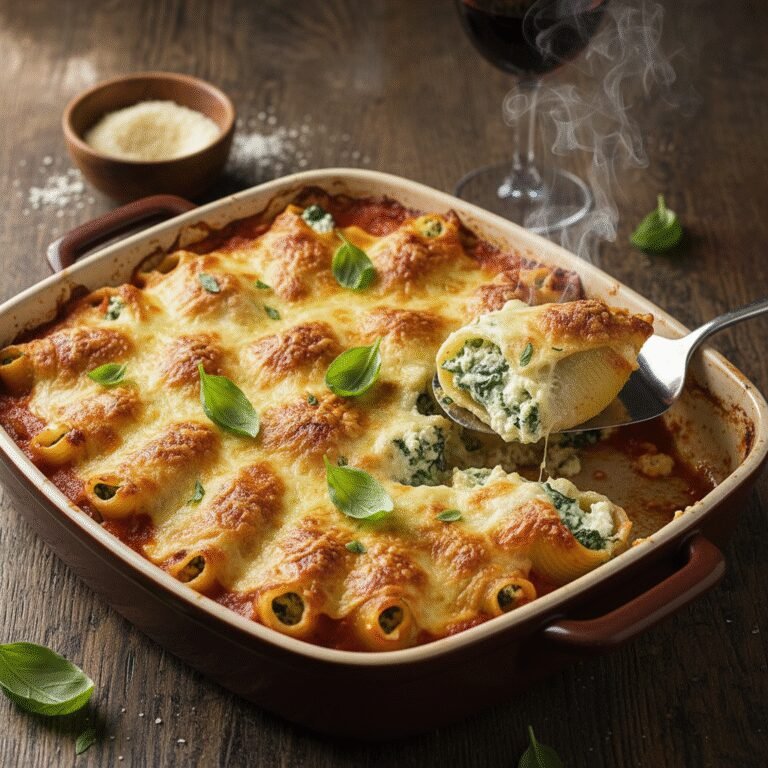
Hearty Mushroom and Spinach Whole Wheat Lasagna Healthy Recipe
Mushroom And Spinach Whole Wheat Lasagna Healthy Recipe
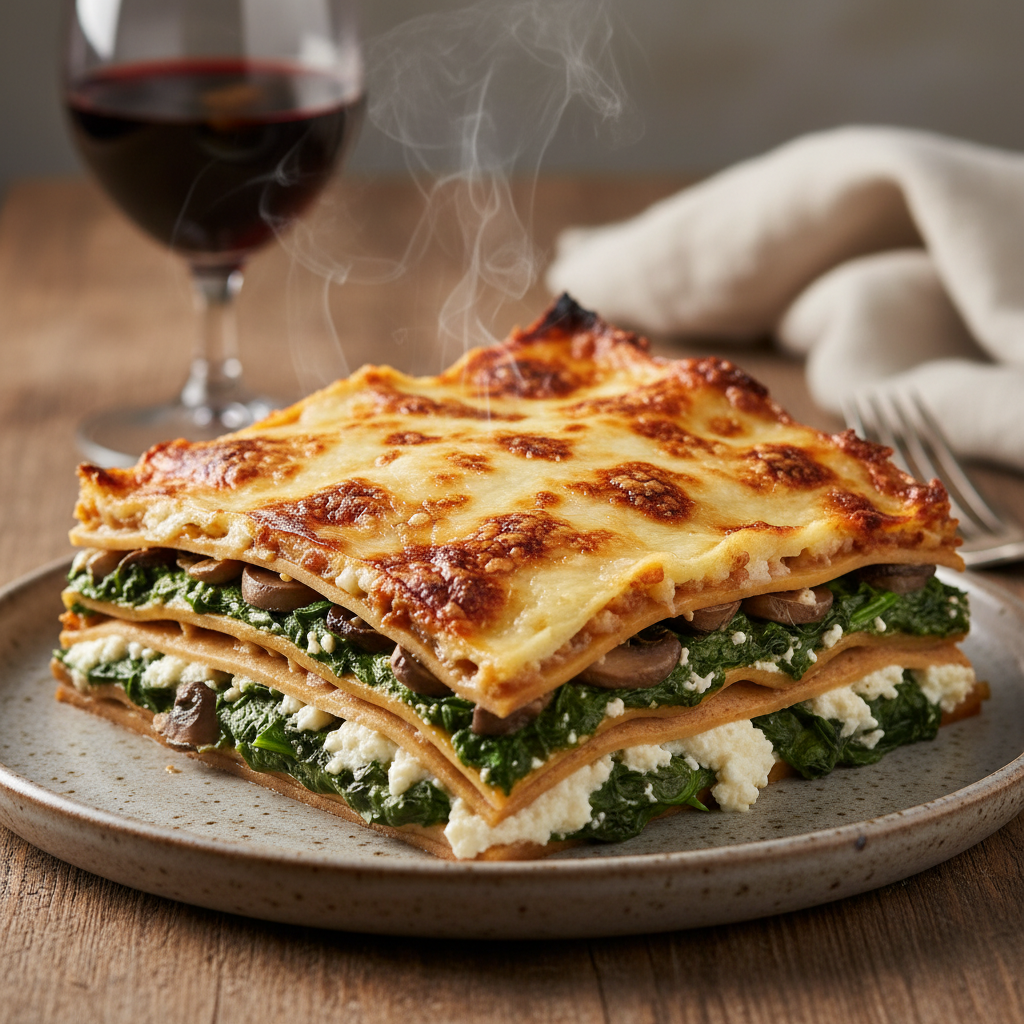
This comforting yet nutritious Mushroom and Spinach Whole Wheat Lasagna swaps refined carbs for nutty whole grain noodles and layers them with savory vegetables and light cheeses. It is the perfect guilt-free family dinner that satisfies cheesy cravings while packing a powerful fiber and protein punch.
30 minutes
50 minutes
1 hour 20 minutes
9 servings
Main Course
Baking
Italian-American
Vegetarian
There is something undeniably magical about pulling a bubbling, golden-brown lasagna out of the oven. The aroma of roasted garlic, simmering tomatoes, and melting cheese has a way of drawing everyone to the kitchen. However, traditional lasagna often gets a bad reputation for being overly heavy, laden with refined carbs and saturated fats that leave you feeling sluggish rather than nourished. That is where this Mushroom and Spinach Whole Wheat Lasagna steps in to change the narrative. By making a few strategic swaps—specifically, replacing white pasta with robust whole wheat noodles and bulking up the filling with nutrient-dense vegetables instead of heavy meats—we create a dish that honors the soul-soothing nature of Italian comfort food while aligning with a modern, health-conscious lifestyle. The earthy flavor of the whole wheat pasta pairs exceptionally well with the umami-rich cremini mushrooms and the bright, iron-rich spinach, creating a flavor profile that is actually more complex and satisfying than its traditional counterpart. We use a blend of part-skim ricotta and mozzarella to maintain that essential creamy texture without the excessive calorie load. This recipe is not just ‘good for a healthy dish’; it is genuinely delicious in its own right. Whether you are looking to introduce more whole grains into your diet, searching for a meatless Monday showstopper, or simply want a meal that hugs you from the inside out without the heavy aftermath, this lasagna is your answer. It is a labor of love that yields leftovers you will actually look forward to eating all week long.
History & Origins
The concept of lasagna is one of the oldest forms of pasta, with roots tracing back to Ancient Greece and Rome. The word ‘lasagna’ is derived from the Greek word ‘laganon’, which referred to a flat sheet of pasta dough sliced into strips. Unlike the modern casserole we know today, these early versions were not baked with tomato sauce—tomatoes were not introduced to Italy until after the discovery of the Americas in the 16th century. Instead, early Roman lasagna was often a layered dish of pasta, meat, and cheese, potentially eaten with a skewer. As the dish evolved through the Middle Ages in Italy, particularly in Naples and Bologna, it began to take on the form we recognize, with regional variations dictating the fillings. The Bolognese version, featuring ragù, béchamel, and Parmigiano-Reggiano, became the gold standard. However, the vegetarian adaptation utilizing spinach and mushrooms gained popularity in the mid-20th century, coinciding with a growing interest in lighter, vegetable-forward eating in both Europe and the United States. The introduction of whole wheat pasta into the fold is a much more modern innovation, born out of the health food movements of the 1970s and 80s. Initially, whole wheat pasta was criticized for its grainy texture, but advancements in food technology and artisanal production have vastly improved its quality. Today, whole wheat lasagna represents the intersection of ancient Italian culinary tradition and contemporary nutritional science, proving that heritage dishes can evolve to meet modern dietary needs without losing their soul.
Why This Recipe Works
This recipe succeeds because it meticulously addresses the two biggest pitfalls of vegetable lasagna: wateriness and blandness. Mushrooms and spinach are naturally high in water content. If you were to simply layer raw vegetables into the casserole, they would release moisture during baking, resulting in a soupy mess and soggy noodles. To prevent this, we take the time to sauté the mushrooms until they are deeply browned and dry, concentrating their umami flavor. Similarly, we wilt the spinach and squeeze out every drop of excess liquid before mixing it with the cheese. This ensures the lasagna holds its structure beautifully when sliced. Furthermore, the choice of whole wheat noodles is not just for health; their nuttier, heartier taste stands up remarkably well to the strong, earthy flavors of the mushrooms and the acidity of the marinara sauce. Traditional white noodles might get lost against such bold vegetable flavors, but whole wheat holds its own. We also utilize a ‘cheater’s béchamel’ approach by mixing an egg and herbs into the ricotta, which stabilizes the cheese layer so it becomes fluffy and set rather than runny. The result is a stack of distinct, flavorful layers that offer the perfect bite of chewy pasta, creamy cheese, and savory vegetables every time.
Why You’ll Love This Recipe
- ✓High in fiber thanks to whole wheat pasta and spinach.
- ✓Packed with plant-based iron and essential vitamins.
- ✓Vegetarian-friendly and easily adaptable for meat-eaters.
- ✓Freezes beautifully for meal prep.
- ✓Lighter on calories but heavy on comfort.
- ✓Rich, earthy flavor profile that surpasses plain cheese lasagna.
Equipment You’ll Need
- ✓9×13 inch baking dish
- ✓Large skillet or sauté pan
- ✓Large pot for boiling water
- ✓Colander
- ✓Medium mixing bowl
- ✓Chef’s knife
- ✓Cutting board
- ✓Aluminum foil
Ingredients
- ✓12 sheets whole wheat lasagna noodles
- ✓2 tablespoons olive oil, divided
- ✓16 oz cremini or baby bella mushrooms, sliced
- ✓1 large yellow onion, diced
- ✓4 cloves garlic, minced
- ✓10 oz frozen spinach, thawed and squeezed completely dry (or 1 lb fresh spinach, wilted and squeezed)
- ✓24 oz jar marinara sauce (look for low sugar/sodium)
- ✓15 oz container part-skim ricotta cheese
- ✓1 large egg, lightly beaten
- ✓1/2 cup grated Parmesan cheese, divided
- ✓2 cups shredded part-skim mozzarella cheese, divided
- ✓1 teaspoon dried oregano
- ✓1 teaspoon dried basil
- ✓1/2 teaspoon salt
- ✓1/4 teaspoon black pepper
- ✓Fresh parsley or basil for garnish
Instructions
- Preheat your oven to 375°F (190°C). Lightly grease a 9×13 inch baking dish with cooking spray or a little olive oil.
- Bring a large pot of salted water to a boil. Cook the whole wheat lasagna noodles according to package directions for ‘al dente’. Do not overcook. Drain and lay them flat on a baking sheet or foil to prevent sticking.
- While the water boils, heat 1 tablespoon of olive oil in a large skillet over medium-high heat. Add the sliced mushrooms. Cook undisturbed for 3-4 minutes until browned, then stir and cook for another 3-4 minutes until the liquid has evaporated and mushrooms are golden. Remove mushrooms from the pan and set aside.
- In the same skillet, add the remaining tablespoon of olive oil. Add the diced onion and sauté for 5 minutes until translucent. Add the minced garlic and cook for 1 minute until fragrant. Stir in the dried oregano, basil, salt, and pepper.
- Add the cooked mushrooms back to the pan. If using fresh spinach, add it now and wilt it down. If using thawed frozen spinach (squeezed dry), stir it into the onion and mushroom mixture to warm through. Remove from heat.
- In a medium mixing bowl, combine the ricotta cheese, beaten egg, and 1/4 cup of the Parmesan cheese. Mix until smooth and creamy.
- Assemble the lasagna: Spread about 1/2 cup of marinara sauce on the bottom of the prepared baking dish.
- Layer 3-4 noodles over the sauce (overlapping slightly is okay).
- Spread 1/3 of the ricotta mixture over the noodles.
- Top with 1/3 of the mushroom-spinach mixture.
- Sprinkle with 1/2 cup of mozzarella cheese.
- Top with about 3/4 cup of marinara sauce.
- Repeat the layers (noodles, ricotta, veggies, mozzarella, sauce) two more times.
- For the final layer, place the remaining noodles on top, cover with the remaining sauce, and sprinkle with the remaining 1/2 cup mozzarella and 1/4 cup Parmesan cheese.
- Cover the baking dish loosely with aluminum foil (try not to let the foil touch the cheese) and bake for 30 minutes.
- Remove the foil and bake for another 15-20 minutes, or until the cheese is bubbly and slightly browned on top.
- Remove from the oven and let the lasagna rest for at least 15-20 minutes before slicing. This is crucial for the layers to set.
- Garnish with fresh parsley or basil and serve warm.
Expert Cooking Tips
- ✓Squeeze the spinach thoroughly: Whether using fresh or frozen, wrap the spinach in a clean kitchen towel and wring it out until no more water drips. This prevents watery lasagna.
- ✓Undercook the noodles slightly: Since the noodles will continue to cook in the sauce while baking, drain them about 1-2 minutes before the package says they are done.
- ✓Don’t skip the rest time: Cutting into a lasagna straight out of the oven causes the layers to slide apart. Resting allows the cheese and juices to stabilize.
- ✓Grate your own cheese: Pre-shredded cheese contains anti-caking agents that prevent smooth melting. Grating a block of mozzarella yields a better texture.
- ✓Season every layer: While the recipe includes salt and pepper, taste your ricotta mixture and veggie mixture to ensure they are flavorful before assembling.
- ✓Prevent sticking: After boiling noodles, toss them with a tiny bit of oil or lay them flat on parchment paper so they don’t clump together.
Substitutions and Variations
This recipe is highly versatile and can be adapted to suit various dietary needs and pantry staples. If you cannot find whole wheat lasagna noodles, you can substitute them with brown rice noodles for a gluten-free option (check cooking times as they can be delicate) or standard semolina noodles if fiber content isn’t a priority. For the greens, kale or Swiss chard are excellent alternatives to spinach; just ensure you remove the tough stems and sauté them until tender before layering. If you are looking to increase the protein content further, you could add crumbled tofu to the ricotta mixture or mix in cooked lentils with the marinara sauce. For a dairy-free or vegan version, replace the ricotta with a tofu-cashew ricotta blend, use a flax egg instead of a chicken egg, and opt for high-quality vegan mozzarella shreds. The mushrooms can be swapped for roasted eggplant or zucchini slices, though you must ensure these vegetables are roasted or salted and drained beforehand to remove excess moisture. Lastly, if you prefer a meatier texture without the meat, try using portobello mushrooms chopped into chunks instead of sliced cremini.
Common Mistakes to Avoid
The most common mistake when making vegetable lasagna is failing to remove enough moisture from the vegetables. If you add raw mushrooms or wet spinach directly to the layers, the water released during baking will pool at the bottom of the pan, resulting in a soupy dish that falls apart on the plate. Another frequent error is overcooking the pasta before baking; mushy noodles offer no textural contrast and can make the dish feel heavy. Be careful not to over-sauce the layers; while you want the noodles to cook, drowning them in sauce can also contribute to structural failure. Finally, many home cooks cover the lasagna too tightly with foil, causing the cheese to stick to the top. Tent the foil slightly or spray the underside of the foil with cooking oil to ensure your beautiful cheesy crust stays on the lasagna, not the trash.
Serving Suggestions
This hearty lasagna pairs beautifully with sides that cut through its richness with acidity and crunch. A large, crisp green salad with a lemon vinaigrette or balsamic glaze is the perfect accompaniment. For a cozy dinner party, serve it alongside roasted garlic broccoli or asparagus. If you aren’t strictly watching carb intake, a slice of crusty whole wheat garlic bread or focaccia is excellent for mopping up any extra sauce. In terms of beverages, a light-bodied red wine like a Chianti or Pinot Noir complements the tomato sauce and mushrooms without overpowering the dish. For a non-alcoholic option, sparkling water with a twist of lemon or an iced herbal tea works well.
Storage and Reheating Tips
Lasagna is one of those rare dishes that tastes even better the next day. To store leftovers, allow the dish to cool completely to room temperature, then cover the pan tightly with plastic wrap or transfer individual slices to airtight containers. It will keep in the refrigerator for 3 to 4 days. For reheating, the oven is best to maintain texture; cover with foil and bake at 350°F for 15-20 minutes until heated through. The microwave works for single slices but may make the noodles slightly softer. This lasagna is also a freezer champion. You can freeze the unbaked assembled lasagna (lined with foil) for up to 3 months. Thaw in the fridge overnight before baking. Alternatively, freeze baked individual slices wrapped in foil and plastic; these make for excellent quick lunches.
Nutrition Facts (Estimated)
| Serving Size | 1 square (approx 250g) |
| Calories | 340 |
| Fat | 12g |
| Saturated Fat | 6g |
| Unsaturated Fat | 5g |
| Trans Fat | 0g |
| Cholesterol | 45mg |
| Sodium | 480mg |
| Carbohydrates | 38g |
| Fiber | 7g |
| Sugar | 6g |
| Protein | 22g |
Frequently Asked Questions
Can I use no-boil noodles for this recipe?
Yes, you can use no-boil (oven-ready) whole wheat noodles. However, because whole wheat pasta requires more hydration, you should slightly increase the amount of marinara sauce used or add 1/4 cup of water to the sauce to ensure the noodles soften properly during baking.
Why is my vegetable lasagna watery?
Watery lasagna is usually caused by vegetables releasing moisture during the bake. To fix this, ensure you sauté the mushrooms until they are dry and browned, and squeeze every bit of liquid out of the thawed spinach before assembling.
Is whole wheat pasta healthy?
Yes, whole wheat pasta is made from the entire grain kernel, meaning it retains the bran and germ. This provides significantly more fiber, iron, and B vitamins compared to refined white pasta, leading to better digestion and sustained energy levels.
Can I make this recipe ahead of time?
Absolutely. You can assemble the entire lasagna, cover it tightly, and refrigerate it for up to 24 hours before baking. You may need to add 5-10 minutes to the covered baking time if it is going into the oven cold.
Can I use fresh spinach instead of frozen?
Yes. You will need about 1 pound of fresh spinach. Sauté it in a pan until it wilts down completely, then let it cool and squeeze out the excess liquid just as you would with frozen spinach.
How do I know when the lasagna is done?
The lasagna is done when the sauce is bubbling vigorously around the edges and the cheese on top is melted and golden brown. You can also insert a knife into the center; if it goes through the noodles easily without resistance, they are cooked.
Can I use cottage cheese instead of ricotta?
Yes, cottage cheese is a popular high-protein substitute. For the best texture, it is recommended to blend the cottage cheese in a food processor until smooth before mixing it with the egg and herbs, as this mimics the consistency of ricotta.
Do I have to put an egg in the cheese mixture?
The egg acts as a binder to help the ricotta layer set and stay firm. If you have an egg allergy or prefer not to use it, the lasagna will still taste delicious, but the cheese layers may be slightly creamier and looser when sliced.
Conclusion
This Mushroom and Spinach Whole Wheat Lasagna proves that you don’t have to sacrifice comfort for nutrition. It is a robust, flavorful meal that brings the warmth of Italian cooking into your home with a wholesome twist. By taking the time to layer these quality ingredients, you are creating a dish that nourishes the body and delights the palate. Whether you are serving it for a special Sunday family dinner or prepping it for a busy week ahead, this recipe is sure to become a staple in your rotation. Enjoy the process of creating it, and even more so, enjoy the delicious results!