Ultimate Creamy Cauliflower Mac and Cheese Bake (Keto & Low Carb)
Cauliflower Mac And Cheese Bake Healthy Recipe
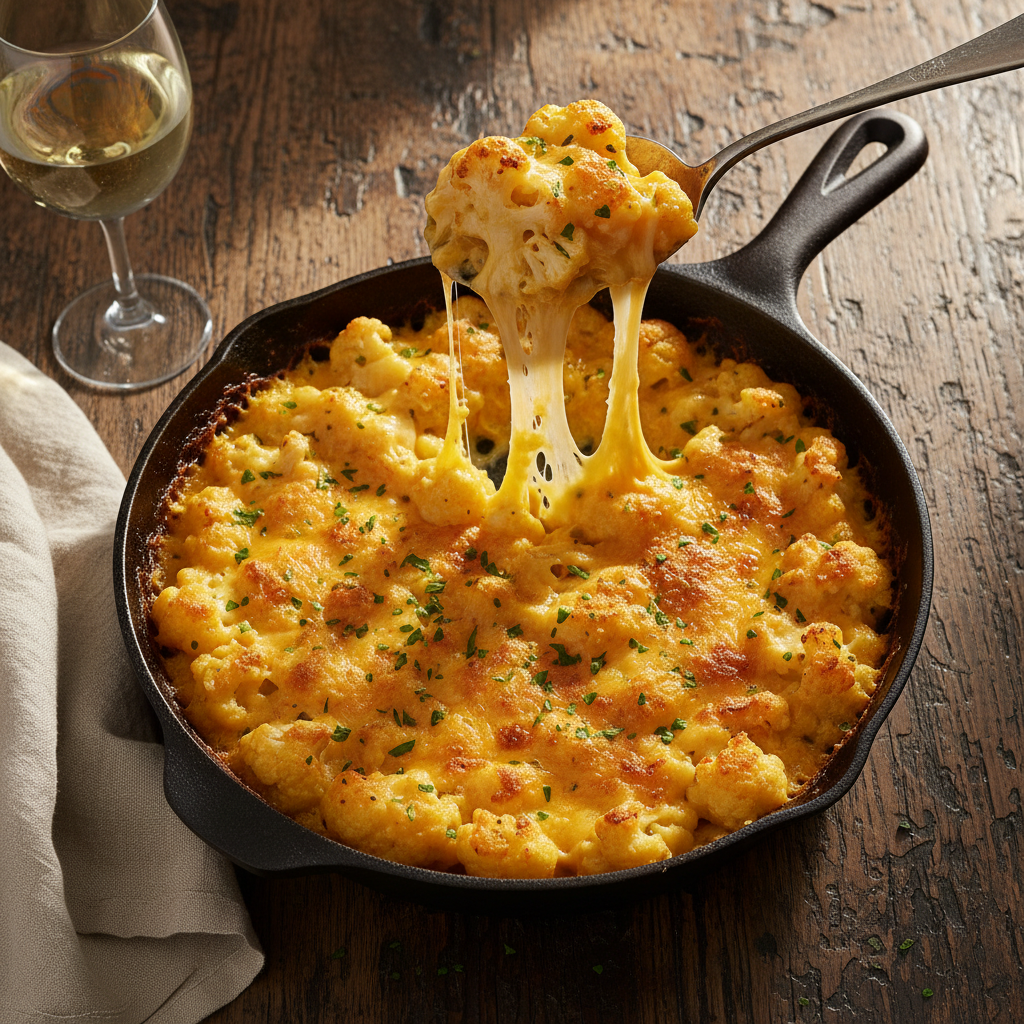
Satisfy your deepest comfort food cravings without the carb overload with this rich, velvety Cauliflower Mac and Cheese Bake. Featuring tender roasted cauliflower florets smothered in a luxurious three-cheese sauce and baked to golden perfection, this dish is the ultimate healthy dinner that the whole family will devour.
20 minutes
40 minutes
60 minutes
6 Servings
Main Course
Baking
American
Gluten-Free
There is arguably no dish more synonymous with comfort than macaroni and cheese. It is the culinary equivalent of a warm hug, a staple of childhood dinners, and a must-have at holiday gatherings. However, as we become more conscious of our carbohydrate intake and seek to incorporate more vegetables into our daily diets, the traditional pasta-heavy version often falls onto the ‘occasional treat’ list. Enter the Cauliflower Mac and Cheese Bake—a revolutionary recipe that does not just act as a substitute but stands proudly as a delicious dish in its own right. This recipe is designed to banish the notion that healthy food must be bland or unsatisfying. By swapping out macaroni for tender, roasted cauliflower florets, we drastically reduce the carb count while increasing the fiber and nutrient density of the meal. But the real secret lies in the sauce. We do not cut corners here; we use a robust blend of sharp cheddar, nutty parmesan, and rich cream cheese to create a sauce so velvety and flavorful that you might just forget there is no pasta involved at all. The cauliflower acts as the perfect vessel, capturing pools of molten cheese in its nooks and crannies, delivering a burst of savory goodness in every bite. Whether you are strictly following a ketogenic diet, looking for gluten-free options, or simply trying to get your children to eat more vegetables without a fuss, this bake is a game-changer. It bubbles in the oven until the edges are crispy and caramelized, filling your kitchen with an aroma that promises a satisfying, hearty meal. Get ready to redefine your weeknight dinner rotation with a healthy twist on a classic that truly delivers on flavor, texture, and comfort.
History & Origins
The concept of combining pasta and cheese dates back to the 14th century in Italy, appearing in the cookbook ‘Liber de Coquina,’ but the dish we recognize today as Macaroni and Cheese has deep roots in American history. It was famously popularized by Thomas Jefferson, who, after encountering the dish in Paris, brought a pasta machine back to Virginia and served ‘macaroni pie’ at a state dinner in 1802. Since then, it has evolved from an upper-class delicacy to a ubiquitous comfort food, especially after Kraft introduced the boxed dinner in 1937 during the Great Depression. However, the history of the ‘Cauliflower Mac’ is a much more modern phenomenon, born out of the health-conscious movements of the early 21st century. As the Atkins diet gained traction in the early 2000s, followed by the explosion of the Paleo and Ketogenic lifestyles in the 2010s, home cooks and chefs alike began searching for low-carb vegetables that could mimic the texture and versatility of starch. Cauliflower emerged as the undisputed champion of this movement. Its mild flavor and sturdy structure made it the perfect blank canvas for culinary experimentation. Initially used as a substitute for mashed potatoes, it wasn’t long before creative bloggers and chefs realized that roasted cauliflower florets bore a striking structural resemblance to pasta shells. The ‘Cauliflower Renaissance’ saw this humble brassica transformed into pizza crusts, rice, and eventually, the mac and cheese substitute. This dish represents the modern culinary era’s focus on adapting traditional comfort foods to fit healthier lifestyles without sacrificing the emotional connection and satisfaction that those classic dishes provide.
Why This Recipe Works
This recipe succeeds where many other vegetable-based substitutions fail because it meticulously addresses the two biggest challenges of cooking with cauliflower: texture and water content. Many cauliflower mac and cheese recipes result in a watery, soupy mess because cauliflower naturally releases moisture as it cooks. This recipe bypasses that issue by roasting the cauliflower at a high temperature before combining it with the sauce. Roasting not only draws out excess moisture, ensuring the sauce remains thick and creamy, but it also caramelizes the vegetable’s natural sugars, adding a depth of nutty flavor that boiling or steaming simply cannot achieve. Furthermore, the cheese sauce is engineered for maximum cling and meltability. Instead of a traditional flour-based roux, which adds unnecessary carbs and can be finicky, we utilize a reduction of heavy cream and cream cheese. The cream cheese acts as a stabilizer, preventing the sauce from breaking or becoming grainy, while providing a luscious mouthfeel that mimics the starchiness of pasta water. The combination of sharp cheddar for a punchy flavor and parmesan for a salty, umami kick ensures the flavor profile is complex and satisfying. Finally, the baking step marries the flavors together; the heat of the oven melds the sauce into the florets and creates that essential golden-brown, slightly crispy top layer that is the hallmark of any great casserole.
Why You’ll Love This Recipe
- ✓Significantly lower in carbohydrates than traditional pasta mac and cheese.
- ✓Rich in fiber, Vitamin C, and Vitamin K thanks to the cauliflower base.
- ✓Gluten-free and Keto-friendly, making it suitable for various dietary needs.
- ✓Features a rich, homemade three-cheese sauce that is preservative-free.
- ✓Meal-prep friendly and reheats beautifully for lunches throughout the week.
- ✓Kid-approved way to sneak more vegetables into the family diet.
Equipment You’ll Need
- ✓Large baking sheet
- ✓9×13 inch ceramic baking dish
- ✓Large saucepan
- ✓Whisk
- ✓Chef’s knife
- ✓Cutting board
- ✓Cheese grater
Ingredients
- ✓2 large heads of cauliflower, cut into bite-sized florets
- ✓2 tablespoons olive oil
- ✓1 teaspoon salt, divided
- ✓1/2 teaspoon black pepper, divided
- ✓1 cup heavy whipping cream
- ✓4 ounces cream cheese, softened and cubed
- ✓2 cups sharp cheddar cheese, freshly grated
- ✓1/2 cup parmesan cheese, grated
- ✓1 teaspoon garlic powder
- ✓1 teaspoon onion powder
- ✓1/2 teaspoon smoked paprika
- ✓1 teaspoon Dijon mustard
- ✓2 tablespoons chopped fresh parsley (for garnish)
Instructions
- 1. Preheat your oven to 400°F (200°C). Line a large baking sheet with parchment paper for easy cleanup.
- 2. Place the cauliflower florets on the baking sheet. Drizzle with olive oil and season with 1/2 teaspoon of salt and 1/4 teaspoon of pepper. Toss well to coat evenly.
- 3. Roast the cauliflower in the preheated oven for 20 minutes, or until the florets are tender-crisp and starting to brown on the edges. Do not overcook them to mush. Remove from oven and reduce heat to 375°F (190°C).
- 4. While the cauliflower is roasting, prepare the cheese sauce. In a large saucepan over medium heat, combine the heavy whipping cream and the softened cream cheese.
- 5. Whisk continuously until the cream cheese has melted into the heavy cream and the mixture is smooth and simmering gently.
- 6. Reduce the heat to low. Stir in the garlic powder, onion powder, smoked paprika, Dijon mustard, remaining salt, and remaining pepper.
- 7. Gradually add 1.5 cups of the cheddar cheese and all of the parmesan cheese, whisking constantly until the cheese is fully melted and the sauce is thick. Reserve the remaining 0.5 cup of cheddar for topping.
- 8. Add the roasted cauliflower to the cheese sauce and stir gently with a spatula until every floret is generously coated.
- 9. Transfer the mixture to a 9×13 inch baking dish (or a similar sized casserole dish). Spread it out into an even layer.
- 10. Sprinkle the remaining 1/2 cup of cheddar cheese over the top.
- 11. Bake at 375°F (190°C) for 15-20 minutes, until the cheese is bubbling vigorously and the top is golden brown.
- 12. For an extra crispy top, broil on high for 2-3 minutes, watching closely to prevent burning.
- 13. Remove from the oven and let it rest for 5-10 minutes to allow the sauce to set slightly. Garnish with fresh parsley before serving.
Expert Cooking Tips
- ✓Always grate your own cheese from a block. Pre-shredded cheese contains anti-caking agents like potato starch that prevent it from melting smoothly and can make your sauce gritty.
- ✓Don’t chop the cauliflower too small. Keep the florets bite-sized so they maintain their structure and don’t turn into a mash during the second bake.
- ✓Room temperature cream cheese melts much faster and smoother than cold cream cheese, preventing lumps in your sauce.
- ✓If you prefer a looser sauce, you can add a splash of unsweetened almond milk or pasta water if you have it, though heavy cream is best for richness.
- ✓Pat the cauliflower dry after washing before roasting. Any excess water left on the vegetable will steam it instead of roasting it, leading to a watery final dish.
Substitutions and Variations
This recipe is incredibly versatile and can be adapted to suit various dietary needs or pantry limitations. If you are not strictly keto and want to lighten the calories, you can substitute half of the heavy cream with unsweetened almond milk or whole milk, though the sauce will be slightly thinner. For the cheeses, while sharp cheddar provides that classic mac and cheese taste, you can experiment with Gruyere for a nuttier, more sophisticated flavor, or Monterey Jack for superior meltability. If you don’t have cream cheese, mascarpone is an excellent alternative that offers a similar richness. For a dairy-free or vegan version, substitute the heavy cream with full-fat coconut milk (canned) or a cashew-based cream, and use high-quality vegan cheese shreds, keeping in mind that vegan cheese does not always melt as smoothly. You can also boost the protein content by adding cooked, cubed chicken breast, crispy bacon bits, or even ground beef to the bake. If you want to add more veggies, broccoli works perfectly alongside cauliflower; just ensure you roast it similarly to avoid excess moisture.
Common Mistakes to Avoid
The most common mistake when making cauliflower mac and cheese is ending up with a watery casserole. This almost always happens because the cauliflower was boiled or steamed instead of roasted, or it wasn’t cooked long enough to release its natural moisture before being mixed with the sauce. Another pitfall is overheating the cheese sauce. Cheese separates if it gets too hot, causing the oil to pool on top and the solids to become grainy. Always remove the pan from high heat before adding your grated cheese and let the residual heat melt it. Using pre-shredded cheese is another error that compromises texture due to the cellulose coating. Finally, be careful not to over-bake the final dish. Since the cauliflower is already roasted, the baking step is primarily to heat everything through and melt the top cheese. Over-baking can result in mushy vegetables.
Serving Suggestions
This Cauliflower Mac and Cheese Bake is substantial enough to be a main course, especially for lunch or a light dinner. When serving it as a main, pair it with a crisp, acidic salad—like an arugula salad with lemon vinaigrette—to cut through the richness of the cheese sauce. As a side dish, it pairs magnificently with proteins. It is the perfect accompaniment to a juicy grilled steak, roast chicken, or pork chops. For a holiday spread, it holds its own alongside turkey or glazed ham. To elevate the presentation, sprinkle crispy bacon bits, chopped chives, or even a handful of toasted keto-friendly breadcrumbs (made from almond flour or crushed pork rinds) on top right before serving for added texture and flavor contrast.
Storage and Reheating Tips
Leftovers of this dish store surprisingly well. Allow the bake to cool completely to room temperature before transferring it to an airtight container. It will keep in the refrigerator for 3 to 4 days. When reheating, the microwave works well for single portions (heat in 30-second intervals), but for the best texture, reheat it in the oven at 350°F for about 10-15 minutes until bubbly. You may notice the oil separates slightly upon reheating; a quick stir usually brings it back together. Freezing is possible but requires care, as dairy-based sauces can sometimes break when thawed. If you plan to freeze it, bake it in a foil container, let it cool, cover tightly with plastic wrap and foil, and freeze for up to 2 months. Thaw overnight in the refrigerator before baking. Note that the cauliflower may be slightly softer after freezing and reheating.
Nutrition Facts (Estimated)
| Serving Size | 1.5 cups |
| Calories | 420 |
| Fat | 34g |
| Saturated Fat | 20g |
| Unsaturated Fat | 11g |
| Trans Fat | 0g |
| Cholesterol | 110mg |
| Sodium | 680mg |
| Carbohydrates | 10g |
| Fiber | 4g |
| Sugar | 4g |
| Protein | 18g |
Frequently Asked Questions
Is this recipe suitable for the Keto diet?
Yes, absolutely. By replacing pasta with cauliflower and using high-fat dairy like heavy cream and cheese, this recipe is low in carbohydrates and high in fat, making it perfectly compliant with a Ketogenic diet.
Can I use frozen cauliflower instead of fresh?
Yes, you can, but you must be careful about moisture. Thaw the frozen cauliflower completely and squeeze out as much water as possible using a clean kitchen towel. You may still want to roast it briefly to dry it out further before adding the sauce.
Why is my cheese sauce grainy?
Grainy sauce usually happens because the cheese was added when the liquid was too hot, causing the proteins to curdle and fats to separate. Always turn the heat down to low or remove the pan from the burner entirely before stirring in the cheese.
Can I make this ahead of time?
Yes. You can roast the cauliflower and make the sauce, combine them in the baking dish, and then cover and refrigerate for up to 24 hours. When ready to eat, add the topping and bake. You may need to add 5-10 minutes to the baking time since you are starting from cold.
How do I make the top crispy without breadcrumbs?
The combination of the cheese topping and the heat of the oven usually creates a nice crust. For extra crispiness, broil the dish for the last 2-3 minutes of cooking. You can also use crushed pork rinds or almond flour mixed with butter as a keto-friendly crumb topping.
Does it taste exactly like pasta mac and cheese?
While the flavor of the cheese sauce is identical to traditional mac and cheese, the texture of cauliflower is different from pasta. It has a slight vegetable sweetness and a softer bite, but most people find it to be a delicious and satisfying alternative.
Can I use a different vegetable?
Broccoli is the most common substitute and works very well. Brussels sprouts can also be used for a different flavor profile. Just ensure whatever vegetable you use is cooked to tender-crisp and drained of water before adding the sauce.
What is the best cheese to use?
Sharp cheddar is best for that classic flavor. We recommend mixing it with Parmesan for depth and cream cheese for texture. Avoid mild cheddar as the flavor can get lost in the cream sauce.
Conclusion
Embracing a healthier lifestyle doesn’t mean you have to say goodbye to the foods you love. This Cauliflower Mac and Cheese Bake proves that with a little culinary creativity, you can enjoy the rich, gooey, comforting experience of a cheese casserole while nourishing your body with wholesome vegetables. It is a recipe that bridges the gap between indulgence and nutrition, earning its place at the center of your table. Whether you are serving it for a casual weeknight dinner, a potluck, or a holiday feast, it is guaranteed to be a crowd-pleaser that will have everyone asking for seconds—and the recipe. Give it a try this week, and watch as even the most skeptical vegetable eaters fall in love with cauliflower.