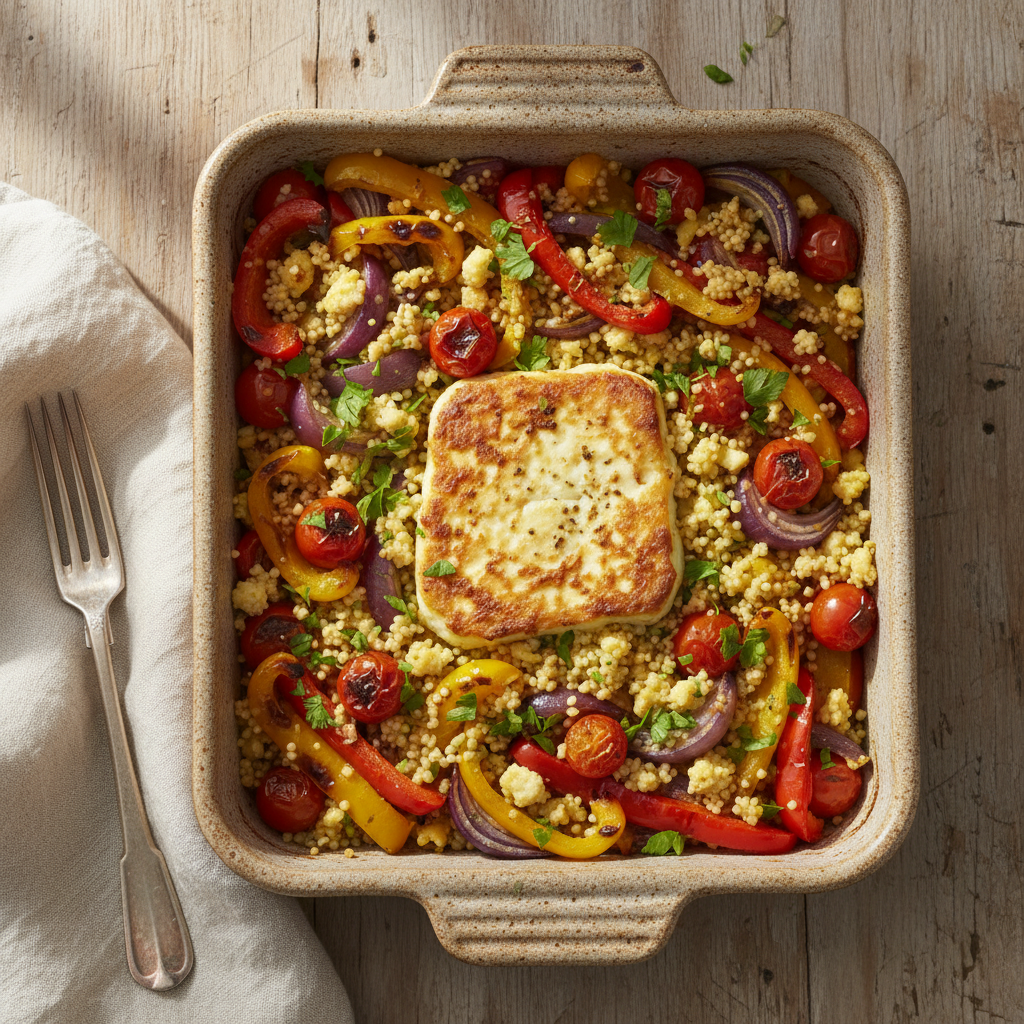
Roasted Vegetable and Feta Couscous Bake
Roasted Vegetable And Feta Couscous Bake Recipe
This vibrant Roasted Vegetable and Feta Couscous Bake is the ultimate one-pan Mediterranean dinner. Bursting with caramelized veggies, tangy feta, and fluffy couscous, it is a nutritious, vegetarian weeknight meal that comes together in under 45 minutes.
15 minutes
30 minutes
45 minutes
4 servings
Main Course
Baking
Mediterranean Fusion
Vegetarian
If there is one dinner strategy that has completely revolutionized my weeknight cooking routine, it is the ‘dump-and-bake’ method. We are all searching for those unicorn recipes that deliver maximum flavor with minimal cleanup, and this Roasted Vegetable and Feta Couscous Bake is precisely that. Imagine a dish where the oven does 90% of the heavy lifting, transforming humble pantry staples into a gourmet-tasting feast that looks as beautiful as it tastes. This recipe celebrates the bold, sunny flavors of the Mediterranean, bringing together the sweetness of roasted bell peppers and red onions with the savory, salty punch of warm feta cheese. The magic happens when these ingredients meld together; the juices released from the roasting vegetables create a rich, flavorful steam that cooks the couscous to fluffy perfection, infusing every grain with essence of garlic, oregano, and olive oil. It is not just a side dish; it is a hearty, standalone main course that satisfies vegetarians and meat-eaters alike. The texture is a delightful interplay between the soft, melt-in-your-mouth vegetables, the slightly chewy pearl couscous (or fluffy fine couscous, depending on your preference), and the creamy, softened feta that acts as a luxurious sauce when mixed in. Whether you are meal-prepping for a busy week ahead or hosting a casual dinner party, this bake is visually stunning and incredibly comforting. It captures the essence of summer produce but is cozy enough for winter nights, making it a year-round staple in my kitchen.
History & Origins
To truly appreciate this dish, we must look at the origins of its two star components: couscous and feta. Couscous is a staple food throughout the Maghreb cuisines of Algeria, Tunisia, Mauritania, Morocco, and Libya. Historically, it dates back to the Berbers (Imazighen) of North Africa, with evidence of its production dating back as far as the 7th century. Traditionally, couscous is not boiled but steamed over a simmering stew in a special pot called a couscoussier, a process that requires time, patience, and skill to achieve light, fluffy granules. It is made from semolina (granules of durum wheat) and is technically a type of small pasta, though it is treated like a grain. On the other side of the Mediterranean, we have Feta, the most famous cheese of Greece. Protected by EU legislation, real Feta must be produced in specific regions of Greece from sheep’s milk or a mixture of sheep and goat’s milk. Its history traces back to ancient times, with references in Homer’s Odyssey describing the cheese-making process of the Cyclops Polyphemus. This specific recipe—the ‘Roasted Vegetable and Feta Couscous Bake’—is a modern culinary invention, likely born from the fusion food movements of the late 20th and early 21st centuries in the UK and US. It gained massive popularity alongside the ‘traybake’ revolution championed by food writers like Nigella Lawson and Jamie Oliver, and saw a resurgence with the viral ‘baked feta pasta’ trend on TikTok in recent years. This dish represents the globalization of ingredients, taking the North African staple of couscous and the Greek staple of feta, and applying a convenient, Western-style casserole cooking method to create a harmonious, cross-cultural meal.
Why This Recipe Works
This recipe succeeds because it leverages the science of roasting to build a depth of flavor that boiling or steaming simply cannot achieve. When you roast vegetables like red onions, bell peppers, and cherry tomatoes at a high temperature (400°F/200°C), you trigger the Maillard reaction and caramelization. The natural sugars in the vegetables break down, creating complex, savory-sweet flavor compounds and a slightly charred texture that adds smokiness to the dish. This is the foundational layer of flavor. Secondly, the ‘absorption method’ for the couscous is modified here to utilize the hot vegetable broth and the residual heat of the roasting pan. By adding the couscous directly to the hot pan with the roasted veggies, the grains absorb not just the stock, but also the seasoned olive oil and vegetable juices, ensuring that the couscous itself is seasoned from the inside out, rather than being bland starch. Finally, the inclusion of feta provides the necessary element of fat and acid. Feta is unique because it doesn’t melt completely like mozzarella; it softens and becomes creamy but retains its structure. Its high salt content and tangy acidity cut through the sweetness of the roasted vegetables and the mildness of the wheat, providing a perfect flavor balance in every bite. The contrast of textures—crunchy char, soft cheese, and fluffy grains—makes every mouthful interesting.
Why You’ll Love This Recipe
- ✓Ready in under 45 minutes with minimal hands-on time.
- ✓One-pan cleanup makes it perfect for busy weeknights.
- ✓Packed with fiber and vitamins from a rainbow of vegetables.
- ✓Vegetarian-friendly and easily adaptable for vegans.
- ✓Great for meal prep as it tastes delicious warm or cold.
Equipment You’ll Need
- ✓Large rimmed baking sheet or 9×13 inch baking dish
- ✓Chef’s knife
- ✓Cutting board
- ✓Measuring cups and spoons
- ✓Kettle or pot for boiling water
- ✓Aluminum foil or a fitted lid
- ✓Large mixing spoon
Ingredients
- ✓1 cup dry couscous (uncooked)
- ✓1 large red bell pepper, chopped into 1-inch pieces
- ✓1 large yellow bell pepper, chopped into 1-inch pieces
- ✓1 medium zucchini, sliced into half-moons
- ✓1 large red onion, chopped into chunks
- ✓1 pint cherry tomatoes, whole
- ✓4 cloves garlic, minced
- ✓3 tablespoons extra virgin olive oil
- ✓1 teaspoon dried oregano
- ✓1/2 teaspoon dried thyme
- ✓1/2 teaspoon smoked paprika
- ✓Salt and freshly cracked black pepper to taste
- ✓1 block (7-8 oz) feta cheese
- ✓1 1/2 cups vegetable broth, boiling hot
- ✓Fresh parsley or basil, chopped (for garnish)
- ✓Lemon wedges (for serving)
Instructions
- 1. Preheat your oven to 400°F (200°C). Ensure a rack is positioned in the center of the oven.
- 2. Prepare the vegetables: Wash and chop the bell peppers, zucchini, and red onion into uniform bite-sized pieces. Leave the cherry tomatoes whole.
- 3. In a large 9×13 inch baking dish or on a large deep rimmed baking sheet, combine the chopped peppers, zucchini, onion, cherry tomatoes, and minced garlic.
- 4. Drizzle the vegetables with the olive oil. Sprinkle evenly with dried oregano, thyme, smoked paprika, a generous pinch of salt, and black pepper. Toss everything well with your hands or a spoon to ensure the vegetables are evenly coated in oil and spices.
- 5. Nest the block of feta cheese into the center of the baking dish, surrounded by the vegetables. Drizzle a little extra olive oil and a crack of black pepper over the feta block.
- 6. Roast in the preheated oven for 20-25 minutes, or until the vegetables are tender and starting to char at the edges, and the feta is soft.
- 7. While the vegetables are roasting, bring the vegetable broth to a boil in a kettle or small pot.
- 8. Carefully remove the baking dish from the oven. Stir the dry couscous directly into the pan around the feta block (you can break the feta up slightly now or leave it whole for presentation).
- 9. Pour the boiling hot vegetable broth over the couscous and vegetables. Stir gently to ensure the couscous is submerged in the liquid.
- 10. Immediately cover the dish tightly with aluminum foil to trap the steam. Let it sit on the counter (or return to the turned-off warm oven) for 5-8 minutes. This allows the couscous to absorb the liquid and become fluffy.
- 11. Remove the foil. Fluff the couscous with a fork and break up the creamy feta, mixing it through the vegetables and grains to create a creamy coating.
- 12. Garnish with fresh chopped parsley or basil and serve immediately with lemon wedges on the side for squeezing.
Expert Cooking Tips
- ✓Cut your vegetables into uniform sizes to ensure they cook at the same rate; otherwise, you might end up with mushy zucchini and raw onions.
- ✓Do not skip the boiling step for the broth; the liquid must be boiling hot when it hits the couscous to ensure it hydrates properly without becoming gummy.
- ✓If you prefer a crispier top, you can switch the oven to broil for the last 2-3 minutes of the vegetable roasting time before adding the couscous.
- ✓Use a high-quality block of feta in brine rather than pre-crumbled feta; the block melts much better and has a superior creamy texture.
- ✓If the mixture looks too dry after the couscous has fluffed up, drizzle with a little extra high-quality olive oil and a squeeze of lemon juice to revive it.
Substitutions and Variations
This recipe is incredibly versatile and forgiving, allowing for numerous substitutions based on dietary needs or pantry availability. If you are gluten-free, regular couscous (which is wheat-based) is a no-go. You can substitute it with quinoa or millet, but note that these grains require boiling and cooking *before* being added to the bake, or a significantly longer baking time with more liquid. For a different flavor profile, swap the feta cheese for goat cheese logs, which offer a similar tang and creaminess, or use halloumi cubes if you prefer a squeaky, salty cheese that holds its shape (though halloumi won’t create a sauce like feta). Vegan adaptations are easy; simply use a high-quality vegan feta alternative or omit the cheese entirely and stir in a cashew cream sauce or tahini dressing at the end for richness. Vegetable swaps are endless: eggplant, asparagus, broccoli florets, or butternut squash cubes work beautifully, though harder root vegetables like squash will need to be roasted for 10-15 minutes longer than softer veggies like peppers. You can also swap the vegetable broth for chicken bone broth if you are not vegetarian and want extra protein.
Common Mistakes to Avoid
The most common mistake with this dish is overcooking the couscous or adding lukewarm liquid. Couscous is delicate; if you boil it actively on the stove or add cool liquid, it can turn into a gummy, clumpy mash. It only needs hot steam to cook. Another pitfall is overcrowding the pan during the roasting phase. If the vegetables are piled too high on top of each other, they will steam instead of roast, and you will miss out on that crucial caramelized flavor. Use a large enough tray or two separate trays if scaling up. Additionally, be cautious with salt. Feta cheese and store-bought vegetable broth can both be quite salty. Taste your mixture before adding the final seasoning to avoid an overly salty dish. Lastly, don’t add the fresh herbs before baking; delicate herbs like basil and parsley will burn and lose their flavor in the high heat. Always add them fresh right before serving.
Serving Suggestions
This Roasted Vegetable and Feta Couscous Bake is a complete meal on its own, but it pairs wonderfully with several sides. For a protein boost, serve it alongside grilled lemon-herb chicken breast, pan-seared salmon, or lamb koftas. If you want to keep it vegetarian, a side of crispy roasted chickpeas or a simple lentil salad works well. A fresh, crisp green salad with a balsamic vinaigrette helps cut through the richness of the feta. Warm pita bread or crusty sourdough is excellent for scooping up any stray grains or creamy cheese sauce. For a beverage pairing, a crisp white wine like a Sauvignon Blanc or a Pinot Grigio complements the acidity of the feta and the vegetables perfectly.
Storage and Reheating Tips
Leftovers store surprisingly well, making this a great candidate for meal prep. Allow the dish to cool completely to room temperature before transferring it to an airtight container. It can be refrigerated for up to 4 days. When reheating, the couscous may have absorbed all the moisture and become slightly dry. To fix this, sprinkle a tablespoon of water or broth over the portion and reheat in the microwave for 60-90 seconds, or in a saucepan on low heat, fluffing with a fork to redistribute the moisture. Freezing is not recommended for this specific recipe because the texture of the zucchini and the roasted peppers can become mushy upon thawing, and the couscous may become grainy.
Nutrition Facts (Estimated)
| Serving Size | 1 bowl (approx 350g) |
| Calories | 420 |
| Fat | 18g |
| Saturated Fat | 7g |
| Unsaturated Fat | 10g |
| Trans Fat | 0g |
| Cholesterol | 25mg |
| Sodium | 850mg |
| Carbohydrates | 52g |
| Fiber | 6g |
| Sugar | 6g |
| Protein | 14g |
Frequently Asked Questions
Can I use Israeli (Pearl) Couscous instead of regular couscous?
Yes, but the cooking method changes slightly. Israeli couscous is larger and takes longer to cook. You would need to add it to the pan with the boiling broth and actually bake it in the oven (covered) for about 12-15 minutes, rather than just letting it sit and steam.
Is couscous gluten-free?
No, couscous is made from semolina flour, which is derived from durum wheat. It is not gluten-free. For a gluten-free version, substitute with quinoa or gluten-free pasta alternatives.
Can I prep this ahead of time?
You can chop all the vegetables and store them in the fridge up to 2 days in advance. However, I recommend roasting and adding the couscous just before serving for the best texture.
What if my couscous is still crunchy after 5 minutes?
If the grains are still hard, the water wasn’t hot enough or there wasn’t enough steam. Add a splash more boiling water, cover tightly again, and let it sit for another 5 minutes or pop it in the warm oven.
Can I use frozen vegetables?
Fresh vegetables are highly recommended for roasting as frozen veggies release a lot of water and tend to get soggy, which can water down the flavor of the bake.
Do I have to use vegetable broth?
No, you can use water, but broth adds significantly more flavor. Chicken stock is also a great alternative if you are not vegetarian.
Can I add meat to this bake?
Absolutely. You can add pre-cooked sausage slices, shredded rotisserie chicken, or cooked shrimp. Stir them in when you add the couscous so they warm through without overcooking.
Is this spicy?
Not as written, but the smoked paprika adds a tiny bit of heat. If you like spice, add a teaspoon of red pepper flakes to the vegetable mixture before roasting.
Conclusion
The Roasted Vegetable and Feta Couscous Bake is truly a champion of modern home cooking, proving that you do not need hours of time or a sink full of dishes to create a meal that is healthy, hearty, and deeply satisfying. It brings the sunshine of the Mediterranean straight to your table with its vibrant colors and bold flavors. Whether you are a seasoned chef or a kitchen novice, this recipe is nearly foolproof and guarantees a delicious result every time. I hope this dish finds its way into your regular dinner rotation just as it has in mine. Don’t forget to pin this recipe for later and tag me in your creations on social media—I love seeing how you make these recipes your own!