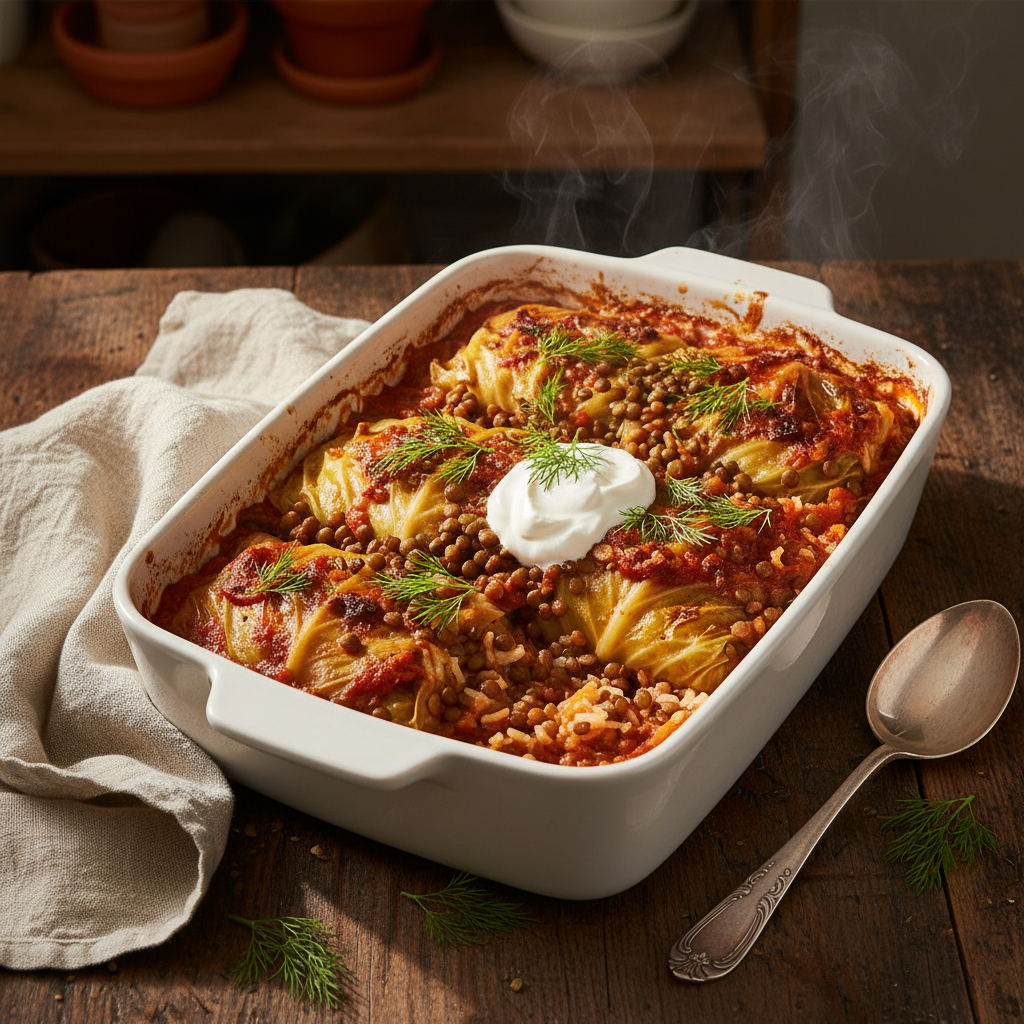
The Ultimate Vegetarian Stuffed Cabbage Roll Casserole: All the Comfort, None of the Rolling
Vegetarian Stuffed Cabbage Roll Casserole Recipe
Experience the rich, savory flavors of traditional Polish Golabki without the labor-intensive rolling. This Vegetarian Stuffed Cabbage Roll Casserole features tender layers of cabbage, hearty lentils, brown rice, and a tangy tomato sauce, creating a wholesome, comforting dinner that the whole family will devour.
20 minutes
1 hour 15 minutes
1 hour 35 minutes
8 servings
Main Course
Baking
Eastern European / American
Vegetarian
There is something undeniably comforting about the smell of cabbage rolls simmering on the stove—a scent that instantly transports many of us back to our grandmother’s kitchen. However, let’s be honest: traditional stuffed cabbage rolls are a labor of love. Between blanching the cabbage leaves just right so they don’t tear, preparing the filling, and the meticulous rolling process, it is often a weekend project reserved for special occasions. Enter the Vegetarian Stuffed Cabbage Roll Casserole, often affectionately known as ‘Unstuffed Cabbage.’ This dish is a revelation for busy weeknights, delivering 100% of that nostalgic, sweet-and-sour flavor profile with a fraction of the effort.
By deconstructing the classic roll, we transform this Eastern European staple into a user-friendly casserole that requires nothing more than chopping and layering. But don’t let the simplicity fool you; the depth of flavor here is profound. We swap the traditional ground meat for a robust mixture of lentils, mushrooms, and brown rice, seasoned heavily with paprika, garlic, and herbs. The cabbage, rather than serving merely as a wrapper, becomes a tender, sweet component that melts into the savory tomato sauce. This recipe is designed to be a nutritional powerhouse, packed with fiber and plant-based protein, yet it remains hearty enough to satisfy the most devoted meat-eaters. Whether you are looking for a cozy Sunday supper, a meal-prep champion for the week ahead, or a freezer-friendly option for future dinners, this casserole checks every single box. It is rustic, messy in the best way possible, and utterly delicious.
History & Origins
The history of the cabbage roll is a culinary journey that spans centuries and crosses numerous borders, making it a truly global comfort food. While many Americans associate cabbage rolls with Eastern European cuisine—specifically the Polish *Gołąbki*, Ukrainian *Holubtsi*, or Jewish *Holishkes*—the origins likely trace back further to the Middle East. Historians believe the concept originated in the Ottoman Empire as *dolma*, grape leaves stuffed with meat and rice. As the dish migrated north into cooler climates where grapevines were scarce, cabbage became the wrapper of choice.
In Eastern Europe, the dish became a staple due to the affordability and hardiness of cabbage, which could be stored through long, harsh winters. Each region developed its own variation: Romanians use sauerkraut leaves for a sour kick, while Hungarians might incorporate more paprika. In Jewish Ashkenazi tradition, stuffed cabbage is famously served during the festival of Simchat Torah, symbolizing the cylindrical shape of the Torah scrolls.
The evolution into a ‘casserole’ form is a distinctly modern, likely American, adaptation. As mid-20th-century cooking trends shifted toward convenience and efficiency—popularizing the ‘hotdish’ and casserole culture—home cooks sought ways to enjoy traditional flavors without the time-consuming preparation. The ‘lazy’ or ‘unstuffed’ cabbage casserole emerged as a brilliant solution, maintaining the cultural heritage of the ingredients while adapting to the faster pace of modern life. Today, it stands as a testament to how immigrant foodways adapt and thrive in new environments.
Why This Recipe Works
This recipe succeeds because it addresses the two main challenges of traditional cabbage rolls: texture consistency and flavor distribution. In a traditional roll, if the cabbage is too thick, it remains tough while the filling overcooks; if the leaf is too thin, it falls apart. By chopping the cabbage into uniform ribbons and layering it lasagna-style (or mixing it throughout), we ensure that every bite is perfectly tender. The heat circulates more evenly through a casserole dish than it does around tightly packed rolls in a pot, guaranteeing that the rice and lentils cook through perfectly without becoming mushy.
Furthermore, the sauce is key. We use a sweet-and-sour tomato base—enhanced with a touch of vinegar and a hint of sugar or maple syrup—which is essential for cutting through the earthiness of the cabbage and lentils. This acidity also helps to tenderize the cabbage fibers during the baking process. The ‘steam-bake’ method, where the casserole is covered with foil for the majority of the cooking time, traps moisture, allowing the uncooked rice and lentils to absorb the flavorful tomato broth directly. This means the filling doesn’t just sit next to the sauce; it is infused with it. Finally, uncovering the dish for the last few minutes allows for caramelization on top, adding a depth of flavor that boiled or braised rolls simply cannot achieve.
Why You’ll Love This Recipe
- ✓Deconstructed format saves over an hour of prep time compared to traditional rolling.
- ✓High-fiber and protein-rich vegetarian filling keeps you full longer.
- ✓Freezer-friendly: tastes even better the next day as flavors meld.
- ✓One-pot style baking reduces cleanup significantly.
- ✓Customizable: easily adaptable for vegan or gluten-free diets.
Equipment You’ll Need
- ✓Large Dutch oven or skillet
- ✓9×13 inch baking dish or large casserole dish
- ✓Chef’s knife
- ✓Cutting board
- ✓Aluminum foil
- ✓Measuring cups and spoons
- ✓Mixing bowl
Ingredients
- ✓1 large head of green cabbage (approx. 2.5 lbs), core removed and chopped into 1-inch pieces
- ✓1 tbsp olive oil
- ✓1 large yellow onion, diced
- ✓3 cloves garlic, minced
- ✓1 cup brown lentils, rinsed and picked over (uncooked)
- ✓1/2 cup long-grain brown rice (uncooked)
- ✓8 oz cremini mushrooms, finely chopped (optional for meaty texture)
- ✓1 (28 oz) can crushed tomatoes
- ✓1 (15 oz) can tomato sauce
- ✓2 cups vegetable broth
- ✓2 tbsp apple cider vinegar or lemon juice
- ✓2 tbsp brown sugar or maple syrup
- ✓1 tbsp paprika (smoked or sweet)
- ✓1 tsp dried thyme
- ✓1 tsp dried dill (plus fresh for garnish)
- ✓Salt and freshly cracked black pepper to taste
- ✓Sour cream or vegan yogurt for serving
Instructions
- Preheat your oven to 375°F (190°C). Grease a 9×13 inch baking dish lightly with oil or cooking spray.
- Prepare the cabbage: Remove the tough core from the cabbage and chop the leaves into rough 1-inch squares. Set aside about half of the chopped cabbage to line the bottom of the dish later.
- Sauté aromatics: In a large skillet or Dutch oven, heat the olive oil over medium heat. Add the diced onion and cook until translucent, about 5 minutes. Add the minced garlic and chopped mushrooms (if using) and cook for another 3-4 minutes until the mushrooms have released their moisture.
- Toast spices: Stir in the paprika, dried thyme, and dried dill. Cook for 1 minute until fragrant.
- Make the sauce mixture: Pour in the crushed tomatoes, tomato sauce, vegetable broth, apple cider vinegar, and brown sugar. Stir well to combine. Bring to a gentle simmer, season with salt and pepper, then turn off the heat.
- Combine filling: In a large mixing bowl, combine the rinsed lentils, uncooked brown rice, and the sautéed onion/mushroom mixture. (Note: You do not need to pre-cook the lentils or rice; they will cook in the liquid in the oven).
- Layer the casserole: Place half of the chopped cabbage in the bottom of the prepared baking dish. Spread the lentil and rice mixture evenly over the cabbage layer. Top with the remaining chopped cabbage.
- Add liquid: Carefully pour the hot tomato sauce mixture evenly over the entire casserole. Use a spoon to gently press down on the cabbage to ensure the liquid permeates the layers. The liquid should come up mostly to the top of the solids.
- Bake covered: Cover the baking dish tightly with aluminum foil. Bake in the preheated oven for 60 minutes.
- Finish baking: Remove the foil and bake for an additional 15-20 minutes, or until the cabbage is very tender and the rice and lentils are fully cooked. The top should be slightly browned.
- Rest and serve: Let the casserole rest for 10-15 minutes before serving. This allows the sauce to thicken and the layers to set. Garnish with fresh dill and a dollop of sour cream.
Expert Cooking Tips
- ✓Chop Uniformly: Ensure your cabbage pieces are roughly the same size so they cook at the same rate.
- ✓Don’t Skip the Rest: Letting the casserole sit for 15 minutes after baking is crucial. It allows the excess liquid to be absorbed by the rice and lentils, preventing a runny plate.
- ✓Tight Seal: Make sure the foil is sealed tightly around the edges of the dish to trap steam; this is essential for cooking the rice and lentils properly.
- ✓Test for Doneness: Rice cooking times can vary. Taste a few grains of rice from the center of the dish before turning off the oven to ensure they are tender.
- ✓Broth Adjustment: If you prefer a soupier casserole, add an extra half-cup of broth. For a firmer sliceable casserole, stick to the recipe measurements.
Substitutions and Variations
This recipe is incredibly forgiving and adaptable. If you are not a fan of lentils, you can substitute them with a plant-based ground meat alternative (like Impossible or Beyond meat), or for non-vegetarians, lean ground beef or turkey works perfectly—just brown the meat with the onions before baking. For the grain, white rice can be used instead of brown rice, but you will need to reduce the cooking time by about 15-20 minutes and slightly reduce the liquid. Quinoa is another great protein-rich option; treat it similarly to white rice regarding timing. If you don’t have apple cider vinegar, lemon juice or red wine vinegar provide that necessary acidic brightness. Savoy cabbage can be used instead of green cabbage for a more delicate texture, though it cooks faster, so check the dish earlier. Finally, for a lower-carb version, replace the rice with riced cauliflower, but reduce the broth by half as cauliflower releases its own moisture.
Common Mistakes to Avoid
The most common mistake with this dish is undercooking the rice or lentils. This usually happens if the foil isn’t sealed tightly enough, allowing steam to escape, or if there isn’t enough liquid to begin with. Always ensure the liquid level is visible just below the top layer of cabbage before baking. Another pitfall is using ‘quick-cook’ or ‘minute’ rice without adjusting the liquid; these types of rice will turn to mush with the amount of liquid specified here. Use standard, uncooked long-grain rice. Lastly, avoid chopping the cabbage too finely; if it’s shredded like coleslaw, it can disappear into the sauce and lose its texture. Chunky 1-inch squares are ideal for maintaining structure.
Serving Suggestions
This casserole is a hearty meal on its own, but it pairs beautifully with a few sides to round out the dinner. A slice of crusty rye bread or pumpernickel is traditional and perfect for mopping up the savory tomato sauce. A simple cucumber salad with dill and a vinegar dressing provides a crisp, cool contrast to the hot, savory casserole. Mashed potatoes are another classic pairing, serving as a bed for the saucy cabbage mixture. For garnish, fresh dill is non-negotiable for that authentic flavor, and a generous dollop of sour cream (or a dairy-free alternative like cashew cream) adds a creamy richness that balances the acidity of the tomatoes.
Storage and Reheating Tips
This dish is one of those magical recipes that tastes even better the next day. To store, allow the casserole to cool completely to room temperature, then transfer it to an airtight container. It will keep in the refrigerator for up to 4-5 days. Reheat individual portions in the microwave, or warm the whole dish in the oven at 350°F, covered, until heated through. This casserole is also exceptionally freezer-friendly. You can freeze the cooked casserole in portions or as a whole. Wrap it tightly with plastic wrap and then foil to prevent freezer burn. It can be frozen for up to 3 months. Thaw overnight in the refrigerator before reheating. If reheating from frozen, add an extra 30-45 minutes to the oven time.
Nutrition Facts (Estimated)
| Serving Size | 1.5 cups |
| Calories | 320 |
| Fat | 6g |
| Saturated Fat | 1g |
| Unsaturated Fat | 4.5g |
| Trans Fat | 0g |
| Cholesterol | 0mg |
| Sodium | 450mg |
| Carbohydrates | 54g |
| Fiber | 9g |
| Sugar | 8g |
| Protein | 14g |
Frequently Asked Questions
Can I use white rice instead of brown rice?
Yes, but because white rice cooks faster than brown rice, you should check the casserole after 45 minutes. You may also want to reduce the liquid by about 1/2 cup, as white rice absorbs less water.
Do I need to cook the lentils or rice before adding them?
No, you add them uncooked. The liquid in the sauce and the steam created under the foil will cook them perfectly. Just ensure you use standard dry lentils and rice, not pre-cooked pouches.
Is this recipe gluten-free?
Yes, naturally! Just double-check your vegetable broth and soy sauce (if you add any for extra umami) to ensure they are certified gluten-free. The core ingredients—rice, lentils, cabbage, tomatoes—are all gluten-free.
Can I make this in a slow cooker?
Absolutely. Layer the ingredients in the slow cooker exactly as described. Cook on High for 3-4 hours or Low for 6-7 hours, until the rice and lentils are tender.
What kind of cabbage is best?
Standard green cabbage (cannonball cabbage) is best because it holds its shape well during the long cook time. Savoy cabbage is a good alternative but is more delicate. Red cabbage can be used but will turn the entire dish purple.
Can I add cheese to this?
While not traditional, melted cheese is delicious here. You can sprinkle mozzarella or provolone on top during the last 15 minutes of baking (when you remove the foil) for a bubbly, cheesy crust.
Why are my lentils still hard?
This usually means there wasn’t enough liquid or the acid in the tomatoes slowed down the cooking process significantly. Ensure you have enough broth and that the foil is tight. If they are still hard, add a splash more broth and bake longer.
Can I use canned lentils?
If you use canned lentils, they are already cooked. You would need to reduce the cooking time significantly (just to cook the rice) or use pre-cooked rice as well and just bake for 30 minutes to heat through and meld flavors.
Conclusion
This Vegetarian Stuffed Cabbage Roll Casserole proves that you don’t need meat to create a dinner that is deeply satisfying and rich in flavor. It honors the tradition of the classic dish while embracing the convenience we all need in our modern lives. Whether you are a lifelong vegetarian or just looking to incorporate more plant-based meals into your rotation, this recipe is a winner. The combination of tender cabbage, sweet-tart tomato sauce, and the hearty grain-legume filling is pure comfort in a bowl. So, grab that head of cabbage and get chopping—your new favorite weeknight dinner awaits!