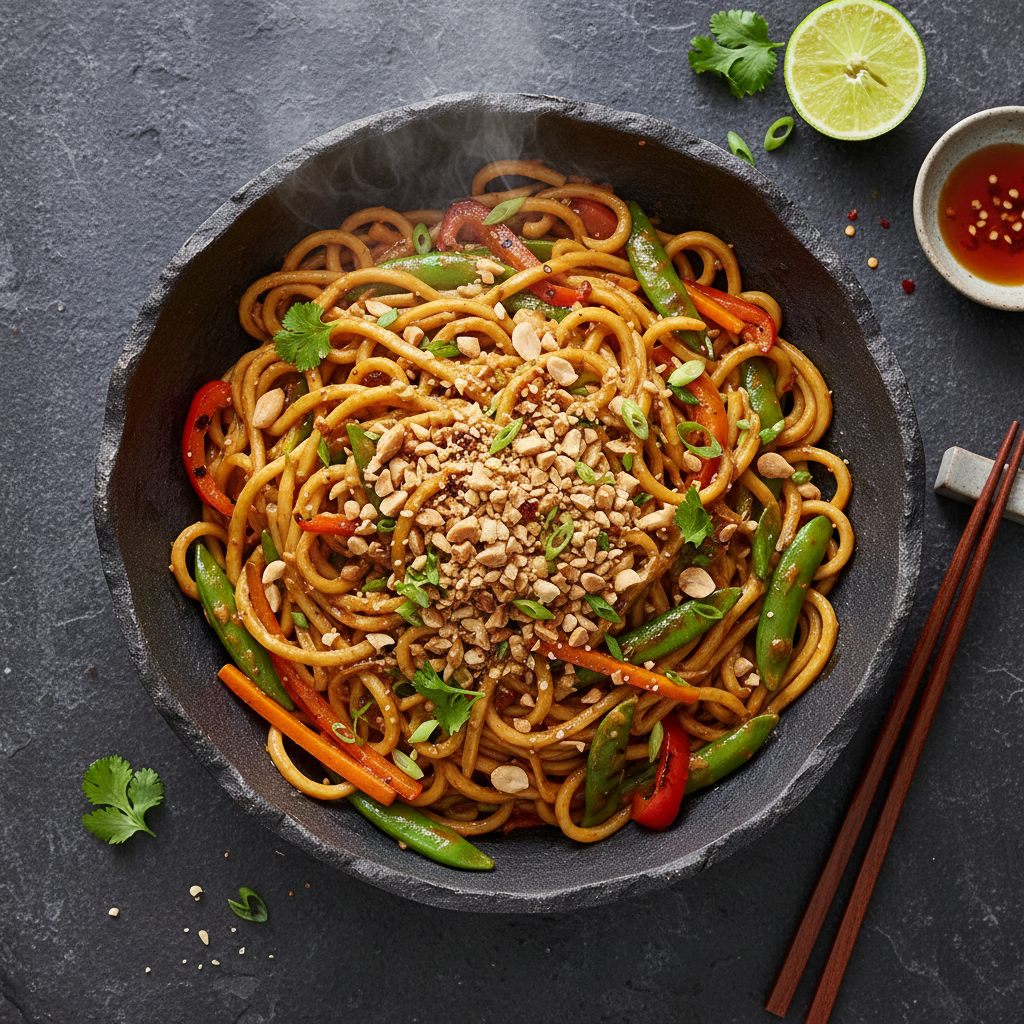
Better-Than-Takeout Spicy Peanut Vegetable Stir Fry With Noodles
Spicy Peanut Vegetable Stir Fry With Noodles Recipe
Ditch the delivery menu for this vibrant, 30-minute Spicy Peanut Vegetable Stir Fry! Packed with crunchy colorful veggies, tender noodles, and smothered in a creamy, savory-sweet peanut sauce that packs a kick, this dish is the ultimate weeknight comfort food that happens to be vegan-friendly.
15 minutes
15 minutes
30 minutes
4 servings
Main Course
Stir-Fry
Asian Fusion
Vegan
There is something undeniably comforting about a massive bowl of noodles coated in a rich, creamy sauce. When that sauce is a spicy, savory peanut blend that clings to every strand of pasta and every crevice of crunchy vegetable, you have a recipe that transcends the ordinary weeknight dinner. This Spicy Peanut Vegetable Stir Fry is a celebration of textures and bold flavors, designed to satisfy those intense cravings for takeout while providing a wholesome, nutrient-dense meal right from your own kitchen.
The magic of this dish lies in the sauce. It is not just peanut butter mixed with soy sauce; it is a carefully balanced emulsion of aromatics, heat, acidity, and sweetness. The creaminess of natural peanut butter provides a luxurious mouthfeel, while fresh ginger and garlic cut through the richness with their sharp, zesty notes. A splash of lime juice adds the necessary brightness to wake up the palate, and a generous dose of chili paste brings a warmth that builds slowly with every bite.
What I love most about this recipe is its incredible versatility. It is a ‘clean out the fridge’ hero. Have half a bell pepper, a handful of snap peas, or some wilting spinach? Throw them in. The peanut sauce is robust enough to tie together almost any combination of vegetables. Whether you are a seasoned home cook looking for a quick win or a beginner wanting to impress with complex flavors, this stir fry delivers on all fronts. It is vibrant, messy in the best way possible, and deeply satisfying—a true feast for the senses that proves plant-based eating never has to be boring.
History & Origins
The origins of peanut sauce, often the star of dishes like this stir fry, are deeply rooted in Southeast Asian cuisine, specifically Indonesia, where it is known as ‘bumbu kacang’. History tells us that peanuts were introduced to Indonesia by Portuguese and Spanish merchants from Mexico in the 16th century. The legume thrived in the tropical climate and quickly became a staple ingredient. Indonesians ingeniously ground roasted peanuts and combined them with local spices like galangal, garlic, chili, and tamarind to create the earliest versions of the savory sauce we adore today.
From Indonesia, the use of peanut sauce spread to neighboring countries like Malaysia, Thailand, and Vietnam, each culture adapting the recipe to suit local palates. In Thailand, for example, peanut sauce (often associated with Satay) tends to be sweeter and often includes coconut milk and red curry paste. In Vietnam, it might be paired with hoisin sauce for dipping fresh spring rolls.
The concept of stir-frying, or ‘chao’, originated in China as a method to cook food quickly over high heat, preserving the texture and nutrients of the ingredients. This technique became essential in times when fuel was scarce, as it required shorter cooking times. As Chinese immigrants traveled and settled across the globe, they brought their woks and techniques with them, influencing culinary landscapes worldwide.
This specific recipe—Spicy Peanut Vegetable Stir Fry with Noodles—is a modern, Westernized fusion. It borrows the creamy, nutty profile of Indonesian and Thai sauces and marries it with the classic Chinese stir-fry technique. It represents the evolution of global cuisine, where traditional boundaries blur to create dishes that are accessible, convenient, and universally loved. It honors the ancient roots of these culinary traditions while adapting them for the busy modern kitchen.
Why This Recipe Works
This recipe succeeds because it masters the fundamental culinary principle of balancing the five key flavor profiles: salty, sweet, sour, bitter, and umami. The peanut butter acts as a fatty, rich base that carries flavor compounds effectively across the palate. By using natural, unsweetened peanut butter, we control the sugar content, adding maple syrup or brown sugar only to counterbalance the acidity of the lime juice and rice vinegar. This interplay between the sweet and sour elements is what makes the sauce ‘pop’ rather than tasting flat or heavy.
Furthermore, the technique of adding the sauce towards the end of the cooking process ensures that the emulsification doesn’t break. Peanut butter can separate if cooked too long over high heat. By tossing the noodles and veggies with the sauce just long enough to heat it through, we maintain a velvety, glossy texture that perfectly coats the ingredients.
Texturally, this dish is a powerhouse. We use a variety of vegetables cut into uniform sizes to ensure even cooking, but we stir-fry them quickly to retain a ‘crisp-tender’ bite. This crunch contrasts beautifully with the soft, chewy noodles and the smooth sauce. The addition of crushed peanuts as a garnish adds a final layer of texture, reinforcing the nutty flavor profile. Finally, the use of aromatics like fresh ginger and garlic, bloomed in oil at the start, infuses the entire dish with a depth of flavor that powdered spices simply cannot replicate.
Why You’ll Love This Recipe
- ✓Ready in under 30 minutes, perfect for busy weeknights.
- ✓Highly customizable with whatever vegetables you have on hand.
- ✓Vegan and easily adaptable to gluten-free diets.
- ✓Rich, creamy sauce without the need for dairy.
- ✓Balances spicy, sweet, and savory flavors perfectly.
Equipment You’ll Need
- ✓Large Wok or Skillet
- ✓Pot for boiling noodles
- ✓Colander
- ✓Whisk
- ✓Small mixing bowl
- ✓Chef’s knife
- ✓Cutting board
- ✓Tongs
Ingredients
- ✓8 oz Ramen noodles, Udon, or Rice noodles
- ✓1 tbsp Sesame oil
- ✓1 tbsp Neutral oil (avocado or vegetable)
- ✓1 Red bell pepper, sliced thin
- ✓1 cup Snap peas or Snow peas
- ✓1 cup Broccoli florets, small
- ✓2 Carrots, julienned
- ✓1 cup Red cabbage, shredded
- ✓3 cloves Garlic, minced
- ✓1 tbsp Fresh ginger, grated
- ✓1/2 cup Natural creamy peanut butter
- ✓3 tbsp Soy sauce or Tamari
- ✓1 tbsp Rice vinegar
- ✓1 tbsp Maple syrup or Brown sugar
- ✓1-2 tbsp Chili garlic sauce or Sriracha (to taste)
- ✓1/4 cup Warm water (to thin sauce)
- ✓1 Lime, juiced
- ✓Garnish: Crushed peanuts, Green onions, Cilantro, Sesame seeds
Instructions
- Bring a large pot of water to a boil. Cook the noodles according to package instructions, but drain them 1 minute early so they remain slightly al dente. Rinse with cold water to stop cooking and toss with a teaspoon of sesame oil to prevent sticking. Set aside.
- While the water boils, prepare the peanut sauce. In a small mixing bowl, whisk together the peanut butter, soy sauce, rice vinegar, maple syrup, chili garlic sauce, lime juice, and warm water. Whisk until smooth and creamy. If it is too thick, add water one tablespoon at a time until it reaches a pourable consistency. Taste and adjust seasoning.
- Heat the neutral oil in a large wok or skillet over medium-high heat. Once shimmering, add the minced garlic and grated ginger. Stir-fry for 30 seconds until fragrant, being careful not to burn them.
- Add the broccoli and carrots to the wok. Stir-fry for 2-3 minutes as these take longer to cook.
- Add the red bell pepper and snap peas. Continue to stir-fry for another 2-3 minutes. The vegetables should be bright in color and crisp-tender.
- Add the shredded cabbage and toss for 1 minute until slightly wilted.
- Reduce the heat to medium-low. Add the cooked noodles to the pan with the vegetables.
- Pour the peanut sauce over the noodles and vegetables. Using tongs, toss everything together vigorously until the noodles and veggies are evenly coated in the sauce and heated through (about 1-2 minutes).
- Remove from heat immediately. Serve hot, garnished with crushed peanuts, sliced green onions, fresh cilantro, and a sprinkle of sesame seeds.
Expert Cooking Tips
- ✓Prep all your vegetables before you turn on the stove; stir-frying happens fast!
- ✓Don’t overcook the noodles in the boiling water; they will finish cooking in the sauce.
- ✓Use natural peanut butter for the best texture; sugary brands can make the dish cloying.
- ✓If you like extra heat, garnish with fresh sliced chili peppers or chili oil.
- ✓To make it gluten-free, ensure you use Tamari instead of soy sauce and rice noodles.
Substitutions and Variations
This recipe is incredibly forgiving and allows for numerous substitutions based on dietary needs or pantry availability. For the noodles, you can use ramen, udon, soba, rice noodles, or even standard spaghetti if you are in a pinch. For a low-carb option, zucchini noodles or spaghetti squash work wonderfully, though you should add them at the very end to prevent them from becoming mushy. The vegetable selection is entirely up to you; baby corn, bok choy, mushrooms, water chestnuts, and edamame are all excellent additions or replacements. If you have a peanut allergy, almond butter or cashew butter provides a similar creamy texture, while sunflower seed butter or tahini are great nut-free alternatives. For the sweetener, agave nectar, honey (if not vegan), or coconut sugar can replace maple syrup. Lastly, if you don’t have rice vinegar, apple cider vinegar or extra lime juice can provide the necessary acidity.
Common Mistakes to Avoid
One of the most common mistakes with this dish is overcooking the vegetables. The goal of a stir-fry is to maintain the crunch and vibrant color of the produce; cooking them until they are soft and dull results in a mushy texture that gets lost in the sauce. Another pitfall is adding the sauce to a pan that is too hot. Peanut butter can separate or burn quickly, leading to a gritty, oily sauce rather than a smooth emulsion. Always lower the heat before adding the sauce. Additionally, overcrowding the wok can cause the vegetables to steam rather than fry. If you are doubling the recipe, it is better to cook the vegetables in batches to ensure they get that slight char and distinct texture. Finally, failing to thin the sauce enough can make the dish dry; remember that the noodles will absorb some liquid, so the sauce should be slightly looser than you think it needs to be before mixing.
Serving Suggestions
This Spicy Peanut Vegetable Stir Fry is a complete meal on its own, but it pairs beautifully with a few sides if you are hosting a dinner. Start with some fresh spring rolls or crispy vegetable dumplings to whet the appetite. A light, refreshing cucumber salad with a vinegar dressing helps cut through the richness of the peanut sauce. For beverages, an iced jasmine tea, a cold lager, or a crisp Riesling complements the spicy and nutty flavors perfectly. If you want to add more protein, this dish serves as an excellent base for grilled tofu, seared shrimp, or sliced chicken breast placed on top.
Storage and Reheating Tips
Leftovers store surprisingly well, making this a great meal-prep option. Store the stir fry in an airtight container in the refrigerator for up to 4 days. Note that the noodles will absorb the sauce as they sit, so the dish may appear drier the next day. To reheat, place a portion in a microwave-safe bowl, sprinkle with a teaspoon of water to loosen the sauce, and microwave in 30-second intervals, stirring in between. Alternatively, you can reheat it in a pan over low heat with a splash of water or vegetable broth. Freezing is not recommended for this specific recipe, as the vegetables will lose their crunch and the sauce may separate upon thawing.
Nutrition Facts (Estimated)
| Serving Size | 1 bowl (approx 350g) |
| Calories | 485 |
| Fat | 22g |
| Saturated Fat | 4g |
| Unsaturated Fat | 16g |
| Trans Fat | 0g |
| Cholesterol | 0mg |
| Sodium | 680mg |
| Carbohydrates | 58g |
| Fiber | 7g |
| Sugar | 9g |
| Protein | 16g |
Frequently Asked Questions
Can I make this recipe gluten-free?
Absolutely. Simply substitute the wheat noodles with rice noodles (like Pad Thai noodles) or gluten-free spaghetti, and ensure you use Tamari or coconut aminos instead of traditional soy sauce.
Is this dish very spicy?
It has a moderate kick, but the spice level is entirely up to you. The recipe calls for 1-2 tablespoons of chili garlic sauce. Start with 1 tablespoon or even less if you are sensitive to heat, and add more to taste.
Can I use crunchy peanut butter?
Yes, crunchy peanut butter works great and adds extra texture! You may just need to whisk the sauce a bit more vigorously to incorporate the other ingredients evenly.
My sauce is too thick, what should I do?
Peanut butter consistency varies by brand. Simply add more warm water, one tablespoon at a time, whisking constantly until you reach a heavy cream consistency.
Can I add meat to this recipe?
Definitely. Chicken, beef, or shrimp are great additions. Cook your protein separately first, remove it from the pan, cook the veggies, and then add the protein back in at the end with the noodles and sauce.
What is the best type of noodle to use?
Ramen noodles (discard the flavor packet) or Udon noodles offer the best chewiness that holds up to the thick sauce. However, flat rice noodles are a fantastic traditional alternative.
Do I need a wok to make this?
While a wok is ideal because its shape allows for even high-heat cooking and easy tossing, a large, deep skillet or sauté pan works perfectly fine.
How do I prevent the noodles from clumping?
After boiling and draining the noodles, rinse them immediately with cold water to remove excess starch, then toss them with a little sesame oil. This keeps them separate until you are ready to fry.
Conclusion
This Spicy Peanut Vegetable Stir Fry with Noodles is more than just a recipe; it’s a reliable, flavor-packed solution for those days when you want something special without the hassle. It brings the excitement of street food into your home, offering a perfect balance of health and indulgence. Whether you are cooking for a family dinner, prepping lunches for the week, or just treating yourself to a solo feast, this dish never disappoints. The creamy, spicy, savory sauce is bound to become a staple in your repertoire. So grab your chopsticks, fire up the wok, and get ready to fall in love with your new favorite noodle dish!