The Ultimate Vegetarian Paella with Artichokes and Sweet Peas
Vegetarian Paella With Artichokes And Peas Recipe
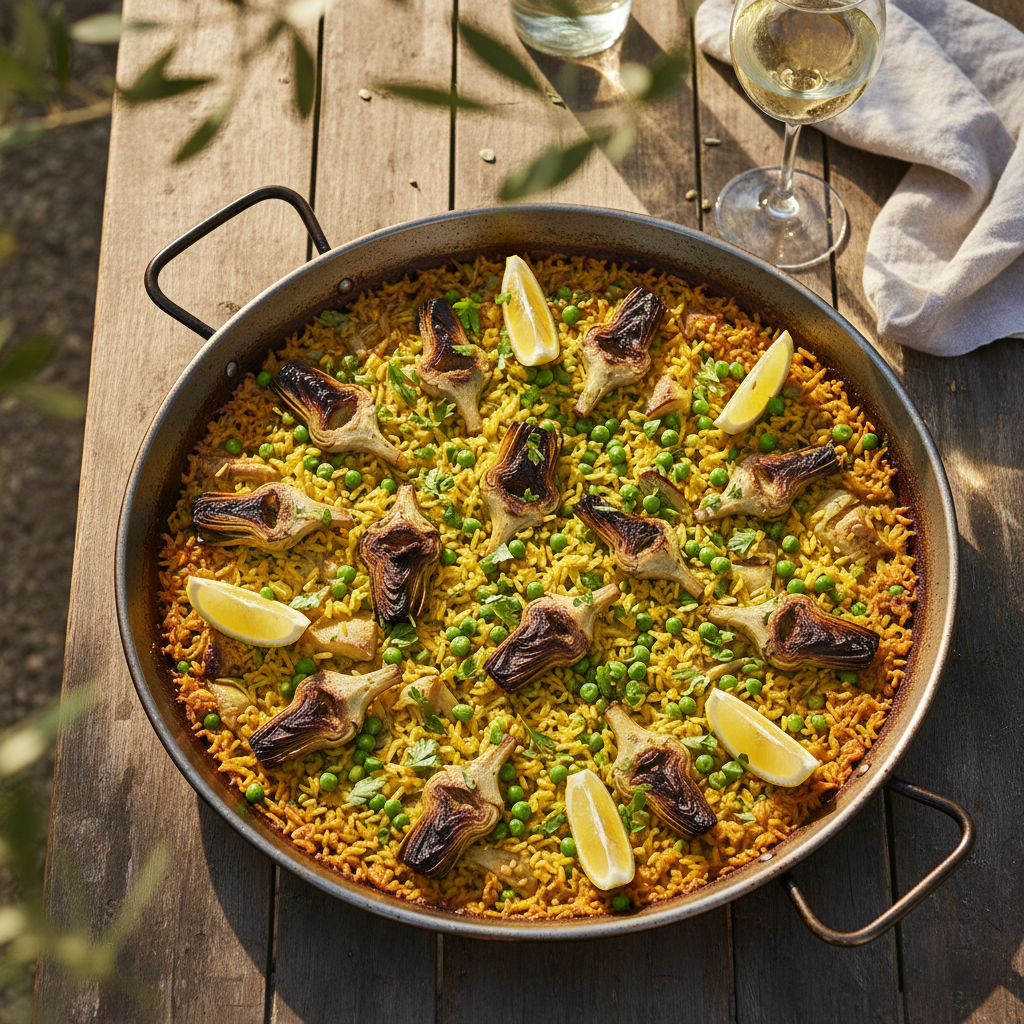
Experience the vibrant flavors of Spain with this stunning Vegetarian Paella, featuring tender artichoke hearts, sweet garden peas, and saffron-infused Bomba rice. This one-pan masterpiece delivers the coveted crispy socarrat bottom and robust, smoky aromas without any meat, making it the perfect centerpiece for your next dinner party.
20 minutes
40 minutes
60 minutes
4-6 servings
Main Course
Stovetop
Spanish
Vegetarian
If there is one dish that captures the sun-drenched soul of Spanish cuisine, it is undoubtedly paella. While traditional versions often rely heavily on seafood, rabbit, or chorizo to build depth, this Vegetarian Paella with Artichokes and Peas proves that plant-based ingredients can sing just as loudly. The magic lies in the layering of flavors—starting with a rich sofrito base of tomatoes, onions, and garlic, and culminating in the aromatic infusion of high-quality saffron threads. What truly sets this recipe apart is the texture; we are using traditional Bomba rice, a short-grain variety known for absorbing three times its volume in liquid while remaining distinct and firm. The artichokes offer a meaty, satisfying bite that contrasts beautifully with the delicate sweetness of fresh peas.
Many home cooks are intimidated by paella, fearing they won’t achieve that legendary ‘socarrat’—the caramelized, crispy layer of rice at the bottom of the pan that is the hallmark of a well-executed dish. Fear not. This guide breaks down the science of heat management and liquid ratios to ensure you get that golden crust every single time. Whether you are hosting a summer al fresco dinner or simply looking to elevate your weeknight meal rotation, this dish is a showstopper. It is rustic yet elegant, hearty yet light, and visually spectacular with its bright yellows and greens. Prepare to transport your kitchen straight to the coast of Valencia with every savory forkful.
History & Origins
Paella is far more than just a rice dish; it is a cultural icon of Spain, deeply rooted in the history of the Valencia region. Its origins date back to the mid-19th century near the Albufera lagoon, a freshwater lagoon on the east coast of Spain where rice cultivation has flourished since the Moors introduced it over 1,000 years ago. Originally, paella was a humble meal for farmers and farm laborers. They would cook rice over an open wood fire in the fields, adding whatever ingredients were readily available to them. Early iterations, known as ‘Paella Valenciana,’ typically included water vole, eel, butter beans, and eventually rabbit and chicken as the dish became more refined. The wide, shallow pan—also called a ‘paella’—was designed to maximize the surface area, allowing the liquid to evaporate quickly and the rice to cook evenly in a thin layer.
As the popularity of the dish spread throughout Spain and across the globe, variations began to emerge based on regional ingredients. Coastal areas naturally incorporated fresh seafood, creating ‘Paella de Marisco,’ while inland regions experimented with sausages and meats. Vegetarian versions, or ‘Paella de Verduras,’ have gained immense popularity in modern times, celebrating Spain’s incredible produce like artichokes, broad beans, and peppers. Despite the variations, the soul of the dish remains the communal act of eating straight from the pan, a tradition that fosters connection and celebration. This specific recipe honors that lineage by maintaining traditional techniques while highlighting the earthiness of artichokes, a beloved ingredient in Spanish agriculture.
Why This Recipe Works
This recipe succeeds where many vegetarian paellas fail because it aggressively builds flavor foundations to compensate for the lack of animal fats or stocks. First, we utilize smoked paprika (pimentón de la Vera), which provides that essential smoky undertone usually derived from chorizo or wood-fire cooking. Second, the choice of rice is non-negotiable. We use Bomba or Calasparra rice because their starch structure allows them to absorb the rich vegetable broth without becoming mushy, unlike Arborio rice which is designed to become creamy for risotto.
Another critical factor is the ‘sofrito.’ We take the time to cook down the onions, garlic, and tomatoes until they are a thick, dark red paste. This concentration of umami is the engine of the dish. Furthermore, we add the artichokes early enough to brown them, unlocking the Maillard reaction, before simmering them in the broth to become tender. Finally, the method of not stirring the rice once the stock is added is crucial. Stirring releases excess starch, which creates a creamy texture suitable for risotto but disastrous for paella. By leaving it undisturbed, we encourage the formation of the socarrat, adding a complex, toasted flavor profile and a delightful textural crunch that makes this dish truly authentic.
Why You’ll Love This Recipe
- ✓Achieves the perfect crispy ‘socarrat’ bottom layer.
- ✓Bursting with plant-based protein and fiber from artichokes and peas.
- ✓Uses smoked paprika to mimic traditional smoky depth.
- ✓visually stunning centerpiece perfect for entertaining.
- ✓One-pan meal meant for easy cleanup and communal dining.
Equipment You’ll Need
- ✓15-inch Paella Pan or large cast-iron skillet
- ✓Chef’s Knife
- ✓Cutting Board
- ✓Measuring Cups and Spoons
- ✓Wooden Spoon
- ✓Aluminum Foil (optional for resting)
Ingredients
- ✓1/4 cup Extra Virgin Olive Oil
- ✓1 medium Yellow Onion, finely diced
- ✓4 cloves Garlic, minced
- ✓1 Red Bell Pepper, diced
- ✓2 medium Tomatoes, grated (discard skins)
- ✓1 can (14 oz) Artichoke Hearts, drained and halved (or fresh if in season)
- ✓1 tsp Smoked Paprika (Pimentón de la Vera)
- ✓1/2 tsp Saffron Threads, crushed
- ✓1.5 cups Bomba or Calasparra Rice
- ✓4-5 cups High-Quality Vegetable Broth, hot
- ✓1 cup Fresh or Frozen Peas
- ✓Salt and Freshly Cracked Black Pepper to taste
- ✓1 Lemon, cut into wedges for garnish
- ✓2 tbsp Fresh Parsley, chopped
Instructions
- Prepare your ingredients: Dice the onion and red pepper, mince the garlic, and grate the tomatoes. Heat the vegetable broth in a separate saucepan and keep it hot.
- Heat the olive oil in your paella pan over medium heat. Add the artichoke hearts and sauté until they are lightly browned on all sides. Remove them from the pan and set aside.
- In the same pan, add the diced onion and red pepper. Sauté for 5-7 minutes until the onions are translucent and soft.
- Add the minced garlic and cook for another minute until fragrant, being careful not to burn it.
- Stir in the grated tomato pulp, smoked paprika, and a pinch of salt. Cook this mixture (the sofrito) down for about 5-8 minutes until it thickens and turns a dark, brick-red color.
- Add the rice to the pan. Stir well to coat every grain with the oil and tomato mixture. Toast the rice for 1-2 minutes.
- Crush the saffron threads and sprinkle them over the rice. Pour in the hot vegetable broth. Give the pan a gentle shake to distribute the rice evenly. Do not stir from this point on.
- Nestle the browned artichoke hearts back into the pan, arranging them decoratively.
- Increase the heat to medium-high and bring to a vigorous boil. Cook for 10 minutes uncovered. You want the liquid to reduce rapidly.
- Reduce the heat to low. Sprinkle the peas over the top of the rice (do not stir them in). Simmer gently for another 10-15 minutes until the liquid is absorbed and the rice is tender.
- Listen for a crackling sound at the bottom of the pan—this indicates the socarrat is forming. Let it crackle for 30-60 seconds, then remove from heat.
- Cover the pan with a clean kitchen towel or foil and let it rest for 5-10 minutes. This helps the rice finish steaming and creates a better texture.
- Garnish with fresh parsley and lemon wedges before serving.
Expert Cooking Tips
- ✓Do not stir the rice after adding the broth; this is crucial for texture.
- ✓Use hot broth to keep the cooking temperature consistent.
- ✓Invest in high-quality saffron; it makes a huge difference in flavor and color.
- ✓If the rice looks dry but is still crunchy, splash a little more hot water over the dry spots.
- ✓Listen to your pan: the sound changes from bubbling to crackling when the socarrat forms.
- ✓Use a wide, shallow pan to ensure the rice cooks in a thin layer.
Substitutions and Variations
This recipe is incredibly versatile and welcomes adaptations based on seasonal availability or pantry staples. If you cannot find Bomba or Calasparra rice, which are the gold standards for paella, you can use Arborio rice in a pinch, though you should be careful not to overcook it as it can become gummy. For the vegetables, fresh green beans (specifically flat beans or romano beans) are a traditional addition in Valencia and add a wonderful crunch. You can also swap the artichokes for asparagus spears or even roasted cauliflower florets. If you want to boost the protein content, chickpeas or butter beans (garrofó) are excellent, traditional additions that hold their shape well. While we use vegetable broth to keep it vegetarian, a mushroom broth can add an even deeper, earthier umami profile that mimics meat stocks effectively. Finally, if you don’t have smoked paprika, you can use sweet paprika with a dash of cayenne for heat, though you will miss that specific smoky nuance.
Common Mistakes to Avoid
The most common mistake when making paella is stirring the rice throughout the cooking process. Unlike risotto, where agitation releases starch for creaminess, paella requires the rice to remain distinct and separate. Stirring will result in a mushy, gluey texture. Another frequent error is overloading the pan with too many toppings. While it looks bountiful, too many vegetables can release excess water, steaming the rice instead of allowing it to absorb the broth properly. Heat management is also tricky; if your heat is too low during the initial boil, the rice will become soggy before the water evaporates. Conversely, if the heat is too high at the end, you will burn the socarrat rather than caramelizing it. Lastly, using a pan that is too small for the amount of rice will cause the layer to be too thick, resulting in unevenly cooked rice—crunchy on top and mushy on the bottom.
Serving Suggestions
Paella is best served family-style, placed directly in the center of the table in the pan it was cooked in. This not only makes for a stunning presentation but also keeps the rice warm. Serve it with plenty of fresh lemon wedges; the acidity cuts through the starch and brightens the earthy flavors of the artichokes and saffron. A simple, crisp green salad with a vinaigrette dressing makes the perfect side dish to balance the richness of the rice. For a drink pairing, a chilled glass of Spanish Albariño or a dry Rosé complements the vegetable flavors beautifully without overpowering them. If you want to go the extra mile, serve some crusty baguette slices rubbed with garlic and tomato (Pan con Tomate) on the side.
Storage and Reheating Tips
Paella is best enjoyed fresh, but leftovers can be stored in an airtight container in the refrigerator for up to 3 days. To reheat, it is best to avoid the microwave if possible, as it tends to dry out the rice. Instead, place the rice in a skillet with a splash of water or broth, cover it, and heat it over medium-low heat until warmed through. This helps steam the rice back to a tender texture. You can also freeze the leftovers, though the texture of the vegetables, particularly the peas and artichokes, may soften significantly upon thawing. If freezing, consume within 1 month for the best quality.
Nutrition Facts (Estimated)
| Serving Size | 1 bowl (approx 300g) |
| Calories | 420 |
| Fat | 12g |
| Saturated Fat | 2g |
| Unsaturated Fat | 9g |
| Trans Fat | 0g |
| Cholesterol | 0mg |
| Sodium | 680mg |
| Carbohydrates | 68g |
| Fiber | 8g |
| Sugar | 4g |
| Protein | 10g |
Frequently Asked Questions
Can I make this without a paella pan?
Yes, you can use a large, wide cast-iron skillet or a stainless steel sauté pan. The key is to use a vessel that is wide enough to allow the rice to spread out in a thin layer rather than piling up deep.
What is the best substitute for saffron?
Saffron provides a unique flavor and yellow color that is hard to replicate. However, you can use a pinch of turmeric for color and a little extra smoked paprika for depth, though the floral aroma of saffron will be missing.
Why is my rice still crunchy?
If the liquid has evaporated but the rice is crunchy, your heat may have been too high, causing evaporation before absorption. Drizzle a little extra hot broth or water over the crunchy spots and cover the pan with foil for a few minutes to steam it.
How do I know when the socarrat is done?
Use your nose and ears. You will hear the sound change from a bubbling simmer to a dry crackle. You should also smell a toasty, nutty aroma (like toasted popcorn). If it smells like burning, remove it from the heat immediately.
Can I use frozen artichokes?
Absolutely. Frozen artichoke hearts work very well. Just thaw them slightly and pat them dry before sautéing so they brown properly instead of steaming.
Is this recipe gluten-free?
Yes, this recipe is naturally gluten-free, provided your vegetable broth is certified gluten-free.
Can I add soy chorizo?
Yes! Soy chorizo is a fantastic addition if you want that meaty texture and extra spice. Add it during the sofrito stage to render out its flavors.
Do I need to wash the rice first?
No, do not wash the rice for paella. You want to keep the outer starch layer intact to help the grain structure, and washing it adds unnecessary moisture.
Conclusion
Mastering this Vegetarian Paella with Artichokes and Peas is a rewarding culinary journey that brings the vibrant culture of Spain right to your dining table. It challenges the notion that meat is necessary for a robust, flavorful main course, proving that the right technique and high-quality produce can stand on their own. The interplay of textures—from the tender artichokes to the popping sweet peas and the crunchy socarrat—makes every bite interesting. So, gather your friends, pour some wine, and enjoy the communal warmth that this dish naturally inspires. Happy cooking!