The Ultimate Vegan Black Bean and Quinoa Stuffed Bell Peppers
Black Bean And Quinoa Stuffed Bell Pepper Vegan Recipe
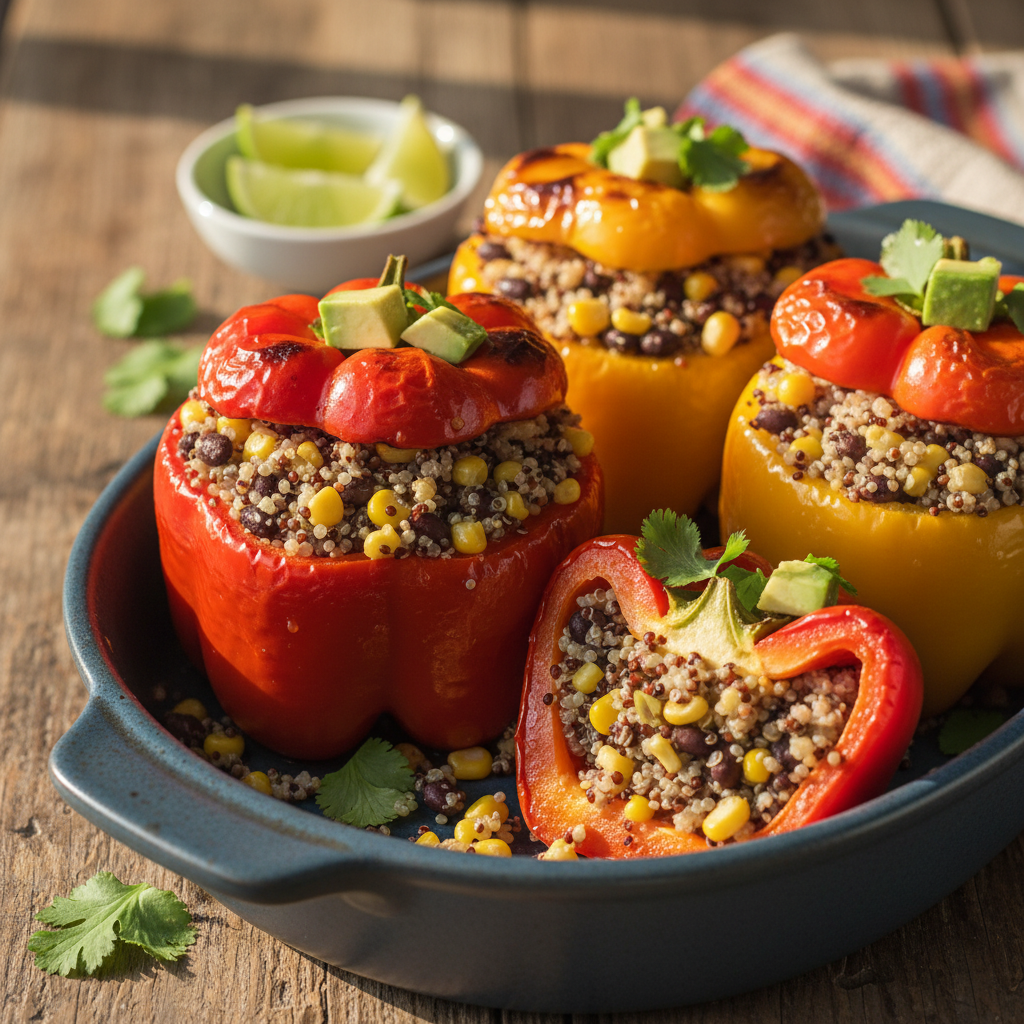
Packed with plant-based protein and vibrant Southwestern flavors, these Black Bean and Quinoa Stuffed Peppers are the perfect comfort food for a healthy weeknight dinner. They are naturally gluten-free, incredibly filling, and visually stunning, making them a hit with vegans and meat-eaters alike.
20 minutes
45 minutes
1 hour 5 minutes
4-6 Servings
Main Course
Baking
Southwestern / Mexican Fusion
Vegan
If there is one dish that perfectly bridges the gap between wholesome nutrition and indulgent comfort food, it is the stuffed bell pepper. But not just any stuffed pepper—we are talking about a vibrant, flavor-packed vessel overflowing with a zesty mixture of fluffy quinoa, hearty black beans, sweet corn, and a medley of aromatic spices. This recipe for Black Bean and Quinoa Stuffed Bell Peppers is a celebration of texture and taste, designed to satisfy even the most skeptical eaters who believe a meal isn’t complete without meat. The magic lies in the preparation; we don’t just throw raw ingredients into a pepper and hope for the best. Instead, we build layers of flavor by sautéing onions, garlic, and spices before folding in the cooked quinoa and beans, ensuring every bite is seasoned to perfection.
As the peppers bake, they become tender and sweet, offering a delightful contrast to the savory, slightly nutty filling. The aroma that fills your kitchen—a mix of cumin, chili powder, and roasting vegetables—is enough to gather the whole family around the table. Whether you are a dedicated vegan, gluten-free, or simply looking to incorporate more plant-based meals into your rotation, this recipe checks every box. It is colorful, nutrient-dense, and robust enough to stand alone as a main course. Plus, it is fantastic for meal prep, as the flavors only deepen after a day in the refrigerator. Get ready to elevate your dinner game with a dish that looks as impressive as it tastes.
History & Origins
The concept of stuffing vegetables is an ancient culinary tradition found in cultures across the globe. From the Middle Eastern ‘dolma’ (stuffed vine leaves) to the Greek ‘gemista’ (stuffed tomatoes and peppers), and the Indian ‘bharwan shimla mirch,’ humans have long recognized the utility and aesthetic appeal of using vegetables as edible containers. The bell pepper, specifically, is native to the Americas, originating in Mexico, Central America, and northern South America. Following the Columbian Exchange, pepper seeds were transported to Spain in 1493 and subsequently spread throughout Europe and Asia, evolving into the sweet, non-spicy varieties we know today as bell peppers.
The specific combination of black beans and quinoa in this recipe pays homage to the indigenous ingredients of the Americas. Quinoa, often called the ‘gold of the Incas,’ was domesticated in the Andean region of South America (modern-day Peru and Bolivia) roughly 3,000 to 4,000 years ago. It was considered sacred by the Inca civilization. Black beans, similarly, have been a staple in Latin American diets for over 7,000 years. The modern ‘stuffed pepper’ as a baked casserole dish became popular in American cuisine during the mid-20th century, often filled with ground beef and white rice. This vegan adaptation represents a contemporary shift towards plant-forward eating, reclaiming the ancient, nutrient-rich staples of the Americas—quinoa and beans—and reuniting them with the bell pepper in a dish that honors its geographical roots while catering to modern health consciousness.
Why This Recipe Works
This recipe succeeds where many stuffed pepper recipes fail because it addresses the two most common complaints: bland filling and undercooked peppers. First, we treat the filling as a standalone dish. Rather than mixing raw ingredients and hoping they cook inside the pepper, we pre-cook the quinoa in vegetable broth to infuse it with savory notes from the start. We then sauté a ‘sofrito’ base of onions, garlic, and spices before mixing in the beans and quinoa. This ensures that the filling is rich, aromatic, and fully seasoned before it even enters the oven.
Secondly, the moisture balance is carefully calculated. By adding a high-quality tomato sauce or diced fire-roasted tomatoes to the mixture, we prevent the quinoa from drying out during the baking process. The liquid creates steam inside the pepper cavity, keeping the interior moist and fluffy while the exterior pepper roasts to tender perfection. We also recommend blanching or pre-baking the empty peppers for just a few minutes if you prefer a very soft skin, though our standard method yields a perfect ‘al dente’ bite that holds its shape. Finally, the combination of black beans and quinoa provides a complete protein profile, meaning it contains all nine essential amino acids, making this dish not just tasty, but nutritionally complete.
Why You’ll Love This Recipe
- ✓100% Vegan and Gluten-Free
- ✓Complete protein source with all 9 essential amino acids
- ✓Rich in fiber and antioxidants
- ✓Excellent for meal prepping and freezes well
- ✓Customizable with your favorite toppings like avocado or salsa
- ✓Budget-friendly ingredients
Equipment You’ll Need
- ✓Large baking dish (9×13 inch)
- ✓Medium saucepan with lid
- ✓Large skillet or frying pan
- ✓Chef’s knife
- ✓Cutting board
- ✓Measuring cups and spoons
- ✓Mixing bowl
Ingredients
- ✓4 large bell peppers (any color, tops removed and seeds hollowed out)
- ✓1 cup quinoa, uncooked (rinsed well)
- ✓2 cups vegetable broth (low sodium preferred)
- ✓1 tablespoon olive oil
- ✓1 medium yellow onion, finely diced
- ✓2 cloves garlic, minced
- ✓1 can (15 oz) black beans, rinsed and drained
- ✓1 cup corn kernels (fresh, frozen, or canned)
- ✓1 can (14.5 oz) fire-roasted diced tomatoes, drained
- ✓1 teaspoon ground cumin
- ✓1 teaspoon chili powder
- ✓1/2 teaspoon smoked paprika
- ✓1/2 teaspoon salt (plus more to taste)
- ✓1/4 teaspoon black pepper
- ✓1/2 cup fresh cilantro, chopped (plus more for garnish)
- ✓Optional: 1/2 cup vegan shredded cheese or nutritional yeast
Instructions
- Preheat your oven to 375°F (190°C). Lightly grease a 9×13 inch baking dish with a little olive oil.
- In a medium saucepan, combine the rinsed quinoa and vegetable broth. Bring to a boil over high heat, then reduce heat to low, cover, and simmer for 15 minutes or until the liquid is absorbed and quinoa is fluffy. Fluff with a fork and set aside.
- While the quinoa cooks, prepare the peppers. Slice the tops off the bell peppers and remove the ribs and seeds from the inside. If the peppers don’t stand up straight, you can very thinly slice the bottom to level them (be careful not to cut a hole into the cavity).
- Heat the olive oil in a large skillet over medium heat. Add the diced onion and sauté for 5 minutes until translucent and soft. Add the minced garlic and cook for another minute until fragrant.
- To the skillet, add the cooked quinoa, black beans, corn, diced tomatoes, cumin, chili powder, smoked paprika, salt, and black pepper. Stir well to combine and cook for 3-4 minutes to allow the flavors to meld. Remove from heat and stir in the chopped cilantro.
- Generously stuff each bell pepper with the quinoa and black bean mixture, packing it down gently to ensure they are full.
- Place the stuffed peppers upright in the prepared baking dish. If you have leftover filling, you can spoon it around the base of the peppers in the dish.
- Cover the baking dish tightly with aluminum foil. Bake for 30 minutes.
- Remove the foil. If using vegan cheese, sprinkle it over the tops of the peppers now. Bake uncovered for an additional 15-20 minutes, or until the peppers are tender and the tops are slightly browned.
- Remove from the oven and let cool for 5-10 minutes before serving. Garnish with extra cilantro, sliced avocado, or a squeeze of lime juice.
Expert Cooking Tips
- ✓Rinse your quinoa thoroughly before cooking to remove the natural coating called saponin, which can make it taste bitter.
- ✓Choose peppers with four bumps on the bottom (female peppers) rather than three; they tend to be sweeter and stand up better in the baking dish.
- ✓If you prefer your peppers very soft, you can blanch them in boiling water for 3 minutes before stuffing them.
- ✓Don’t skip the fire-roasted tomatoes; they add a smoky depth that regular tomatoes lack.
- ✓Taste your filling before stuffing the peppers! This is your last chance to adjust salt and spices to your liking.
Substitutions and Variations
This recipe is incredibly versatile and forgiving. If you don’t have quinoa, you can easily substitute it with brown rice, farro, or even cauliflower rice for a lower-carb option, though cooking times for the grain may vary. For the beans, pinto beans or kidney beans work just as well as black beans. If you are not strictly vegan, you can add lean ground turkey or beef to the skillet when sautéing the onions. For vegetables, feel free to mix in diced zucchini, mushrooms, or spinach to the filling to up the nutrient content. If you don’t have fire-roasted tomatoes, regular diced tomatoes mixed with a pinch of smoked paprika will mimic the flavor. Lastly, the spice level is adjustable; add a diced jalapeño or a pinch of cayenne pepper to the onion sauté if you prefer a spicy kick.
Common Mistakes to Avoid
One of the most common mistakes is not seasoning the inside of the pepper itself. Before stuffing, sprinkle a tiny pinch of salt into the cavity of each raw pepper to ensure the vegetable itself isn’t bland. Another error is overcooking the quinoa initially; remember it will continue to cook inside the oven, so fluffy but not mushy is the goal. Avoid using too much liquid in the filling mixture, as the peppers release water as they bake; a soggy filling can cause the peppers to collapse. Finally, do not rush the baking process. If you pull them out too early, the peppers will be crunchy and difficult to cut; patience ensures that melt-in-your-mouth texture.
Serving Suggestions
These stuffed peppers are a meal in themselves, but they pair beautifully with fresh sides. Serve them hot, topped with a generous dollop of homemade guacamole or sliced avocado to add creaminess. A drizzle of vegan cashew sour cream or a zesty lime crema elevates the dish significantly. On the side, a crisp green salad with a citrus vinaigrette helps cut through the savory richness of the peppers. You could also serve them alongside roasted sweet potato wedges or tortilla chips with salsa for a full Tex-Mex feast. A cold glass of horchata or a lime sparkling water makes for the perfect beverage pairing.
Storage and Reheating Tips
These stuffed peppers store wonderfully, making them a meal prep favorite. Allow them to cool completely before transferring them to an airtight container. They will keep in the refrigerator for up to 4-5 days. To reheat, place them in a microwave-safe dish, cut them in half to ensure even heating, and microwave for 2-3 minutes. Alternatively, reheat them in the oven at 350°F for 15-20 minutes until warmed through. You can also freeze these peppers. Wrap each cooked and cooled pepper individually in plastic wrap and then place them in a freezer-safe bag or container for up to 3 months. Thaw in the refrigerator overnight before reheating for the best texture.
Nutrition Facts (Estimated)
| Serving Size | 1 Stuffed Pepper |
| Calories | 340 |
| Fat | 8g |
| Saturated Fat | 1g |
| Unsaturated Fat | 6g |
| Trans Fat | 0g |
| Cholesterol | 0mg |
| Sodium | 480mg |
| Carbohydrates | 58g |
| Fiber | 12g |
| Sugar | 6g |
| Protein | 14g |
Frequently Asked Questions
Do I have to cook the quinoa before stuffing the peppers?
Yes, it is highly recommended to cook the quinoa first. While some recipes use raw grains with excess liquid, cooking it beforehand ensures the quinoa is perfectly fluffy and allows you to season the filling properly before baking.
Can I make this recipe oil-free?
Absolutely. Instead of sautéing the onions and garlic in olive oil, you can use a splash of vegetable broth or water. Just keep an eye on the pan to prevent sticking.
My peppers always fall over in the oven. How do I stop this?
Try to buy peppers that are wide and have a flat bottom. If they are wobbly, very carefully slice a thin layer off the bottom to create a flat surface, ensuring you don’t cut through to the inside. Alternatively, pack them tightly into a smaller baking dish so they support each other.
Is this recipe spicy?
As written, the recipe has a mild, warm flavor profile suitable for most palates. The chili powder provides flavor rather than intense heat. If you want heat, add cayenne pepper or fresh jalapeños.
Can I use jarred salsa instead of diced tomatoes?
Yes, jarred salsa is a great shortcut and adds extra flavor. Use about 1 cup of chunky salsa in place of the can of diced tomatoes.
Do I need to cover the peppers while baking?
Covering the peppers with foil for the first 30 minutes creates a steam environment that helps cook the thick pepper flesh without burning the filling. Removing the foil at the end allows for browning.
Can I use frozen corn?
Yes, frozen corn works perfectly. You don’t even need to thaw it before adding it to the skillet mixture; it will heat through quickly.
What color bell pepper is best?
Red, orange, and yellow peppers are sweeter and generally preferred for this dish. Green peppers are more bitter and grassy, though some people enjoy that savory contrast.
Conclusion
These Black Bean and Quinoa Stuffed Bell Peppers are more than just a healthy dinner option; they are a testament to how delicious and satisfying plant-based eating can be. With their vibrant colors, robust nutritional profile, and explosive flavors, they are sure to become a staple in your kitchen rotation. Whether you are cooking for a dinner party or prepping lunches for the week, this recipe delivers on all fronts. We hope you enjoy making and eating them as much as we do. Don’t forget to snap a photo and tag us on social media—we love seeing your culinary creations!