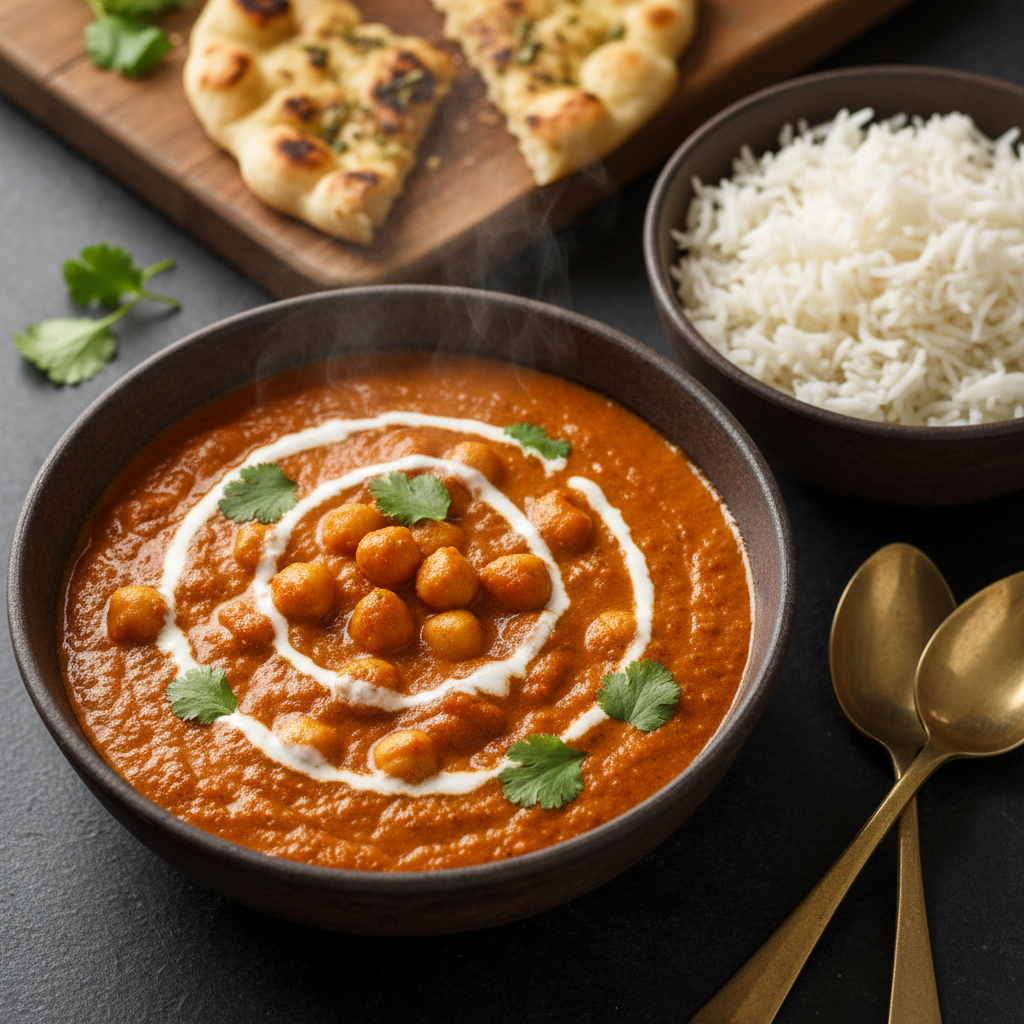
Creamy Vegan Chickpea Tikka Masala With Fluffy Basmati Rice
Vegan Chickpea Tikka Masala With Rice Recipe
This restaurant-quality Vegan Chickpea Tikka Masala is the ultimate comfort food, featuring tender chickpeas simmered in a rich, aromatic, and creamy tomato-coconut sauce. Paired with fragrant basmati rice, it’s a healthy, plant-based dinner that comes together in under 45 minutes, rivaling your favorite takeout spot.
15 minutes
30 minutes
45 minutes
4 servings
Main Course
Stovetop
Indian-Fusion
Vegan
There is something undeniably magical about the aroma of Indian spices blooming in hot oil—the way ginger, garlic, and garam masala swirl together to create a scent that promises warmth and comfort. This Vegan Chickpea Tikka Masala is a celebration of those flavors, transformed into a plant-based masterpiece that sacrifices absolutely nothing in terms of richness or satisfaction. For many, Tikka Masala is the gateway to Indian cuisine, beloved for its creamy, tangy, and slightly spicy tomato sauce. Traditionally made with marinated chicken and heavy cream or yogurt, this recipe proves that the soul of the dish lies in the spices and the sauce technique, not necessarily the meat.
In this version, we swap the poultry for protein-packed chickpeas, also known as garbanzo beans. Chickpeas are the perfect vessel for this curry because they have a nutty, buttery texture that holds up beautifully against the bold sauce without becoming mushy. Instead of dairy, we utilize full-fat coconut milk, which provides a luxurious, velvety mouthfeel that mimics the richness of heavy cream while adding a subtle, natural sweetness that balances the acidity of the tomatoes.
This dish is more than just a quick weeknight dinner; it is a sensory experience. The vibrant orange-red hue of the sauce, derived from turmeric and paprika, is visually stunning, while the layers of flavor—starting with the savory base of onions and aromatics, moving through the complex spice blend, and finishing with a bright pop of fresh lemon juice and cilantro—make every bite exciting. Whether you are a strict vegan, looking to reduce your meat consumption, or simply a lover of bold, global flavors, this recipe is designed to impress. It’s hearty enough for a winter evening yet bright enough for a summer dinner, and it pairs perfectly with the fluffy, aromatic basmati rice included in this guide.
History & Origins
The history of Tikka Masala is a fascinating culinary puzzle, shrouded in legends and competing claims that span continents. While it is widely considered a staple of Indian cuisine today, its origins are heavily debated, with the most popular narrative tracing its roots not to New Delhi or Mumbai, but to Glasgow, Scotland. The story goes that in the 1970s, a customer at the Shish Mahal restaurant in Glasgow complained that his Chicken Tikka (dry, roasted marinated chicken) was too dry. The chef, Ali Ahmed Aslam, improvising on the fly, supposedly whipped up a sauce using a can of tomato soup and spices, creating the first iteration of Chicken Tikka Masala. This anecdotal origin story highlights the dish as a prime example of Anglo-Indian fusion—a dish created to suit the British palate’s desire for gravy while utilizing Indian spice profiles.
However, culinary historians also point to the authentic North Indian dish ‘Murgh Makhani’ (Butter Chicken) and ‘Butter Paneer’ as the true ancestors of Tikka Masala. These dishes date back much further, originating in Delhi in the mid-20th century, created by chefs at the famous Moti Mahal restaurant to utilize leftover tandoori chicken by simmering it in a rich tomato and cream sauce. Tikka Masala is essentially a derivation of these Mughlai-style curries, adapted with a slightly spicier and more complex masala base rather than the pure butter-and-cream profile of Makhani.
As plant-based diets gained momentum in the 21st century, the evolution of this dish continued. The ‘Chana’ (chickpea) version became a staple in vegan cooking because chickpeas have been a cornerstone of Indian cuisine for thousands of years, featuring prominently in dishes like Chana Masala. By fusing the Western-beloved Tikka Masala sauce with the ancient, humble chickpea, we arrive at this modern classic: a dish that respects the spice traditions of the East, acknowledges the fusion history of the West, and embraces the sustainable, plant-forward future of food.
Why This Recipe Works
This recipe succeeds where many vegan adaptations fail because it focuses heavily on texture and flavor layering rather than relying on highly processed meat substitutes. The first reason this works is the ‘blooming’ technique. By frying the tomato paste and dry spices (cumin, coriander, turmeric, paprika) in the oil after sautéing the onions, but before adding the liquid, we unlock the fat-soluble flavor compounds in the spices. This process, often called ‘bhunao’ in Indian cooking, removes the raw edge of the spices and intensifies their potency, creating a base flavor that is deep and resonant rather than powdery or flat.
Secondly, the sauce consistency is achieved through a specific ratio of crushed tomatoes to full-fat coconut milk. Many recipes use light coconut milk or almond milk, resulting in a watery curry. This recipe insists on full-fat canned coconut milk because the fat content is crucial for emulsification. As the sauce simmers, the coconut fat reduces and thickens, mimicking the mouthfeel of heavy cream or ghee found in traditional recipes.
Lastly, the treatment of the chickpeas is key. We add the chickpeas early in the simmering process, allowing them to absorb the masala flavors. Unlike chicken, which can dry out if overcooked, chickpeas become creamier and more tender the longer they simmer. The addition of a pinch of sugar and a splash of lemon juice at the very end creates a necessary ‘agrodolce’ (sweet and sour) effect, brightening the heavy spices and rich fats to ensure the dish remains palatable and vibrant until the very last bite.
Why You’ll Love This Recipe
- ✓100% Vegan and Gluten-Free
- ✓High in plant-based protein and fiber
- ✓Ready in under 45 minutes
- ✓Freezes beautifully for meal prep
- ✓Rich, creamy texture without dairy
- ✓Budget-friendly pantry staples
Equipment You’ll Need
- ✓Large heavy-bottomed skillet or Dutch oven
- ✓Medium saucepan with lid (for rice)
- ✓Chef’s knife
- ✓Cutting board
- ✓Measuring cups and spoons
- ✓Wooden spoon or spatula
- ✓Can opener
Ingredients
- ✓2 cans (15 oz each) chickpeas, rinsed and drained
- ✓1 large yellow onion, finely diced
- ✓3 cloves garlic, minced
- ✓1 tablespoon fresh ginger, grated
- ✓2 tablespoons vegetable oil or coconut oil
- ✓1 can (14 oz) crushed tomatoes
- ✓1 can (13.5 oz) full-fat coconut milk
- ✓2 tablespoons tomato paste
- ✓1.5 tablespoons garam masala
- ✓1 teaspoon ground cumin
- ✓1 teaspoon ground coriander
- ✓1 teaspoon turmeric powder
- ✓1 teaspoon smoked paprika
- ✓1/2 teaspoon cayenne pepper (adjust to taste)
- ✓1 teaspoon salt
- ✓1 tablespoon maple syrup or brown sugar
- ✓1 tablespoon fresh lemon juice
- ✓1/2 cup fresh cilantro, chopped
- ✓1.5 cups uncooked basmati rice
- ✓2.5 cups water (for rice)
Instructions
- First, rinse the basmati rice under cold water until the water runs clear to remove excess starch. Combine the rice and water in a medium saucepan. Bring to a boil, then reduce heat to low, cover tightly with a lid, and simmer for 15-18 minutes. Remove from heat and let it steam with the lid on for another 5 minutes.
- While the rice cooks, heat the oil in a large skillet or Dutch oven over medium heat. Add the diced onion and sauté for 5-7 minutes until translucent and starting to brown slightly.
- Add the minced garlic, grated ginger, and tomato paste to the onions. Cook for 2 minutes, stirring constantly to prevent burning. This cooks out the raw tomato flavor.
- Stir in the garam masala, cumin, coriander, turmeric, paprika, cayenne, and salt. Cook the spices in the oil/onion mixture for about 1 minute until highly fragrant. This step is crucial for developing flavor.
- Pour in the crushed tomatoes and scrape the bottom of the pan to release any browned bits (fond). Let the tomato mixture simmer for 3-4 minutes to thicken slightly.
- Add the drained chickpeas and the full-fat coconut milk. Stir well to combine. Bring the mixture to a gentle simmer.
- Reduce the heat to low and let the curry simmer uncovered for 15-20 minutes. The sauce should thicken and turn a rich orange color.
- Stir in the maple syrup (or sugar) and fresh lemon juice. Taste and adjust salt or spice levels if needed.
- Remove from heat and stir in half of the chopped cilantro.
- Fluff the rice with a fork. Serve the chickpea tikka masala hot over a bed of rice, garnished with the remaining cilantro.
Expert Cooking Tips
- ✓Always rinse your chickpeas thoroughly to remove excess sodium and the metallic taste from the can.
- ✓Use fresh ginger and garlic rather than the jarred paste for a significantly brighter flavor profile.
- ✓Don’t skip the sugar/maple syrup; it neutralizes the acidity of the canned tomatoes.
- ✓If you want an even creamier sauce, blend a handful of soaked cashews and add them with the coconut milk.
- ✓Toast your dry spices in the oil, but be careful not to burn them; if the pan is too hot, remove it from the heat briefly.
- ✓Let the curry sit for 10 minutes after cooking before serving; the flavors meld together beautifully as it cools slightly.
Substitutions and Variations
This recipe is incredibly versatile and forgiving. If you don’t have chickpeas, you can substitute them with firm tofu (pressed and cubed), cooked lentils, or even roasted cauliflower florets for a different texture. For the coconut milk, if you are allergic to coconut or dislike the flavor, you can use cashew cream (soaked cashews blended with water) or a heavy oat cream designed for cooking; avoid sweetened almond or soy milks as they are too thin and sugary. If you don’t have basmati rice, jasmine rice or brown rice are excellent alternatives, though brown rice will require a longer cooking time. In place of maple syrup, agave nectar, brown sugar, or coconut sugar work perfectly. If you are sensitive to spice, omit the cayenne pepper entirely and reduce the paprika, or use sweet paprika instead of smoked.
Common Mistakes to Avoid
The most common mistake people make is rushing the onion and spice cooking stage. If you don’t cook the onions long enough, the base of the curry will lack depth and sweetness. Similarly, simply dumping raw spices into the liquid rather than frying them in the oil results in a gritty texture and raw spice flavor. Another mistake is using ‘lite’ coconut milk; this will result in a thin, soupy sauce rather than the rich, creamy gravy that defines Tikka Masala. Finally, do not boil the curry vigorously once the coconut milk is added, as high heat can sometimes cause the coconut milk to separate or curdle; a gentle simmer is all that is required.
Serving Suggestions
Serve this Vegan Chickpea Tikka Masala piping hot over the fluffy basmati rice. For a complete Indian-inspired feast, pair it with warm vegan naan bread or roti to scoop up the extra sauce. A side of cucumber raita (made with coconut yogurt) or a kachumber salad (diced cucumber, tomato, and onion with lime) adds a refreshing crunch that contrasts perfectly with the creamy, spicy curry. You can also serve it with mango chutney or spicy lime pickle for an extra kick of flavor. A garnish of fresh cilantro is standard, but thinly sliced red chilies or a sprinkle of kasuri methi (dried fenugreek leaves) adds a professional touch.
Storage and Reheating Tips
This dish is excellent for meal prep as the flavors tend to improve the next day. Store leftovers in an airtight container in the refrigerator for up to 5 days. To reheat, place in a saucepan over medium-low heat, adding a splash of water or vegetable broth if the sauce has thickened too much in the fridge. Alternatively, microwave in 1-minute intervals, stirring in between. For freezing, let the curry cool completely, then transfer to freezer-safe bags or containers. It can be frozen for up to 3 months. Thaw overnight in the refrigerator before reheating. Note that the rice is best frozen separately or cooked fresh, as freezing rice mixed with sauce can sometimes make it mushy.
Nutrition Facts (Estimated)
| Serving Size | 1 bowl (with rice) |
| Calories | 580 |
| Fat | 22g |
| Saturated Fat | 12g |
| Unsaturated Fat | 8g |
| Trans Fat | 0g |
| Cholesterol | 0mg |
| Sodium | 650mg |
| Carbohydrates | 82g |
| Fiber | 14g |
| Sugar | 8g |
| Protein | 18g |
Frequently Asked Questions
Can I use dried chickpeas instead of canned?
Yes, absolutely. You will need to soak about 1 cup of dried chickpeas overnight and then boil them until tender (about 1 hour) before adding them to the recipe. This yields about 2.5 to 3 cups of cooked chickpeas.
Is this recipe spicy?
It has a moderate kick due to the cayenne pepper, but it is customizable. If you prefer mild curry, omit the cayenne. If you like it hot, add a diced serrano pepper with the onions.
Can I make this in an Instant Pot?
Yes. Sauté the aromatics and spices on the ‘Sauté’ mode, add liquids and chickpeas, and pressure cook on High for 5 minutes. Quick release, then stir in the coconut milk and simmer on Sauté mode to thicken.
Why does my sauce taste sour?
Canned tomatoes can vary in acidity. If your sauce tastes too sour, add a little more maple syrup or sugar, 1/2 teaspoon at a time, until the flavor balances out.
Can I add vegetables to this?
Definitely! Spinach, green peas, bell peppers, or diced potatoes make great additions. Add potatoes with the tomatoes to ensure they cook through, or stir in spinach at the very end.
What is Garam Masala and can I make it?
Garam Masala is a warming spice blend common in Indian cooking. If you don’t have it, you can make a quick substitute by mixing cumin, coriander, cardamom, cinnamon, cloves, and black pepper.
Is coconut milk necessary?
For the vegan version, coconut milk provides the fat usually provided by cream. Cashew cream is the best alternative substitute if you want to avoid coconut.
How do I make the rice fluffy?
Rinsing the rice to remove starch is the most important step. Also, letting the rice steam with the lid on after cooking (off the heat) allows the moisture to redistribute, preventing clumping.
Conclusion
Vegan Chickpea Tikka Masala is a testament to the fact that plant-based cooking can be just as indulgent, flavorful, and satisfying as any meat-based counterpart. With its velvety sauce, tender chickpeas, and aromatic spices, it brings the warmth of a traditional curry house right into your kitchen. Whether you are cooking for a family dinner, preparing meals for the week, or hosting friends, this dish is a reliable crowd-pleaser that nourishes the body and the soul. We hope this recipe becomes a staple in your home rotation, proving that healthy eating never has to be boring.