The Ultimate Vegan Lentil Bolognese With Spaghetti: A Hearty Plant-Based Classic
Vegan Lentil Bolognese With Spaghetti Recipe
Discover the ultimate comfort food with this rich, hearty Vegan Lentil Bolognese. Packed with protein and simmered to perfection, this plant-based ragu delivers a depth of flavor that rivals any traditional meat sauce, making it the perfect weeknight dinner or Sunday supper centerpiece.
15 minutes
45 minutes
1 hour
6 servings
Main Course
Stovetop
Italian-Inspired
Vegan
There is something undeniably magical about a pot of Bolognese sauce simmering on the stove. The way the kitchen fills with the aroma of sautéed aromatics, simmering tomatoes, and savory herbs is the very definition of home cooking. For many, the idea of a Bolognese without meat seems counterintuitive, perhaps even sacrilegious to the traditionalist. However, this Vegan Lentil Bolognese is here to shatter those misconceptions and earn a permanent spot in your recipe rotation. This dish isn’t just a substitute; it is a celebration of how incredible plant-based ingredients can be when treated with patience and culinary respect. We utilize humble brown lentils, often overlooked in the pantry, and transform them into a sauce that is robust, meaty, and deeply satisfying. The texture of the lentils, when cooked down in a rich tomato and wine reduction, mimics the mouthfeel of a traditional ground beef ragu, providing that essential chew and heartiness. This recipe is designed for everyone—from the strict vegan looking for a protein-packed meal to the skeptical carnivore who just wants a delicious bowl of pasta. We layer flavors meticulously, starting with a classic soffritto base, deglazing with a dry red wine to lift the fond from the pot, and finishing with a touch of plant-based milk for that luxurious, velvety finish characteristic of true Bolognese. Whether you are hosting a dinner party or simply craving a cozy bowl of spaghetti on a rainy Tuesday, this recipe delivers on all fronts: flavor, nutrition, and pure comfort.
History & Origins
The history of Bolognese sauce, or ‘Ragù alla Bolognese,’ is as rich and layered as the sauce itself. Originating from Bologna, the capital of the Emilia-Romagna region in Northern Italy, this culinary masterpiece dates back centuries. The earliest documented recipe for a meat-based ragu served with pasta comes from the late 18th century, specifically from Imola, a city near Bologna. Traditionally, this sauce was a slow-cooked meat-based sauce involving beef or pork, white wine, milk, and a small amount of tomato—or sometimes no tomato at all in its earliest iterations. It was a dish born of patience, designed to tenderize tougher cuts of meat and create a luxurious coating for fresh egg tagliatelle. The official recipe was registered by the Italian Academy of Cuisine at the Bologna Chamber of Commerce in 1982 to preserve its cultural heritage. However, as culinary traditions evolve and global dietary needs shift, so too do these classic recipes. The rise of plant-based eating in the 20th and 21st centuries sparked a creative revolution in Italian-American and global kitchens. Chefs and home cooks began seeking ways to replicate the savory depth (umami) and hearty texture of the traditional ragu without animal products. Enter the lentil. With its earthy flavor profile and ability to hold its shape while softening, the lentil became the perfect candidate to replace minced meat. This modern adaptation respects the technique of the original—the slow sweating of the soffritto, the deglazing, the long simmer—while showcasing the versatility of legumes. Today, Vegan Lentil Bolognese stands on its own as a beloved staple in modern cuisine, bridging the gap between Old World technique and New World conscious eating.
Why This Recipe Works
This recipe succeeds where many other vegan pasta sauces fail because it focuses heavily on texture and the layering of umami flavors. Often, vegan sauces can be thin or lacking in the savory depth that meat provides. We solve the texture issue by using brown or French green lentils; unlike red lentils which disintegrate into a mush, brown lentils retain a slight bite that mimics the texture of ground beef perfectly. To address the flavor profile, we employ a few key techniques. First, we don’t rush the ‘soffritto’ (the onion, carrot, and celery base). Sautéing these vegetables until they are very soft and sweet forms the backbone of the sauce. Second, we use tomato paste browned in the pan before adding liquids; this caramelization process intensifies the tomato flavor, adding a savory richness that canned tomatoes alone cannot achieve. Third, the addition of dry red wine deglazes the pan and adds complex tannins and acidity, which cuts through the starchiness of the lentils. Finally, the secret weapon in this recipe is a splash of unsweetened almond or soy milk and a pinch of nutmeg at the end. This nods to the traditional Bolognese method where milk is used to tenderize the meat and balance the acidity of the wine and tomatoes. In our version, it adds a creamy, velvety mouthfeel that binds the sauce to the pasta, ensuring every bite is luscious and satisfying.
Why You’ll Love This Recipe
- ✓High-Protein Plant-Based Meal: Packed with lentils for a nutritious boost.
- ✓Rich & Meaty Texture: Brown lentils provide a satisfying chew similar to traditional ragu.
- ✓Freezer Friendly: This sauce freezes beautifully, making it perfect for meal prep.
- ✓Budget-Friendly: Utilizes affordable pantry staples for a gourmet experience.
- ✓Kid-Approved: The veggies are chopped small and cooked down, making them undetectable to picky eaters.
- ✓Versatile: Delicious over spaghetti, polenta, or even roasted potatoes.
Equipment You’ll Need
- ✓Large Dutch Oven or Heavy-Bottomed Pot
- ✓Chef’s Knife
- ✓Cutting Board
- ✓Wooden Spoon
- ✓Large Pot (for pasta)
- ✓Colander
Ingredients
- ✓2 tablespoons olive oil
- ✓1 large yellow onion, finely diced
- ✓2 medium carrots, finely diced
- ✓2 celery stalks, finely diced
- ✓4 cloves garlic, minced
- ✓1 cup dry brown or green lentils, rinsed and picked over
- ✓2 tablespoons tomato paste
- ✓1/2 cup dry red wine (Cabernet Sauvignon or Merlot)
- ✓1 (28-ounce) can crushed tomatoes
- ✓2 cups vegetable broth
- ✓2 teaspoons dried oregano
- ✓1 teaspoon dried thyme
- ✓1 bay leaf
- ✓1 tablespoon balsamic vinegar
- ✓1/2 cup unsweetened almond milk or oat milk (optional for creaminess)
- ✓Salt and black pepper to taste
- ✓1 lb dried spaghetti or tagliatelle (gluten-free if needed)
- ✓Fresh basil or parsley for garnish
- ✓Vegan parmesan cheese (optional)
Instructions
- 1. Prepare the Soffritto: Heat the olive oil in a large Dutch oven or heavy pot over medium heat. Add the diced onion, carrots, and celery. Sauté for about 8-10 minutes, stirring occasionally, until the vegetables are softened and the onions are translucent. This step is crucial for building the flavor base.
- 2. Add Aromatics: Stir in the minced garlic, dried oregano, and dried thyme. Cook for another 1-2 minutes until fragrant, being careful not to burn the garlic.
- 3. Caramelize Tomato Paste: Push the vegetables to the side of the pot and add the tomato paste to the center. Cook the paste for 2 minutes, stirring it constantly, until it darkens slightly in color. Mix it into the vegetables.
- 4. Deglaze: Pour in the red wine to deglaze the pan. Use your wooden spoon to scrape up any browned bits (fond) stuck to the bottom of the pot. Let the wine simmer for 2-3 minutes until the smell of alcohol has cooked off and the liquid has reduced by half.
- 5. Simmer the Sauce: Add the rinsed lentils, crushed tomatoes (with their juices), vegetable broth, and the bay leaf. Stir well to combine. Increase the heat to bring the mixture to a boil, then reduce the heat to low to maintain a gentle simmer.
- 6. Cook Lentils: Cover the pot with a lid slightly ajar and simmer for 35-40 minutes, or until the lentils are tender but not mushy. Stir occasionally to prevent sticking. If the sauce becomes too thick before the lentils are done, add a splash more broth or water.
- 7. Finish the Sauce: Once the lentils are tender, remove the bay leaf. Stir in the balsamic vinegar and the plant-based milk (if using). Simmer for another 2-3 minutes uncovered to let the flavors meld. Taste and adjust seasoning with salt and generous cracks of black pepper.
- 8. Cook the Pasta: While the sauce finishes, bring a large pot of salted water to a boil. Cook the spaghetti according to package instructions until al dente. Reserve 1/2 cup of pasta water before draining.
- 9. Combine and Serve: Add the drained pasta directly to the pot with the sauce (or toss a portion of sauce with pasta in a separate bowl). If needed, add a splash of the reserved pasta water to help the sauce cling to the noodles. Serve hot, garnished with fresh basil and vegan parmesan.
Expert Cooking Tips
- ✓Don’t skip the rinse: Always rinse your lentils thoroughly before cooking to remove debris and dust.
- ✓Chop uniformly: For the best texture, try to chop your onions, carrots, and celery into very small, uniform pieces so they melt into the sauce.
- ✓Wine selection: Use a wine you would enjoy drinking. A dry red like Cabernet or Pinot Noir adds the best depth. If you are alcohol-free, substitute with more vegetable broth and a teaspoon of red wine vinegar.
- ✓Simmer slowly: Low and slow is the key. If you boil the lentils too hard, they might burst and become mushy rather than maintaining their meaty texture.
- ✓Pasta water gold: Always save some starchy pasta water. It helps emulsify the sauce and makes it stick to the spaghetti perfectly.
Substitutions and Variations
This recipe is incredibly forgiving and adaptable to whatever you have in your pantry. If you don’t have brown lentils, French green lentils (Puy lentils) are an excellent substitute as they hold their shape well. Avoid red lentils unless you want a pureed, soup-like consistency, as they break down completely. For a gluten-free version, simply use your favorite gluten-free spaghetti or serve the sauce over polenta or zucchini noodles. If you are out of fresh garlic, garlic powder can be used, though fresh is preferred for the best flavor. The red wine adds a classic depth, but it can be omitted; simply replace the liquid volume with extra vegetable broth and add a splash of red wine vinegar or lemon juice at the end for acidity. For the creamy element, unsweetened soy milk, oat milk, or even a dollop of cashew cream works wonders. If you prefer a ‘meatier’ texture, you can also add finely chopped mushrooms or walnuts along with the lentils.
Common Mistakes to Avoid
One of the most common mistakes when making lentil bolognese is undercooking or overcooking the lentils. Undercooked lentils are crunchy and unpleasant, while overcooked ones turn to mush. Test them around the 30-minute mark; they should be soft but still have a distinct shape. Another mistake is rushing the vegetable base. The onion, carrot, and celery need time to sweat and release their sugars; rushing this step results in a sauce that lacks depth. Additionally, be careful with the salt. Canned tomatoes and vegetable broth often contain sodium, so it is best to season lightly during the cooking process and adjust the salt levels at the very end. Finally, do not forget to remove the bay leaf before serving—it is a choking hazard and unpleasant to bite into.
Serving Suggestions
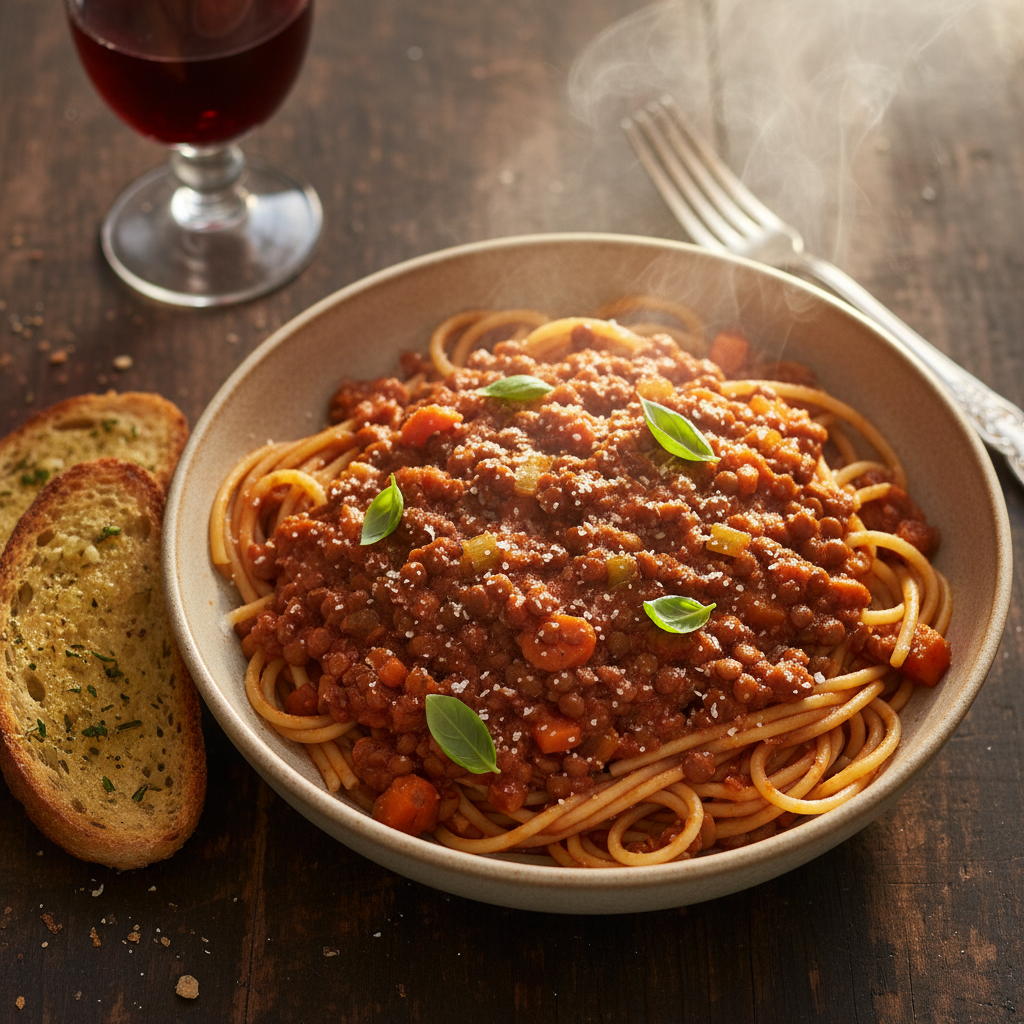
This Vegan Lentil Bolognese is a star on its own, but it shines even brighter with the right sides. Serve it atop a mound of al dente spaghetti, fettuccine, or pappardelle for a classic presentation. For a lower-carb option, it pairs beautifully with spiralized zucchini noodles or roasted spaghetti squash. To complete the meal, serve with a side of crusty garlic bread to sop up the extra sauce and a simple green salad with a balsamic vinaigrette to cut through the richness. A glass of the same red wine used in the sauce makes for a perfect beverage pairing. If you have leftovers, the sauce is excellent served over a baked potato or even as a filling for a vegan shepherd’s pie.
Storage and Reheating Tips
This sauce tastes even better the next day as the flavors have more time to meld. Store leftovers in an airtight container in the refrigerator for up to 5 days. Reheat gently on the stove over medium-low heat, adding a splash of water or broth if the sauce has thickened too much in the fridge. This recipe is also a freezer hero. Allow the sauce to cool completely, then transfer it to freezer-safe bags or containers. It can be frozen for up to 3 months. To use, thaw overnight in the refrigerator or defrost in the microwave before reheating on the stove. Note that if you mixed the pasta with the sauce before storing, the pasta may become softer upon reheating; for best results with freezing, store the sauce separately from the pasta.
Nutrition Facts (Estimated)
| Serving Size | 1.5 cups sauce with pasta |
| Calories | 485 |
| Fat | 9g |
| Saturated Fat | 1.5g |
| Unsaturated Fat | 7g |
| Trans Fat | 0g |
| Cholesterol | 0mg |
| Sodium | 420mg |
| Carbohydrates | 78g |
| Fiber | 14g |
| Sugar | 8g |
| Protein | 22g |
Frequently Asked Questions
Can I use canned lentils instead of dry?
Yes, you can use canned lentils to save time. Use two 15-ounce cans, drained and rinsed. Since they are already cooked, reduce the simmering liquid (broth) by half and simmer the sauce for only 15-20 minutes to allow flavors to meld.
Is this recipe gluten-free?
The sauce itself is naturally gluten-free. To make the entire meal gluten-free, simply serve it over gluten-free pasta, quinoa, or vegetable noodles.
Why do you add milk to a tomato sauce?
Adding milk is a traditional Bolognese technique. In this vegan version, plant-based milk neutralizes the acidity of the tomatoes and wine, creating a rounder, creamier, and more luxurious mouthfeel.
Can I make this in an Instant Pot?
Absolutely. Sauté the veggies on ‘Sauté’ mode, add the rest of the ingredients (reduce broth to 1.5 cups), and cook on High Pressure for 10-12 minutes. Quick release the pressure.
What is the best type of lentil to use?
Brown or French Green (Puy) lentils are best because they retain their shape and have a firm texture. Red lentils will dissolve and are not recommended for a ragu style.
Can I add other vegetables?
Yes! Finely chopped mushrooms, bell peppers, or zucchini are great additions. Add them during the sauté step with the onions and carrots.
How do I make it spicy?
If you prefer a kick, add 1/2 teaspoon of red pepper flakes when you add the garlic and herbs.
Is this dish high in protein?
Yes, lentils are an excellent source of plant-based protein. This dish provides approximately 22g of protein per serving.
Conclusion
Embracing plant-based cooking doesn’t mean saying goodbye to the hearty, comforting flavors you grew up with. This Vegan Lentil Bolognese is proof that with the right ingredients and a little patience, you can create a meal that satisfies the soul just as much as the stomach. It’s a dish that gathers people around the table, invites conversation, and leaves everyone feeling nourished. Whether you are a lifelong vegan or just dipping your toes into meatless Mondays, this recipe is a reliable, delicious classic that you will want to make again and again. So, pour a glass of wine, put on some music, and enjoy the process of creating this beautiful bowl of pasta.