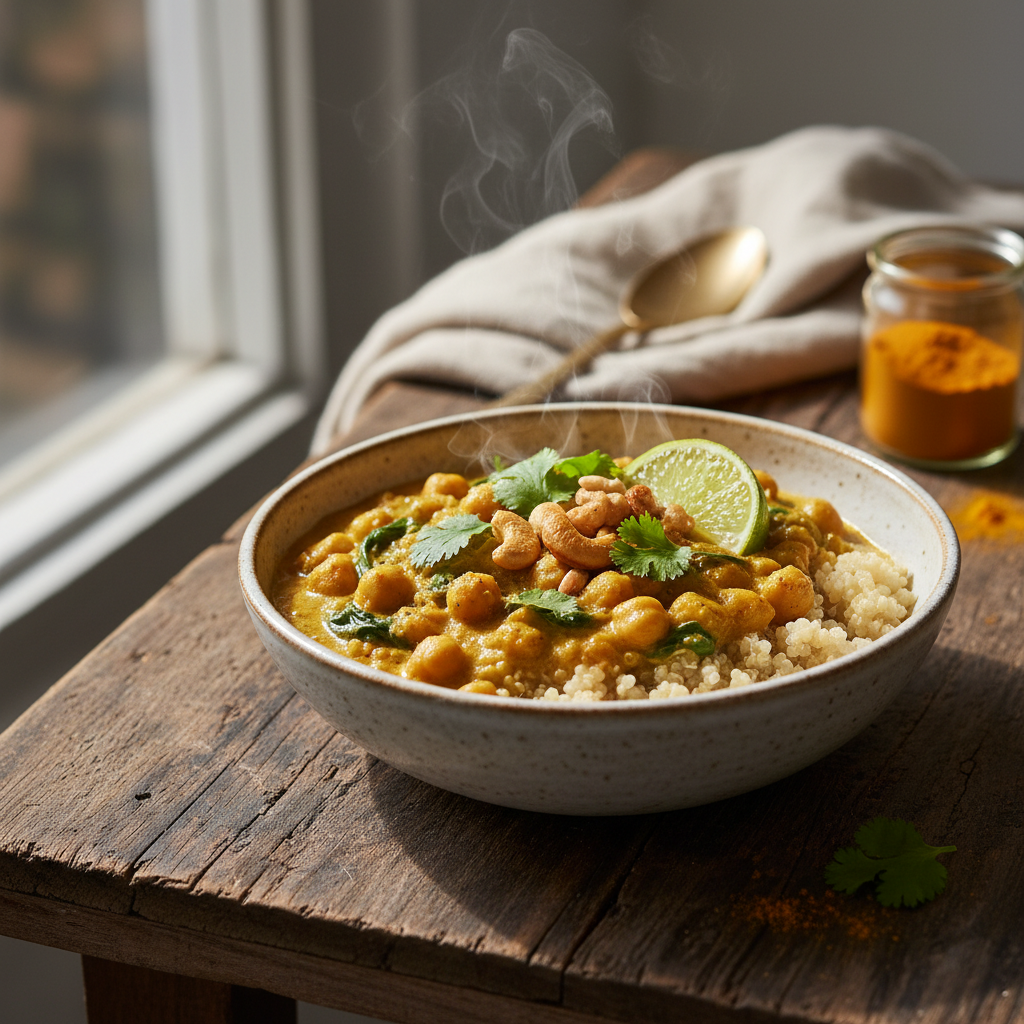
Golden Coconut Quinoa and Chickpea Curry Bowl
Quinoa And Chickpea Curry Bowl Vegan Recipe
This vibrant, protein-packed Quinoa and Chickpea Curry Bowl is the ultimate vegan comfort food. Ready in under 45 minutes, it combines creamy coconut milk, warming spices, and nutrient-dense greens for a healthy, satisfying dinner that tastes even better the next day.
15 minutes
30 minutes
45 minutes
4 servings
Main Course
Stovetop
Fusion / Indian-Inspired
Vegan
There is something undeniably comforting about a bowl of warm curry, especially when it strikes the perfect balance between creamy, spicy, and wholesome. This Quinoa and Chickpea Curry Bowl is not just a meal; it’s a hug in a bowl. As a food blogger who focuses on accessible yet flavor-forward plant-based recipes, I have found that the marriage of hearty chickpeas and fluffy quinoa is a match made in culinary heaven. This dish is designed for those busy weeknights when you crave takeout but want to nourish your body with clean ingredients.
The magic begins with the aromatics—fresh ginger, garlic, and onion sautéed until golden—which form the flavor foundation. We then bloom a robust blend of curry powder, turmeric, and cumin in the hot oil to release their essential oils, ensuring every bite is infused with depth and warmth. Unlike heavy, dairy-laden curries, this version relies on full-fat coconut milk for that luxurious mouthfeel without the lethargy that follows a heavy meal. The addition of quinoa directly into the bowl (or served underneath, depending on your preference) adds a complete protein profile, making this a nutritional powerhouse.
Whether you are a strict vegan, a ‘Meatless Monday’ enthusiast, or simply someone trying to incorporate more fiber into your diet, this curry delivers. It is vibrant, colorful, and deeply satisfying. Plus, the leftovers are phenomenal, as the flavors have more time to meld and marry in the fridge. Get ready to add a new staple to your weekly rotation that pleases both the palate and the soul.
History & Origins
To understand the roots of this dish, we must look at the convergence of two ancient culinary traditions: the spice-laden curries of South Asia and the ancient grains of the Andes. The concept of ‘curry’ itself is complex; the word is an Anglicized term derived from the Tamil word ‘kari,’ meaning sauce or relish for rice. For thousands of years, cooks in the Indian subcontinent have mastered the art of blending spices (masalas) to create medicinal and flavorful stews. Chickpeas, or garbanzo beans, have been cultivated in the Middle East for roughly 7,500 years, serving as a vital source of plant-based protein for civilizations across the Mediterranean and Asia.
On the other side of the globe, quinoa was revered by the Incas in the Andean regions of South America as the ‘mother grain’ (chisaya mama). It was a sacred crop, resilient and incredibly nutritious. For centuries, these two ingredients existed worlds apart. It wasn’t until the modern era of globalization and the rise of plant-based eating in the West that these ingredients met in the humble ‘grain bowl.’
The ‘bowl food’ trend, which exploded in popularity in the United States during the 2010s, emphasizes macro-nutrient balance and aesthetic appeal. It draws heavy inspiration from the ‘Buddha Bowl’ concept—a balanced meal of grain, bean, and green. This specific recipe represents a modern fusion, taking the flavor profile of a traditional Indian chana masala or korma and adapting it to the contemporary desire for gluten-free superfoods like quinoa. It is a dish that respects the history of spice trade routes while catering to the modern wellness-focused kitchen.
Why This Recipe Works
This recipe succeeds because it focuses on the principles of flavor layering and textural contrast. Many vegan curries can fall flat if they rely solely on boiling vegetables in milk. Here, we use the technique of ‘tempering’ or blooming spices in fat (oil) at the very beginning. This activates the fat-soluble flavor compounds in the turmeric and curry powder, creating a base that is rich and aromatic rather than powdery or raw-tasting.
Secondly, the dual-starch approach works in your favor. Chickpeas provide a creamy, dense bite that holds up to simmering, while the quinoa offers a fluffy, nutty counterpoint. By using full-fat coconut milk, we introduce natural sweetness and fat that balances the heat of the spices and the acidity of the lime juice added at the end. That final squeeze of lime is chemically crucial; the acid brightens the heavy coconut fats and makes the earthy spices pop.
Finally, this is a one-pot wonder if you choose to cook the quinoa in the broth, or a two-pot meal if you prefer them separate. The ratio of liquid to solids is calculated to ensure the curry is saucy enough to coat the grains but thick enough to cling to the chickpeas. It is a foolproof formula that prioritizes high-impact flavor with low-stress cooking techniques.
Why You’ll Love This Recipe
- ✓100% Vegan and Gluten-Free
- ✓High in plant-based protein and fiber
- ✓Ready in under 45 minutes
- ✓Meal-prep friendly (flavors improve over time)
- ✓Uses pantry staple ingredients
- ✓Creamy texture without dairy
Equipment You’ll Need
- ✓Large Dutch oven or deep skillet
- ✓Medium saucepan (for quinoa)
- ✓Chef’s knife
- ✓Cutting board
- ✓Measuring spoons and cups
- ✓Wooden spoon or spatula
Ingredients
- ✓1 cup uncooked quinoa, rinsed well
- ✓2 cups vegetable broth (divided)
- ✓1 tbsp coconut oil or olive oil
- ✓1 large yellow onion, diced
- ✓3 cloves garlic, minced
- ✓1 tbsp fresh ginger, grated
- ✓2 tbsp mild yellow curry powder
- ✓1 tsp ground turmeric
- ✓1/2 tsp ground cumin
- ✓1/4 tsp cayenne pepper (optional for heat)
- ✓2 cans (15 oz each) chickpeas, rinsed and drained
- ✓1 can (13.5 oz) full-fat coconut milk
- ✓1 tsp sea salt (plus more to taste)
- ✓3 cups fresh baby spinach
- ✓1 lime, juiced
- ✓Fresh cilantro, chopped (for garnish)
Instructions
- Rinse the quinoa thoroughly under cold water in a fine-mesh strainer to remove the bitter saponin coating.
- In a medium saucepan, combine the rinsed quinoa with 1.5 cups of vegetable broth. Bring to a boil, then reduce heat to low, cover, and simmer for 15 minutes or until water is absorbed. Fluff with a fork and set aside.
- While quinoa cooks, heat the coconut oil in a large Dutch oven or deep skillet over medium heat.
- Add the diced onion and sauté for 5-6 minutes until translucent and starting to brown slightly.
- Add the minced garlic and grated ginger. Sauté for another 1-2 minutes until fragrant, being careful not to burn the garlic.
- Stir in the curry powder, turmeric, cumin, and cayenne pepper. Cook for 1 minute, stirring constantly, to bloom the spices.
- Add the drained chickpeas, stirring to coat them in the spice mixture.
- Pour in the can of coconut milk and the remaining 1/2 cup of vegetable broth. Stir well to combine. Bring the mixture to a gentle simmer.
- Let the curry simmer uncovered for 10-15 minutes to thicken the sauce and allow flavors to meld.
- Stir in the fresh spinach and cook for 1-2 minutes until just wilted.
- Remove from heat. Stir in the fresh lime juice and season with salt to taste.
- Serve the curry over a bed of the fluffy quinoa. Garnish generously with fresh cilantro.
Expert Cooking Tips
- ✓Always rinse your quinoa to remove the natural bitter coating called saponin.
- ✓Use full-fat coconut milk for the creamiest texture; ‘lite’ milk will result in a thinner sauce.
- ✓Bloom your spices in the oil before adding liquid to unlock their full flavor potential.
- ✓If you prefer a thicker curry, mash a small handful of chickpeas against the side of the pot while simmering.
- ✓Add the lime juice at the very end to keep the acidity bright and fresh.
- ✓For extra protein, you can add cubed tofu or green peas to the simmer.
Substitutions and Variations
This recipe is incredibly flexible and forgiving. If you don’t have quinoa, this curry pairs perfectly with brown rice, basmati rice, or even cauliflower rice for a lower-carb option. For the chickpeas, you can substitute white kidney beans (cannellini beans) or lentils, though cooking times for raw lentils will vary significantly (canned lentils work best as a direct swap). If you are out of coconut milk, you can use cashew cream or heavy cream (if not vegan), though the coconut flavor is signature to this dish. Sweet potatoes or butternut squash cubes are excellent additions if you want more vegetables; simply add them with the liquids and simmer until tender. For those who dislike cilantro, fresh parsley or chopped scallions make great alternative garnishes.
Common Mistakes to Avoid
The most common mistake is burning the garlic or spices. The transition from ‘fragrant’ to ‘burnt’ happens quickly, so have your liquids ready to pour before you add the spices. Another issue is not rinsing the quinoa, which can lead to a soapy or bitter aftertaste that ruins the bowl. Additionally, avoid boiling the coconut milk vigorously for too long, as it can sometimes separate or curdle; a gentle simmer is all you need. Lastly, under-seasoning is a crime with curry. Potatoes and grains soak up a lot of salt, so taste your curry at the end and adjust. If it tastes ‘flat,’ it usually needs more salt or more lime juice.
Serving Suggestions
Serve this Quinoa and Chickpea Curry Bowl hot, preferably in wide, shallow bowls to maximize the toppings. It pairs beautifully with warm naan bread or roti for scooping up the sauce. For a crunch element, top with toasted cashews or pumpkin seeds. A dollop of unsweetened coconut yogurt or a side of cucumber raita can help cool down the dish if you’ve made it spicy. A side of roasted cauliflower or pickled red onions also adds a lovely acid and texture contrast to the creamy curry.
Storage and Reheating Tips
This curry stores beautifully, making it a meal prep champion. Store the quinoa and the curry in separate airtight containers in the refrigerator for up to 5 days to prevent the grains from becoming mushy. If you prefer, you can mix them, but the quinoa will absorb more liquid. To reheat, use the microwave or stovetop; you may need to add a splash of water or broth to loosen the sauce as it thickens when cold. This dish also freezes well. Freeze the curry portion in freezer-safe bags or containers for up to 3 months. Thaw overnight in the fridge before reheating. Fresh spinach is best added after reheating if freezing, but cooked spinach freezes fine too.
Nutrition Facts (Estimated)
| Serving Size | 1 bowl |
| Calories | 480 |
| Fat | 22g |
| Saturated Fat | 14g |
| Unsaturated Fat | 6g |
| Trans Fat | 0g |
| Cholesterol | 0mg |
| Sodium | 450mg |
| Carbohydrates | 58g |
| Fiber | 12g |
| Sugar | 6g |
| Protein | 16g |
Frequently Asked Questions
Can I make this in an Instant Pot?
Yes! Sauté the aromatics and spices using the Sauté function. Add chickpeas, liquids, and rinsed quinoa (1:1 ratio with liquid). Cook on High Pressure for 1 minute, then do a 10-minute natural release. Stir in spinach and lime at the end.
Is this recipe spicy?
It is mild to moderately spiced depending on your curry powder. You can omit the cayenne pepper entirely for a kid-friendly version or add fresh chili peppers for more heat.
Can I use dried chickpeas instead of canned?
Yes, but you must soak and cook them beforehand. You will need about 3 cups of cooked chickpeas to replace the 2 cans.
What kind of curry powder should I use?
A standard mild yellow curry powder (like Madras style) works best. Avoid red or green curry pastes for this specific recipe as they have different flavor profiles.
Why is my sauce too runny?
Simmer it for a few minutes longer with the lid off. The starch from the chickpeas will naturally thicken it. You can also mash some chickpeas to help.
Can I use frozen spinach?
Absolutely. Thaw it and squeeze out the excess water before adding it to the pot, or just toss it in frozen and let it heat through.
Is this dish keto-friendly?
No, due to the chickpeas and quinoa, it is higher in carbohydrates. You could substitute cauliflower rice and use low-carb veggies to adapt it.
Can I use light coconut milk?
You can, but the sauce will be much thinner and less rich. You might want to add a teaspoon of cornstarch slurry to thicken it if using light milk.
Conclusion
I hope this Quinoa and Chickpea Curry Bowl becomes a cherished recipe in your home kitchen. It is a testament to the fact that healthy, plant-based eating does not mean sacrificing flavor or satisfaction. Whether you are cooking for a family dinner, prepping lunches for the week, or just treating yourself to a cozy night in, this bowl delivers on all fronts. The creamy, golden sauce, the tender chickpeas, and the nutty quinoa create a symphony of textures that is hard to beat. Don’t forget to tag me on social media if you recreate this dish—I love seeing your variations and toppings! Happy cooking!