The Ultimate Hearty Vegan Chili with Kidney Beans and Sweet Corn
Vegan Chili With Kidney Beans And Corn Recipe
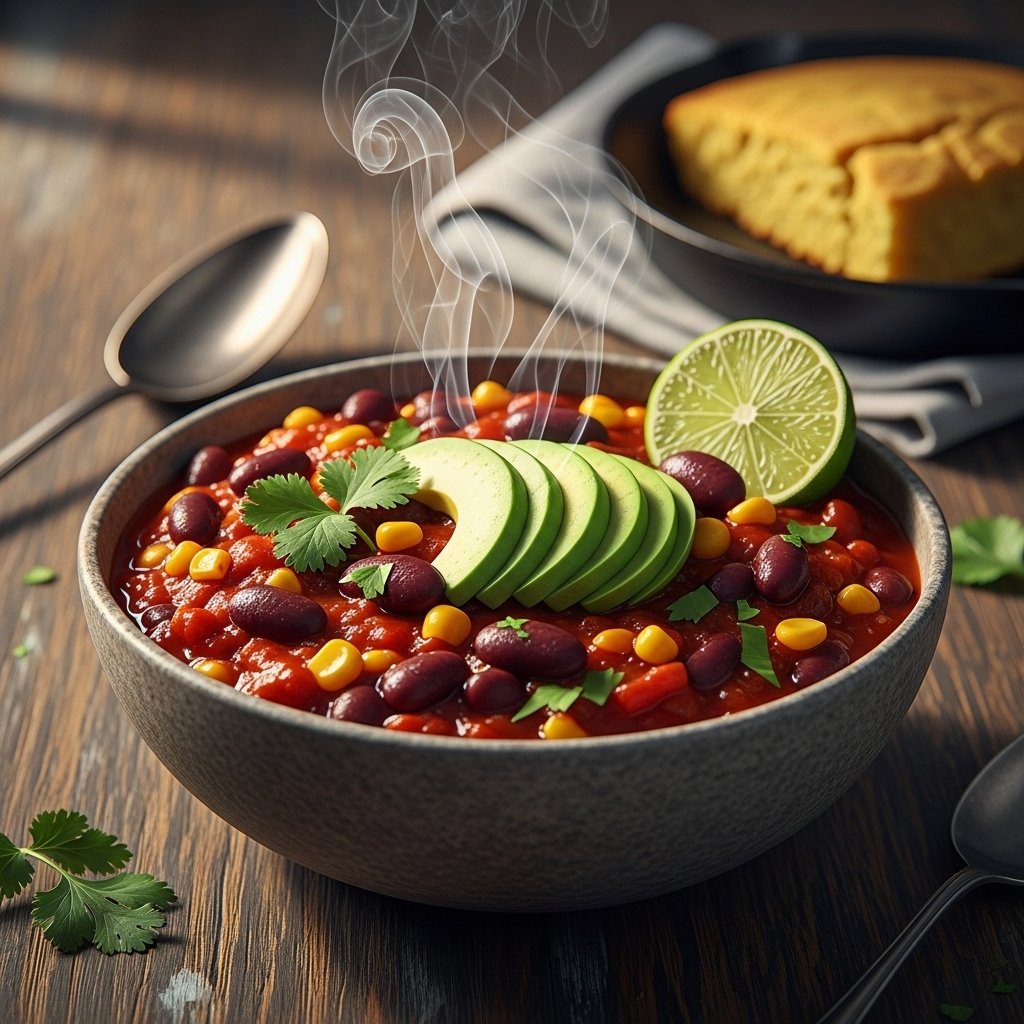
This robust Vegan Chili with Kidney Beans and Corn is the ultimate plant-based comfort food. Packed with smoky spices, protein-rich beans, and the natural sweetness of corn, it is a one-pot wonder that pleases both vegans and meat-eaters alike.
15 minutes
45 minutes
1 hour
6 servings
Main Course
Stovetop
American / Tex-Mex
Vegan
There is something undeniably magical about a simmering pot of chili on the stove. It is the culinary equivalent of a warm hug, a dish that signals comfort, gathering, and hearty satisfaction. This Vegan Chili with Kidney Beans and Corn is not just a meatless alternative; it is a stand-alone star that celebrates the incredible textures and flavors of whole plant foods. While traditional chili often relies on beef for depth, this recipe derives its rich, complex profile from a strategic layering of aromatics, smoked spices, and the umami punch of fire-roasted tomatoes. The kidney beans provide a satisfying, meaty chew that holds up beautifully during the long simmer, ensuring that every spoonful is substantial and filling. But the secret weapon here is the sweet corn. The pops of sweetness from the corn kernels cut through the spicy, smoky heat of the chili powder and cumin, creating a perfect flavor balance that keeps you coming back for more.
Whether you are a dedicated vegan, a ‘Meatless Monday’ enthusiast, or simply looking to incorporate more fiber-rich legumes into your diet, this recipe delivers on all fronts. It is incredibly versatile, welcoming a variety of toppings from creamy avocado to tangy pickled onions. Furthermore, it is a meal prep champion; the flavors meld and deepen overnight, making leftovers even more delicious than the fresh batch. In this guide, we will walk through exactly how to build flavor without meat, ensuring a thick, glossy, and aromatic chili that will become a staple in your dinner rotation. Get ready to fill your kitchen with the scents of cumin, garlic, and smoked paprika.
History & Origins
The history of chili is as rich and spicy as the dish itself, often sparking heated debates regarding its true origins and ‘authentic’ ingredients. While many associate chili with Mexico, food historians generally agree that ‘Chili con Carne’ is a distinctively American creation, born in San Antonio, Texas, in the 19th century. The famous ‘Chili Queens’ of San Antonio sold bowls of the spicy stew in the plazas, popularizing the dish among cowboys, soldiers, and pioneers. Traditionally, this was a meat-forward dish, often excluding beans entirely—a point of contention that remains in competitive chili cook-offs today.
However, as the dish migrated across the United States, it evolved. The Great Depression saw the addition of beans as a way to stretch the protein and make the meal more affordable and filling. By the mid-20th century, particularly with the rise of the counterculture and vegetarian movements in the 1960s and 70s, meatless chili began to carve out its own identity. No longer just a ‘substitute,’ vegetarian chili became a canvas for celebrating the diversity of legumes and vegetables.
The inclusion of corn in chili signals a Southwestern or Tex-Mex influence, nodding to the indigenous staples of the Americas. Corn (maize) has been a foundational crop in the Americas for thousands of years. Combining corn with beans is not just a culinary delight but a nutritional powerhouse strategy known as ‘The Three Sisters’ (squash being the third) in Native American agriculture, where the amino acids in corn and beans complement each other to form a complete protein. This recipe honors that ancestral pairing, bringing a modern, smoky twist to a combination that has sustained generations.
Why This Recipe Works
This recipe works because it meticulously addresses the three main challenges of vegan cooking: texture, depth of flavor, and satiety. First, let’s talk about texture. A common complaint with vegetable soups is that they can feel too light. Here, we use dark red kidney beans because they have a thick skin and a dense interior that mimics the ‘chew’ of meat better than softer beans like navy or pinto beans. We also employ a technique where a portion of the chili is slightly mashed or blended against the side of the pot; this releases starch from the beans, naturally thickening the broth without the need for flour or cornstarch.
Secondly, the depth of flavor is achieved through ‘blooming’ the spices. Instead of throwing raw spices into liquid, we sauté the chili powder, cumin, and smoked paprika with the onions and garlic. This oil-soluble process intensifies the essential oils in the spices, creating a savory base note that permeates the entire dish. We also use a splash of soy sauce or tamari, which adds a savory umami kick often missing when meat is removed.
Finally, the balance of flavors is scientifically sound. Tomatoes are acidic, and chili peppers are spicy. The addition of sweet corn provides a necessary sugar contrast that neutralizes the acidity and mellows the heat, creating a rounded palate experience. The final squeeze of lime juice brightens the heavy, starchy elements, ensuring the dish feels fresh rather than heavy.
Why You’ll Love This Recipe
- ✓High-protein and fiber-rich plant-based meal.
- ✓Perfect balance of spicy, savory, and sweet flavors.
- ✓One-pot meal for easy cleanup.
- ✓Budget-friendly ingredients that are easy to find.
- ✓Freezer-friendly and excellent for meal prep.
- ✓Naturally gluten-free and dairy-free.
Equipment You’ll Need
- ✓Large Dutch oven or heavy-bottomed soup pot
- ✓Chef’s knife
- ✓Cutting board
- ✓Wooden spoon or heat-resistant spatula
- ✓Can opener
- ✓Measuring cups and spoons
- ✓Ladle
Ingredients
- ✓2 tablespoons olive oil or avocado oil
- ✓1 large yellow onion, diced
- ✓1 red bell pepper, seeded and diced
- ✓1 green bell pepper, seeded and diced
- ✓4 cloves garlic, minced
- ✓1 jalapeño, seeded and finely minced (optional for heat)
- ✓2 tablespoons chili powder
- ✓1 tablespoon ground cumin
- ✓1 teaspoon smoked paprika
- ✓1 teaspoon dried oregano
- ✓1/2 teaspoon ground coriander
- ✓2 (15-ounce) cans dark red kidney beans, drained and rinsed
- ✓1 (15-ounce) can black beans, drained and rinsed
- ✓1 (28-ounce) can crushed tomatoes (fire-roasted preferred)
- ✓2 cups vegetable broth (low sodium)
- ✓1.5 cups frozen sweet corn kernels (no need to thaw)
- ✓1 tablespoon soy sauce or tamari (for umami)
- ✓1 tablespoon maple syrup or brown sugar (optional)
- ✓1/2 teaspoon salt (adjust to taste)
- ✓1/4 teaspoon black pepper
- ✓1 lime, juiced
- ✓Fresh cilantro, chopped (for garnish)
Instructions
- 1. Prepare the vegetables: Wash and chop the onion, red bell pepper, green bell pepper, and jalapeño. Mince the garlic. Drain and rinse the kidney beans and black beans thoroughly.
- 2. Sauté aromatics: Heat the olive oil in a large Dutch oven over medium heat. Add the diced onion and a pinch of salt. Sauté for 5-6 minutes until the onion becomes translucent and soft.
- 3. Add peppers and garlic: Add the red and green bell peppers, jalapeño, and minced garlic to the pot. Cook for another 3-4 minutes, stirring frequently to prevent the garlic from burning.
- 4. Bloom the spices: Add the chili powder, cumin, smoked paprika, oregano, and coriander. Stir constantly for 1 minute to toast the spices and release their fragrance. This step is crucial for depth of flavor.
- 5. Simmer: Pour in the crushed tomatoes (with their juices), vegetable broth, drained beans, and soy sauce. Stir well to combine, scraping up any browned bits from the bottom of the pot. Bring the mixture to a boil.
- 6. Cook: Once boiling, reduce the heat to low, cover the pot, and let it simmer gently for 30 minutes. This allows the flavors to meld together.
- 7. Add corn: Stir in the frozen sweet corn and the maple syrup (if using). Simmer uncovered for an additional 10-15 minutes. This will help the chili thicken slightly.
- 8. Thicken (Optional): For a thicker texture, use your wooden spoon to mash some of the beans against the side of the pot, or use an immersion blender for 2-3 quick pulses (do not purée the whole soup).
- 9. Finish: Remove from heat. Stir in the fresh lime juice. Taste and adjust seasoning with more salt or pepper if needed.
- 10. Serve: Ladle into bowls and top with fresh cilantro and your favorite chili toppings.
Expert Cooking Tips
- ✓Bloom your spices in the oil before adding liquids to unlock their full flavor potential.
- ✓Use fire-roasted canned tomatoes for an extra layer of smoky flavor without extra effort.
- ✓If the chili is too thick, add a splash more vegetable broth or water; if too thin, simmer uncovered longer.
- ✓Don’t skip the lime juice at the end; the acidity brightens the dish and cuts through the starchy beans.
- ✓For the best flavor, make this chili a day ahead—it tastes even better after sitting in the fridge overnight.
- ✓Rinse your canned beans thoroughly to remove excess sodium and the starchy canning liquid which can cause digestive issues.
Substitutions and Variations
This recipe is incredibly forgiving and adaptable to whatever you have in your pantry. If you don’t have kidney beans, pinto beans or Great Northern beans are excellent substitutes that offer a creamy texture. You can also swap the black beans for chickpeas if you prefer a firmer bite. If fresh onions and garlic aren’t available, onion powder and garlic powder can be used, though fresh is always recommended for the best base flavor. For the corn, fresh corn cut off the cob is amazing in the summer, but canned corn (drained) works just as well as frozen in a pinch. If you are out of vegetable broth, water with a bouillon cube is a standard replacement. For those who want a ‘meatier’ texture without meat, try adding 1 cup of dry quinoa or red lentils along with an extra 2 cups of broth; they will cook directly in the chili and thicken it substantially. If you are not strictly vegan, you can use chicken broth, though the recipe is designed for vegetable stock.
Common Mistakes to Avoid
The most common mistake when making vegan chili is rushing the process. While it can be eaten as soon as the vegetables are soft, allowing it to simmer for the full time is essential for the spices to permeate the beans. Another mistake is under-seasoning. Beans are like sponges and soak up a lot of salt; taste your chili at the end and don’t be afraid to add more salt or acid. Avoiding the sugar or maple syrup is also a mistake; while it might seem odd to add sugar to a savory dish, that small amount balances the acidity of the canned tomatoes. Finally, do not boil the chili vigorously once the beans are added. A rolling boil can cause the beans to burst and turn into mush. A gentle simmer is all you need to maintain the integrity of the ingredients.
Serving Suggestions
This chili is a meal in itself, but the toppings are where the fun begins. Serve steaming bowls topped with diced avocado or guacamole for creaminess, and pickled red onions for a tangy crunch. A dollop of vegan sour cream or unsweetened coconut yogurt works wonders to cool down the heat. For crunch, try tortilla chips or Fritos. On the side, a slice of moist vegan cornbread is traditional and perfect for soaking up the flavorful sauce. You can also serve this chili over a bed of brown rice or a baked potato to stretch the meal further, making it ‘Chili Mac’ by serving it over elbow macaroni is also a kid-friendly favorite.
Storage and Reheating Tips
This chili stores beautifully, making it a meal prep goldmine. Allow the chili to cool completely to room temperature before transferring it to airtight containers. It will keep in the refrigerator for up to 5 days. As it sits, the chili will thicken, so you may need to add a splash of water or broth when reheating. For freezing, portion the cooled chili into freezer-safe bags or containers, leaving about an inch of space at the top for expansion. It can be frozen for up to 3 months. Thaw overnight in the refrigerator before reheating on the stovetop over medium-low heat or in the microwave in 2-minute intervals.
Nutrition Facts (Estimated)
| Serving Size | 1.5 cups |
| Calories | 320 |
| Fat | 4g |
| Saturated Fat | 0.5g |
| Unsaturated Fat | 3.5g |
| Trans Fat | 0g |
| Cholesterol | 0mg |
| Sodium | 450mg |
| Carbohydrates | 58g |
| Fiber | 16g |
| Sugar | 6g |
| Protein | 15g |
Frequently Asked Questions
Can I make this in a slow cooker?
Yes! Sauté the onion, peppers, garlic, and spices in a pan first to develop the flavor, then transfer everything (except the lime juice and cilantro) to the slow cooker. Cook on Low for 6-8 hours or High for 3-4 hours. Stir in lime juice before serving.
Is this chili very spicy?
As written, this recipe has a medium heat level. The heat comes primarily from the chili powder and the fresh jalapeño. To make it mild, omit the jalapeño and reduce the chili powder to 1 tablespoon. To make it hotter, leave the seeds in the jalapeño or add cayenne pepper.
Do I have to use frozen corn?
No, you can use canned corn (drained) or fresh corn cut directly from the cob. If using canned corn, add it in the last 5 minutes of cooking just to heat it through.
Can I use dried beans instead of canned?
Absolutely. If using dried beans, you must soak and cook them completely before adding them to the chili recipe. You will need about 1.5 cups of cooked beans to replace one 15-ounce can.
How can I increase the protein content?
The beans already provide good protein, but to boost it further, you can add texturized vegetable protein (TVP), crumbled tempeh, or a meat substitute crumble. Quinoa is also a great high-protein grain to stir in.
Why does my chili taste metallic?
A metallic taste usually comes from the canned tomatoes. To fix this, ensure you simmer the chili long enough, and don’t skip the sweetener (maple syrup/sugar) and the fat (oil/avocado topping), which help mask that tinny flavor.
Is this recipe gluten-free?
Yes, this recipe is naturally gluten-free. However, always double-check the labels on your soy sauce (use tamari for GF) and vegetable broth to ensure they were processed in a gluten-free facility.
Can I use fresh tomatoes instead of canned?
You can, but you will need about 2 pounds of ripe tomatoes, peeled and chopped. You may also need to add tomato paste to get the same depth of flavor and thickness that canned crushed tomatoes provide.
Conclusion
This Vegan Chili with Kidney Beans and Corn is more than just a recipe; it is a reliable staple that brings warmth and nutrition to your table with minimal effort. Whether you are feeding a crowd on game day, prepping lunches for a busy work week, or simply curling up on the couch on a rainy evening, this dish delivers deep, satisfying flavors that prove plant-based eating never has to be boring. The interplay of the smoky spices, the hearty beans, and the sweet bursts of corn creates a symphony of textures and tastes that will have everyone asking for seconds. Give this recipe a try, play around with your favorite toppings, and enjoy the cozy, wholesome goodness of homemade chili.