The Ultimate Vegan Tofu Tikka Masala With Fluffy Basmati Rice
Vegan Tofu Tikka Masala With Rice Recipe
Experience the rich, creamy, and vibrant flavors of restaurant-style Tikka Masala right in your own kitchen. This vegan version swaps dairy for luscious coconut milk and uses perfectly spiced, crispy tofu to create a hearty, protein-packed dinner that rivals any takeout.
20 minutes
30 minutes
50 minutes
4 servings
Main Course
Stovetop
Indian-Fusion
Vegan
There is something undeniably comforting about a warm, aromatic bowl of Tikka Masala. It is the kind of dish that hugs your soul with its velvety tomato base, warming spices, and satisfying richness. For many transitioning to a plant-based diet, giving up that creamy, buttery curry texture can feel like a sacrifice. However, this Vegan Tofu Tikka Masala proves that you do not need dairy to achieve that luxurious mouthfeel or depth of flavor. In fact, this recipe might just become your new weeknight favorite, surpassing even the traditional versions you remember.
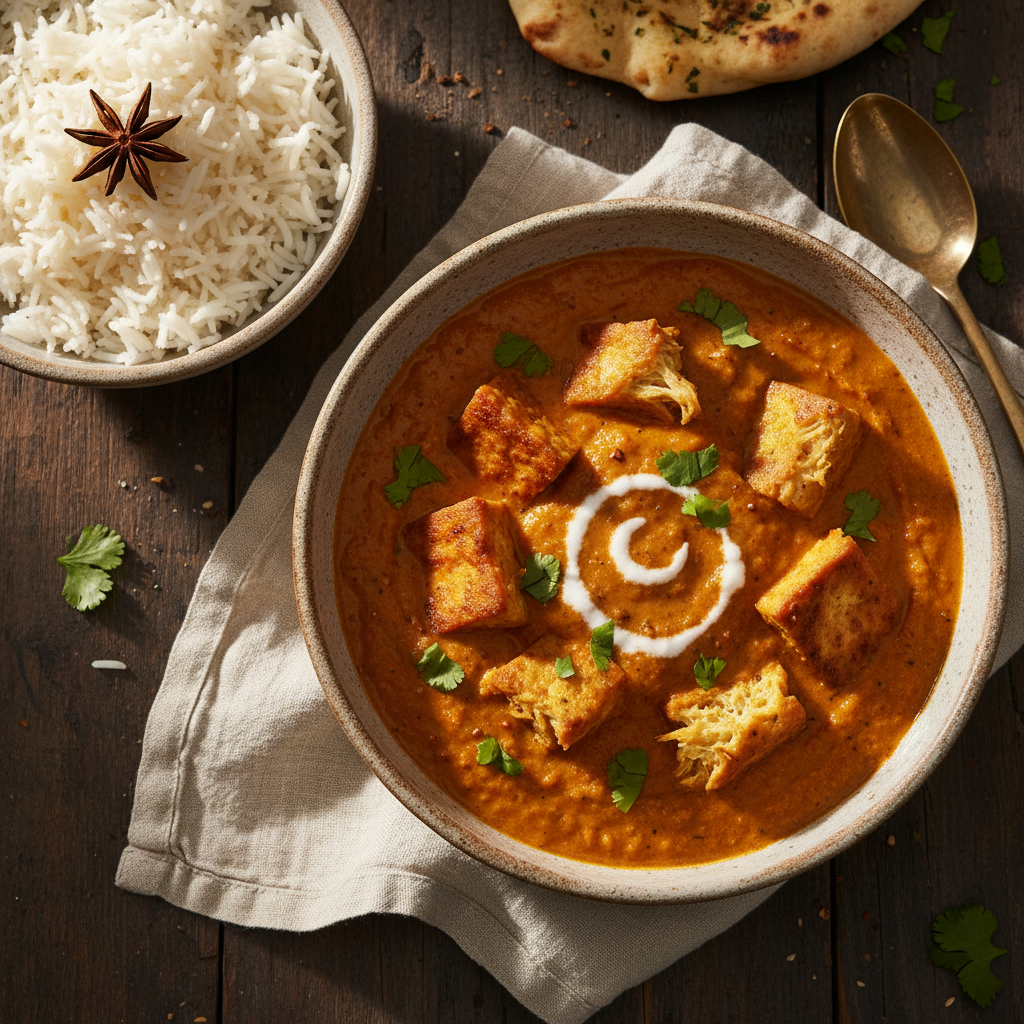
The secret lies in how we treat the tofu. Often, tofu gets a bad reputation for being bland or having a spongy texture. In this recipe, we transform extra-firm tofu by pressing out the excess moisture, coating it in savory cornstarch and spices, and pan-searing it until it develops a golden, crispy exterior. This mimics the charred texture of paneer or chicken traditionally cooked in a tandoor oven. When simmered in the robust, ginger-garlic infused tomato gravy, the tofu absorbs the flavors while maintaining a delightful chew.
Paired with fragrant, fluffy Basmati rice, this meal is a complete sensory experience. The bright orange hue of the sauce, speckled with fresh green cilantro, is visually stunning, while the aroma of garam masala and cumin fills the kitchen, promising a feast. Whether you are a strict vegan, a flexitarian, or just someone looking to cut down on meat without compromising on taste, this dish delivers on all fronts. It is hearty, healthy, and undeniably delicious.
History & Origins
The origins of Tikka Masala are as rich and layered as the curry itself, often the subject of culinary debate and folklore. While it is firmly rooted in the flavor profiles of North Indian cuisine, specifically Punjabi cooking, Tikka Masala is widely believed to be a British invention. The most popular origin story takes us back to Glasgow, Scotland, in the 1970s. Legend has it that a customer at a curry house complained that his Chicken Tikka (marinated meat cooked in a clay oven) was too dry. The chef, Ali Ahmed Aslam, improvising on the fly, allegedly whipped up a sauce using tomato soup and spices to satisfy the patron. The result was an instant hit.
Regardless of the exact moment of conception, the dish became a symbol of the British-Indian relationship, eventually being declared ‘a true British national dish’ by Foreign Secretary Robin Cook in 2001. It represents a perfect adaptation of Indian spices to the Western palate, which often craves gravy and creaminess. Traditional Chicken Tikka Masala relies heavily on heavy cream, butter (ghee), and yogurt marinades.
In recent years, as the global culinary landscape has shifted towards sustainability and plant-based eating, the history of this dish has entered a new chapter. Chefs and home cooks alike began experimenting with substitutions. Coconut milk, cashew cream, and almond yogurt have replaced dairy, while tofu, seitan, and chickpeas have taken the place of meat. This Vegan Tofu Tikka Masala honors the diasporic history of the dish—a recipe born from adaptation and evolution—by continuing to adapt it for the modern, ethical eater while respecting the spice blends that make it recognizable.
Why This Recipe Works
This recipe succeeds where many vegan curries fail because it prioritizes texture and depth of flavor equally. First, the ‘Tofu Technique’ is crucial. By tearing the tofu into chunks rather than cutting it into perfect cubes, we increase the surface area. This allows for more crispy edges when pan-fried and more nooks and crannies for the sauce to cling to. The cornstarch coating provides a barrier that keeps the tofu firm even after it is submerged in the sauce, preventing the dreaded soggy tofu syndrome.
Secondly, the sauce relies on the concept of ‘blooming’ spices. We do not just dump spices into a liquid; we fry the cumin, coriander, and turmeric in oil alongside the aromatics (onions, ginger, garlic). This oil-soluble process releases the essential oils in the spices, making the flavor significantly more potent and complex.
Finally, the balance of acidity and fat is meticulously calculated. Canned tomatoes and lemon juice provide the necessary acid to cut through the richness, while full-fat coconut milk offers the creamy mouthfeel associated with heavy cream. A touch of sugar (or maple syrup) rounds out the acidity of the tomatoes, creating a harmonious blend of savory, spicy, tart, and sweet notes that hit every part of the palate.
Why You’ll Love This Recipe
- ✓100% Vegan and Gluten-Free friendly
- ✓High-protein meal perfect for post-workout recovery
- ✓Rich, restaurant-quality sauce made without dairy
- ✓Crispy tofu technique that mimics meat texture
- ✓Meal-prep friendly; tastes even better the next day
Equipment You’ll Need
- ✓Tofu press (or heavy books/plates)
- ✓Large non-stick skillet or Dutch oven
- ✓Chef’s knife and cutting board
- ✓Rice cooker or medium pot
- ✓Measuring cups and spoons
- ✓Wooden spoon or spatula
Ingredients
- ✓2 blocks (14oz each) Extra Firm Tofu, drained and pressed
- ✓3 tbsp Cornstarch
- ✓2 tbsp Coconut Oil or Neutral Oil, divided
- ✓1 large Yellow Onion, finely diced
- ✓4 cloves Garlic, minced
- ✓1 tbsp Fresh Ginger, grated
- ✓2 tbsp Garam Masala
- ✓1 tsp Ground Cumin
- ✓1 tsp Ground Coriander
- ✓1 tsp Turmeric Powder
- ✓1 tsp Smoked Paprika (for color)
- ✓1/2 tsp Cayenne Pepper (optional, adjust to heat preference)
- ✓1 can (14oz) Tomato Puree or Crushed Tomatoes
- ✓1 can (13.5oz) Full-Fat Coconut Milk
- ✓1 tbsp Maple Syrup or Brown Sugar
- ✓1 tbsp Lemon Juice
- ✓Salt and Black Pepper to taste
- ✓2 cups Basmati Rice, uncooked
- ✓Fresh Cilantro, chopped (for garnish)
Instructions
- 1. Prepare the Rice: Rinse the basmati rice under cold water until the water runs clear to remove excess starch. Cook according to package instructions or use a rice cooker (usually a 1:1.5 ratio of rice to water). Fluff with a fork when done and set aside.
- 2. Prep the Tofu: While the rice cooks, tear the pressed tofu into bite-sized chunks (tearing creates better texture than cutting). In a large bowl, toss the tofu with cornstarch, a pinch of salt, and 1 teaspoon of garam masala until evenly coated.
- 3. Sear the Tofu: Heat 1 tablespoon of oil in a large skillet over medium-high heat. Add the tofu in a single layer (do this in batches if necessary to avoid overcrowding). Pan-fry for 3-4 minutes per side until golden brown and crispy. Remove tofu from the pan and set aside on a paper towel-lined plate.
- 4. Sauté Aromatics: In the same pan, add the remaining 1 tablespoon of oil. Add the diced onion and sauté over medium heat for 5-7 minutes until translucent and starting to brown. Add the minced garlic and grated ginger, cooking for another 1-2 minutes until fragrant. Be careful not to burn the garlic.
- 5. Bloom the Spices: Add the remaining garam masala, cumin, coriander, turmeric, paprika, and cayenne pepper to the onion mixture. Stir constantly for about 1 minute to toast the spices and release their oils.
- 6. Simmer the Sauce: Pour in the tomato puree. Stir well to combine with the spiced onion mixture. Let this simmer on low heat for 5-8 minutes, allowing the flavors to meld and the sauce to thicken slightly.
- 7. Make it Creamy: Stir in the full-fat coconut milk and maple syrup. Bring the sauce to a gentle simmer. If the sauce is too thick, you can add a splash of water or vegetable broth to reach your desired consistency.
- 8. Combine: Add the crispy tofu back into the pan, tossing gently to coat every piece in the luscious sauce. Simmer for 2-3 minutes to warm the tofu through.
- 9. Finish and Serve: Stir in the lemon juice and season with salt and pepper to taste. Serve hot over a bed of fluffy basmati rice, garnished generously with fresh cilantro.
Expert Cooking Tips
- ✓Press Your Tofu: This is non-negotiable for the best texture. Pressing removes water so the tofu can absorb the marinade and get crispy.
- ✓Don’t Shake the Can: When using full-fat coconut milk, use the thick white cream at the top for a richer sauce. If you want a lighter version, shake it to mix with the coconut water.
- ✓Tear, Don’t Cut: Tearing the tofu creates jagged edges that crisp up beautifully and hold onto more sauce than smooth cubes.
- ✓Toast the Spices: Adding spices directly to the hot oil (blooming) makes a massive difference in flavor intensity compared to adding them to the liquid.
- ✓Make Ahead: Curries often taste better the next day as the flavors have more time to marry. This is an excellent meal prep candidate.
Substitutions and Variations
This recipe is highly adaptable. If you are soy-free, you can substitute the tofu with a can of drained chickpeas (Chana Masala style), roasted cauliflower florets, or even seitan chunks for a wheat-based protein. For the sauce, if you are allergic to coconut or dislike the taste, you can use cashew cream (soaked raw cashews blended with water) or a store-bought unsweetened oat cream. If you don’t have maple syrup, agave nectar or plain cane sugar works perfectly to balance the acidity. For the grain, while Basmati is traditional, this pairs well with brown rice, quinoa, or warm naan bread. If you prefer a lower-fat option, you can use light coconut milk, though the sauce will be less creamy.
Common Mistakes to Avoid
The most common mistake is not pressing the tofu sufficiently, leading to a watery dish where the tofu dilutes the sauce. Another pitfall is burning the garlic or spices; because the paste is thick, it can catch on the bottom of the pan quickly, so keep the heat moderate and stir frequently during the aromatic stage. Also, avoid adding the lemon juice too early; adding acid to the boiling coconut milk can sometimes cause it to curdle or separate. Always finish with acid at the very end. Finally, using ‘silken’ or ‘soft’ tofu is a disaster for this recipe—it will disintegrate in the pan. Ensure you buy ‘Extra Firm’ or ‘Super Firm’ tofu.
Serving Suggestions
Serve this Vegan Tofu Tikka Masala piping hot in wide bowls to maximize the surface area for the sauce. It is best accompanied by steamed Basmati rice, perhaps infused with a cardamom pod or star anise for extra elegance. For a complete Indian-inspired feast, add a side of vegan garlic naan or roti to scoop up the gravy. A cooling side dish like a cucumber-mint salad or a vegan raita (made with coconut yogurt) balances the heat of the curry perfectly. A garnish of fresh cilantro is standard, but you can also sprinkle some Kasuri Methi (dried fenugreek leaves) on top for an authentic restaurant touch.
Storage and Reheating Tips
Leftovers store beautifully in an airtight container in the refrigerator for up to 4-5 days. In fact, the flavors often deepen after a night in the fridge. To reheat, use the microwave or a saucepan over low heat; you may need to add a splash of water as the sauce thickens when cold. This dish is also freezer-friendly. You can freeze the sauce and tofu mixture for up to 3 months. Thaw overnight in the fridge before reheating. Note that the texture of the tofu becomes slightly chewier after freezing, which many people actually prefer as it becomes more ‘meat-like’.
Nutrition Facts (Estimated)
| Serving Size | 1 bowl with rice |
| Calories | 520 |
| Fat | 24g |
| Saturated Fat | 12g |
| Unsaturated Fat | 10g |
| Trans Fat | 0g |
| Cholesterol | 0mg |
| Sodium | 680mg |
| Carbohydrates | 58g |
| Fiber | 6g |
| Sugar | 8g |
| Protein | 18g |
Frequently Asked Questions
Can I use almond milk instead of coconut milk?
You can, but it will be much thinner and less creamy. If you use almond milk, ensure it is unsweetened and unflavored. You might need to add a cornstarch slurry to thicken the sauce.
Is this dish very spicy?
As written, it is mild to medium. The cayenne pepper provides the heat. Omit it entirely for a kid-friendly version, or double it if you like a fiery kick.
Do I have to use cornstarch on the tofu?
The cornstarch helps create a crispy crust and thickens the sauce slightly. You can skip it, but the tofu will be softer and won’t hold the sauce as well.
Can I bake the tofu instead of frying?
Absolutely. Toss the cubed tofu in oil and cornstarch, then bake at 400°F (200°C) for 20-25 minutes, flipping halfway, until crispy.
What is Garam Masala and where can I find it?
Garam Masala is a warming spice blend common in Indian cooking, usually containing cinnamon, mace, peppercorns, coriander, cumin, and cardamom. It is available in the spice aisle of almost all major grocery stores.
Can I make this oil-free?
Yes. Sauté the onions in a splash of vegetable broth instead of oil, and bake the tofu without oil on a parchment-lined sheet or in an air fryer.
My sauce tastes too acidic, what do I do?
Tomatoes can vary in acidity. Add a little more sugar or maple syrup, half a teaspoon at a time, until the flavor balances out.
Can I add vegetables to this?
Yes! Bell peppers, peas, and spinach are great additions. Add peppers with the onions, and stir in peas or spinach at the very end.
Conclusion
This Vegan Tofu Tikka Masala is more than just a substitute for the chicken version; it is a standalone dish that celebrates the versatility of plant-based ingredients. It brings the warmth, spice, and comfort of Indian cuisine into your kitchen with surprising ease. Whether you are cooking for a skeptical omnivore or a long-time vegan, this recipe is bound to impress. So, put on some music, bloom those spices, and get ready to enjoy a bowl of pure comfort. Don’t forget to leave a comment below if you try it—we love hearing how you made it your own!