Better-Than-Takeout Tofu and Vegetable Fried Rice: A Healthy Vegan Staple
Tofu And Vegetable Fried Rice Healthy Vegan Recipe
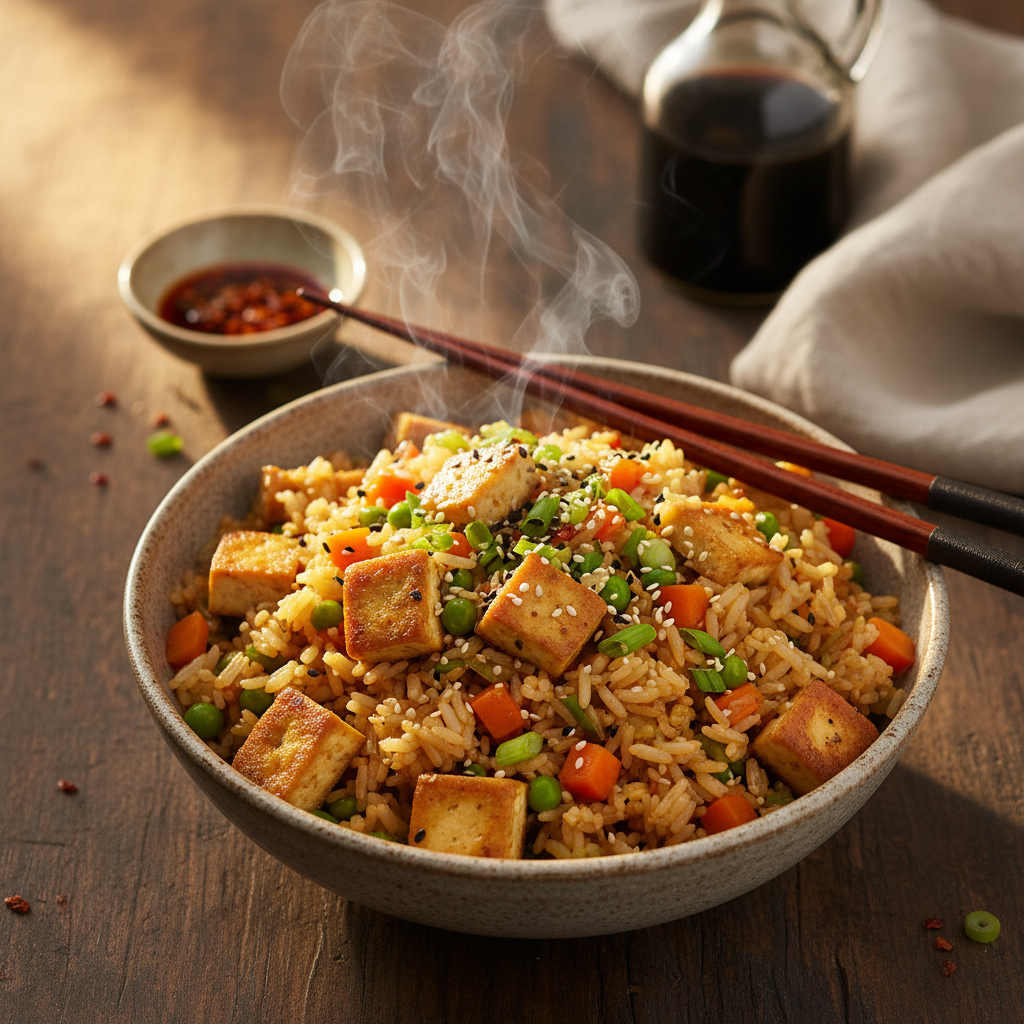
Transform day-old rice into a vibrant, protein-packed dinner with this crispy Tofu and Vegetable Fried Rice recipe. Bursting with colorful veggies and tossed in a savory, umami-rich sauce, this healthy vegan meal comes together in under 30 minutes.
15 minutes
15 minutes
30 minutes
4 servings
Main Course
Stir-Fry
Asian-Fusion
Vegan
There is something undeniably comforting about a steaming bowl of fried rice. It is the culinary equivalent of a warm hug, a dish that manages to be both deeply satisfying and incredibly versatile. However, the version we often associate with takeout boxes can leave us feeling heavy, laden with excessive oil and sodium. Enter this Healthy Vegan Tofu and Vegetable Fried Rice, a recipe designed to reclaim the beloved classic as a nutritious staple in your weekly rotation. This dish is a celebration of texture and flavor, proving that plant-based eating does not mean compromising on the savory, crave-worthy qualities of your favorite comfort foods. The secret lies in the treatment of the ingredients. We start with firm tofu, pressed and pan-fried until it achieves a golden, crispy exterior that mimics the bite of meat, providing a substantial protein punch that keeps you full. We then introduce a rainbow of vegetables—carrots, peas, bell peppers, and corn—each adding its own crunch and sweetness to the mix. But the real magic happens in the wok, where day-old rice meets high heat, transforming from clumpy leftovers into distinct, chewy grains that absorb every drop of our homemade garlic-ginger soy sauce. This recipe is not just a meal; it is a masterclass in the art of the ‘fridge clean-out,’ allowing you to reduce food waste while creating something gourmet. Whether you are a seasoned vegan, a vegetarian, or a flexitarian looking to reduce meat consumption, this dish hits all the right notes: salty, savory, slightly sweet, and perfectly textured. It is fast enough for a busy Tuesday night yet impressive enough to serve to friends at a casual dinner party.
History & Origins
Fried rice is a dish with a lineage as rich and complex as its flavor profile, tracing its roots back to the Sui Dynasty in China (589–618 AD). Historically, the dish was born out of necessity and the cultural virtue of frugality; throwing away food was taboo, and rice, being the staple grain, was too precious to waste. Chinese home cooks discovered that leftover rice, which had dried out slightly in the cool air, possessed a firmer texture that made it ideal for stir-frying. Unlike fresh rice, which turns mushy when reheated, day-old rice could withstand the high heat of the wok, allowing it to be tossed with bits of meat, vegetables, and aromatics without losing its structural integrity. The most famous iteration, Yangzhou fried rice, emerged from the Jiangsu province, setting a standard for the dish with its meticulous balance of ingredients and distinct lack of soy sauce, relying instead on salt and the natural flavors of the components. As Chinese immigrants traveled across the globe in the 19th and 20th centuries, they brought their culinary traditions with them, adapting fried rice to local palates and available ingredients. In the United States, fried rice became a cornerstone of Chinese-American cuisine, often darkened with soy sauce and adapted to include a wider variety of proteins. The evolution of Tofu Fried Rice specifically caters to the growing demand for plant-based alternatives in the West. While tofu has been a staple in Asian cuisine for over 2,000 years, its integration into fried rice as the primary protein source for a Western audience represents a modern fusion of ancient technique and contemporary dietary awareness. This recipe honors that long history of preservation and adaptation, bringing a centuries-old tradition into the modern, health-conscious kitchen.
Why This Recipe Works
This recipe succeeds where many home-cooked fried rice attempts fail because it adheres to the fundamental scientific principles of stir-frying while optimizing for health. The primary reason this works is the insistence on using cold, day-old rice. When rice cools, the starch molecules undergo a process called retrogradation, crystallizing and becoming firm. This prevents the grains from gelatinizing and turning into a sticky mash when they hit the hot pan, ensuring that signature ‘chewy’ texture found in restaurant-quality dishes. Secondly, the technique used for the tofu is crucial. By pressing the tofu to remove excess moisture and then searing it separately before adding it back to the rice, we create a Maillard reaction—browning the exterior for a savory depth of flavor and a meat-like resistance that soft tofu simply cannot provide. Furthermore, the sauce is balanced to provide maximum umami without drowning the dish in liquid, which would steam the rice rather than fry it. The combination of soy sauce for salt, rice vinegar for acidity, sesame oil for aroma, and a touch of maple syrup to balance the sodium ensures every bite is complex and well-rounded. Finally, the high heat and quick cooking time preserve the crunch and color of the vegetables, ensuring they retain their nutritional value and fresh taste, contrasting perfectly with the tender rice and chewy tofu.
Why You’ll Love This Recipe
- ✓High-protein vegan meal with over 15g of protein per serving
- ✓Perfect way to use up leftover rice and vegetables
- ✓Ready in under 30 minutes for quick weeknight dinners
- ✓Customizable with whatever veggies you have on hand
- ✓Low in saturated fat compared to traditional takeout
- ✓Full of fiber and essential nutrients
Equipment You’ll Need
- ✓Large Wok or Cast Iron Skillet
- ✓Tofu Press (or heavy plates)
- ✓Chef’s Knife
- ✓Cutting Board
- ✓Wooden Spatula
- ✓Small Mixing Bowl
- ✓Measuring Cups and Spoons
Ingredients
- ✓1 block (14 oz) Extra Firm Tofu, drained and pressed
- ✓3 cups Cooked Brown or White Rice, cold and day-old
- ✓1 tbsp Sesame Oil
- ✓1 tbsp Avocado Oil or neutral high-heat oil
- ✓1 cup Mixed Frozen Vegetables (peas, carrots, corn), thawed
- ✓1/2 Red Bell Pepper, diced
- ✓3 cloves Garlic, minced
- ✓1 tbsp Fresh Ginger, grated
- ✓3 Green Onions, sliced (whites and greens separated)
- ✓3 tbsp Tamari or Soy Sauce (low sodium preferred)
- ✓1 tbsp Rice Vinegar
- ✓1 tsp Maple Syrup or Agave
- ✓1 tsp Sriracha (optional for heat)
- ✓Sesame seeds for garnish
Instructions
- 1. Prepare the Tofu: Wrap the tofu block in a clean kitchen towel or paper towels and place a heavy object on top (like a cast-iron skillet) for 15-20 minutes to press out excess moisture. Once pressed, cut the tofu into small 1/2-inch cubes.
- 2. Make the Sauce: In a small bowl, whisk together the soy sauce (or tamari), rice vinegar, maple syrup, and Sriracha. Set aside.
- 3. Crisp the Tofu: Heat the avocado oil in your wok or large skillet over medium-high heat. Add the tofu cubes in a single layer. Cook for 3-4 minutes on each side until golden brown and crispy. Remove tofu from the pan and set aside on a plate.
- 4. Sauté Aromatics and Veggies: In the same pan, add the sesame oil. Add the white parts of the green onions, minced garlic, and grated ginger. Stir-fry for 30 seconds until fragrant. Add the diced bell pepper and mixed vegetables. Stir-fry for 2-3 minutes until tender-crisp.
- 5. Fry the Rice: Increase the heat to high. Add the cold rice to the pan. Break up any clumps with your spatula. Spread the rice out in an even layer and let it sit undisturbed for 1-2 minutes to crisp up slightly. Toss and repeat for another minute.
- 6. Combine: Add the crispy tofu back into the pan. Pour the sauce mixture evenly over the rice and veggies. Toss everything vigorously for 1-2 minutes until the rice is evenly coated and heated through.
- 7. Garnish and Serve: Remove from heat. Stir in the green parts of the green onions. Garnish with sesame seeds and extra Sriracha if desired. Serve immediately.
Expert Cooking Tips
- ✓Always use cold, day-old rice; fresh rice will turn mushy.
- ✓If you don’t have time to wait for rice to cool, spread fresh rice on a baking sheet and freeze for 15 minutes.
- ✓Use a wok if possible; the shape allows for better heat distribution and tossing.
- ✓Don’t overcrowd the pan when frying tofu; do it in batches if necessary to ensure crispiness.
- ✓Prep all ingredients before turning on the stove; stir-frying happens very quickly.
- ✓Use extra firm tofu for the best texture; silken or soft tofu will fall apart.
- ✓Taste as you go and adjust the soy sauce or chili level to your preference.
Substitutions and Variations
This recipe is incredibly flexible and welcomes substitutions based on dietary needs or pantry availability. For the grain, while jasmine or brown rice is traditional, you can easily swap in quinoa for extra protein, cauliflower rice for a low-carb keto-friendly option, or even farro for a nutty, chewy texture. If you are soy-free, replace the tofu with chickpeas, edamame, or seitan, and use coconut aminos instead of soy sauce or tamari. The vegetable selection is entirely up to you; broccoli florets, snap peas, zucchini, mushrooms, and bok choy are all excellent additions. If you do not have fresh ginger or garlic, you can use the powdered versions, though fresh is highly recommended for the best flavor punch. For the sweetener, brown sugar or coconut sugar works just as well as maple syrup. If you prefer a nuttier flavor, you can drizzle a little peanut butter thinned with water over the top, or add roasted cashews for crunch.
Common Mistakes to Avoid
The most common mistake when making fried rice is using freshly cooked, hot rice. This contains too much moisture and will result in a gluey, sticky mess rather than distinct grains. Another frequent error is overcrowding the pan. If you put too many ingredients in the wok at once, the temperature drops, and the food steams instead of frying. This is particularly important when browning the tofu; it needs space to crisp up. Additionally, avoid adding the sauce too early. The liquid should be added at the very end just to coat the ingredients; adding it too soon can make the vegetables soggy. Lastly, make sure your pan is hot enough. Stir-frying requires high heat to achieve the ‘wok hei’ or ‘breath of the wok’ flavor. If the heat is too low, the ingredients will just simmer in oil, leading to a greasy final dish.
Serving Suggestions
This Tofu and Vegetable Fried Rice is a complete meal on its own, but it pairs beautifully with a variety of sides for a larger feast. Serve it alongside crispy vegetable spring rolls or steamed dumplings for a dim sum-style dinner. A side of smashed cucumber salad with chili oil provides a refreshing, cool contrast to the hot, savory rice. For added greens, sautéed bok choy with garlic or a simple miso soup makes for a comforting accompaniment. To elevate the presentation, serve the rice in shallow bowls topped with a fried egg (if not strictly vegan), fresh cilantro, a lime wedge for a burst of acidity, and a drizzle of chili crisp or homemade spicy mayo.
Storage and Reheating Tips
Fried rice is excellent for meal prep and stores surprisingly well. Allow the leftovers to cool completely to room temperature before transferring them to an airtight container. It can be stored in the refrigerator for up to 4-5 days. When reheating, it is best to use a skillet or wok over medium heat with a splash of water or oil to re-hydrate the grains and bring back the texture. If you must use a microwave, place a damp paper towel over the rice to create steam and prevent it from drying out; heat in 60-second intervals, stirring in between. You can also freeze fried rice in freezer-safe bags or containers for up to 3 months. Thaw overnight in the fridge before reheating for the best results.
Nutrition Facts (Estimated)
| Serving Size | 1.5 cups |
| Calories | 380 |
| Fat | 12g |
| Saturated Fat | 2g |
| Unsaturated Fat | 9g |
| Trans Fat | 0g |
| Cholesterol | 0mg |
| Sodium | 650mg |
| Carbohydrates | 52g |
| Fiber | 6g |
| Sugar | 4g |
| Protein | 16g |
Frequently Asked Questions
Why is my fried rice mushy?
Mushy fried rice is almost always caused by using warm or fresh rice. The grains release too much starch and moisture. Always use day-old, refrigerated rice. If you must use fresh rice, spread it on a tray and let it dry out in the fridge or freezer first.
Do I have to press the tofu?
Yes, pressing the tofu is highly recommended. It removes excess water, allowing the tofu to absorb the marinade and spices better. More importantly, it allows the tofu to get crispy when fried. Unpressed tofu will steam and remain soft.
Is this recipe Gluten-Free?
This recipe is naturally gluten-free if you use Tamari instead of traditional soy sauce. Traditional soy sauce contains wheat, so always check the label to ensure it is certified gluten-free.
Can I use frozen vegetables?
Absolutely! Frozen peas, carrots, and corn are classic additions to fried rice. There is no need to boil them beforehand; simply thaw them slightly or toss them directly into the hot wok, and they will cook through in a few minutes.
What is the best type of rice to use?
Long-grain white rice, like Jasmine or Basmati, is ideal because the grains stay distinct and fluffy. Medium-grain rice works okay, but short-grain (sushi) rice can be too sticky. Brown rice is a great healthy alternative that adds a nice chewiness.
Can I make this without oil?
You can make an oil-free version by using a good non-stick pan and using vegetable broth to sauté the veggies (water-sautéing). However, you won’t get the same crispy texture on the tofu or the rice without the fat.
How do I add more protein?
To boost the protein content further, you can add edamame beans, chickpeas, or sprinkle hemp seeds on top. If you aren’t vegan, scrambling an egg into the rice is a traditional way to add protein.
Can I use an air fryer for the tofu?
Yes! Toss the cubed tofu in a little oil and cornstarch, then air fry at 400°F (200°C) for 10-15 minutes, shaking halfway through. This creates an extra crispy texture with less oil.
Conclusion
This Tofu and Vegetable Fried Rice is proof that healthy eating doesn’t have to be complicated or bland. It is a vibrant, flavorful dish that respects your time, your budget, and your body. By mastering the simple techniques of using cold rice and properly searing tofu, you unlock a world of culinary possibilities right in your own kitchen. Whether you are whipping this up for a quick post-work meal or preparing lunches for the week ahead, this recipe is sure to become a cherished favorite. So, toss out the takeout menus and grab your wok—delicious, plant-based comfort food is just minutes away. Don’t forget to share your creations on Pinterest and tag us so we can see your beautiful bowls!