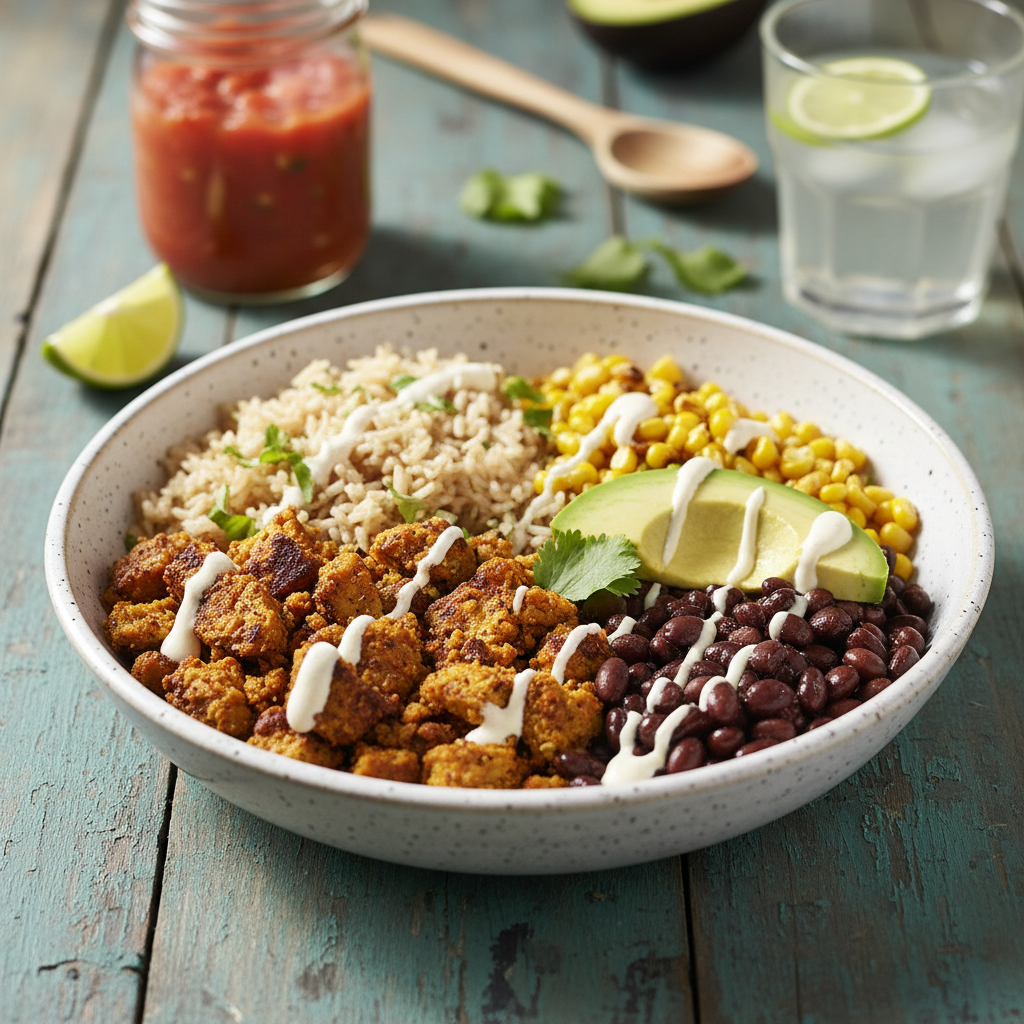
Smoky Vegan Tempeh Taco Bowls with Cilantro Lime Brown Rice
Vegan Tempeh Taco Bowl With Brown Rice Recipe
This protein-packed Vegan Tempeh Taco Bowl features savory, crumbled tempeh, fluffy cilantro lime brown rice, and all your favorite fresh toppings. It is the perfect healthy, gluten-free weeknight dinner that satisfies cravings without the meat, coming together in under 45 minutes.
20 minutes
25 minutes
45 minutes
4 servings
Main Course
Stovetop
Mexican-Fusion
Vegan
If you have been searching for the ultimate plant-based meal that delivers on texture, flavor, and satisfaction, look no further than these Smoky Vegan Tempeh Taco Bowls. In the world of vegan cooking, texture is often the biggest hurdle to overcome. While tofu has its place, it often lacks the hearty, chewy bite that many of us crave, especially when replicating comfort foods like tacos. Enter tempeh: the fermented soybean superfood that completely transforms this dish. When prepared correctly, crumbled tempeh mimics the texture of ground beef with uncanny accuracy, absorbing a smoky, savory marinade that will have even the most skeptical carnivores asking for seconds. This recipe is not just about the meat substitute, though; it is a symphony of components. We pair the savory tempeh with nutty, aromatic brown rice that has been brightened with fresh lime juice and chopped cilantro, providing a zest that cuts through the richness of the spices. The beauty of the ‘bowl’ concept lies in its versatility and visual appeal. It allows you to layer flavors and textures—crunchy corn, creamy avocado, tender beans, and crisp lettuce—creating a meal that is as fun to eat as it is nutritious. Whether you are a long-time vegan, participating in Meatless Monday, or simply trying to incorporate more whole grains and plant proteins into your diet, this recipe is designed to be a staple in your rotation. It is hearty enough for winter but fresh enough for summer, making it a year-round winner.
History & Origins
To truly appreciate this dish, we must look at the convergence of three distinct culinary histories: the ancient origins of tempeh, the traditional Mexican taco, and the modern American ‘bowl’ trend. Tempeh, the star of this show, originated in Indonesia, specifically on the island of Java, likely originating several centuries ago. Unlike tofu, which is made from soy milk, tempeh is made from whole fermented soybeans, a process that was historically significant for preserving nutrients and making soy more digestible in the tropical Javanese climate. It has been a staple protein source in Indonesian cuisine for hundreds of years, traditionally fried and served with sambal. On the other side of the world, the concept of the taco dates back to the silver mines of Mexico in the 18th century, evolving into the street food icon we know today. However, the specific iteration of the ‘Taco Bowl’ or ‘Burrito Bowl’ is a distinctly modern, largely American invention. Gaining massive popularity in the early 2000s through fast-casual dining chains, the bowl format deconstructed the traditional handheld taco, catering to a growing demand for lower-carb or gluten-free options that focused on fresh ingredients over heavy tortillas. This recipe represents a global culinary fusion, taking the ancient Javanese preservation method of tempeh, seasoning it with the bold, smoky spices of Mexican cuisine (cumin, chili, paprika), and serving it in the contemporary, health-conscious format of a grain bowl. It is a testament to how modern cooking transcends borders to create something entirely new yet deeply rooted in tradition.
Why This Recipe Works
This recipe succeeds where many other vegan taco recipes fail because it specifically addresses the two main complaints about tempeh: bitterness and lack of flavor absorption. Raw tempeh can have a slightly bitter, earthy aftertaste that turns many people off. This recipe utilizes a crucial ‘steaming’ step before marinating. By simmering the crumbled tempeh in a little water or vegetable broth for just a few minutes before adding the fat and spices, we open up the pores of the soybeans and neutralize the bitterness. This prepares the tempeh to act like a sponge. The marinade itself is scientifically balanced to hit every flavor receptor. We use tamari (or soy sauce) for umami depth, smoked paprika for that fire-roasted scent, cumin for earthiness, and a touch of maple syrup to balance the acidity of the lime and the heat of the chili powder. Furthermore, the choice of brown rice over white rice is not just for health; the nuttier profile of brown rice stands up better to the bold taco spices, providing a firmer texture that prevents the bowl from becoming mushy. The combination of hot, savory tempeh with cold, fresh toppings like salsa and avocado creates a temperature contrast that makes every bite exciting.
Why You’ll Love This Recipe
- ✓High-Protein & Vegan: Packed with plant-based protein from tempeh and black beans.
- ✓Gluten-Free: Naturally gluten-free ingredients make it accessible for sensitive diets.
- ✓Meal-Prep Friendly: The components store beautifully for lunches throughout the week.
- ✓Nutrient Dense: Fermented foods, whole grains, and healthy fats in one bowl.
- ✓Customizable: Easy to swap toppings based on what you have in the fridge.
Equipment You’ll Need
- ✓Large skillet or frying pan
- ✓Medium saucepan with lid
- ✓Steamer basket (optional)
- ✓Chef’s knife
- ✓Cutting board
- ✓Mixing bowls
Ingredients
- ✓2 blocks (16 oz) organic tempeh
- ✓1 cup uncooked brown rice
- ✓2 cups vegetable broth
- ✓1 tbsp olive oil or avocado oil
- ✓3 tbsp Tamari or soy sauce (GF if needed)
- ✓1 tsp chili powder
- ✓1 tsp ground cumin
- ✓1 tsp smoked paprika
- ✓1/2 tsp garlic powder
- ✓1 tbsp maple syrup
- ✓1 lime, juiced and zested
- ✓1/4 cup fresh cilantro, chopped
- ✓1 can (15 oz) black beans, drained and rinsed
- ✓1 cup corn kernels (fresh, frozen, or canned)
- ✓1 large avocado, sliced
- ✓Salsa or pico de gallo for serving
Instructions
- Rinse the brown rice thoroughly. In a medium saucepan, combine the rice with 2 cups of water (or broth for extra flavor). Bring to a boil, then reduce heat to low, cover, and simmer for 30-40 minutes until water is absorbed. Remove from heat and let sit covered for 10 minutes.
- While rice cooks, prepare the tempeh. Crumble the tempeh blocks into bite-sized pieces with your hands. Place them in a skillet and cover with about 1/2 inch of water. Bring to a simmer and cook for 5-8 minutes until the water has mostly evaporated. This steaming step removes bitterness.
- In a small bowl, whisk together the tamari, olive oil, chili powder, cumin, smoked paprika, garlic powder, and maple syrup to create the marinade.
- Once the water has evaporated from the tempeh skillet, pour the marinade over the crumbled tempeh. Sauté over medium heat for 5-7 minutes, stirring frequently, until the tempeh is browned and crispy on the edges.
- Fluff the cooked brown rice with a fork. Stir in the fresh lime juice, lime zest, and chopped cilantro. Season with a pinch of salt if desired.
- Assemble the bowls: Start with a base of cilantro lime brown rice. Top with a generous scoop of the taco tempeh.
- Add your toppings: arranged black beans, corn, avocado slices, and salsa around the bowl.
- Serve immediately with extra lime wedges and hot sauce if desired.
Expert Cooking Tips
- ✓Do not skip the steaming step for the tempeh; it is essential for texture and flavor.
- ✓Crumble the tempeh into varying sizes—some small crumbs and some chunks—to create a more realistic ‘meaty’ texture.
- ✓Toast your dry spices in the pan for 30 seconds before adding the liquid ingredients to wake up their essential oils.
- ✓Use short-grain brown rice for a stickier texture, or long-grain for a fluffier result.
- ✓Make a double batch of the spice marinade to keep in the fridge for quick stir-frys later in the week.
Substitutions and Variations
This recipe is highly adaptable to whatever is in your pantry. If you cannot find tempeh, extra-firm tofu can be used; just be sure to press it first to remove excess water, though the texture will be softer. For a soy-free option, you can use cooked lentils or walnut meat, though the cooking method will vary. If you prefer a lower-carb base, swap the brown rice for cauliflower rice or a bed of mixed greens. The tamari can be replaced with coconut aminos for a lower-sodium and soy-free alternative. Maple syrup can be swapped for agave nectar or brown sugar. For the toppings, feel free to add pickled red onions, jalapeños, dairy-free sour cream, or shredded vegan cheese depending on your dietary preferences.
Common Mistakes to Avoid
The most common mistake is under-seasoning the tempeh. Tempeh is very dense and requires a heavy hand with spices and salt to taste flavorful. Another error is rushing the rice cooking process; brown rice takes longer than white rice, and lifting the lid too early releases the steam needed to cook the grains through, resulting in crunchy rice. Avoid overcrowding the pan when browning the tempeh; if there is too much in the pan, it will steam rather than fry, and you will miss out on those delicious crispy edges. Finally, do not forget the acid; the lime juice is crucial to cut through the earthy flavors of the tempeh and beans.
Serving Suggestions
Serve these bowls family-style by placing all the components in separate serving dishes in the center of the table, allowing everyone to build their own bowl to their liking. This is especially great for families with picky eaters. Pair the meal with a side of tortilla chips and guacamole, or a refreshing drink like an Agua Fresca or a spicy margarita to complete the fiesta vibe. For a lighter lunch option, skip the rice and serve the tempeh mixture inside romaine lettuce leaves for taco boats.
Storage and Reheating Tips
This recipe is excellent for meal prep. Store the cooked tempeh and the brown rice in separate airtight containers in the refrigerator for up to 5 days. The black beans and corn can be stored together. Keep wet toppings like salsa and avocado separate until just before serving to prevent the bowl from getting soggy and the avocado from oxidizing. To reheat, microwave the rice and tempeh for 1-2 minutes, or sauté them quickly in a pan. If the rice has dried out, add a splash of water before reheating. The tempeh can also be frozen for up to 3 months; thaw overnight in the fridge before reheating.
Nutrition Facts (Estimated)
| Serving Size | 1 Bowl |
| Calories | 540 |
| Fat | 22g |
| Saturated Fat | 3g |
| Unsaturated Fat | 18g |
| Trans Fat | 0g |
| Cholesterol | 0mg |
| Sodium | 850mg |
| Carbohydrates | 62g |
| Fiber | 14g |
| Sugar | 6g |
| Protein | 24g |
Frequently Asked Questions
Is tempeh gluten-free?
Generally, yes, tempeh is made from soybeans. However, some store-bought brands include grains like barley or wheat in the fermentation process. Always check the package label to ensure it is certified gluten-free.
Can I use white rice instead of brown rice?
Absolutely. White rice will cook much faster (usually 15-20 minutes). You may want to adjust the water ratio according to your package instructions.
Why does my tempeh taste bitter?
Tempeh has a natural bitterness due to the fermentation process. Steaming or simmering it in water for 10 minutes before frying is the best way to remove this bitter flavor.
Is this recipe spicy?
It has a mild kick from the chili powder, but it is generally family-friendly. To make it milder, reduce the chili powder. To make it spicier, add cayenne pepper or chopped jalapeños.
Can I make this without oil?
Yes, you can sauté the tempeh in vegetable broth instead of oil, though you won’t get the same crispy edges.
What is the difference between tempeh and tofu?
Tofu is made from coagulated soy milk and is soft and smooth. Tempeh is made from whole fermented soybeans pressed into a cake, resulting in a firmer, chewier texture and higher protein and fiber content.
Do I need to peel the tempeh?
No, standard tempeh does not need to be peeled. It is ready to slice or crumble right out of the package.
Can I use quinoa instead of rice?
Yes! Quinoa is a great high-protein substitute. It cooks in about 15 minutes and has a fluffy texture that works well in bowls.
How do I keep the avocado from turning brown?
Squeeze fresh lime or lemon juice over the sliced avocado and store it in an airtight container. However, it is best cut fresh right before serving.
Is this recipe suitable for keto diets?
Tempeh is relatively low carb, but brown rice and black beans are higher in carbohydrates. To make this keto-friendly, swap the rice for cauliflower rice and omit the beans and corn.
Conclusion
These Vegan Tempeh Taco Bowls prove that plant-based eating doesn’t mean sacrificing flavor or satisfaction. With the smoky, savory crunch of the tempeh and the zesty brightness of the cilantro lime rice, this dish hits all the right notes for a comforting yet healthy meal. It is a testament to the power of good seasoning and proper preparation. Whether you are meal prepping for a busy week or hosting a casual dinner with friends, this recipe is sure to become a requested favorite. Give it a try, and you might just find yourself preferring tempeh over traditional taco meat!