The Ultimate Smoky Vegan Quinoa and Black Bean Burger
Vegan Quinoa And Black Bean Burger Patty Recipe
Say goodbye to mushy veggie burgers with this robust, protein-packed recipe. These Vegan Quinoa and Black Bean Burgers are perfectly seasoned with smoked paprika and cumin, holding their shape beautifully for the grill or skillet. They are the ultimate satisfying, plant-based dinner that even meat-eaters will crave.
20 minutes
15 minutes
35 minutes
6 patties
Main Course
Stovetop or Baking
American / Fusion
Vegan
If you have been on the hunt for the holy grail of veggie burgers—one that doesn’t squish out the sides of the bun when you take a bite, lacks that gummy texture, and actually packs a punch of savory flavor—your search ends here. This Vegan Quinoa and Black Bean Burger recipe is a labor of love, designed to solve the common pitfalls of plant-based patties. We are talking about a burger with a crisp, golden-brown exterior and a hearty, substantial interior that mimics the satisfaction of a traditional burger without trying too hard to be ‘fake meat.’ The magic lies in the combination of textures. The black beans provide a creamy, earthy base, while the quinoa adds a nutty crunch and structural integrity that prevents the dreaded mushiness. We elevate the flavor profile with a bold mix of smoked paprika, cumin, and a hint of chili powder, creating a smoky, southwestern-inspired taste that pairs perfectly with creamy avocado or a spicy chipotle mayo. Whether you are a strict vegan, a curious flexitarian, or just someone looking to cut down on red meat without sacrificing joy at the dinner table, this recipe is a game-changer. It is robust enough to stand up to a hot grill, yet tender enough to melt in your mouth. Prepare to impress your friends at your next barbecue, because these patties prove that plant-based eating is anything but boring.
History & Origins
The history of the veggie burger is a fascinating journey through culinary innovation and shifting cultural attitudes toward meat consumption. While vegetable-based fritters and patties have existed in various cuisines for centuries—think of the Middle Eastern falafel or Indian aloo tikki—the concept of a ‘burger’ specifically designed to replace beef on a bun is a relatively modern invention. The commercial veggie burger traces its roots back to London in the early 1980s, created by Gregory Sams, who dubbed it the ‘VegeBurger.’ It was a dry mix that needed to be rehydrated, a far cry from today’s fresh options. In the United States, the Gardenburger, created by Paul Wenner in an Oregon vegetarian restaurant around the same time, popularized the concept using leftover vegetables and rice. For decades, veggie burgers were often relegated to the back of freezer sections, notorious for their cardboard-like texture or bland flavor. However, the 21st century brought a renaissance in plant-based dining. As the ancient grain quinoa exploded in popularity due to its status as a complete protein, chefs began experimenting with it as a binder and textural element. Black beans, a staple in Latin American cuisine for thousands of years, became the natural partner due to their dense texture and rich flavor. This specific recipe represents the modern era of ‘whole food’ burgers—patties that celebrate the ingredients they are made of, rather than processing them into unrecognizable isolates. It honors the indigenous roots of quinoa (from the Andes) and black beans (from the Americas) while adapting them into the iconic American burger format.
Why This Recipe Works
This recipe succeeds where many others fail due to three critical factors: moisture control, binding agents, and flavor layering. First, the most common mistake in veggie burgers is excess moisture, which leads to a mushy center. In this recipe, we ensure the black beans are thoroughly drained and rinsed, and we often recommend drying them in the oven briefly if they are too wet. Furthermore, the quinoa is cooked and then allowed to cool and dry out slightly before mixing. Second, the binding matrix is scientifically balanced. We use a combination of mashed beans (which act as a paste), cooked quinoa (for structure), and oat flour or breadcrumbs. The oats absorb residual moisture during the cooking process, swelling to lock the patty together. We also utilize a ‘flax egg’—ground flaxseed mixed with water—which creates a gelatinous substance similar to egg whites, acting as a powerful glue without animal products. Finally, the flavor profile is built to mimic the umami depth of meat. We don’t just rely on salt; we use soy sauce or tamari for depth, tomato paste for richness, and smoked paprika to simulate the char of a grill. The result is a patty that creates a Maillard reaction on the outside—browning and crisping up—while remaining cohesive and tender on the inside.
Why You’ll Love This Recipe
- ✓High-protein and fiber-rich for a filling meal
- ✓Holds together perfectly on the grill or skillet
- ✓Naturally gluten-free friendly (if using GF oats/soy sauce)
- ✓Freezer-friendly for easy meal prep
- ✓Bold, smoky Southwest flavor profile
- ✓No food processor required—can be made by hand
Equipment You’ll Need
- ✓Large mixing bowl
- ✓Fine mesh strainer
- ✓Saucepan (for quinoa)
- ✓Potato masher or fork
- ✓Large skillet or cast iron pan
- ✓Baking sheet (optional)
- ✓Measuring cups and spoons
Ingredients
- ✓1/2 cup uncooked quinoa (rinsed well)
- ✓1 cup water (for cooking quinoa)
- ✓1 can (15 oz) black beans, rinsed and drained well
- ✓1/2 cup red onion, finely diced
- ✓1/3 cup fresh cilantro, chopped
- ✓2 cloves garlic, minced
- ✓1 tablespoon ground flaxseed mixed with 3 tablespoons warm water (flax egg)
- ✓1/2 cup rolled oats (gluten-free if needed), ground slightly or quick oats
- ✓1 tablespoon tomato paste
- ✓1 tablespoon soy sauce or tamari
- ✓1 teaspoon ground cumin
- ✓1 teaspoon smoked paprika
- ✓1/2 teaspoon chili powder
- ✓1/2 teaspoon sea salt
- ✓1/4 teaspoon black pepper
- ✓1-2 tablespoons olive oil (for frying)
Instructions
- Prepare the flax egg by mixing the ground flaxseed with warm water in a small bowl. Set aside for 5-10 minutes to thicken into a gel.
- Combine the rinsed quinoa and water in a small saucepan. Bring to a boil, then reduce heat to low, cover, and simmer for 15 minutes or until water is absorbed. Remove from heat and let it sit covered for 5 minutes. Fluff with a fork and let it cool slightly.
- While the quinoa cooks, thoroughly rinse and drain the black beans. For best results, spread them on a paper towel to remove excess moisture.
- In a large mixing bowl, add the black beans. Use a potato masher or a sturdy fork to mash the beans until about 75% of them are a paste, leaving some whole for texture.
- Add the cooked quinoa, diced red onion, garlic, cilantro, tomato paste, soy sauce, flax egg, and all the spices (cumin, paprika, chili powder, salt, pepper) to the bowl with the beans.
- Sprinkle the oats over the mixture. Using a large spoon or your clean hands, mix everything together until thoroughly combined. The mixture should be sticky and hold together when squeezed.
- Divide the mixture into 6 equal portions. Form them into patties, packing them firmly to ensure they hold their shape. Place them on a plate or baking sheet. Tip: Refrigerating the formed patties for 20 minutes helps them firm up.
- Heat the olive oil in a large skillet (cast iron is best) over medium heat.
- Place the patties in the hot skillet, being careful not to overcrowd the pan (cook in batches if necessary). Cook for 4-5 minutes on the first side until deep golden brown and crispy.
- Carefully flip the patties and cook for another 4-5 minutes on the other side.
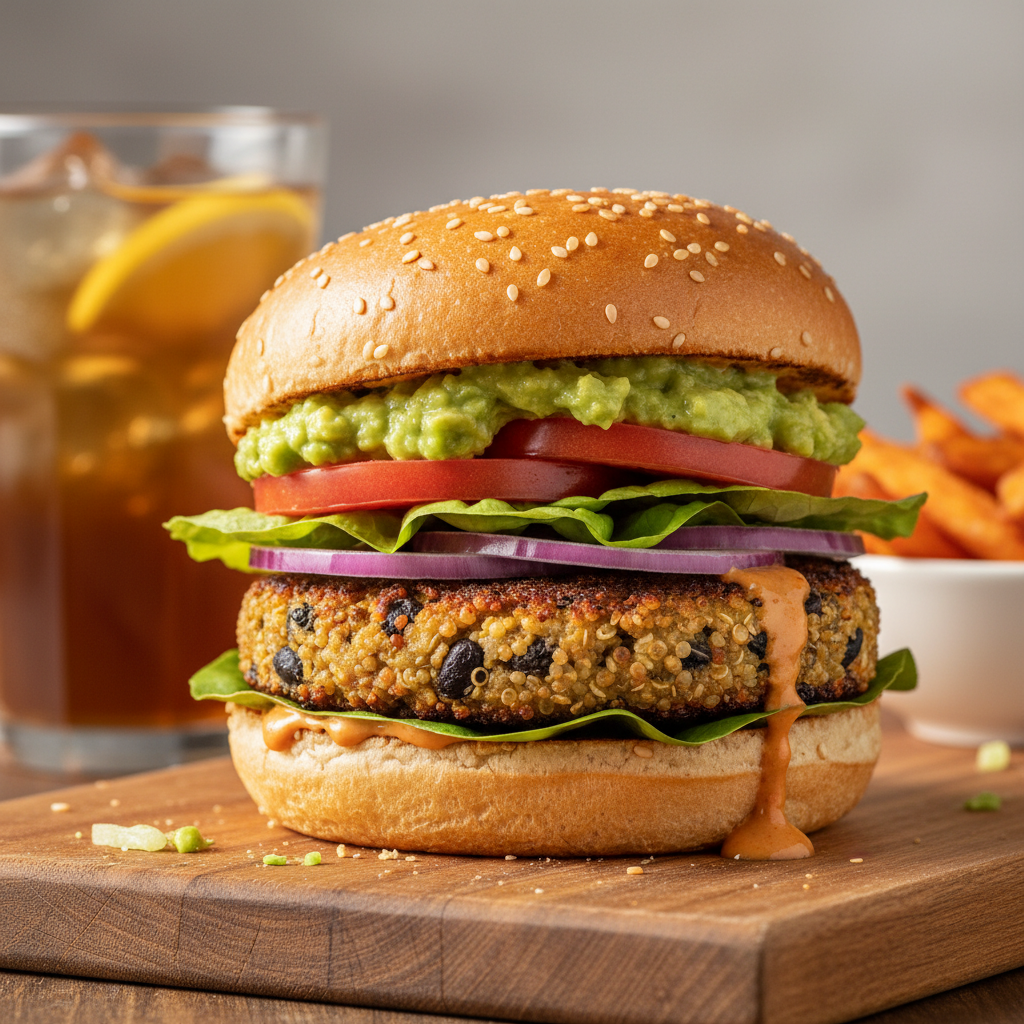
- Serve immediately on toasted buns with your favorite toppings like avocado, lettuce, tomato, and vegan mayo.
Expert Cooking Tips
- ✓Dry the beans thoroughly; moisture is the enemy of a firm burger.
- ✓Do not skip the flax egg; it is the primary binder replacing chicken eggs.
- ✓Finely dice the onions; large chunks can cause the patty to break apart.
- ✓Chill the patties before cooking if you have time; this solidifies the structure.
- ✓Use a cast-iron skillet for the best crust and even heat distribution.
- ✓If the mixture feels too wet, add another tablespoon of oats.
- ✓Be gentle when flipping; use a wide spatula to support the whole patty.
Substitutions and Variations
This recipe is quite versatile regarding substitutions. If you do not have quinoa, you can substitute cooked brown rice or millet, though the texture will be slightly softer. For the black beans, kidney beans or pinto beans work well as alternatives, offering a similar creaminess when mashed. If you are not gluten-free, you can use regular breadcrumbs or panko instead of oats for the dry binder. For the flax egg, a chia egg (1 tbsp chia seeds + 3 tbsp water) works identically. If you are not vegan, a regular chicken egg can be used as the binder. Soy sauce adds umami, but coconut aminos is a great soy-free alternative that is slightly sweeter. Finally, if you don’t like cilantro, fresh parsley or green onions are excellent herbal swaps.
Common Mistakes to Avoid
The most common mistake people make with veggie burgers is not drying the ingredients enough. If your beans are wet from the can or your quinoa is soggy, the burger will be mushy inside no matter how long you cook it. Another error is over-mashing the mixture; you want to keep some texture, or it becomes a bean paste puree. Not seasoning enough is also a pitfall—grains and beans soak up flavor, so don’t be shy with the salt and spices. Lastly, impatience during cooking is fatal. If you try to flip the burger before a crust has formed, it will likely crumble. Let it sear undisturbed for at least 4 minutes.
Serving Suggestions
These burgers are incredibly versatile. Serve them classically on a toasted brioche or sesame seed bun with lettuce, tomato, red onion, and pickles. For a Southwestern twist, top with smashed avocado or guacamole, pickled jalapeños, and a drizzle of spicy chipotle mayo. They are also fantastic served ‘naked’ on top of a large salad with a lime vinaigrette, or crumbled into a wrap. Pair with sweet potato fries or a crisp coleslaw for a complete meal.
Storage and Reheating Tips
To store leftovers, let the cooked patties cool completely, then place them in an airtight container in the refrigerator for up to 4-5 days. To reheat, warm them in a skillet over medium heat or in an oven at 350°F until heated through; microwaving is not recommended as it makes them rubbery. For freezing, you can freeze cooked or uncooked patties. Stack them with parchment paper between each patty to prevent sticking, place in a freezer bag, and freeze for up to 3 months. Cook frozen raw patties directly in the pan (add a few minutes to cook time) or reheat frozen cooked patties in the oven.
Nutrition Facts (Estimated)
| Serving Size | 1 patty |
| Calories | 190 |
| Fat | 4g |
| Saturated Fat | 0.5g |
| Unsaturated Fat | 3g |
| Trans Fat | 0g |
| Cholesterol | 0mg |
| Sodium | 320mg |
| Carbohydrates | 32g |
| Fiber | 8g |
| Sugar | 1g |
| Protein | 9g |
Frequently Asked Questions
Why do my black bean burgers fall apart?
This usually happens because the mixture is too wet or the ingredients aren’t bound properly. Ensure you dry your beans well, use the flax egg, and pack the patties firmly. Chilling them before cooking also helps significantly.
Can I bake these instead of frying?
Yes! Preheat your oven to 400°F (200°C). Place patties on a parchment-lined baking sheet, brush with a little oil, and bake for 20-25 minutes, flipping halfway through.
Can I grill these burgers?
Yes, but be careful. Make sure the grill grates are very clean and well-oiled. It helps to bake the patties for 10 minutes first to set them, then finish them on the grill for the smoky flavor.
Do I have to use a food processor?
No, this recipe is designed to be made by hand. A potato masher works perfectly for the beans, and mixing by hand ensures you don’t over-process the ingredients into a soup.
Is this recipe gluten-free?
Yes, as long as you use certified gluten-free oats and tamari instead of soy sauce. Quinoa and black beans are naturally gluten-free.
Can I use canned chickpeas instead?
You can, but chickpeas are drier and harder to mash than black beans. You might need to add a tiny bit more liquid or oil to get the mixture to stick together.
What can I use instead of flax egg?
If you are not vegan, one regular egg works perfectly. If you are vegan, a chia egg or a commercial egg replacer (like Bob’s Red Mill) are great substitutes.
Are these burgers spicy?
They have a mild kick from the chili powder, but they are not ‘hot.’ To make them spicy, add a pinch of cayenne pepper or minced jalapeño to the mix.
Conclusion
Making your own Vegan Quinoa and Black Bean Burgers at home is a rewarding experience that yields a product far superior to anything you can buy in a freezer box. Not only do you control the ingredients, avoiding preservatives and excess sodium, but you also get to enjoy the fresh, vibrant flavors of cilantro, lime, and spices. These patties are a testament to how delicious plant-based eating can be—hearty, savory, and completely satisfying. Whether you are meal-prepping for a busy week or firing up the grill for a summer weekend, this recipe is sure to become a staple in your kitchen rotation. Give it a try, and you might just find yourself preferring these over beef burgers!