One-Pan Vegan Chickpea and Spinach Pasta Skillet: The Ultimate 20-Minute Dinner
Vegan Chickpea And Spinach Pasta Skillet Recipe
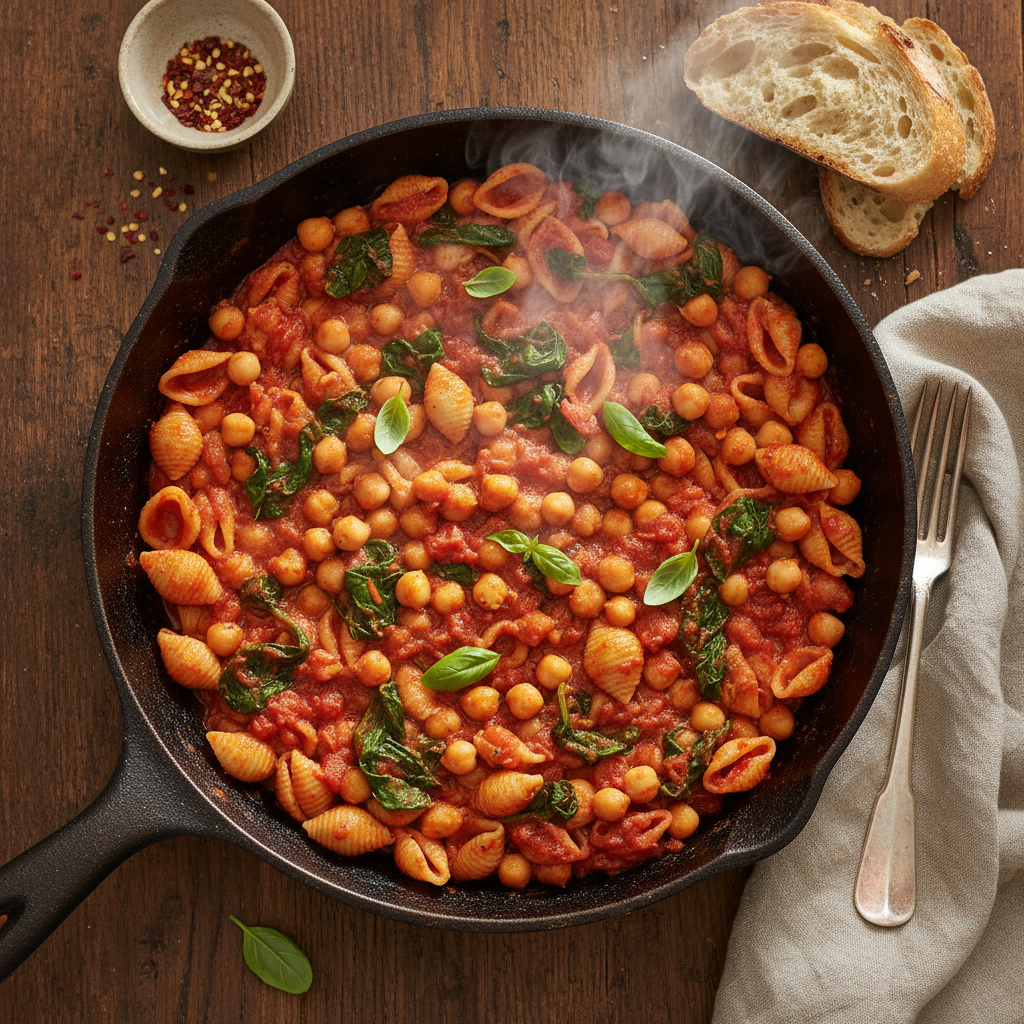
This vibrant Vegan Chickpea and Spinach Pasta Skillet is the definition of a weeknight savior, combining protein-packed chickpeas, tender pasta, and fresh greens in a rich, savory tomato sauce. Ready in just 20 minutes and requiring only one pan, it delivers maximum flavor with minimal cleanup, making it perfect for busy families and meal preppers alike.
10 minutes
20 minutes
30 minutes
4 servings
Main Course
Stovetop
Italian-Inspired
Vegan
In the hustle and bustle of modern life, finding a dinner recipe that ticks every box—nutritious, comforting, quick, and easy to clean up—can feel like searching for a needle in a haystack. Enter the Vegan Chickpea and Spinach Pasta Skillet, a dish that has quickly become a staple in my kitchen and is guaranteed to earn a permanent spot in your weekly rotation. This recipe is more than just a convenient meal; it is a celebration of simple, wholesome ingredients coming together to create something greater than the sum of their parts. The magic begins with the aromatics—garlic and onion sizzling in olive oil—building a flavor foundation that is robust and inviting. As the chickpeas toast slightly in the pan, they develop a nutty complexity that pairs perfectly with the acidity of the crushed tomatoes and the earthy warmth of Italian herbs. Unlike traditional pasta dishes that require boiling water in a separate pot, this skillet method allows the pasta to cook directly in the sauce. This technique is a game-changer: as the pasta releases its natural starches, it naturally thickens the sauce, resulting in a creamy, velvety texture without the need for heavy creams or dairy substitutes. The addition of fresh spinach at the very end provides a pop of color and a boost of iron, wilting gently into the hot pasta to retain its vibrant green hue and fresh flavor. Whether you are a committed vegan, trying to incorporate more plant-based meals into your diet, or simply looking for a hearty, budget-friendly dinner, this skillet pasta delivers on all fronts. It is cozy enough for a winter evening yet light enough for a summer lunch. Plus, the leftovers taste even better the next day, allowing the flavors to meld further. Get ready to fall in love with the simplicity of one-pan cooking.
History & Origins
While this specific Vegan Chickpea and Spinach Pasta Skillet is a modern adaptation designed for convenience, its roots are deeply embedded in the culinary traditions of the Mediterranean, specifically Italy. The combination of pasta and legumes is a hallmark of Italian peasant cooking, known as ‘cucina povera’ or ‘poor kitchen.’ This style of cooking emphasized making delicious, sustaining meals out of humble, shelf-stable ingredients. The most famous ancestor of this dish is ‘Pasta e Ceci’ (pasta and chickpeas), a Roman classic that dates back centuries. Historically, chickpeas were a vital source of protein for the working class when meat was scarce or too expensive. In traditional Roman preparations, dried chickpeas were soaked and cooked slowly with aromatics, and the pasta was often broken bits of leftovers mixed in to bulk up the soup or stew. Over time, this concept traveled and evolved. In Southern Italy, the dish often took on a redder hue with the introduction of tomatoes from the Americas in the 16th century, evolving into a stew-like consistency that blurred the line between soup and pasta. Our modern skillet version pays homage to this history by maintaining the core duo of chickpeas and pasta but adapts the technique for the contemporary home cook. By utilizing canned chickpeas and a skillet reduction method, we accelerate the cooking process without sacrificing the soul-warming essence of the original dish. It is a testament to the timeless nature of these ingredients that they remain just as relevant and satisfying today as they were in the rustic kitchens of rural Italy hundreds of years ago.
Why This Recipe Works
This recipe succeeds because it leverages the science of one-pan pasta cooking to create a superior texture and flavor profile that boiling water simply cannot achieve. When you boil pasta separately and drain it, you pour away the starch-rich water, which is actually ‘liquid gold’ for creating sauces. In this skillet method, the pasta cooks directly in the tomato broth. As the pasta softens, it releases starch into the liquid, emulsifying with the olive oil and tomato juices to create a naturally creamy, glossy sauce that clings to every shell and chickpea. Furthermore, the flavor absorption is significantly higher. Instead of absorbing plain water, the pasta absorbs the seasoned tomato broth, infusing every bite with the taste of garlic, herbs, and vegetable stock. The chickpeas also benefit from simmering in the sauce, becoming tender and flavorful rather than just being tossed in at the end. The balance of textures is another reason this works so well: the slight chew of the al dente pasta, the creamy interior of the chickpeas, and the soft, wilted spinach create a satisfying mouthfeel. Finally, the nutritional synergy is key; the vitamin C in the tomatoes helps your body absorb the plant-based iron from the spinach and chickpeas, making this not just a delicious meal, but a nutritionally optimized one.
Why You’ll Love This Recipe
- ✓Ready in under 30 minutes with minimal prep required.
- ✓One-pan method means significantly fewer dishes to wash.
- ✓High in plant-based protein and fiber for a filling meal.
- ✓Naturally creamy sauce created by the pasta starch.
- ✓Budget-friendly ingredients that are likely already in your pantry.
- ✓Versatile recipe that accommodates various vegetable add-ins.
Equipment You’ll Need
- ✓Large cast-iron skillet or deep sauté pan with lid
- ✓Wooden spoon or spatula
- ✓Chef’s knife
- ✓Cutting board
- ✓Measuring cups and spoons
- ✓Can opener
Ingredients
- ✓2 tablespoons extra virgin olive oil
- ✓1 medium yellow onion, finely diced
- ✓3 cloves garlic, minced
- ✓1 (15 oz) can chickpeas, rinsed and drained
- ✓1 (28 oz) can crushed tomatoes
- ✓2 cups vegetable broth
- ✓1 teaspoon dried oregano
- ✓1 teaspoon dried basil
- ✓1/2 teaspoon red pepper flakes (optional)
- ✓8 oz dried short pasta (rotini, penne, or shells)
- ✓3 cups fresh baby spinach
- ✓Salt and black pepper to taste
- ✓Fresh basil or parsley for garnish
- ✓Nutritional yeast or vegan parmesan (optional)
Instructions
- 1. Heat the olive oil in a large skillet over medium heat. Once shimmering, add the diced onion and sauté for 3-4 minutes until translucent and fragrant.
- 2. Add the minced garlic and red pepper flakes (if using) to the skillet. Cook for another 1 minute, stirring constantly to prevent the garlic from burning.
- 3. Add the rinsed chickpeas, dried oregano, dried basil, salt, and pepper. Stir well to coat the chickpeas in the oil and aromatics, cooking for 2 minutes to toast the spices slightly.
- 4. Pour in the crushed tomatoes and vegetable broth. Stir to combine and bring the mixture to a gentle boil.
- 5. Stir in the dried pasta, ensuring it is mostly submerged in the liquid. Reduce the heat to medium-low and cover the skillet with a lid.
- 6. Simmer for 12-15 minutes, stirring occasionally to prevent the pasta from sticking to the bottom of the pan. Cook until the pasta is al dente and most of the liquid has been absorbed to form a thick sauce.
- 7. Remove the skillet from the heat. Immediately add the fresh baby spinach on top and stir gently. The residual heat will wilt the spinach within 1-2 minutes.
- 8. Taste and adjust seasoning with more salt or pepper if needed. Garnish with fresh chopped basil, parsley, or a sprinkle of nutritional yeast before serving hot.
Expert Cooking Tips
- ✓Use a high-quality vegetable broth as it forms the base flavor of the sauce.
- ✓Do not overcook the pasta; remember it will continue to cook slightly in the residual heat of the sauce.
- ✓If the sauce becomes too thick before the pasta is done, add a splash of hot water or extra broth.
- ✓Rinsing the chickpeas thoroughly removes excess sodium and the starchy canning liquid, improving the final texture.
- ✓For a deeper flavor, add a splash of balsamic vinegar or a pinch of sugar to the tomato sauce to balance the acidity.
Substitutions and Variations
This recipe is incredibly flexible and handles substitutions well. If you are gluten-free, simply swap the regular wheat pasta for a sturdy gluten-free blend, such as brown rice or chickpea pasta; just be mindful that gluten-free pasta can release more starch, so you might need a touch more liquid. For the greens, kale or Swiss chard make excellent alternatives to spinach, though they will require an extra minute or two of cooking time to soften. If you do not have chickpeas, white beans like Cannellini or Great Northern beans are a perfect swap, offering a creamier texture. You can also boost the protein content by adding crumbled vegan sausage or red lentils (which would need to be added with the broth). For those who are not strictly vegan, regular parmesan cheese can be used instead of nutritional yeast for the topping. If you lack crushed tomatoes, you can use diced tomatoes for a chunkier sauce or tomato purée for a smoother finish.
Common Mistakes to Avoid
The most common mistake with one-pot pasta dishes is letting the liquid evaporate too quickly. Keep an eye on the heat level; it should be a gentle simmer, not a rolling boil, to ensure the pasta cooks evenly without scorching the bottom of the pan. Another pitfall is adding the spinach too early. Spinach wilts almost instantly; adding it while the dish is still boiling will result in slimy, overcooked greens. Always fold it in at the very end when the heat is off. Additionally, be careful with seasoning. Canned tomatoes and vegetable broth often contain salt, so taste your sauce before adding extra salt to avoid an overly salty dish. Lastly, do not use long pasta shapes like spaghetti or fettuccine for this specific method unless you break them, as they are harder to submerge evenly in a skillet and tend to clump together.
Serving Suggestions
This skillet pasta is a complete meal on its own, but it pairs beautifully with a side of crusty garlic bread or focaccia to mop up the rich tomato sauce. A crisp, green salad with a sharp lemon vinaigrette cuts through the richness of the pasta and adds a refreshing crunch. For a dinner party, serve this family-style right in the skillet placed on a trivet in the center of the table. Top with a generous drizzle of high-quality extra virgin olive oil and fresh cracked black pepper right before serving. If you want to add a creamy element, a dollop of vegan ricotta or a swirl of cashew cream on top adds a luxurious finish.
Storage and Reheating Tips
Leftovers of this dish store wonderfully, making it a great option for meal prep. Allow the pasta to cool completely before transferring it to an airtight container. It can be stored in the refrigerator for up to 4 days. When reheating, you may notice the pasta has absorbed most of the sauce. To revive it, add a splash of water or vegetable broth and reheat gently on the stovetop over low heat or in the microwave, stirring halfway through. We do not recommend freezing this dish, as the texture of the pasta can becomes mushy and the spinach may become watery upon thawing.
Nutrition Facts (Estimated)
| Serving Size | 1 bowl (approx 350g) |
| Calories | 420 |
| Fat | 12g |
| Saturated Fat | 1.5g |
| Unsaturated Fat | 9g |
| Trans Fat | 0g |
| Cholesterol | 0mg |
| Sodium | 480mg |
| Carbohydrates | 65g |
| Fiber | 14g |
| Sugar | 6g |
| Protein | 18g |
Frequently Asked Questions
Can I use frozen spinach instead of fresh?
Yes, you can use frozen spinach. Ensure you thaw it and squeeze out as much excess water as possible before adding it to the skillet to prevent watering down your sauce. Add it a few minutes earlier than fresh spinach to ensure it heats through completely.
My sauce is too watery, what should I do?
If the pasta is cooked but the sauce is still too thin, simply remove the lid and increase the heat slightly for a few minutes while stirring. This will help the excess liquid evaporate. Letting the dish sit for 5 minutes off the heat also helps it thicken.
Can I use fresh tomatoes instead of canned?
Absolutely. You will need about 2 pounds of fresh ripe tomatoes, diced. You may need to cook them down for 10-15 minutes before adding the broth and pasta to develop a saucy consistency, and you might need to add a tablespoon of tomato paste for depth of flavor.
Is this recipe spicy?
The recipe calls for red pepper flakes which add a mild heat. If you are sensitive to spice or cooking for young children, you can omit the red pepper flakes entirely without affecting the overall success of the dish.
What is the best type of pot to use?
A wide, deep skillet or a Dutch oven is ideal. You want a wide surface area to help the sauce reduce, but high enough sides to hold the liquid and pasta comfortably.
Can I add other vegetables?
Yes! Diced zucchini, bell peppers, or mushrooms work great. Sauté them with the onions and garlic at the beginning of the cooking process so they have time to soften and brown.
How do I make this gluten-free?
Substitute the wheat pasta with your favorite gluten-free pasta brand. Chickpea pasta or brown rice pasta holds up well. Monitor the liquid levels as GF pasta absorption rates vary.
Can I double this recipe?
Yes, but ensure you use a very large pot or Dutch oven. You may need to adjust the cooking time slightly and ensure you stir frequently to move the large volume of pasta around for even cooking.
Why is my pasta taking longer to cook than the package says?
One-pot methods often take 2-4 minutes longer than the package instructions because the pasta is cooking in a thickened sauce rather than boiling water, which transfers heat differently. Trust the texture, not just the timer.
Is this dish high in protein?
Yes, for a plant-based meal it is quite substantial. The chickpeas and spinach provide protein, and using a high-protein pasta variety can boost this even further.
Conclusion
The Vegan Chickpea and Spinach Pasta Skillet is a testament to the fact that delicious, healthy food doesn’t have to be complicated or time-consuming. By mastering this simple one-pan technique, you unlock a world of flavor that is accessible on even the busiest of weeknights. It brings the warmth of Italian comfort food into your home with nutritional benefits that will leave you feeling energized. Whether you are cooking for yourself, a partner, or a whole family, this dish is sure to satisfy. So grab your skillet, open a can of chickpeas, and enjoy the effortless magic of this wholesome dinner.