Smoky Vegan Vegetable and Lentil Paella: A Protein-Packed Spanish Classic
Vegan Vegetable And Lentil Paella Healthy Recipe
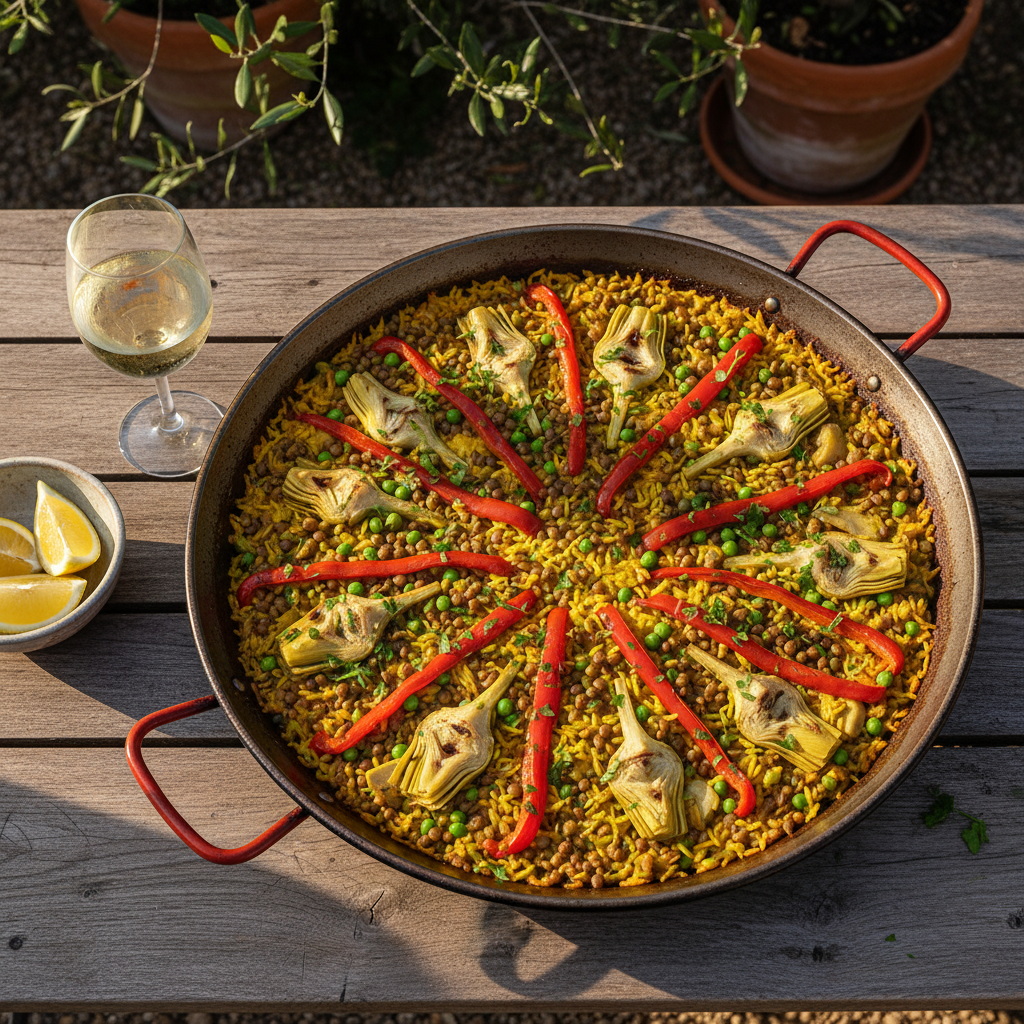
Experience the vibrant flavors of Spain with this hearty Vegan Vegetable and Lentil Paella. Packed with protein-rich lentils, colorful veggies, and infused with aromatic saffron, this one-pan wonder delivers the perfect ‘socarrat’ crust without any animal products.
20 minutes
40 minutes
1 hour
4-6 servings
Main Course
Stovetop
Spanish
Vegan
There are few dishes in the culinary world that command as much respect and evoke as much communal joy as a traditional Spanish paella. The sight of that wide, shallow pan bubbling with golden, saffron-infused rice is enough to transport anyone straight to the sun-drenched coast of Valencia. However, traditional recipes often rely heavily on seafood, chicken, or rabbit, leaving plant-based eaters searching for a worthy alternative that doesn’t sacrifice texture or depth of flavor. Enter this Vegan Vegetable and Lentil Paella—a recipe designed not just to substitute meat, but to celebrate the earthiness of legumes and the sweetness of garden-fresh vegetables.
By incorporating hearty brown lentils, we introduce a robust, meaty texture and a significant protein boost that transforms this rice dish into a nutritionally complete meal. The secret lies in building layers of flavor, starting with a rich sofrito base of garlic, onions, and tomatoes, enhanced by the smokiness of high-quality Spanish paprika (pimentón). As the short-grain rice absorbs the vegetable broth, it swells with the essence of saffron, turning a brilliant yellow hue. But the true magic happens at the bottom of the pan, where we aim for the coveted ‘socarrat’—that caramelized, crispy layer of toasted rice that is the hallmark of a perfectly executed paella. Whether you are hosting a summer dinner party or looking for a comforting Sunday night meal, this recipe proves that plant-based cooking can be just as savory, complex, and satisfying as its traditional counterparts.
History & Origins
The history of paella is as deep and layered as the dish itself, rooted firmly in the agricultural traditions of Valencia, Spain. While today it is often associated with seafood and tourism, the original paella was a humble peasant dish born from the rice paddies of the Albufera lagoon. The Moors introduced rice cultivation to Spain in the 8th century, forever changing the gastronomic landscape of the Iberian Peninsula. The word ‘paella’ actually refers to the pan itself—a wide, shallow, flat-bottomed vessel usually made of polished steel with two handles—rather than the ingredients inside.
Historically, farm laborers would gather wood from orange trees to build a fire in the open air, cooking rice with whatever ingredients were locally available. This original ‘Paella Valenciana’ typically included rabbit, snails, duck, and local beans like garrofó and tavella. It was a communal meal, eaten directly from the pan with wooden spoons, symbolizing unity and shared sustenance. Over centuries, as the dish spread to the coast, fishermen began substituting meat with their daily catch, giving rise to ‘Paella de Marisco.’ In modern times, the dish has transcended its regional borders to become a global icon of Spanish cuisine. This vegan adaptation respects that lineage by maintaining the traditional cooking method and the sacred triad of rice, saffron, and sofrito, while embracing the modern desire for sustainable, plant-forward eating. It honors the spirit of the original field workers by utilizing humble, earthly ingredients like lentils and vegetables to create a feast fit for a king.
Why This Recipe Works
This recipe succeeds where many vegetable paellas fail because it meticulously addresses texture and umami—two elements often missing when meat is removed. First, the choice of rice is non-negotiable; using Bomba or Calasparra rice is essential because these short-grain varieties absorb three times their volume in liquid without bursting, allowing them to soak up the rich vegetable broth and saffron infusion while remaining distinct. Long-grain rice simply cannot provide the necessary structure.
Secondly, the inclusion of lentils is a game-changer. Unlike soft tofu or beans that might turn mushy, brown or French green lentils hold their shape during the simmer, providing a ‘meaty’ chew and earthy backbone that mimics the mouthfeel of traditional proteins. We also double down on umami by caramelizing the tomato paste and using smoked paprika, which replicates the smoky flavor usually imparted by chorizo or an open wood fire. Finally, the cooking technique focuses heavily on the ‘socarrat.’ By resisting the urge to stir the rice once the stock is added and controlling the heat precisely at the end, we allow the sugars and starches at the bottom of the pan to caramelize. This creates that essential crispy crust that provides a textural contrast to the tender rice and creamy lentils above, ensuring every bite is complex and satisfying.
Why You’ll Love This Recipe
- ✓High-Protein Vegan Meal
- ✓Authentic Socarrat (Crispy Bottom)
- ✓One-Pan Cleanup
- ✓Gluten-Free & Soy-Free
- ✓Rich Saffron & Smoked Paprika Flavor
- ✓Perfect for Meal Prep
Equipment You’ll Need
- ✓15-inch Paella Pan or large cast-iron skillet
- ✓Chef’s Knife
- ✓Cutting Board
- ✓Measuring Cups and Spoons
- ✓Wooden Spoon
- ✓Aluminum Foil or a large lid
Ingredients
- ✓2 tablespoons extra virgin olive oil
- ✓1 medium yellow onion, finely diced
- ✓1 red bell pepper, sliced into strips
- ✓4 cloves garlic, minced
- ✓2 medium tomatoes, grated (discard skin) or 1 cup crushed tomatoes
- ✓1 teaspoon smoked paprika (pimentón de la Vera)
- ✓1/2 teaspoon saffron threads, crushed
- ✓1 cup brown or green lentils, rinsed (uncooked)
- ✓1.5 cups Bomba rice or Arborio rice
- ✓4.5 cups high-quality vegetable broth, hot
- ✓1 cup artichoke hearts (canned or frozen), quartered
- ✓1/2 cup frozen peas
- ✓1 teaspoon salt (adjust to taste)
- ✓Fresh parsley, chopped (for garnish)
- ✓Lemon wedges (essential for serving)
Instructions
- Prepare your ingredients. Steep the crushed saffron threads in the hot vegetable broth for at least 10 minutes to release their color and flavor.
- Heat the olive oil in your paella pan or large skillet over medium heat. Add the sliced red bell peppers and sauté until blistered and slightly softened, about 4-5 minutes. Remove peppers from the pan and set aside for garnish later.
- In the same pan, add the diced onion and sauté for 5 minutes until translucent. Add the minced garlic and cook for another minute until fragrant.
- Add the grated tomatoes (or crushed tomatoes) to the pan. Cook this mixture, stirring frequently, until the liquid evaporates and the mixture darkens into a thick paste. This is your ‘sofrito’.
- Stir in the smoked paprika and salt. Quickly mix to prevent the paprika from burning.
- Add the rinsed lentils and the rice to the pan. Stir well to coat every grain of rice and lentil in the sofrito oil mixture. Toast them for about 2 minutes.
- Pour in the saffron-infused hot vegetable broth. Give the pan a gentle shake to distribute the rice and lentils evenly. Increase heat to high and bring to a vigorous boil.
- Once boiling, reduce heat to medium-low. Do not stir the rice from this point on. Let it simmer uncovered for about 15 minutes.
- After 15 minutes, arrange the artichoke hearts, peas, and the reserved red pepper strips on top of the rice in a decorative pattern. Continue cooking for another 5-10 minutes until the liquid is absorbed and the rice is tender.
- To create the socarrat: Once the liquid is gone and you hear a crackling sound (like Rice Krispies), turn the heat up to medium-high for 60-90 seconds. Rotate the pan to ensure even crisping. Be careful not to burn it; smell is your best indicator—it should smell toasty, not acrid.
- Remove the pan from the heat. Cover loosely with foil or a clean kitchen towel and let it rest for 5-10 minutes. This allows the starches to settle and the rice to finish steaming.
- Garnish with fresh parsley and serve immediately with plenty of lemon wedges.
Expert Cooking Tips
- ✓Don’t stir the rice: Once the broth is added, stirring releases too much starch and creates a risotto texture rather than loose paella grains.
- ✓Use the right rice: Bomba is best, Calasparra is second best. Arborio works but requires careful liquid management.
- ✓Listen to the pan: The sound changes from a bubbling boil to a dry crackle when the socarrat is forming.
- ✓Saffron matters: Use real saffron threads, not powder or ‘safflower’, for the authentic metallic-floral flavor.
- ✓Level the pan: Ensure your stove is level so the broth distributes evenly across the wide pan.
- ✓Broth temperature: Always add hot broth to the pan to keep the cooking temperature consistent.
Substitutions and Variations
This recipe is incredibly versatile. If you cannot find Bomba rice, Arborio is the most common supermarket substitute, though you may need slightly less liquid. For the protein, while lentils are excellent, you can substitute them with chickpeas or butter beans (lima beans), which are traditional in Valencian cooking; just add canned beans later in the process so they don’t disintegrate. If you aren’t a fan of artichokes, try adding green beans or flat beans (ferraura) during the sauté step. For a ‘seafood’ vibe without the fish, you can add crumbled nori sheets or a dash of kelp granules to the broth. If you don’t have smoked paprika, you can use regular paprika with a drop of liquid smoke, but the authentic Pimentón de la Vera is highly recommended for the best flavor profile.
Common Mistakes to Avoid
The most common mistake is overcrowding the pan or using a pot that is too deep. Paella requires a wide surface area for evaporation. Using a deep soup pot will result in mushy, steamed rice rather than dry, fluffy grains. Another error is stirring the rice incessantly; remember, this is not risotto! Stirring activates starch and makes the dish creamy, which is incorrect for paella. Additionally, many home cooks fear burning the bottom and skip the high-heat finish, missing out on the socarrat. Trust your nose—if it smells like toast, it’s good; if it smells like charcoal, pull it off. Finally, under-seasoning the broth is a fatal flaw. The rice absorbs all the liquid, so the broth needs to be slightly saltier than you think before it goes in.
Serving Suggestions
Paella is best served family-style, placed directly in the center of the table with a large spoon for serving. It is absolutely mandatory to serve this with fresh lemon wedges; the acid cuts through the starch and brightens the earthy flavors of the lentils. A simple side salad of mixed greens with a vinaigrette is a perfect accompaniment. For a drink pairing, a crisp Spanish white wine like Albariño or a dry Rosé complements the saffron and paprika notes beautifully. If you want to go fully authentic, serve with a side of vegan aioli (garlic mayonnaise) for mixing into the rice.
Storage and Reheating Tips
Paella is best eaten fresh, but leftovers can be stored in an airtight container in the refrigerator for up to 4 days. The lentils may continue to absorb moisture, so the rice might be softer the next day. To reheat, it is best to use a skillet on the stovetop with a splash of water or vegetable broth to steam it back to life without making it mushy. Avoid the microwave if possible, as it tends to dry out the rice unevenly. You can freeze this dish for up to 2 months, but be aware that the texture of the veggies and rice may degrade slightly upon thawing.
Nutrition Facts (Estimated)
| Serving Size | 1 bowl (approx 350g) |
| Calories | 420 |
| Fat | 12g |
| Saturated Fat | 2g |
| Unsaturated Fat | 9g |
| Trans Fat | 0g |
| Cholesterol | 0mg |
| Sodium | 580mg |
| Carbohydrates | 65g |
| Fiber | 14g |
| Sugar | 6g |
| Protein | 18g |
Frequently Asked Questions
Do I need a special paella pan?
While a traditional carbon steel paella pan helps achieve the best evaporation and socarrat, you can absolutely make this in a large, wide cast-iron skillet or a stainless steel sauté pan. The key is a wide surface area.
Can I use brown rice instead of white rice?
It is not recommended. Brown rice takes much longer to cook and requires more liquid, which throws off the delicate ratios needed for a dry paella. Stick to short-grain white rice for authentic results.
My rice is still crunchy but the liquid is gone. What do I do?
Don’t panic. Reduce the heat to low, splash a little more hot broth or water over the crunchy spots, and cover the pan with foil for a few minutes to steam the grains until tender.
Is saffron really necessary?
Saffron provides a distinct, earthy, floral flavor and the signature yellow color. While expensive, a little goes a long way. If you absolutely must skip it, use a pinch of turmeric for color, but the flavor profile will change.
Can I use canned lentils instead of dry?
Yes. If using canned lentils, rinse them well and add them at the same time as the peas and artichokes (towards the end). If you add them at the beginning, they will turn into mush.
How do I know when the socarrat is done?
Use your senses. You will hear the sound change from bubbling to crackling/popping. You should smell a nutty, toasted aroma. You can also use a spoon to gently probe the bottom; if you feel a crust forming, it’s happening.
Is this recipe spicy?
Not usually. Smoked paprika adds smokiness, not heat. If you want heat, you can add a pinch of cayenne pepper or red pepper flakes with the garlic.
Can I add wine to the recipe?
Absolutely. You can deglaze the pan with a splash of dry white wine after cooking the sofrito and before adding the broth for extra acidity and depth.
Conclusion
Making a vegan paella is more than just cooking dinner; it’s about embracing a slower pace and enjoying the process of building flavors. This Vegetable and Lentil Paella proves that you don’t need seafood or meat to create a stunning, centerpiece dish that is bursting with authentic Spanish character. The combination of tender rice, earthy lentils, and the smoky, saffron-laced crust creates a meal that is comforting, healthy, and incredibly satisfying. Whether you are a committed vegan or just looking to reduce your meat intake, this recipe is sure to become a favorite in your household. So, gather your friends, pour some wine, and enjoy the delicious rewards of your patience.