The Ultimate Vegan Tofu Buddha Bowl With Creamy Maple Tahini Dressing
Vegan Tofu Buddha Bowl With Tahini Dressing Recipe
Packed with protein and vibrant veggies, this nourishing bowl is the perfect meal-prep lunch or dinner. Golden, crispy baked tofu meets a rainbow of roasted produce and fluffy quinoa, all drizzled with a life-changing, savory-sweet creamy maple tahini dressing that ties everything together.
20 minutes
30 minutes
50 minutes
4 servings
Main Course
Roasting
American / Fusion
Vegan
If there is one meal that perfectly encapsulates the philosophy of ‘eating the rainbow,’ it is the humble yet mighty Buddha Bowl. This Vegan Tofu Buddha Bowl is not just a salad; it is a symphony of textures, temperatures, and flavors designed to leave you feeling energized rather than weighed down. At the heart of this dish is the protein: extra-firm tofu that has been pressed, tossed in cornstarch, and baked to golden perfection—creating a crispy exterior with a tender bite inside, mimicking the satisfaction of fried tofu without the excess oil.
But a bowl is only as good as its supporting cast. We pair the savory tofu with the earthiness of fluffy quinoa, the caramelized sweetness of roasted sweet potatoes, and the fresh crunch of massaged kale and purple cabbage. It is a meal that hits every palate note: salty, sweet, sour, and umami. However, the real secret weapon here is the dressing. The Creamy Maple Tahini Dressing is liquid gold. It provides a rich, nutty fat source that emulsifies with lemon juice and garlic to coat every grain and vegetable in luxury.
Whether you are a strict vegan, a ‘Meatless Monday’ enthusiast, or just someone looking to incorporate more whole foods into your diet, this recipe is a staple. It is incredibly versatile, allowing you to swap seasonal vegetables in and out, and it stands up remarkably well in the fridge, making it the holy grail of Sunday meal prep. Get ready to nourish your body with a bowl that looks like art and tastes like comfort.
History & Origins
The term ‘Buddha Bowl’ has become a ubiquitous buzzword in the wellness and food blogging community over the last decade, but its origins are a fascinating blend of genuine spiritual tradition and modern slang. Historically, the concept is loosely inspired by ‘Shojin Ryori,’ the traditional dining style of Buddhist monks in Japan, which emphasizes simplicity, seasonality, and a plant-based diet devoid of meat and strong aromatics like onion and garlic. These traditional meals often consist of small bowls offering a balance of colors and cooking methods.
However, the modern Western iteration of the Buddha Bowl likely derives its name from two concepts. First, there is the visual similarity to the statues of the Laughing Buddha, whose rounded, full belly represents abundance and contentment; a properly made Buddha Bowl is packed so full of ingredients that the food mounds up like a rounded belly. Second, it refers to the bowl itself—typically a large, round vessel that monks would carry, accepting whatever food donations were offered by villagers. This resulted in a meal that was naturally a mix of whatever was available locally—rice, vegetables, and curries.
In the early 2010s, as the clean-eating movement gained traction on platforms like Pinterest and Instagram, the term solidified to describe a specific formula: a grain, a green, a bean (or protein), and a dressing. It evolved from the ‘Hippie Bowls’ or ‘Macro Bowls’ of the 1960s and 70s health food movements. Today, it represents a casual, customizable approach to nutrition that prioritizes whole, unprocessed foods arranged aesthetically to delight the eyes as much as the stomach.
Why This Recipe Works
This recipe succeeds where many other grain bowls fail because of its meticulous attention to texture management and flavor balancing. A common complaint with tofu bowls is that the tofu can be spongy or bland. We solve this by using a ‘press and coat’ method. By removing excess water and coating the cubes in cornstarch and soy sauce before baking, we create a moisture barrier that results in a ‘fried’ texture using only the oven. This crunch is essential to contrast with the softer quinoa and roasted sweet potato.
Furthermore, the flavor profile is engineered to hit all five tastes. The soy sauce on the tofu provides umami and salt. The roasted sweet potatoes offer natural sugar. The kale provides a slight bitterness, which is cut by the acidity of the lemon in the dressing. The tahini offers richness and fat.
Finally, the logistics of this recipe are streamlined for home cooks. The sweet potatoes, broccoli, and tofu bake at the same temperature. While they are in the oven, you have the perfect window of time to cook the quinoa and whisk the dressing, meaning the entire meal comes together in under an hour with minimal active cooking time. It is a recipe designed for efficiency without sacrificing gourmet quality.
Why You’ll Love This Recipe
- ✓High-Protein Plant-Based Meal (20g+ per serving)
- ✓Excellent for Meal Prep (stays fresh for 4 days)
- ✓Gluten-Free and Dairy-Free
- ✓Highly Customizable with Seasonal Veggies
- ✓Features a ‘Life-Changing’ 5-Minute Sauce
- ✓Balanced Macros: Healthy Fats, Complex Carbs, and Protein
Equipment You’ll Need
- ✓Tofu Press (or heavy plates and paper towels)
- ✓Two Large Baking Sheets
- ✓Parchment Paper
- ✓Fine-Mesh Sieve (for rinsing quinoa)
- ✓Medium Saucepan with Lid
- ✓Small Blender or Whisk
- ✓Chef’s Knife and Cutting Board
- ✓Large Mixing Bowl
Ingredients
- ✓1 block (14-16 oz) Extra Firm Tofu, drained and pressed
- ✓1 tbsp Cornstarch
- ✓1 tbsp Low-Sodium Soy Sauce or Tamari
- ✓1 tsp Garlic Powder
- ✓1 cup Quinoa, uncooked
- ✓2 cups Vegetable Broth or Water
- ✓2 medium Sweet Potatoes, cubed into 1/2 inch pieces
- ✓1 head Broccoli, cut into florets
- ✓1 tbsp Olive Oil, divided
- ✓3 cups Kale, stems removed and chopped
- ✓1/2 cup Tahini (sesame seed paste)
- ✓1 tbsp Maple Syrup
- ✓1 large Lemon, juiced (approx 3 tbsp)
- ✓1 clove Garlic, minced
- ✓2-4 tbsp Ice Water (to thin dressing)
- ✓Salt and Black Pepper to taste
- ✓Optional garnishes: Sesame seeds, pickled red onions, avocado slices
Instructions
- 1. Press the Tofu: Wrap the block of tofu in paper towels or a clean kitchen cloth. Place a heavy object (like a cast-iron skillet) on top and let it press for at least 15-20 minutes to remove excess water. This is crucial for crispy tofu.
- 2. Preheat and Prep: Preheat your oven to 400°F (200°C). Line two large baking sheets with parchment paper.
- 3. Cook the Quinoa: While tofu presses, rinse the quinoa thoroughly in a fine-mesh sieve. Place in a saucepan with vegetable broth. Bring to a boil, then reduce heat to low, cover, and simmer for 15 minutes or until water is absorbed. Remove from heat and let sit covered for 5 minutes, then fluff with a fork.
- 4. Season Tofu: Cut the pressed tofu into 3/4-inch cubes. Place in a bowl and toss gently with soy sauce (or tamari), garlic powder, and cornstarch until evenly coated.
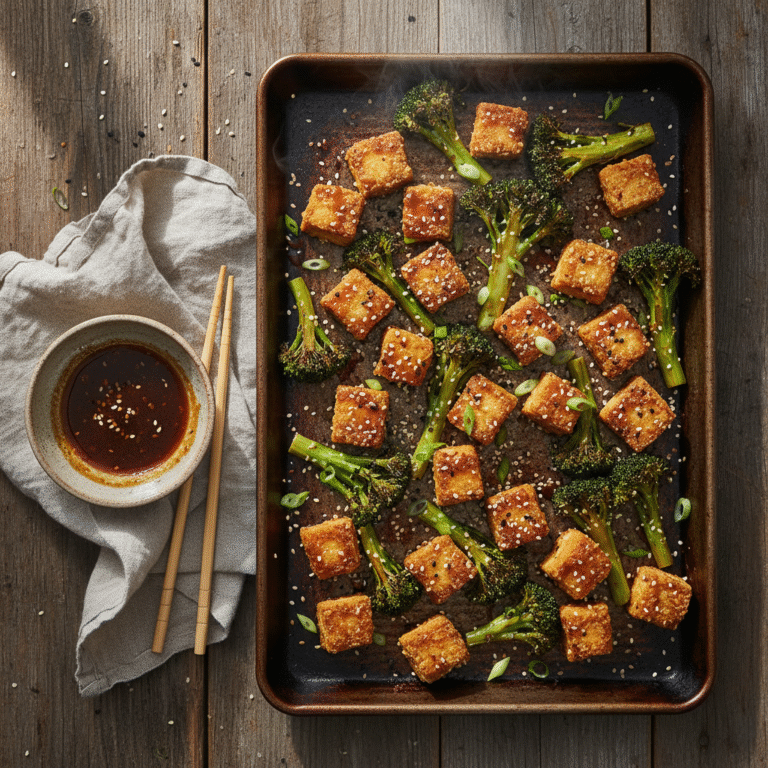
- 5. Roast Veggies and Tofu: On one baking sheet, spread out the sweet potato cubes and broccoli florets. Drizzle with 1 tbsp olive oil, salt, and pepper. Toss to coat. On the second baking sheet, spread the tofu cubes in a single layer, ensuring they don’t touch. Place both trays in the oven. Bake for 25-30 minutes, flipping the tofu and veggies halfway through, until sweet potatoes are tender and tofu is golden brown and crispy.
- 6. Make the Dressing: In a small bowl or blender, combine tahini, maple syrup, lemon juice, minced garlic, and a pinch of salt. Whisk vigorously. The mixture may seize up and get thick initially; slowly add ice water, one tablespoon at a time, whisking constantly until it turns into a smooth, pourable creamy sauce.
- 7. Massage the Kale: Place the chopped kale in a bowl. Add a tiny squeeze of lemon juice or a drop of oil and massage it with your hands for 1-2 minutes until it turns dark green and softens. This breaks down the fibrous cell walls.
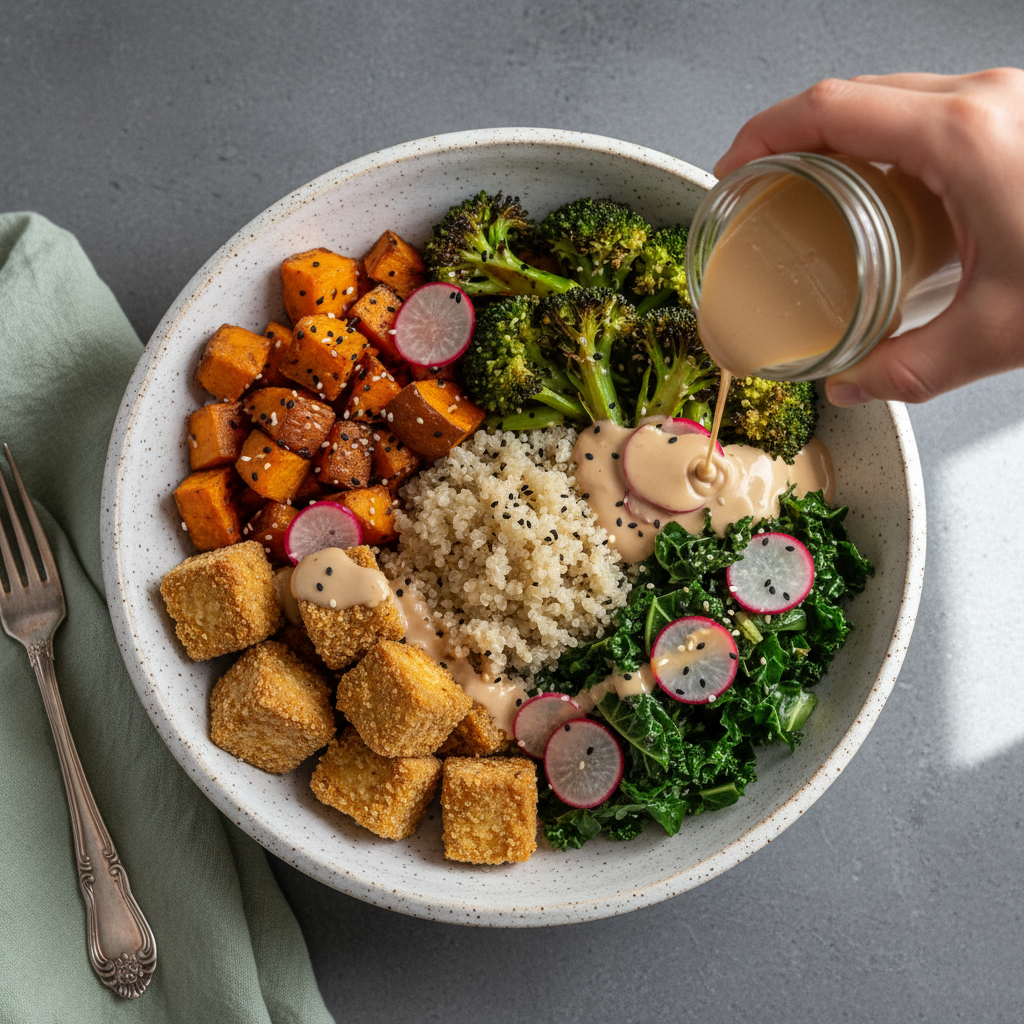
- 8. Assemble: Divide the quinoa among four bowls. Top with sections of roasted sweet potato, broccoli, fresh kale, and crispy tofu. Drizzle generously with the tahini dressing. Top with avocado, sesame seeds, or pickled onions if desired.
Expert Cooking Tips
- ✓Don’t Skip Pressing: If you don’t press the tofu, it will steam inside the oven rather than roast, resulting in a soggy texture.
- ✓Cornstarch is Key: The cornstarch absorbs surface moisture on the tofu and creates a micro-crust that mimics deep-frying.
- ✓Ice Water for Tahini: Using ice-cold water helps emulsify the tahini dressing, making it lighter and fluffier rather than oily.
- ✓Rinse the Quinoa: Quinoa has a natural coating called saponin that can taste soapy or bitter. Rinsing it removes this flavor.
- ✓Space Out the Pan: Overcrowding the baking sheet causes vegetables to steam. Use two sheets if necessary to ensure roasting.
- ✓Batch Cook: You can double the quinoa and dressing recipe easily to have extras for the week.
Substitutions and Variations
This recipe is highly adaptable. **Grains:** If you dislike quinoa, swap it for brown rice, farro, millet, or even cauliflower rice for a lower-carb option. **Protein:** Not a tofu fan? Use chickpeas (roast them with the sweet potatoes), tempeh, or shelled edamame. **Vegetables:** Use whatever is in season. Butternut squash, carrots, or pumpkin work well in place of sweet potatoes. Brussels sprouts, cauliflower, or asparagus can replace broccoli. **Dressing:** If you have a sesame allergy, substitute the tahini with smooth peanut butter, almond butter, or sunflower seed butter. The flavor profile will shift but remain delicious. **Soy Sauce:** Use Tamari or Coconut Aminos for a gluten-free alternative.
Common Mistakes to Avoid
The most common mistake is **undercooking the vegetables or tofu**. Ensure the sweet potatoes are fork-tender and the tofu has a visible golden crust. Another error is **over-dressing the salad too early**. If you are meal prepping, store the dressing in a separate small container and add it right before eating; otherwise, the quinoa and crispy tofu will absorb the liquid and become mushy. Lastly, **burning the garlic** in the oven can happen if you add minced garlic to the roasting pan; it’s better to use garlic powder for roasting and save fresh garlic for the raw dressing.
Serving Suggestions
Serve these bowls warm or at room temperature. They pair beautifully with a side of miso soup or a refreshing glass of kombucha. If you are serving this for a dinner party, lay out all the components ‘buffet style’ and let guests build their own bowls, offering extra toppings like kimchi, sriracha, toasted nori strips, or hemp hearts for added texture.
Storage and Reheating Tips
Store the roasted vegetables, tofu, and quinoa in airtight containers in the refrigerator for up to 4-5 days. Keep the dressing in a separate jar; it may thicken in the fridge, so simply whisk in a teaspoon of warm water before serving to loosen it up again. The avocado should be cut fresh just before serving to prevent browning. To reheat, you can microwave the bowl (without the fresh kale and avocado) for 90 seconds, or eat it cold as a hearty salad.
Nutrition Facts (Estimated)
| Serving Size | 1 Bowl |
| Calories | 485 |
| Fat | 22g |
| Saturated Fat | 3g |
| Unsaturated Fat | 18g |
| Trans Fat | 0g |
| Cholesterol | 0mg |
| Sodium | 650mg |
| Carbohydrates | 54g |
| Fiber | 11g |
| Sugar | 8g |
| Protein | 19g |
Frequently Asked Questions
Can I freeze this Buddha Bowl?
You can freeze the quinoa and the roasted sweet potatoes/broccoli, but tofu changes texture significantly when frozen (it becomes more sponge-like). It is best to freeze the grains and veggies but bake the tofu fresh or store it in the fridge only.
Is this recipe gluten-free?
Yes, provided you use Tamari instead of traditional soy sauce. All other ingredients (quinoa, tofu, veggies, tahini) are naturally gluten-free.
Why did my tahini dressing clump up?
Tahini is high in fat, and when mixed with a small amount of liquid, it can seize. This is normal! Keep adding cold water gradually and whisking vigorously. It will eventually relax into a smooth cream.
Can I use soft or silken tofu?
No, soft or silken tofu has too high a water content and will fall apart if you try to toss and bake it. You must use Extra Firm or Super Firm tofu for this recipe.
How can I make this lower carb?
Swap the quinoa for cauliflower rice or a bed of mixed greens, and reduce the portion of sweet potatoes, replacing them with lower-carb veggies like zucchini or bell peppers.
Is this kid-friendly?
Many kids love the ‘finger food’ nature of the tofu cubes and sweet potatoes. If your child is sensitive to bitter flavors, you might want to skip the kale or use spinach instead, and serve the dressing on the side for dipping.
Can I use frozen vegetables?
Yes, you can roast frozen broccoli and sweet potatoes. However, they release more water than fresh ones, so you may need to bake them for 5-10 minutes longer to get them crispy.
What is the best way to reheat the tofu to keep it crispy?
The air fryer is the best method to revive crispy tofu (350°F for 3-4 minutes). A toaster oven works well too. The microwave will make it soft.
Conclusion
This Vegan Tofu Buddha Bowl is more than just a collection of ingredients; it is a commitment to self-care in a bowl. It proves that plant-based eating doesn’t have to be complicated or bland. With the crunch of the savory tofu, the sweetness of the potatoes, and that irresistible creamy tahini dressing, you’ll find yourself looking forward to lunch every single day. Give this recipe a try for your next meal prep Sunday, and don’t forget to tag us in your creations—we love seeing how you customize your bowls!