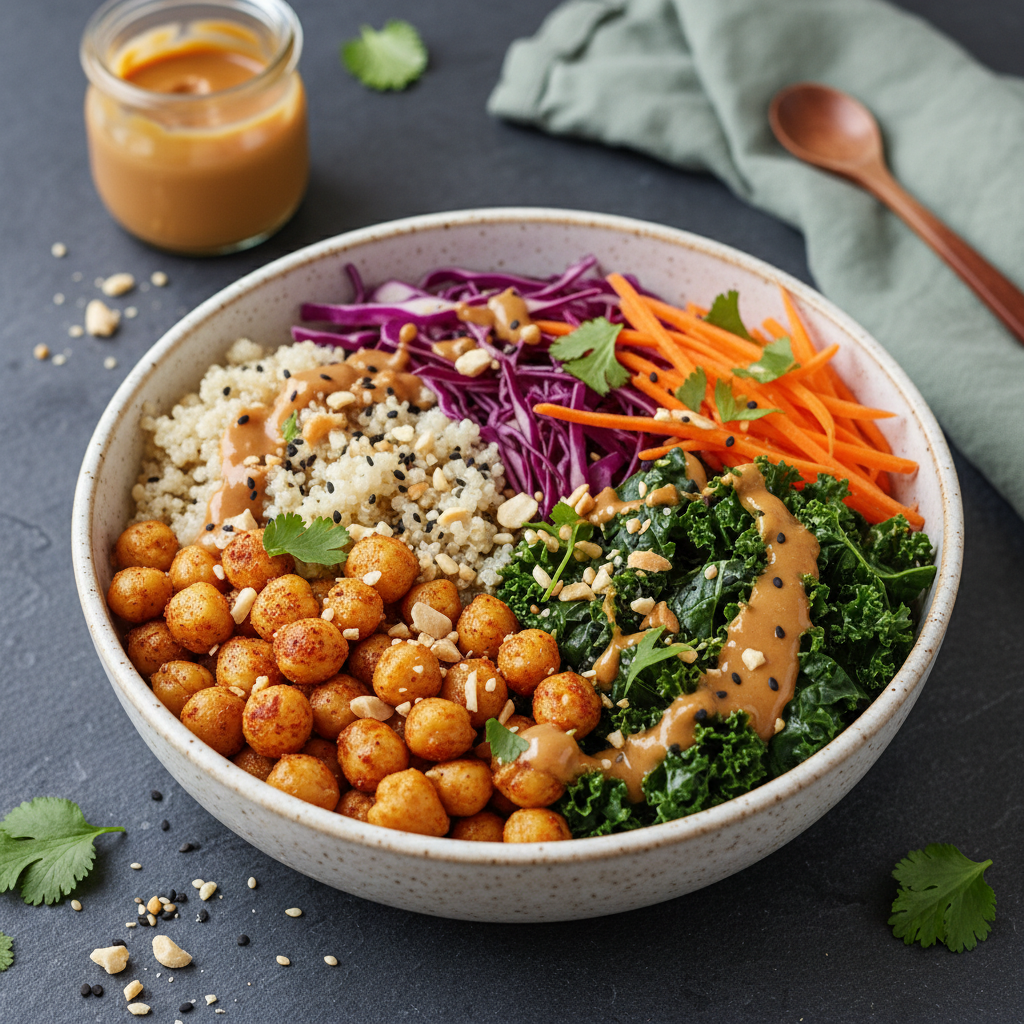
Ultimate Vegan Peanut Chickpea Power Bowl with Creamy Satay Sauce
Vegan Peanut Chickpea Power Bowl Recipe
This vibrant Vegan Peanut Chickpea Power Bowl is the antidote to sad desk lunches, featuring crispy spiced chickpeas, rainbow vegetables, and a drizzle of addictive, savory-sweet peanut ginger dressing. It is protein-packed, meal-prep friendly, and ready in under 45 minutes.
20 minutes
25 minutes
45 minutes
4 servings
Main Course
Roasting
Fusion
Vegan
If there is one meal that perfectly encapsulates the modern philosophy of ‘eating the rainbow,’ it is this Vegan Peanut Chickpea Power Bowl. We have all experienced the midday slump—that 2:00 PM brain fog that follows a heavy, carb-loaded lunch or the dissatisfaction of a wimpy salad that leaves you hungry an hour later. This recipe is designed to shatter that cycle. It is a masterclass in texture and flavor balance, bringing together the earthiness of quinoa, the satisfying crunch of oven-roasted chickpeas, and the fresh snap of raw vegetables.
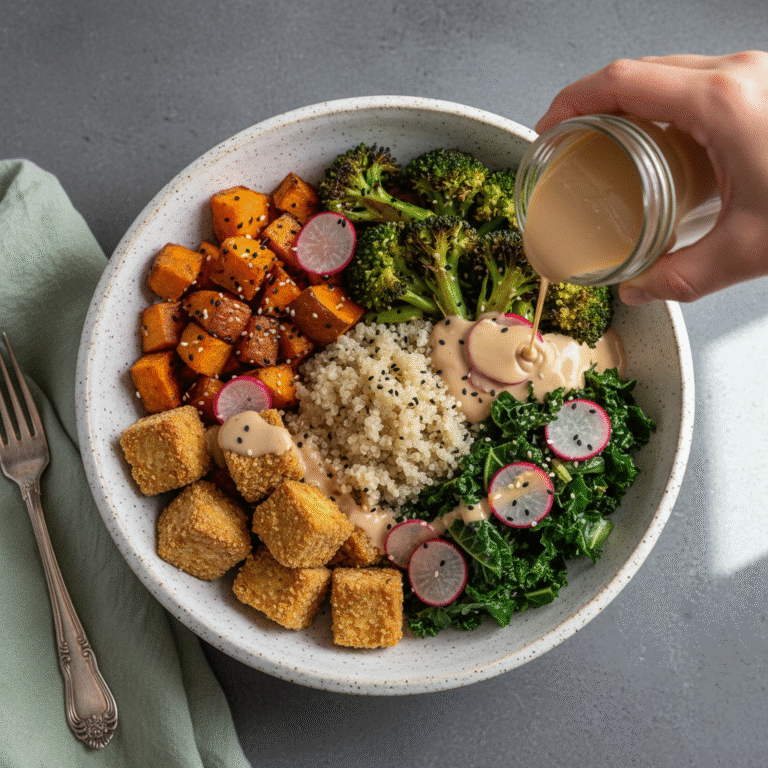
But let’s be honest: the real star of the show here is the dressing. It is a creamy, emulsified liquid gold made from natural peanut butter, zesty lime, fresh ginger, and a hint of maple syrup. It bridges the gap between the warm, spiced chickpeas and the cool, crisp red cabbage and cucumber. When you toss everything together, the sauce coats every grain of quinoa and every leaf of kale, creating a harmonious bite that hits every taste bud—salty, sweet, sour, and umami.
Beyond the incredible flavor profile, this bowl is a nutritional powerhouse designed to fuel your body. It is naturally gluten-free and entirely plant-based, yet it doesn’t compromise on satiety. The combination of fiber from the vegetables and chickpeas, paired with healthy fats from the peanut sauce and avocado, provides a slow-burning energy release that keeps you focused and full. Whether you are a committed vegan or a flexitarian looking to incorporate more meatless meals into your rotation, this power bowl is a customizable canvas that invites you to get creative in the kitchen while nourishing your body from the inside out.
History & Origins
The concept of the ‘Power Bowl’—often used interchangeably with ‘Buddha Bowl’ or ‘Macro Bowl’—has a fascinating evolution that mirrors the shift in Western wellness culture over the last decade. While the exact origin of the term ‘Buddha Bowl’ is debated, it is generally believed to refer to the way a bowl packed with nutritious ingredients resembles the rounded belly of Buddha, or perhaps the tradition of Buddhist monks walking through villages with a bowl to accept whatever food donations were offered, resulting in a varied mix of ingredients.
Historically, the roots of this dish can be traced back to macrobiotic diets of the mid-20th century, which emphasized whole grains, locally grown vegetables, and beans. However, the modern iteration, specifically the fusion of these bowls with Southeast Asian flavors like peanut sauce, is a more recent culinary phenomenon. The peanut sauce used in this recipe draws heavy inspiration from Indonesian *Gado-Gado* (a salad of steamed vegetables and hard-boiled eggs served with peanut sauce) and Thai *Satay* dipping sauces.
In the 2010s, as Instagram and Pinterest became dominant forces in food media, the ‘bowl’ trend exploded. Food bloggers realized that deconstructed meals served in ceramic bowls were not only photogenic but also offered a practical way to handle meal prep. The marriage of the Western ‘grain bowl’ format with the bold, spicy-sweet flavor profiles of Southeast Asian cuisine created a staple in the vegan community. This specific recipe represents the culmination of that journey: a global fusion dish that respects the convenience required by modern life while paying homage to the complex flavor profiles of traditional Asian peanut sauces.
Why This Recipe Works
This recipe succeeds because it is built on the culinary principle of contrasting textures and the ‘bliss point’ of flavor balancing. First, let’s talk about texture. A common complaint with vegan food is a lack of ‘chew’ or variation. By roasting the chickpeas with cumin and paprika until they are crispy on the outside but tender on the inside, we mimic the satisfaction of a crouton or a piece of crispy skin. Contrasting this with the soft, fluffy quinoa and the raw, crunchy red cabbage and carrots ensures that every bite is interesting.
Secondly, the sauce is chemically balanced to trigger satiety. Peanut butter provides rich fat, which carries flavor molecules. The lime juice cuts through that richness with necessary acidity, preventing the bowl from feeling too heavy. The maple syrup balances the acidity and the natural bitterness of the kale, while the soy sauce (or tamari) adds the essential umami depth that plant-based dishes sometimes lack.
Finally, the assembly method works because it keeps the ingredients distinct until the moment of eating. Unlike a stew where flavors muddy together, a power bowl allows you to experience the individual taste of fresh cucumber or sweet potato before mixing it with the complex sauce. This ‘build-your-own’ architecture also makes it scientifically superior for meal prep; keeping wet and dry components separate prevents sogginess, ensuring the meal tastes just as good on Friday as it did on Monday.
Why You’ll Love This Recipe
- ✓High-Protein Vegan Meal: Packs over 18g of plant-based protein per serving.
- ✓Meal-Prep Friendly: Ingredients stay fresh in the fridge for up to 4 days.
- ✓Gluten-Free: Uses quinoa and tamari for a naturally wheat-free option.
- ✓Nutrient Dense: Loaded with fiber, vitamins A, C, and K from the rainbow veggies.
- ✓Customizable: Easy to swap veggies based on seasonality or fridge availability.
- ✓The Sauce: A foolproof, 5-minute blender peanut sauce that tastes good on everything.
Equipment You’ll Need
- ✓Large baking sheet
- ✓Parchment paper
- ✓Medium saucepan (for quinoa)
- ✓High-speed blender or food processor
- ✓Chef’s knife
- ✓Cutting board
- ✓Mason jars (for sauce storage)
- ✓Large mixing bowl
Ingredients
- ✓2 cans (15 oz each) chickpeas, rinsed, drained, and patted dry
- ✓1 tbsp olive oil
- ✓1 tsp ground cumin
- ✓1 tsp smoked paprika
- ✓1/2 tsp garlic powder
- ✓Salt and black pepper to taste
- ✓1 cup uncooked quinoa, rinsed thoroughly
- ✓2 cups vegetable broth or water
- ✓2 cups purple cabbage, shredded
- ✓2 large carrots, julienned or grated
- ✓1 large cucumber, diced
- ✓4 cups kale or spinach, chopped
- ✓1/2 cup creamy natural peanut butter
- ✓2 tbsp maple syrup
- ✓2 tbsp soy sauce or tamari (for GF)
- ✓1 tbsp fresh lime juice
- ✓1 tsp fresh ginger, grated
- ✓1-2 tbsp warm water (to thin sauce)
- ✓Optional garnish: crushed peanuts, sesame seeds, chopped cilantro
Instructions
- Preheat your oven to 400°F (200°C). Line a large baking sheet with parchment paper.
- Thoroughly rinse the chickpeas and pat them very dry with a clean kitchen towel. Removing excess moisture is key to getting them crispy.
- Spread the chickpeas on the baking sheet. Drizzle with olive oil and sprinkle with cumin, smoked paprika, garlic powder, salt, and pepper. Toss with your hands to coat evenly.
- Roast the chickpeas for 20-25 minutes, shaking the pan halfway through, until golden and crispy. Set aside to cool slightly.
- While chickpeas roast, combine the rinsed quinoa and vegetable broth in a medium saucepan. Bring to a boil, then reduce heat to low, cover, and simmer for 15 minutes or until water is absorbed. Fluff with a fork and remove from heat.
- Prepare the peanut sauce: In a blender or small bowl, whisk together peanut butter, maple syrup, soy sauce, lime juice, and grated ginger. Add warm water one tablespoon at a time until you reach a pourable, creamy consistency.
- Massage the kale: If using raw kale, place it in a bowl with a tiny pinch of salt and a drop of oil. Massage with your hands for 1-2 minutes until the leaves darken and soften. This improves texture and digestibility.
- Assemble the bowls: Divide the cooked quinoa among four bowls. Arrange piles of roasted chickpeas, purple cabbage, carrots, cucumber, and massaged kale on top.
- Drizzle generously with the peanut sauce. Garnish with crushed peanuts, sesame seeds, and cilantro if desired. Serve immediately or seal in containers for meal prep.
Expert Cooking Tips
- ✓Dry the chickpeas thoroughly: Any residual water will steam the chickpeas instead of roasting them, resulting in a mushy texture.
- ✓Rinse the quinoa: Quinoa has a natural coating called saponin that can taste bitter. Rinsing it under cold water until the water runs clear removes this bitterness.
- ✓Customize the sauce thickness: If you prefer a dip-like consistency, use less water. For a dressing that runs through the grains, add a bit more warm water.
- ✓Roast veggies option: If you prefer a warm bowl over a cold salad style, roast the carrots and cabbage alongside the chickpeas for the last 15 minutes.
- ✓Make extra sauce: The sauce keeps well and is delicious on noodles, spring rolls, or even just as a dip for raw veggies.
Substitutions and Variations
This recipe is highly flexible. If you have a peanut allergy, substitute the peanut butter with almond butter, cashew butter, or sunflower seed butter for a nut-free version; the texture will remain creamy. For the grains, if you aren’t a fan of quinoa, brown rice, farro, or even cauliflower rice work beautifully as a base. The vegetables can be swapped based on what is in your crisper drawer; roasted sweet potatoes, broccoli, bell peppers, or edamame are excellent additions. If you want to increase the protein further, add cubes of baked tofu or tempeh. For the sweetener in the sauce, agave nectar or date syrup can replace maple syrup. Soy sauce can be replaced with coconut aminos for a soy-free and lower-sodium option.
Common Mistakes to Avoid
The most common mistake is overcrowding the baking sheet when roasting chickpeas. If they are piled on top of each other, they will steam rather than roast, staying soft instead of getting that desirable crunch. Another pitfall is overdressing the salad too early. If you are meal prepping, keep the sauce in a separate small container and pour it on just before eating; otherwise, the acid in the sauce will wilt the veggies and make the quinoa soggy. Lastly, do not skip massaging the kale. Raw kale can be tough and fibrous; taking two minutes to break down the cell walls with a little massage transforms the mouthfeel entirely.
Serving Suggestions
Serve this power bowl slightly warm or at room temperature for the best flavor experience. It pairs wonderfully with a side of miso soup for a complete umami-rich meal. For a refreshing drink, try an iced green tea or a sparkling water with a squeeze of lime to cut through the richness of the peanut sauce. If serving for a dinner party, you can set up a ‘bar’ style station where guests build their own bowls from platters of ingredients, allowing everyone to customize their vegetable ratios.
Storage and Reheating Tips
Store the quinoa, roasted chickpeas, and chopped vegetables in separate airtight containers in the refrigerator if possible. This ‘deconstructed’ storage method keeps everything fresh for up to 5 days. If you must assemble them ahead of time, put the dressing on the bottom of the jar, followed by the chickpeas and harder veggies, with the greens on top to prevent wilting. The roasted chickpeas may lose some crunch in the fridge; you can re-crisp them in an air fryer or oven at 350°F for 5 minutes before serving. The peanut sauce will thicken in the fridge; simply microwave it for 10 seconds or whisk in a teaspoon of hot water to loosen it up before using.
Nutrition Facts (Estimated)
| Serving Size | 1 Bowl (approx 450g) |
| Calories | 520 |
| Fat | 24g |
| Saturated Fat | 3.5g |
| Unsaturated Fat | 18g |
| Trans Fat | 0g |
| Cholesterol | 0mg |
| Sodium | 480mg |
| Carbohydrates | 58g |
| Fiber | 14g |
| Sugar | 9g |
| Protein | 19g |
Frequently Asked Questions
Can I use canned chickpeas directly without roasting?
Yes, you can use plain rinsed canned chickpeas if you are short on time. However, you will miss out on the crunchy texture and the depth of flavor that comes from the spices and roasting process.
Is this recipe suitable for a keto diet?
As written, this recipe is not keto-friendly due to the quinoa, chickpeas, and maple syrup. To adapt it, swap quinoa for cauliflower rice, omit the chickpeas (or use a small amount of black soybeans), and use a sugar-free syrup in the dressing.
How do I make the peanut sauce spicy?
The recipe includes a mild kick from ginger, but for heat lovers, add 1-2 teaspoons of Sriracha, Sambal Oelek, or a pinch of red pepper flakes directly into the blender when making the sauce.
Can I freeze this meal?
The cooked quinoa and the peanut sauce freeze very well. However, fresh vegetables like cucumber and lettuce do not freeze well. It is best to freeze the grains and sauce, then add fresh veggies when you are ready to eat.
Why is my peanut sauce seizing (getting clumpy)?
Peanut butter can seize when mixed with cold liquids. Ensure your water is warm when mixing. If it clumps, just keep whisking and adding warm water slowly; it will eventually emulsify back into a smooth cream.
Is this dish high in calories?
It is a nutrient-dense meal with healthy fats from peanuts and olive oil, making it calorie-dense but very satiating. If you need a lower-calorie version, reduce the amount of peanut sauce and increase the volume of leafy greens.
Can I use powdered peanut butter?
Yes! Powdered peanut butter is a great lower-fat alternative. Rehydrate it with water according to package instructions first, then proceed with the recipe. You may need to adjust the seasoning slightly.
What other proteins work well here?
Crispy tofu cubes, shelled edamame, hemp seeds, or even lentils are fantastic plant-based protein additions that complement the flavor profile.
Conclusion
The Vegan Peanut Chickpea Power Bowl is more than just a recipe; it is a strategy for better eating. It proves that plant-based meals can be robust, flavorful, and deeply satisfying without requiring hours of labor in the kitchen. By mastering the simple components—the perfect fluffy grain, the crispy protein, and the killer sauce—you unlock endless variations for your weekly meal prep. Whether you enjoy this for a quick work-from-home lunch or a vibrant family dinner, it is sure to become a regular in your rotation. Don’t forget to make a double batch of that sauce; you’ll want to put it on everything!