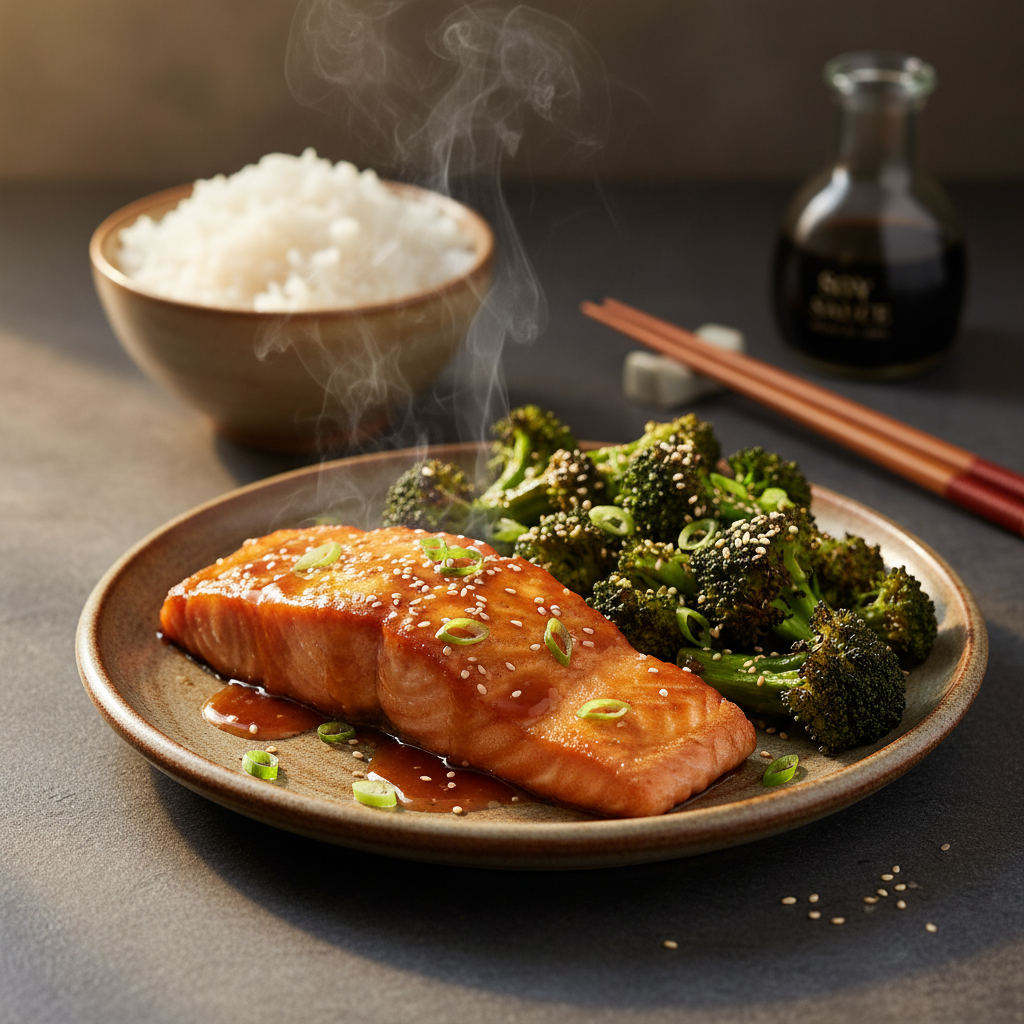
The Ultimate Sticky Honey Soy Glazed Salmon with Roasted Broccoli
Honey Soy Glazed Salmon With Broccoli Recipe
Transform your weeknight dinner routine with this irresistible Honey Soy Glazed Salmon. Featuring a sticky, sweet-and-savory sauce that coats tender, flaky salmon fillets and crisp roasted broccoli, this meal comes together in under 30 minutes for a restaurant-quality experience right at home.
15 minutes
20 minutes
35 minutes
4 servings
Main Course
Stovetop / Oven
Asian Fusion
Dairy-Free
In the bustling world of weeknight cooking, finding a recipe that strikes the perfect balance between effortless preparation and gourmet flavor is akin to discovering gold. This Honey Soy Glazed Salmon with Broccoli is precisely that—a culinary gem that promises to elevate your dinner table without keeping you in the kitchen for hours. Imagine biting into a perfectly seared salmon fillet, its exterior caramelized with a rich, glossy glaze that sings with the deep umami notes of soy sauce and the floral sweetness of honey. The texture is divine: a slightly crisp, sticky surface giving way to buttery, melt-in-your-mouth fish.
But the magic doesn’t stop at the protein. We pair this star ingredient with vibrant, oven-roasted broccoli florets that soak up just enough of that savory glaze to become addictive. The addition of fresh aromatics like grated ginger and minced garlic creates a fragrance that will draw everyone to the kitchen before the timer even goes off. This dish is designed for the modern home cook who craves nutrition without sacrificing indulgence. Whether you are cooking for a busy family, preparing a meal prep for the week, or hosting a casual dinner party, this recipe delivers on all fronts. It’s a celebration of simple ingredients coming together to create complex flavors, proving that healthy eating can be undeniably delicious. Get ready to add a new favorite to your rotation that looks as stunning on a Pinterest board as it tastes on your plate.
History & Origins
The culinary marriage of honey and soy sauce is a testament to the power of fusion cuisine, though its roots run deep in ancient traditions. Soy sauce, or ‘shoyu,’ has been a staple in East Asian cooking for over 2,000 years, originating in China before being refined in Japan. It provides the essential ‘umami’—the fifth taste—that adds depth and savoriness to dishes. Honey, conversely, is one of humanity’s oldest sweeteners, used across civilizations from ancient Egypt to Greece for its preservation properties and distinct flavor.
The specific technique of glazing fish with a soy-based sauce is reminiscent of the Japanese cooking style known as ‘Teriyaki’ (teri meaning luster, and yaki meaning grilled/broiled). While traditional teriyaki sauce relies on soy sauce, mirin, and sugar, the Western adaptation often incorporates honey to achieve a thicker, stickier consistency and a more pronounced floral sweetness that appeals to American palates. This adaptation gained massive popularity in the United States during the mid-20th century as interest in Asian flavors grew, and Hawaiian cuisine—which heavily features soy marinades—influenced mainland cooking.
Over the decades, the ‘Honey Soy’ profile has become a beloved standard in fusion cooking, celebrated for its accessibility and universal appeal. It bridges the gap between the savory, salty profiles of Eastern cuisine and the sweet preferences often found in Western glazing techniques. Today, this dish represents a globalized kitchen where ingredients travel across continents to create meals that are comforting, familiar, yet excitingly exotic.
Why This Recipe Works
This recipe succeeds because it leverages the fundamental principles of flavor balancing and texture contrast. First, let’s talk about the glaze. The combination of soy sauce and honey creates a perfect equilibrium between salt and sugar. When heated, the sugars in the honey caramelize, while the amino acids in the soy sauce undergo the Maillard reaction. This results in a complex, savory-sweet coating that adheres beautifully to the protein. The addition of vinegar (or a splash of citrus) cuts through the richness of the salmon, providing a necessary acidic counterpoint that brightens the entire dish.
Secondly, the cooking method is designed to maximize texture. By searing the salmon or roasting it at a high temperature, we ensure a crisp exterior while keeping the inside moist and flaky. Salmon is a fatty fish, which makes it forgiving to cook, but the high heat is crucial for rendering some of that fat and melding it with the glaze.
Furthermore, cooking the broccoli alongside or in the same flavor profile ensures cohesion. Broccoli’s florets are like little sponges; their textured surface area is ideal for trapping the thick glaze, ensuring that every bite is packed with flavor. The slight bitterness of the charred broccoli perfectly offsets the sweetness of the glaze, creating a harmonious bite that keeps the palate engaged. This isn’t just a recipe; it’s a chemistry experiment that always yields delicious results.
Why You’ll Love This Recipe
- ✓Ready in under 45 minutes for quick weeknight dining.
- ✓High in protein and heart-healthy Omega-3 fatty acids.
- ✓Perfect balance of sweet, savory, and umami flavors.
- ✓Minimal cleanup with streamlined cooking steps.
- ✓Kid-friendly flavors that make eating vegetables easy.
Equipment You’ll Need
- ✓Large non-stick skillet or cast iron pan
- ✓Baking sheet
- ✓Small saucepan
- ✓Whisk
- ✓Chef’s knife
- ✓Cutting board
- ✓Measuring cups and spoons
Ingredients
- ✓4 (6oz) Salmon fillets, skin-on or off
- ✓1 large head of Broccoli, cut into florets
- ✓1/3 cup Low-sodium soy sauce
- ✓1/3 cup Honey
- ✓1 tbsp Rice vinegar
- ✓1 tsp Sesame oil
- ✓2 cloves Garlic, minced
- ✓1 tsp Fresh ginger, grated
- ✓2 tbsp Olive oil, divided
- ✓Salt and black pepper to taste
- ✓1 tbsp Cornstarch mixed with 1 tbsp water (slurry)
- ✓1 tbsp Toasted sesame seeds (garnish)
- ✓2 Green onions, sliced (garnish)
Instructions
- Preheat your oven to 400°F (200°C). Line a baking sheet with parchment paper for the broccoli.
- In a small bowl or jar, whisk together the soy sauce, honey, rice vinegar, sesame oil, minced garlic, and grated ginger. Set aside.
- Place the broccoli florets on the prepared baking sheet. Drizzle with 1 tablespoon of olive oil and season lightly with salt and pepper. Toss to coat evenly. Roast in the oven for 15-20 minutes, until tender and slightly charred at the edges.
- While the broccoli roasts, pat the salmon fillets dry with paper towels. Season both sides with salt and pepper.
- Heat the remaining 1 tablespoon of olive oil in a large skillet over medium-high heat. Once the oil is shimmering, place the salmon fillets in the pan (skin-side up if using skin-on). Sear for 3-4 minutes until golden brown.
- Flip the salmon carefully. Pour the prepared sauce mixture into the pan around the salmon. Reduce heat to medium.
- Let the salmon cook in the simmering sauce for another 3-5 minutes, or until cooked through to your liking. Spoon the sauce over the fish continuously as it cooks.
- If the sauce is too thin, stir in the cornstarch slurry and let it bubble for 1 minute until it thickens into a glossy glaze.
- Remove the skillet from heat. Serve the salmon immediately alongside the roasted broccoli.
- Garnish everything generously with toasted sesame seeds and sliced green onions before serving.
Expert Cooking Tips
- ✓Pat the salmon very dry before searing to ensure a nice crust forms rather than steaming the fish.
- ✓Use low-sodium soy sauce to control the saltiness, especially since the sauce reduces and concentrates in flavor.
- ✓Don’t overcrowd the pan when searing the salmon; cook in batches if necessary to maintain high heat.
- ✓Keep a close eye on the sauce once the honey is added, as sugars can burn quickly if the heat is too high.
- ✓For extra crispy broccoli, ensure the florets are completely dry after washing before roasting.
- ✓Grate your ginger with a microplane for a smooth texture that melts into the sauce without fibrous chunks.
Substitutions and Variations
This recipe is incredibly versatile and can be adapted to suit various dietary needs and pantry limitations. If you are gluten-free, simply swap the soy sauce for Tamari or coconut aminos; the flavor profile will remain largely the same, though coconut aminos are slightly sweeter, so you may want to reduce the honey slightly. For a lower sugar option, maple syrup or agave nectar can replace honey, though honey offers the best viscosity for glazing. If you don’t have rice vinegar, apple cider vinegar or white wine vinegar are excellent alternatives that provide the necessary tang.
Regarding the protein, this glaze works wonders on chicken thighs, shrimp, or even tofu. If you aren’t a fan of broccoli, try roasting asparagus, green beans, or bell peppers instead. For the aromatics, while fresh is best, you can use 1/2 teaspoon of garlic powder and 1/2 teaspoon of ground ginger in a pinch, though the fresh ‘zing’ will be more muted. Lastly, if you want a spicy kick, add a teaspoon of Sriracha or a pinch of red pepper flakes to the sauce mixture.
Common Mistakes to Avoid
The most common mistake when cooking glazed salmon is adding the sauce too early or cooking it at too high a temperature. Honey burns easily, turning bitter and black if left on high heat for too long. Always sear the fish first to get color, then lower the heat when introducing the sugary glaze. Another pitfall is overcooking the salmon. Salmon should be cooked just until it flakes easily with a fork; if you see white albumin seeping out excessively, it is likely overdone.
Regarding the broccoli, overcrowding the baking sheet creates a steaming effect rather than roasting. Ensure there is space between florets so the hot air can circulate, giving you those delicious crispy edges. Finally, failing to taste the sauce before pouring it in can lead to disappointment. Depending on your brand of soy sauce, you might need a splash of water to dilute the saltiness or a touch more honey to balance it out.
Serving Suggestions
This Honey Soy Glazed Salmon is a star on its own, but it shines brightest when paired with complementary sides. A bed of fluffy jasmine rice or nutty brown rice is the classic choice, as the grains soak up the extra sauce beautifully. For a lower-carb option, cauliflower rice or quinoa works exceptionally well. You can also serve this over a cold soba noodle salad dressed with sesame oil for a refreshing contrast to the warm fish. To add freshness, consider a side of thinly sliced cucumber salad marinated in vinegar and chili flakes. A garnish of fresh cilantro or a squeeze of lime juice right before eating can also elevate the dish, cutting through the richness of the glaze.
Storage and Reheating Tips
Leftovers can be stored in an airtight container in the refrigerator for up to 3 days. To reheat, it is best to avoid the microwave if possible, as it can make the salmon rubbery and the broccoli soggy. Instead, reheat gently in a skillet over low heat with a splash of water to loosen the sauce, or in a 300°F oven for about 10-15 minutes until warmed through. If you must use a microwave, use 50% power and cover the dish to trap steam. Note that the skin (if included) will lose its crispiness upon storage. We do not recommend freezing the cooked broccoli as it becomes mushy, but the cooked salmon can be frozen for up to 2 months.
Nutrition Facts (Estimated)
| Serving Size | 1 fillet + 1 cup broccoli |
| Calories | 450 |
| Fat | 22g |
| Saturated Fat | 3.5g |
| Unsaturated Fat | 16g |
| Trans Fat | 0g |
| Cholesterol | 95mg |
| Sodium | 680mg |
| Carbohydrates | 24g |
| Fiber | 4g |
| Sugar | 18g |
| Protein | 38g |
Frequently Asked Questions
Can I use frozen salmon for this recipe?
Yes, absolutely. Just ensure you thaw the salmon completely in the refrigerator overnight before cooking. Pat it very dry to remove excess moisture from the thawing process.
Is this recipe gluten-free?
It can be! Traditional soy sauce contains wheat, but if you substitute it with Tamari or gluten-free soy sauce, the entire dish becomes gluten-free.
Can I make the sauce ahead of time?
Yes, you can whisk the sauce ingredients together and store them in a jar in the fridge for up to a week. Shake well before using.
How do I know when the salmon is done?
The salmon is done when it turns opaque pink and flakes easily with a fork. The internal temperature should reach 145°F (63°C) at the thickest part.
Can I cook the broccoli in the pan with the salmon?
You can, but roasting the broccoli separately ensures it gets crispy. Cooking it in the sauce will result in a softer, steamed texture.
My sauce is too thin, what happened?
The sauce needs to boil to activate the cornstarch. If it’s still thin, you can let it simmer longer to reduce, or add a bit more cornstarch slurry.
Can I use chicken instead of salmon?
Definitely. Chicken thighs work best. Adjust the cooking time as chicken needs to be cooked thoroughly to 165°F (74°C).
Is the skin edible?
Yes, salmon skin is edible and delicious when crispy. However, you can easily remove it after cooking if you prefer not to eat it.
Conclusion
There you have it—a foolproof guide to making the best Honey Soy Glazed Salmon with Broccoli you’ll ever taste. This recipe proves that you don’t need a culinary degree or hours of free time to put a wholesome, flavor-packed meal on the table. It’s a dish that satisfies the craving for takeout while providing the nutritional benefits of a home-cooked meal. The sticky, sweet glaze combined with the savory fish and roasted vegetables creates a harmony of flavors that is sure to be a hit with both adults and children. We hope this recipe finds a permanent spot in your weekly rotation. Happy cooking, and don’t forget to share your creations with us on social media!