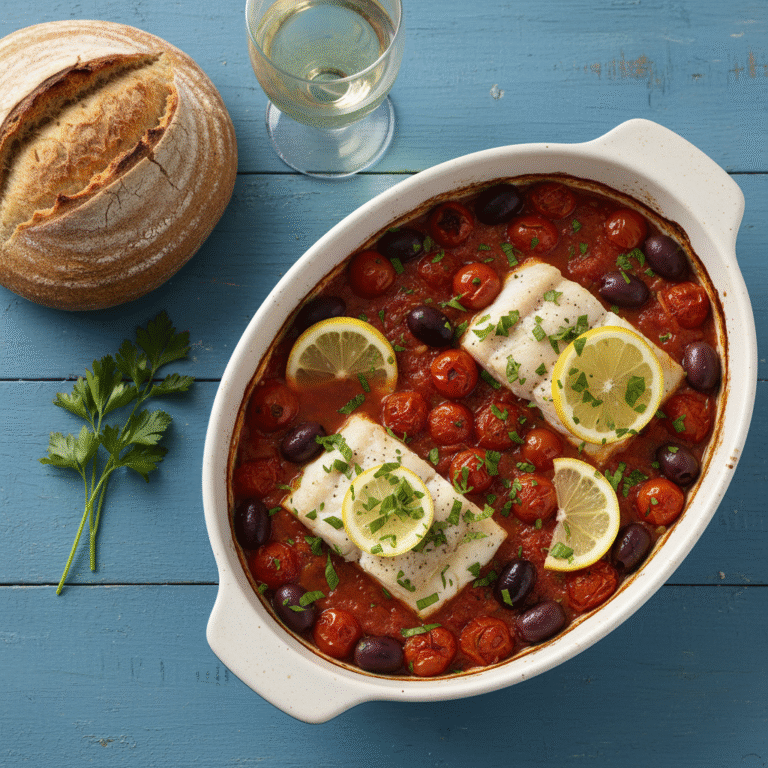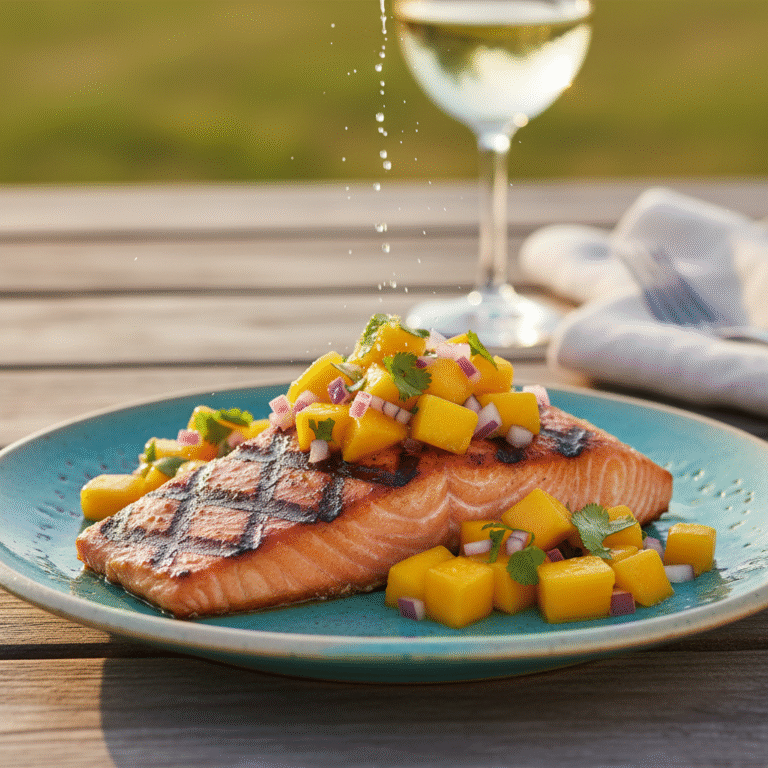
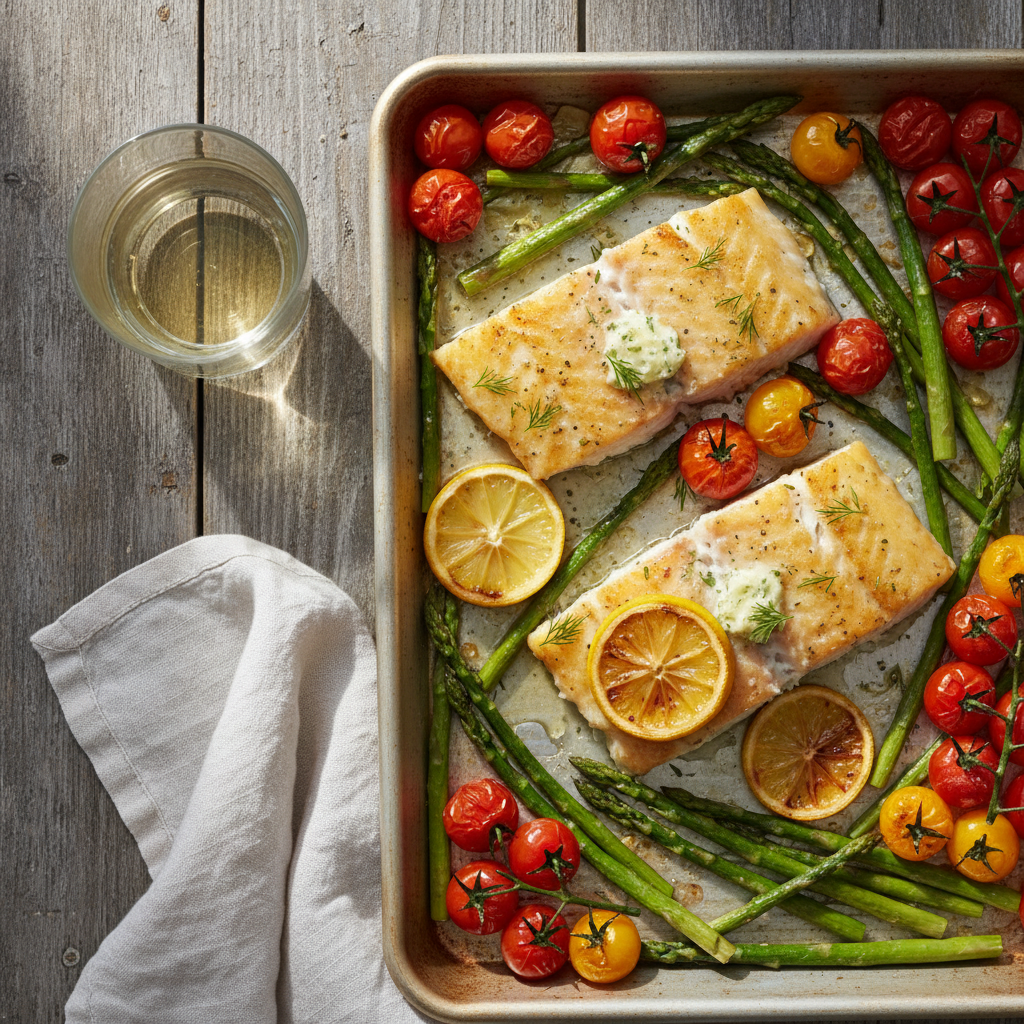
One-Pan Garlic Herb Baked Cod With Roasted Vegetables
Garlic Herb Baked Cod With Vegetables Recipe
This vibrant Garlic Herb Baked Cod is the ultimate healthy weeknight dinner, coming together in just under 40 minutes. Featuring flaky, tender white fish smothered in a rich lemon-garlic butter sauce alongside roasted asparagus and cherry tomatoes, it’s a low-carb, gluten-free masterpiece that requires minimal cleanup.
15 minutes
20 minutes
35 minutes
4 servings
Main Course
Baking
American / Mediterranean Fusion
Gluten-Free
In the bustling rhythm of modern life, the holy grail of home cooking is a meal that feels sophisticated and gourmet yet requires the effort of a quick pantry raid. Enter the Garlic Herb Baked Cod with Vegetables—a sheet pan marvel that has quickly become a staple in my kitchen and a reader favorite on Pinterest. There is something deeply satisfying about the alchemy of baking fish. Unlike searing, which requires constant vigilance and precise heat control, baking allows the gentle oven heat to permeate the delicate protein, ensuring a buttery, flaky texture that melts in your mouth.
This recipe is a celebration of fresh, vibrant flavors. We aren’t just tossing ingredients on a tray; we are building a flavor profile that sings. The star, of course, is the Atlantic Cod—a mild, sweet white fish that acts as the perfect canvas for our bold marinade. We coat the fillets in a compound mixture of melted butter, extra virgin olive oil, minced fresh garlic, and a garden’s worth of parsley and dill. As the fish bakes, this mixture emulsifies with the natural juices of the cod and the bursting sweetness of roasted cherry tomatoes, creating a natural sauce that you’ll want to mop up with a crusty piece of baguette.
But let’s not overlook the vegetables. By pairing the fish with quick-cooking produce like asparagus and bell peppers, we achieve a synchronized finish where everything is perfectly cooked at the exact same moment. The vegetables caramelize slightly at the edges, offering a textural contrast to the soft fish. This dish is not just food; it’s a sensory experience—the aroma of roasting garlic filling the kitchen, the vibrant reds and greens on the plate, and the bright zest of lemon cutting through the richness of the butter. Whether you are cooking for a busy family, prepping a romantic date night dinner, or strictly following a Mediterranean or Keto diet, this recipe checks every single box with style and grace.
History & Origins
The consumption of cod has a history as deep and vast as the Atlantic Ocean itself. Often referred to as ‘the fish that built New England,’ Atlantic Cod was once so abundant that early explorers claimed they could walk across the water on the backs of the schools. For centuries, it was a critical economic commodity, primarily preserved through salting and drying to sustain long sea voyages and trade routes across Europe and the Americas. In classic culinary traditions, particularly in Portuguese (Bacalhau) and Basque cuisines, salt cod is a revered ingredient. However, the transition to enjoying fresh baked cod as a staple of the American dinner table is a relatively modern luxury, made possible by advances in refrigeration and rapid transport in the 20th century.
The specific method used in this recipe—the ‘sheet pan dinner’ or ‘tray bake’—is a contemporary evolution of older techniques like ‘en papillote’ (cooking in parchment). Historically, cooking fish with aromatics and vegetables was done in sealed pouches to steam the ingredients in their own juices, a technique favored in French haute cuisine. The modern sheet pan trend, which exploded in popularity during the mid-2010s, democratized this concept. It stripped away the fussiness of folding parchment paper, favoring the open heat of the oven to achieve roasting and caramelization rather than just steaming. This shift mirrored a cultural movement towards whole-food cooking and transparency in ingredients. By roasting the cod openly alongside Mediterranean staples like olive oil, garlic, and lemon, we are nodding to the coastal cuisines of Italy and Greece, where the integrity of the ingredient is paramount, and the cooking method serves only to highlight, not hide, the natural flavors.
Why This Recipe Works
This recipe succeeds because it masters the delicate balance of thermal dynamics and moisture control, two critical factors when cooking lean white fish. Cod is a low-fat protein; if overcooked even by a minute, it can turn rubbery and dry. By using a hybrid fat coating—a mix of butter for flavor and olive oil for a higher smoke point and viscosity—we create a protective barrier that locks in moisture while the fish cooks. The addition of lemon juice isn’t just for taste; the acid helps to tenderize the fibers slightly before the heat sets them.
Furthermore, the selection of vegetables is scientifically strategic. Asparagus, cherry tomatoes, and thinly sliced peppers have a water content and cellular structure that allows them to roast to perfection in the exact same time window (12-15 minutes at 400°F) as a standard 6-ounce cod fillet. Unlike root vegetables like carrots or potatoes, which would require par-boiling or a significant head start in the oven, these vegetables tenderize quickly. The cherry tomatoes specifically act as ‘flavor bombs’; when they burst under the oven’s heat, they release umami-rich tomato water that mixes with the garlic herb butter, effectively creating a warm vinaigrette in the pan without any extra work. This ‘one-pan’ synergy ensures that the flavors of the vegetables perfume the fish, and the juices of the fish season the vegetables, resulting in a cohesive dish rather than separate components.
Why You’ll Love This Recipe
- ✓Ready in under 40 minutes from fridge to table.
- ✓High-protein, low-carb, and Keto-friendly.
- ✓Minimal cleanup with just one baking sheet required.
- ✓Uses affordable, accessible ingredients found in any supermarket.
- ✓Versatile flavor profile that appeals to both adults and children.
- ✓Naturally gluten-free and grain-free.
Equipment You’ll Need
- ✓Large rimmed baking sheet (sheet pan)
- ✓Parchment paper or silicone baking mat
- ✓Chef’s knife
- ✓Cutting board
- ✓Small mixing bowl
- ✓Whisk or fork
- ✓Pastry brush (optional)
- ✓Paper towels
Ingredients
- ✓4 fresh Atlantic Cod fillets (approx. 6oz each), skin removed
- ✓1 lb fresh asparagus, woody ends trimmed
- ✓1 cup cherry tomatoes, left whole
- ✓1 yellow bell pepper, sliced into strips
- ✓1 red bell pepper, sliced into strips
- ✓4 tablespoons unsalted butter, melted
- ✓3 tablespoons extra virgin olive oil, divided
- ✓4 cloves garlic, minced
- ✓1 tablespoon fresh parsley, finely chopped
- ✓1 tablespoon fresh dill, finely chopped
- ✓1 teaspoon smoked paprika
- ✓1 teaspoon onion powder
- ✓1/2 teaspoon sea salt (plus more to taste)
- ✓1/2 teaspoon freshly cracked black pepper
- ✓1 large lemon (half juiced, half sliced for garnish)
Instructions
- Preheat your oven to 400°F (200°C). Line a large rimmed baking sheet with parchment paper for easy cleanup.
- Prepare the vegetables: Wash and trim the asparagus, wash the tomatoes, and slice the bell peppers. Place all the vegetables into a large bowl. Drizzle with 1 tablespoon of olive oil and a pinch of salt and pepper. Toss to coat evenly.
- Arrange the vegetables in a single layer on the prepared baking sheet. Try to leave four distinct spaces or ‘nests’ among the vegetables where the fish fillets will go. If your pan is small, use two pans to avoid overcrowding.
- Pat the cod fillets dry thoroughly with paper towels. This is crucial for texture. Place the fillets into the spaces you created on the baking sheet.
- In a small mixing bowl, whisk together the melted butter, remaining 2 tablespoons of olive oil, minced garlic, chopped parsley, chopped dill, lemon juice, smoked paprika, onion powder, salt, and pepper.
- Generously brush or spoon the garlic herb butter mixture over the top of each cod fillet. Drizzle any remaining sauce over the surrounding vegetables.
- Place lemon slices on top of the fish or scattered around the pan for aromatic roasting.
- Bake in the preheated oven for 12-15 minutes. The cooking time will vary depending on the thickness of your fillets. The fish is done when it is opaque and flakes easily with a fork (internal temperature should reach 145°F/63°C).
- If you prefer a little char, switch the oven to ‘Broil’ for the last 1-2 minutes, watching closely to ensure the garlic doesn’t burn.
- Remove from the oven and garnish with extra fresh herbs and a squeeze of fresh lemon juice before serving immediately.
Expert Cooking Tips
- ✓Dry the fish thoroughly: Excess moisture on the surface of the fish creates steam, which can make the texture mushy. Paper towels are your best friend here.
- ✓Uniform chopping: Cut your bell peppers and trim your asparagus to similar sizes so they cook at the same rate.
- ✓Don’t overcrowd: If the vegetables are piled on top of each other, they will steam instead of roast. Use two pans if necessary.
- ✓Check for bones: Even ‘boneless’ fillets can have pin bones. Run your finger down the center of the fillet and remove any bones with tweezers.
- ✓Butter temperature: Let the melted butter cool slightly before mixing in the lemon juice to prevent the mixture from separating too aggressively.
- ✓Customize the heat: If you like a kick, add a pinch of red pepper flakes to the butter mixture.
Substitutions and Variations
This recipe is incredibly flexible and forgiving. If you cannot find Cod, any firm white fish works beautifully; try Halibut, Haddock, Mahi Mahi, or even Tilapia (though reduce cooking time slightly for thinner Tilapia fillets). For a richer option, Salmon is a perfect swap, though the flavor profile changes slightly. For the vegetables, you can swap asparagus for green beans, broccoli florets, or zucchini rounds. Just be mindful of cooking times; broccoli may need to be cut smaller to cook through in 15 minutes. If you are dairy-free, substitute the butter for Vegan Butter or simply increase the olive oil quantity. Ghee is also a fantastic lactose-free alternative that adds a nutty flavor. Fresh herbs are always best, but if you are in a pinch, use dried herbs at a ratio of 1 teaspoon dried to 1 tablespoon fresh.
Common Mistakes to Avoid
The most common mistake with this dish is overcooking the fish. Cod is lean, and leaving it in the oven too long results in a dry, rubbery texture. Start checking it at the 12-minute mark; it should flake easily with a fork. Another error is overcrowding the baking sheet. When vegetables are stacked, they release water and steam the food rather than roasting it, leading to soggy peppers and limp asparagus. Always use a large enough pan or split it between two. Finally, do not skimp on the salt. White fish is naturally very mild and requires adequate seasoning to bring out its sweetness. If it tastes bland, it likely just needs a finishing sprinkle of sea salt.
Serving Suggestions
While this sheet pan meal is a complete dinner on its own, it pairs wonderfully with a side of starch to soak up the garlic butter sauce. Fluffy jasmine rice, lemon-herb quinoa, or cauliflower rice (for a low-carb option) are excellent choices. A side of roasted baby potatoes or a fresh crusty baguette is also perfect for hearty appetites. For a wine pairing, serve this with a crisp, dry white wine. A Sauvignon Blanc, Pinot Grigio, or an un-oaked Chardonnay will cut through the buttery richness and complement the lemon and herbs perfectly.
Storage and Reheating Tips
Leftover baked cod is best enjoyed within 2 days. Store the fish and vegetables in an airtight container in the refrigerator. To reheat, avoid the microwave if possible, as it tends to overcook the fish and make the house smell strong. Instead, place the leftovers on a baking sheet, cover loosely with foil to prevent drying out, and reheat in a 275°F oven for about 10-15 minutes until warmed through. If you must use a microwave, use a lower power setting and sprinkle a little water over the fish first. Freezing is not recommended for this cooked dish, as the vegetables will become mushy and the fish texture will degrade upon thawing.
Nutrition Facts (Estimated)
| Serving Size | 1 fillet with vegetables |
| Calories | 340 |
| Fat | 18g |
| Saturated Fat | 7g |
| Unsaturated Fat | 10g |
| Trans Fat | 0g |
| Cholesterol | 85mg |
| Sodium | 480mg |
| Carbohydrates | 12g |
| Fiber | 4g |
| Sugar | 4g |
| Protein | 32g |
Frequently Asked Questions
Can I use frozen cod fillets?
Yes, you can use frozen cod. However, it is absolutely critical to thaw them completely in the refrigerator overnight before cooking. Cooking fish from frozen will result in uneven cooking and a watery sauce. Once thawed, pat them very dry.
How do I know when the cod is fully cooked?
The most reliable method is using an instant-read thermometer; the internal temperature should reach 145°F (63°C). Visually, the fish should turn from translucent to opaque white and should flake easily when you twist a fork into the thickest part.
Can I prep this meal ahead of time?
You can chop all the vegetables and mix the garlic herb butter sauce up to 24 hours in advance. Store them separately in the fridge. When ready to cook, simply assemble on the tray and bake.
Is this recipe spicy?
Not at all. The smoked paprika adds a depth of flavor and color without heat. If you want spice, add 1/2 teaspoon of cayenne pepper or red chili flakes to the butter mixture.
Can I use dried herbs instead of fresh?
Yes. Use 1 teaspoon of dried parsley and 1 teaspoon of dried dill to replace the fresh tablespoons. Dried herbs are more potent, so you need less volume.
Why did my sauce turn out watery?
This usually happens if the fish wasn’t patted dry before baking, or if frozen fish wasn’t fully thawed. The vegetables also release water. If it’s too watery, remove the solids and pour the liquid into a saucepan, reducing it on the stove for a few minutes.
Can I use a glass baking dish instead of a metal sheet pan?
You can, but glass conducts heat differently. You may need to add 5-10 minutes to the cooking time, and the vegetables won’t roast or caramelize as well as they do on metal.
What if I don’t have a lemon?
Lemon is key for acidity, but you can substitute with a splash of white wine vinegar or white wine in the butter sauce for a similar brightening effect.
Is this recipe keto-friendly?
Yes, this recipe is naturally low-carb and high-fat, making it excellent for Keto and Paleo diets.
Conclusion
There you have it—a restaurant-quality seafood dinner that you can pull off on a hectic Tuesday night. This Garlic Herb Baked Cod with Vegetables is proof that healthy eating doesn’t have to be complicated, bland, or time-consuming. The combination of buttery, flaky fish with the roasted char of fresh vegetables creates a meal that feels indulgent yet leaves you feeling light and energized. I hope this recipe finds a permanent spot in your weekly rotation just as it has in mine. Don’t forget to snap a picture of your creation and tag me on Instagram or Pinterest; seeing your variations and success stories is the highlight of my day. Happy cooking!