Perfect Grilled Salmon with Fresh Mango Salsa: The Ultimate Healthy Summer Dinner
Grilled Salmon With Mango Salsa Healthy Recipe
Experience the perfect harmony of smoky, charred fish and sweet, zesty fruit with this Grilled Salmon with Mango Salsa recipe. Ready in under 30 minutes, this vibrant, heart-healthy dish is packed with Omega-3s and tropical flavors, making it the ultimate weeknight winner or dinner party showstopper.
15 minutes
10 minutes
25 minutes
4 servings
Main Course
Grilling
Fusion / American
Gluten-Free
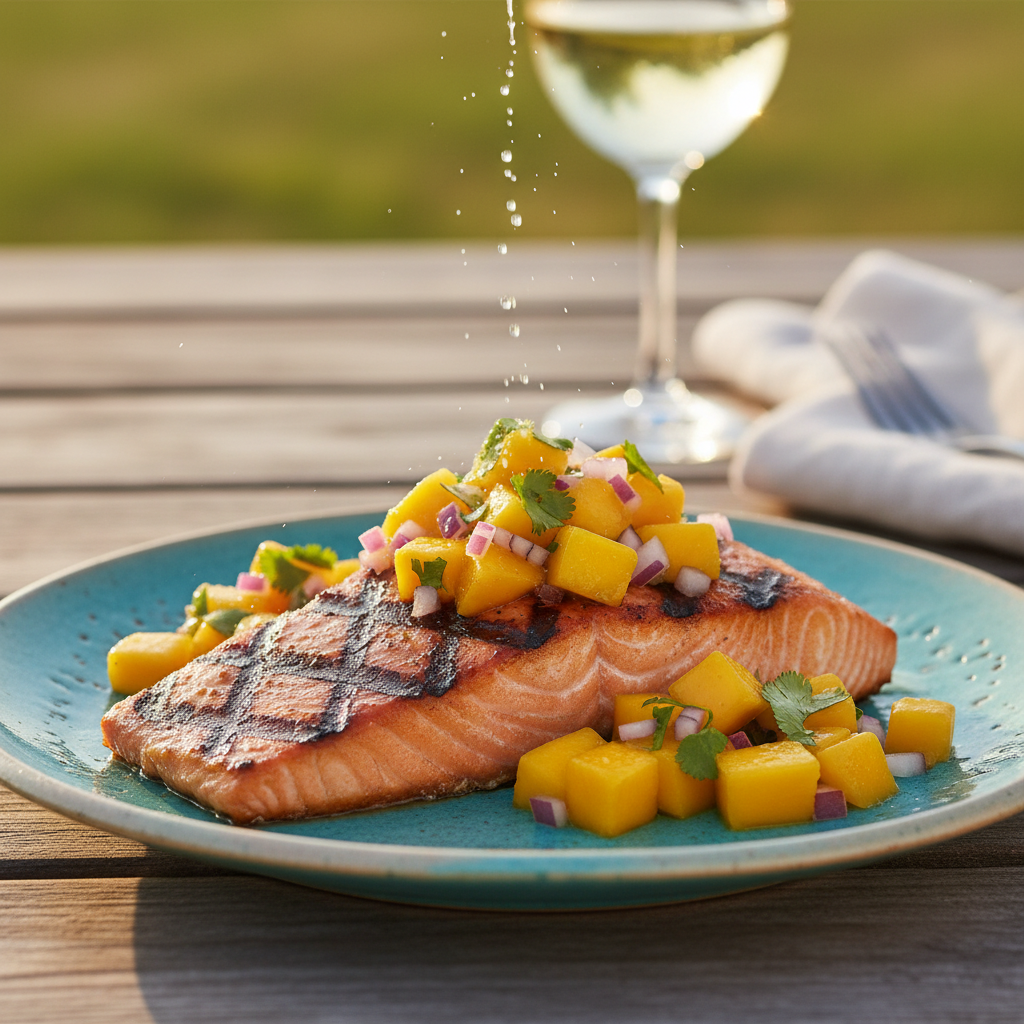
There is something undeniably magical about the combination of rich, fatty fish and bright, acidic fruit. If you are looking for a recipe that screams ‘summer’ while delivering a powerhouse of nutrition, this Grilled Salmon with Mango Salsa is your answer. Picture this: a succulent salmon fillet, seasoned with a smoky blend of paprika, cumin, and garlic, hitting the hot grill grates. The skin crisps up beautifully, protecting the tender pink flesh as it cooks to flaky perfection. But the real star of the show might just be the topping.
While the salmon rests, you toss together a quick salsa that is a riot of colors and textures. Ripe, juicy mango provides sweetness, while red onion adds a sharp bite, jalapeño brings the heat, and fresh cilantro and lime juice tie it all together with herbaceous zest. When you spoon that cool, refreshing salsa over the hot, smoky fish, you create a temperature and flavor contrast that is absolutely addictive.
Beyond the incredible taste, this dish is a nutritional goldmine. We are talking about high-quality protein, essential healthy fats, and a rainbow of vitamins from the fresh produce. It is the kind of meal that leaves you feeling energized and light, rather than weighed down. Whether you are a seasoned grill master or a novice cook, this recipe is incredibly forgiving and yields restaurant-quality results with minimal effort. It is gluten-free, dairy-free, and Paleo-friendly, making it a versatile option for feeding a crowd with diverse dietary needs. So, fire up the grill, grab your sharpest knife for chopping, and get ready to transport your taste buds to a tropical paradise.
History & Origins
The culinary practice of pairing fish with fruit has roots that span across the globe, but this specific iteration—grilled salmon with a tropical fruit salsa—is a hallmark of modern fusion cuisine, particularly influenced by the ‘Floribbean’ and Californian culinary movements of the 1980s and 1990s. To understand this dish, we must look at its two distinct components: the grilled salmon and the salsa.
Salmon has been a staple food source for indigenous peoples of the Pacific Northwest and Northern Europe for thousands of years. Traditionally smoked, dried, or roasted over open fires, salmon was revered for its sustenance and flavor. The method of grilling fish over an open flame is primal and universal, enhancing the natural oils of the fish through the Maillard reaction, which creates that irresistible savory crust.
Salsa, on the other hand, traces its lineage back to the ancient Aztecs, Mayans, and Incas. The word ‘salsa’ simply means ‘sauce’ in Spanish, and early versions were combinations of tomatoes, chilies, and ground squash seeds. The concept of a ‘pico de gallo’ or ‘salsa fresca’—a chunky, uncooked condiment—is a staple of Mexican cuisine.
The innovation of swapping tomatoes for sweet fruits like mango, pineapple, or peach gained popularity as chefs in coastal US regions began experimenting with the abundant local produce and the influence of Caribbean and Latin American immigrants. This fusion created a new category of condiments that bridged the gap between savory and sweet. The mango, native to South Asia but cultivated extensively in the Americas, became a favorite for its buttery texture and floral sweetness. By the turn of the 21st century, ‘Mango Salsa’ had become a beloved accompaniment to grilled proteins, symbolizing a shift towards lighter, fresher, and more globally inspired home cooking.
Why This Recipe Works
This recipe succeeds primarily due to the fundamental culinary concept of balancing flavors: salt, fat, acid, and heat. Salmon is an inherently oily fish, rich in omega-3 fatty acids. While delicious, this richness can sometimes feel heavy on the palate. This is where the mango salsa performs its magic. The acidity from the fresh lime juice and the natural tartness of the mango cut right through the fat of the salmon, cleansing the palate with every bite.
Texture plays an equally important role here. The salmon, when grilled correctly, offers a crisp exterior (especially if you leave the skin on) and a buttery, meltingly soft interior. The salsa provides a necessary ‘crunch’ from the red onions and the firm flesh of the mango, creating a dynamic mouthfeel that keeps the eating experience interesting.
Furthermore, the spice rub on the salmon—typically featuring earthy cumin and smoky paprika—creates a savory bridge to the sweet salsa. The heat from the jalapeño is tempered by the sugar in the fruit, allowing you to enjoy the flavor of the chili without being overwhelmed by spice. This interplay of hot grill char versus cool, raw fruit, and savory spice versus sweet nectar, makes the dish a masterclass in flavor complexity.
Why You’ll Love This Recipe
- ✓Ready in under 30 minutes
- ✓High in Omega-3 fatty acids and protein
- ✓Gluten-free, Dairy-free, and Whole30 compliant
- ✓Perfect balance of sweet, spicy, and smoky flavors
- ✓Visually stunning presentation for guests
- ✓Uses fresh, whole-food ingredients
Equipment You’ll Need
- ✓Outdoor Grill or Grill Pan
- ✓Sharp Chef’s Knife
- ✓Cutting Board
- ✓Mixing Bowls
- ✓Fish Spatula
- ✓Pastry Brush
- ✓Meat Thermometer
Ingredients
- ✓4 Salmon fillets (approx. 6oz each), skin-on preferred
- ✓2 tbsp Extra Virgin Olive Oil
- ✓1 tsp Smoked Paprika
- ✓1/2 tsp Ground Cumin
- ✓1/2 tsp Garlic Powder
- ✓Salt and Black Pepper to taste
- ✓2 Ripe Mangos, peeled and diced
- ✓1/2 Red Onion, finely diced
- ✓1 Jalapeño, seeded and minced
- ✓1/2 cup Fresh Cilantro, chopped
- ✓1 large Lime, juiced
Instructions
- Start by preparing the mango salsa. In a medium mixing bowl, combine the diced mango, finely chopped red onion, minced jalapeño, and chopped cilantro.
- Squeeze the juice of one large lime over the salsa mixture. Season with a pinch of salt and stir gently to combine. Set the salsa aside in the refrigerator to let the flavors meld while you cook the fish.
- Preheat your outdoor grill or indoor grill pan to medium-high heat (about 400°F / 200°C). Ensure the grates are clean and well-oiled to prevent sticking.
- Pat the salmon fillets dry with paper towels. This is crucial for getting a good sear.
- In a small bowl, mix the smoked paprika, cumin, garlic powder, 1 teaspoon of salt, and 1/2 teaspoon of black pepper.
- Brush the salmon fillets on all sides with olive oil, then rub the spice mixture generously over the flesh side of the fish.
- Place the salmon on the hot grill, skin-side down first. Let it cook undisturbed for about 4-5 minutes. You will see the color change up the side of the fillet.
- Carefully flip the salmon using a fish spatula. Cook for another 2-4 minutes on the flesh side, or until the internal temperature reaches 125°F-130°F for medium-rare to medium doneness.
- Remove the salmon from the grill and let it rest on a plate for 3-4 minutes. This allows the juices to redistribute.
- Serve each salmon fillet topped with a generous scoop of the mango salsa. Garnish with extra lime wedges if desired.
Expert Cooking Tips
- ✓Don’t move the fish too early! If it sticks to the grate, it isn’t ready to flip yet. When a crust forms, it will release naturally.
- ✓Use a fish spatula. Its thin, flexible metal edge is designed to slide under delicate fillets without breaking them.
- ✓To pick the perfect mango, give it a gentle squeeze. It should give slightly, similar to a ripe peach or avocado.
- ✓Let the salsa sit for at least 15 minutes before serving. This allows the lime juice to macerate the onions, taking away their harsh raw bite.
- ✓If you are sensitive to spice, remove all seeds and white membranes from the jalapeño, or substitute with bell pepper.
Substitutions and Variations
This recipe is incredibly versatile and welcomes substitutions based on seasonality and dietary preferences. If mangos are not in season or you simply prefer a different flavor profile, fresh pineapple, peaches, or even strawberries make excellent alternatives for the salsa base; they all offer the necessary sweetness to balance the savory fish. For the protein, while salmon is the star here, this rub and salsa combination works wonders on Mahi Mahi, Halibut, or even grilled chicken breasts. If you do not consume cilantro (we know the soap gene is real!), try using fresh mint or parsley for a different but equally refreshing herbal note. For the spice rub, if you don’t have smoked paprika, regular paprika works, though you will miss a bit of that campfire flavor. Chili powder can also be used as a robust alternative to the cumin and paprika blend.
Common Mistakes to Avoid
The most common mistake when cooking salmon is overcooking it. Salmon cooks quickly and continues to cook even after you pull it off the heat due to residual heat. Aim to remove it when it is just slightly under your desired doneness. Another frequent error is not drying the fish before seasoning; moisture creates steam, which prevents that delicious crust from forming. When making the salsa, a common pitfall is cutting the ingredients into uneven sizes. Take the time to dice the mango, onions, and peppers into uniform, small pieces so that you get a perfect mix of flavors in every bite. Lastly, avoid putting the cold salsa on the hot fish until the very moment of serving; if you do it too early, the heat from the fish will ‘cook’ the salsa, making it mushy and lukewarm.
Serving Suggestions
To make this a complete meal, serve the salmon and salsa alongside some fluffy coconut rice or a quinoa salad to soak up the delicious juices. Grilled asparagus, zucchini, or charred corn on the cob make excellent vegetable sides that can be cooked right alongside the fish. For a low-carb option, serve the salmon over a bed of mixed greens or cauliflower rice. A crisp, cold drink pairs perfectly with this dish; try a glass of Sauvignon Blanc, a cold lager, or a sparkling lime water to echo the citrus notes in the salsa.
Storage and Reheating Tips
This dish is best enjoyed fresh, but leftovers can be stored properly. Store the cooked salmon and the mango salsa in separate airtight containers in the refrigerator. The salmon will keep for up to 3 days, while the salsa is best consumed within 2 days as the fruit will eventually become too soft and watery. To reheat the salmon, do so gently in a skillet over low heat or in the oven at 275°F just until warmed through; avoid the microwave if possible, as it tends to dry out the fish and release strong odors. The salsa should be served cold or at room temperature, never heated.
Nutrition Facts (Estimated)
| Serving Size | 1 fillet with 1/2 cup salsa |
| Calories | 380 |
| Fat | 18g |
| Saturated Fat | 3g |
| Unsaturated Fat | 13g |
| Trans Fat | 0g |
| Cholesterol | 95mg |
| Sodium | 290mg |
| Carbohydrates | 18g |
| Fiber | 3g |
| Sugar | 14g |
| Protein | 34g |
Frequently Asked Questions
Should I grill the salmon with the skin on or off?
We highly recommend grilling with the skin on. The skin acts as a protective barrier between the delicate meat and the hot grill grates, helping to prevent the fish from falling apart. Plus, if you crisp it up correctly, the skin is delicious!
How do I know when the mango is ripe?
A ripe mango will be slightly soft to the touch, similar to a ripe avocado. It should also have a fragrant, fruity aroma near the stem. Color is not always the best indicator, as some varieties remain green even when ripe.
Can I use frozen salmon for this recipe?
Absolutely. Just ensure you thaw the salmon completely in the refrigerator overnight before cooking. Pat it very dry with paper towels before applying the oil and rub to ensure it sears rather than steams.
Is this recipe spicy?
It has a mild kick from the jalapeño, but it is generally not very spicy. The sweetness of the mango neutralizes much of the heat. To make it completely mild, remove all seeds and ribs from the jalapeño or use a green bell pepper instead.
Can I make the salsa ahead of time?
Yes, making the salsa 1-2 hours ahead is actually beneficial as it allows the flavors to marry. However, try not to make it more than 24 hours in advance, as the fruit can become mushy.
What is the white stuff that comes out of salmon when cooked?
That is called albumin. It is a liquid protein that solidifies when cooked. It is completely safe to eat, but if you see a lot of it, it usually means the salmon is being cooked too quickly or is overcooked.
Can I bake this instead of grilling?
Yes! Bake the seasoned salmon on a parchment-lined baking sheet at 400°F (200°C) for 12-15 minutes. It won’t have the smoky char, but it will still be delicious.
How do I keep the fish from sticking to the grill?
Clean your grill grates thoroughly, preheat the grill until it is very hot, and oil the grates using a paper towel dipped in high-heat oil (like canola or vegetable oil) right before putting the fish on.
Conclusion
Grilled Salmon with Mango Salsa is the epitome of low-effort, high-reward cooking. It brings together the best of healthy eating with vibrant, explosive flavors that feel indulgent. Whether you are looking to brighten up a gloomy Tuesday night or impress friends at a weekend barbecue, this recipe delivers every single time. The combination of the smoky, savory fish and the sweet, zesty salsa is a timeless classic that you will want to return to again and again. We hope this dish becomes a staple in your kitchen rotation!