Ultimate Mediterranean Tuna and White Bean Salad Bowl: A Protein-Packed 15-Minute Lunch
Tuna And White Bean Salad Bowl Healthy Recipe
Ditch the sad desk lunch for this vibrant, protein-rich Tuna and White Bean Salad Bowl! Bursting with zesty lemon, fresh herbs, and creamy cannellini beans, this no-cook recipe comes together in just 15 minutes and keeps you full for hours.
15 minutes
0 minutes
15 minutes
2 Servings
Main Course
No-Cook
Mediterranean
Gluten-Free
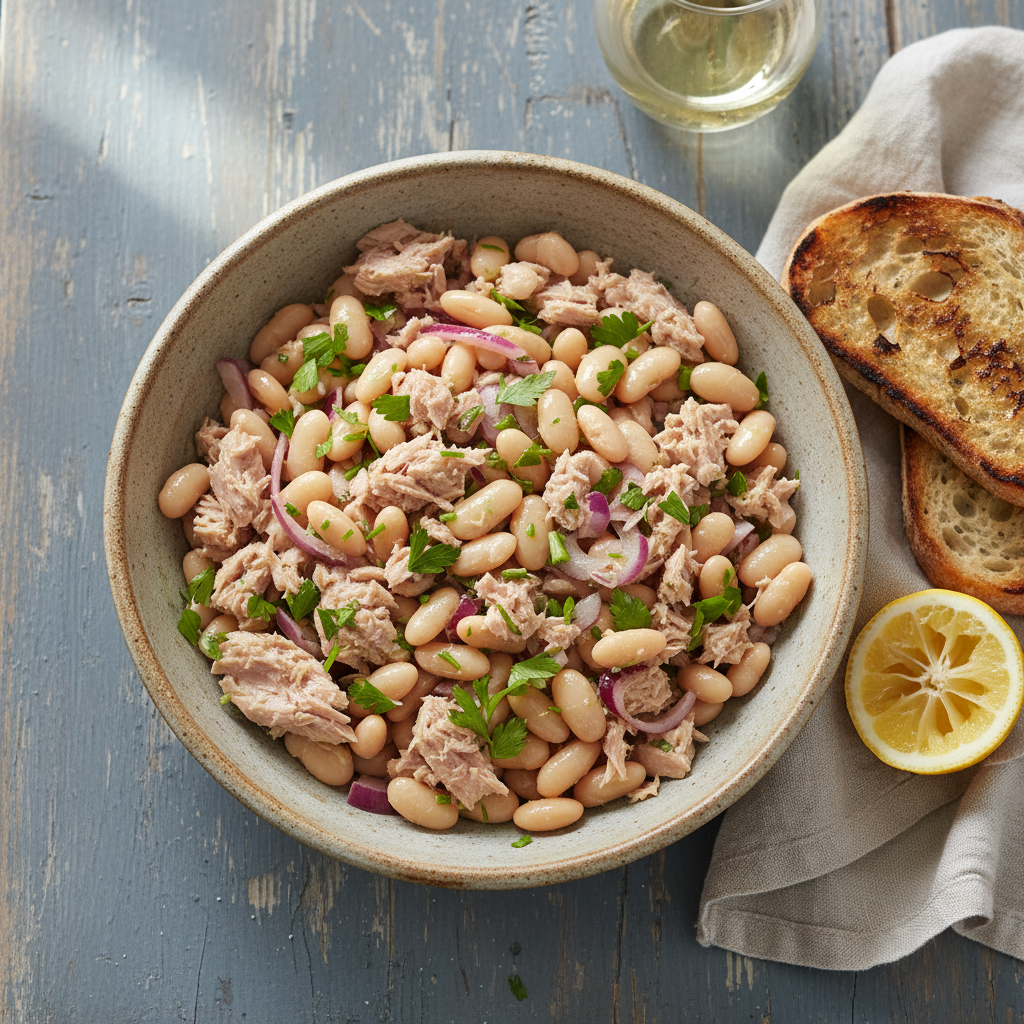
If there is one dish that perfectly bridges the gap between nutritious fuel and gourmet satisfaction, it is the humble yet mighty Tuna and White Bean Salad Bowl. In a world where ‘fast food’ often equates to greasy takeout or processed snacks, this recipe stands as a testament to the power of whole ingredients. Imagine opening your lunch container to reveal a colorful mosaic of tender white beans, flaky high-quality tuna, crisp red onions, and a shower of fresh parsley, all glistening under a emulsion of premium olive oil and bright lemon juice. This isn’t just a salad; it is a textural masterpiece that requires absolutely no cooking, making it the ultimate savior for busy weeknights or frantic mornings.
The beauty of this bowl lies in its simplicity and its ability to transform pantry staples into a restaurant-quality meal. We often overlook the cans gathering dust in our cupboards, but with the right treatment—a vigorous rinse for the beans, a proper drain for the tuna—they become the stars of the show. The flavor profile here is distinctly Mediterranean, leaning heavily on the marriage of fat and acid. The richness of the tuna and the creaminess of the beans are cut through by the sharp bite of red onion and the citrusy tang of the dressing, creating a harmonious balance that dances on the palate.
Furthermore, this salad is a nutritional powerhouse. It is packed with lean protein and heart-healthy fiber, ensuring that you avoid that mid-afternoon energy slump. It is gluten-free, dairy-free, and can easily be adapted to fit various dietary needs. Whether you are meal-prepping for the week ahead or throwing together a quick dinner on a hot summer evening when turning on the stove feels like a crime, this Tuna and White Bean Salad Bowl is your new go-to. It is fresh, it is vibrant, and it proves that healthy eating doesn’t have to be complicated or bland.
History & Origins
The combination of tuna and white beans is not merely a modern health trend; it is a classic pairing deeply rooted in Italian culinary tradition, specifically within the region of Tuscany. Known locally as ‘Insalata di Tonno e Fagioli’, this dish is a prime example of ‘cucina povera’ or ‘peasant cooking’. Historically, Tuscan cuisine has always relied on simple, high-quality ingredients that were readily available and affordable. Cannellini beans, often referred to as the ‘meat of the poor’, provided essential sustenance and protein for farmers and laborers who couldn’t always afford fresh cuts of meat.
In the coastal areas and trade hubs of Italy, preserved fish like tuna packed in olive oil became a pantry staple. It had a long shelf life and offered a rich, savory depth that complemented the mild, creamy earthiness of the beans. Over centuries, what started as a humble, functional meal for the working class evolved into a beloved antipasto served in trattorias across Florence and beyond. The traditional preparation was incredibly sparse—often just beans, tuna, olive oil, and perhaps a slice of onion.
As the dish migrated across the Atlantic and into the repertoire of American home cooks, it began to evolve. The modern ‘salad bowl’ iteration we see today often incorporates more vegetables like celery, arugula, or cherry tomatoes to add crunch and volume, transforming it from a side dish into a complete main course. Despite these additions, the soul of the dish remains unchanged: it is a celebration of how two modest ingredients can come together to create something greater than the sum of their parts. This history reminds us that the best food often comes from necessity and simplicity.
Why This Recipe Works
This recipe succeeds because it masters the art of textural contrast and flavor balancing, turning simple pantry items into a cohesive dish. First, let’s talk about texture. Cannellini beans are naturally creamy and soft, which can sometimes feel monotonous on the palate. By pairing them with the firm, flaky texture of solid white albacore tuna and the sharp, audible crunch of diced celery and raw red onion, we create a bite that is engaging and varied. Every forkful offers a little bit of resistance followed by a melt-in-your-mouth finish.
Secondly, the dressing is key. Many tuna salads rely on heavy mayonnaise, which can mask the delicate flavor of the fish and weigh down the dish. Here, we use a vinaigrette base. The acidity from the fresh lemon juice and white wine vinegar performs two functions: it ‘cooks’ the raw onion slightly to remove its harsh bite, and it cuts through the fatty richness of the olive-oil-packed tuna. This ensures the salad tastes bright and clean rather than heavy.
Finally, the method of marinating the beans briefly before adding the tuna is a game-changer. Beans are like little sponges; by tossing them with the dressing first, they absorb the garlic and lemon flavors all the way through to their center. This prevents the common issue of having a salad where the dressing just slides off the ingredients, leaving them bland. The result is a perfectly seasoned, robust salad that holds up well in the fridge without becoming soggy.
Why You’ll Love This Recipe
- ✓Ready in under 15 minutes with zero cooking required.
- ✓High in protein (30g+) and fiber for sustained energy.
- ✓Uses budget-friendly pantry staples like canned beans and tuna.
- ✓Naturally gluten-free and dairy-free.
- ✓Improves in flavor after sitting, making it perfect for meal prep.
- ✓Versatile base that welcomes extra veggies or greens.
Equipment You’ll Need
- ✓Large mixing bowl
- ✓Small whisk or fork
- ✓Chef’s knife
- ✓Cutting board
- ✓Colander or fine-mesh sieve
- ✓Citrus juicer
Ingredients
- ✓2 cans (5 oz each) solid white albacore tuna in water or olive oil, drained
- ✓1 can (15 oz) cannellini beans, rinsed and drained thoroughly
- ✓1/4 cup red onion, finely diced
- ✓1 stalk celery, finely chopped
- ✓1/4 cup fresh parsley, chopped
- ✓2 tablespoons extra virgin olive oil
- ✓1 large lemon, juiced (approx 3 tbsp)
- ✓1 clove garlic, minced or pressed
- ✓1 teaspoon dried oregano
- ✓1/2 teaspoon red pepper flakes (optional)
- ✓Salt and freshly cracked black pepper to taste
- ✓2 cups mixed greens or arugula (for the base)
Instructions
- Begin by preparing your produce. Finely dice the red onion and chop the celery. Chop the fresh parsley. Mince the garlic clove.
- Place the diced red onion in a small bowl and cover with cold water for 5 minutes. This helps remove the harsh, sulfurous bite. Drain well before using.
- Open the can of cannellini beans. Pour them into a colander and rinse thoroughly under cold water until the foam disappears. Shake off excess water.
- In a large mixing bowl, whisk together the extra virgin olive oil, fresh lemon juice, minced garlic, dried oregano, red pepper flakes, salt, and black pepper until emulsified.
- Add the drained cannellini beans, chopped celery, and drained red onion to the bowl with the dressing. Toss gently to coat. Let this sit for about 5 minutes so the beans can absorb the flavors.
- Open the cans of tuna and drain well. If using tuna in oil, you can reserve a teaspoon of the oil for extra flavor if desired. Flake the tuna into large chunks with a fork.
- Add the flaked tuna and chopped parsley to the bean mixture. Fold gently to combine, being careful not to break the tuna chunks up too much. You want distinct bites of fish.
- Taste and adjust seasoning. Add more lemon juice for brightness or salt if needed.
- To serve, place a bed of mixed greens or arugula in two serving bowls. Top generously with the tuna and white bean mixture. Finish with a final drizzle of olive oil or a crack of black pepper if desired.
Expert Cooking Tips
- ✓Use high-quality tuna. Tuna packed in olive oil (Tonno all’Olio) offers a significantly richer flavor and moister texture than water-packed tuna.
- ✓Rinse the beans thoroughly. The liquid in canned beans can be starchy and salty; rinsing ensures a clean flavor and better texture.
- ✓Don’t skip the onion soak. Soaking raw onions in water mellows their flavor, ensuring they don’t overpower the delicate beans and tuna.
- ✓Let it marinate. While you can eat it immediately, letting the salad sit for 15-20 minutes allows the flavors to meld beautifully.
- ✓Keep the chunks large. When mixing, use a gentle hand so the tuna stays in nice flakes rather than turning into a paste.
- ✓Fresh herbs are essential. Dried parsley won’t give the same fresh lift; stick to fresh flat-leaf parsley for this recipe.
Substitutions and Variations
This recipe is incredibly flexible and forgiving, allowing for numerous substitutions based on your pantry inventory or dietary preferences. If you don’t have cannellini beans, Great Northern beans or chickpeas (garbanzo beans) are excellent alternatives that provide a similar texture and protein profile. For the fish, while solid white albacore is preferred for its firm texture, you can use chunk light tuna for a softer salad, or even high-quality canned salmon or mackerel for a different omega-3 boost. If red onion is too sharp for your taste, try using shallots or scallions for a milder allium kick. For the greenery, while parsley is traditional, fresh dill, basil, or cilantro can completely change the flavor profile to suit your mood. If celery isn’t your favorite, diced cucumber or fennel bulb can provide that necessary crunch. Lastly, if you are out of lemons, red wine vinegar or white balsamic vinegar makes a perfectly acceptable acid for the dressing.
Common Mistakes to Avoid
The most common mistake with this salad is over-mixing. Tuna, especially canned, breaks down easily. If you stir too vigorously, you will end up with a mushy paste rather than a salad with distinct textures. Fold the ingredients gently. Another frequent error is not draining the ingredients properly. Wet beans and water-logged tuna will dilute your dressing, resulting in a watery, bland bowl. Ensure your beans are shaken dry and your tuna is pressed free of excess liquid. Additionally, under-seasoning is a crime here. Beans are dense and starchy, requiring a good amount of salt and acid to wake them up. Don’t be afraid to taste and add more lemon juice or salt right before serving. Finally, using low-quality olive oil is a missed opportunity; since the oil is not being cooked, its flavor is prominent, so use the best extra virgin olive oil you have.
Serving Suggestions
This Tuna and White Bean Salad Bowl is a complete meal on its own, but it can be dressed up in various ways. It is traditionally served over a bed of peppery arugula or mixed baby greens to add volume and extra nutrients. For a heartier meal, serve it alongside or on top of thick slices of toasted sourdough bread rubbed with garlic (bruschetta style). It also works beautifully stuffed inside a whole-wheat pita pocket or a hollowed-out tomato or avocado for a low-carb presentation. If you are serving this at a gathering, it makes a fantastic side dish to grilled chicken or roasted vegetables. A glass of crisp white wine, such as a Pinot Grigio or Sauvignon Blanc, pairs perfectly with the citrus and seafood notes of the dish.
Storage and Reheating Tips
One of the best aspects of this salad is how well it stores. It can be kept in an airtight container in the refrigerator for up to 3 to 4 days. In fact, many find that it tastes even better on the second day as the beans have had more time to marinate in the dressing. If you plan to store it, it is best to keep the salad separate from the bed of greens (arugula/lettuce) to prevent the leaves from wilting. Combine the salad and greens just before eating. This dish does not freeze well, as the texture of the beans and fresh vegetables will degrade significantly upon thawing. If the salad looks a bit dry after sitting in the fridge, a quick splash of olive oil and a squeeze of fresh lemon will revive it instantly.
Nutrition Facts (Estimated)
| Serving Size | 1 bowl |
| Calories | 420 |
| Fat | 18g |
| Saturated Fat | 2.5g |
| Unsaturated Fat | 14g |
| Trans Fat | 0g |
| Cholesterol | 45mg |
| Sodium | 580mg |
| Carbohydrates | 28g |
| Fiber | 9g |
| Sugar | 3g |
| Protein | 32g |
Frequently Asked Questions
Can I use dried beans instead of canned?
Absolutely. While canned beans are convenient, dried beans that have been soaked and cooked from scratch often have a superior texture and flavor. You will need about 1.5 cups of cooked beans to replace one 15oz can.
Is this recipe keto-friendly?
While high in protein and healthy fats, beans are a legume and contain carbohydrates. It is generally considered low-carb or slow-carb, but strict keto dieters usually avoid legumes. You could reduce the beans and increase the greens and tuna to lower the carb count.
What kind of tuna should I buy?
Look for ‘solid white albacore’ or ‘yellowfin’ tuna packed in olive oil for the best flavor and moisture. If you are watching calories, water-packed is fine, but you may want to add a bit more olive oil to the dressing.
Can I meal prep this for the whole week?
Yes, this is an excellent meal prep candidate. You can double the recipe and store it in individual containers. Just remember to keep the leafy greens separate until you are ready to eat.
Is this safe for pregnant women?
Canned light tuna is generally lower in mercury than albacore and is considered safe in moderation. However, it is always best to consult with your doctor regarding fish consumption during pregnancy.
Can I add cheese to this salad?
While not traditional in the strictest sense, crumbled feta cheese or shavings of Parmesan add a wonderful salty, creamy element that pairs very well with the beans and lemon.
How can I make this spicy?
The recipe calls for red pepper flakes, which you can increase to taste. Alternatively, adding a chopped fresh chili pepper or a dash of hot sauce to the dressing works well.
What if I don’t like raw onions?
Soaking them in water helps, but you can also use pickled red onions for a tangier, sweeter flavor without the raw bite, or substitute with chives for a very mild onion flavor.
Conclusion
The Tuna and White Bean Salad Bowl is more than just a quick fix for hunger; it is a celebration of fresh, wholesome ingredients coming together in perfect harmony. It proves that you don’t need hours in the kitchen or a long list of exotic ingredients to create a meal that is both nourishing and delicious. With its rich history, vibrant flavors, and undeniable health benefits, this dish deserves a regular spot in your meal rotation. So, grab that can of beans from the back of your pantry, whisk up that zesty dressing, and enjoy a bowl of Mediterranean goodness that will leave you feeling energized and satisfied.