Baked Salmon and Sweet Potato Cakes: A Healthy, Crispy, & Nutrient-Dense Dinner
Salmon And Sweet Potato Cake Baked Healthy Recipe
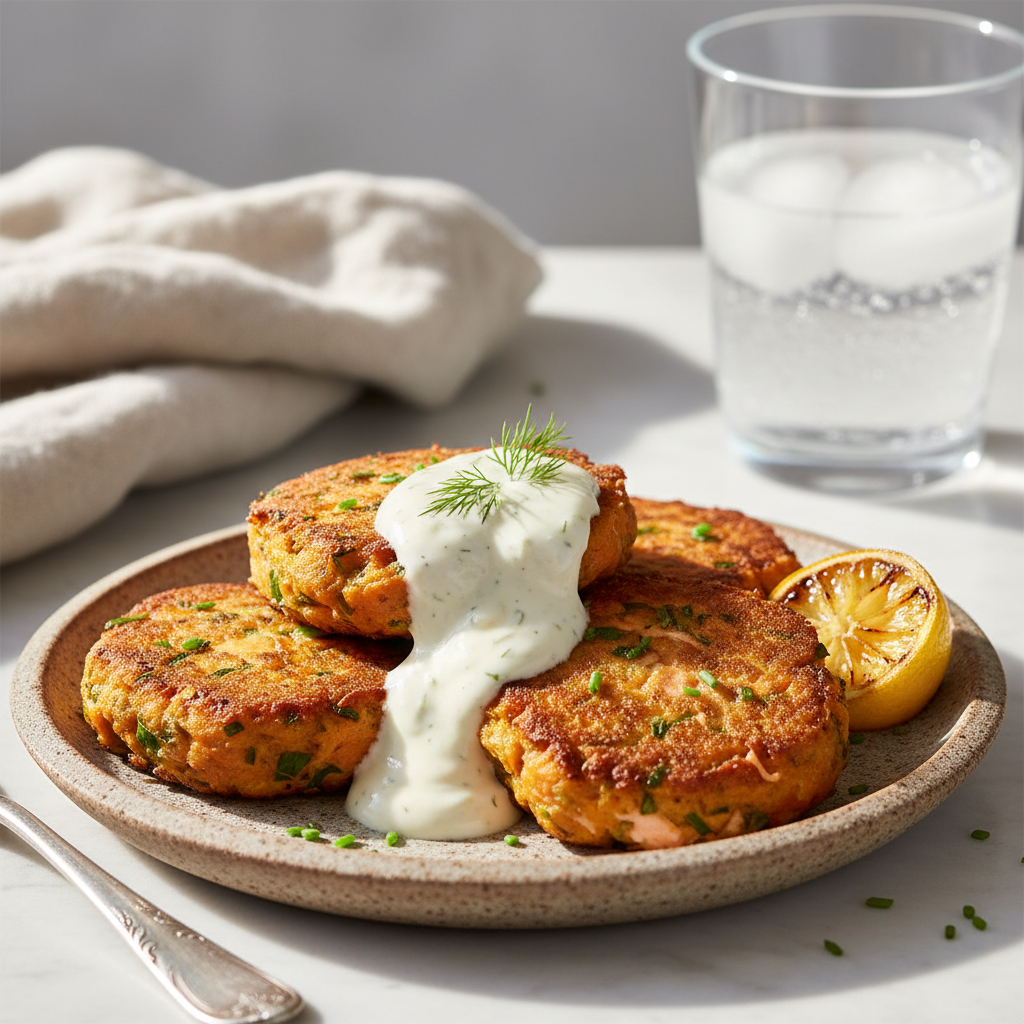
These Baked Salmon and Sweet Potato Cakes are the ultimate fusion of savory, healthy fats and wholesome complex carbohydrates. Perfectly golden on the outside and tender on the inside, they make for a quick weeknight dinner or a meal-prep champion that the whole family will adore.
20 minutes
25 minutes
45 minutes
8 cakes (4 servings)
Main Course
Baking
American / Fusion
Gluten-Free
If you have been searching for a recipe that perfectly balances nutrition, flavor, and ease of preparation, look no further than these Baked Salmon and Sweet Potato Cakes. In the world of healthy eating, it can often feel like a chore to find meals that are both satisfying and good for you, but this dish bridges that gap effortlessly. By combining the rich, savory notes of salmon with the earthy, natural sweetness of sweet potatoes, we create a flavor profile that is complex yet comforting. Unlike traditional fish cakes that are often heavy on breadcrumbs and deep-fried in oil, this version relies on the natural binding properties of the sweet potato and the gentle heat of the oven to achieve a delightful texture without the grease.
The beauty of this recipe lies in its versatility. It serves as a fantastic vehicle for high-quality proteins and essential omega-3 fatty acids, while the sweet potato provides a dose of fiber and Vitamin A. Whether you are following a gluten-free diet, looking for a Paleo-friendly option, or simply trying to incorporate more fish into your weekly rotation, these cakes are a game-changer. They are robust enough to stand alone as a main course served alongside a crisp arugula salad, yet versatile enough to be tucked into a bun for a healthy twist on a burger. Plus, the vibrant orange hue speckled with fresh green herbs makes them visually stunning on the plate. Prepare to fall in love with a dish that proves healthy eating doesn’t mean compromising on taste or texture.
History & Origins
The concept of the fish cake is not new; in fact, it is a culinary tradition that spans centuries and crosses numerous cultural boundaries. Historically, fish cakes were born out of necessity and frugality. In 19th-century New England, ‘cod cakes’ became a staple way to utilize leftover fish and potatoes, stretching expensive protein to feed large families. Similarly, in Asian cuisines, fish cakes like Thai ‘Tod Mun Pla’ have long been cherished for their bouncy texture and aromatic spices. However, the specific marriage of salmon and sweet potato is a more modern culinary evolution, largely popularized by the rise of health-conscious dietary movements in the early 21st century, such as Paleo and Whole30.
Sweet potatoes themselves have a rich history, originating in the Americas over 5,000 years ago before being spread globally by explorers. For centuries, they were a primary source of sustenance for diverse populations due to their hardiness and nutritional density. The innovation of swapping the traditional white potato—often vilified in low-glycemic diets—for the nutrient-rich sweet potato transformed the humble fish cake into a superfood powerhouse. This modern adaptation reflects a broader shift in Western cooking: a move away from purely utilitarian meals toward dishes that optimize health benefits without sacrificing the comfort-food factor. Today, the Salmon and Sweet Potato Cake stands as a testament to this evolution, representing a perfect blend of historical preservation techniques and modern nutritional science.
Why This Recipe Works
This recipe works exceptionally well because it addresses the most common pitfalls of traditional fish cakes: dryness and lack of structural integrity. Salmon, while delicious, can easily become dry if overcooked or if mixed with too many dry binders like flour or breadcrumbs. The sweet potato acts as the secret weapon here. Its natural moisture content ensures that the cakes stay tender and juicy on the inside, even as the exterior crisps up in the oven. Furthermore, the starch in the sweet potato acts as a powerful binder, holding the patties together so they don’t crumble when you flip them or take a bite—a common frustration with egg-free or low-flour variations.
Flavor-wise, this pairing is a masterclass in contrast. Salmon has a distinct, oily richness that craves an acidic or sweet counterpoint. The subtle sweetness of the potato cuts through that richness, while the addition of scallions, garlic, and perhaps a hint of lemon zest provides the necessary aromatic lift. Baking them instead of frying not only reduces the calorie count significantly but also allows for a more even cook. When you fry, you risk burning the outside before the inside is heated through; baking at a steady temperature ensures the egg binds the mixture perfectly while the edges develop a lovely Maillard reaction. It is a foolproof method that yields restaurant-quality results with minimal active effort.
Why You’ll Love This Recipe
- ✓Packed with Omega-3 fatty acids and Vitamin A.
- ✓Baked, not fried, for a healthier, mess-free cooking experience.
- ✓Naturally gluten-free and dairy-free friendly.
- ✓Perfect for meal prep—they reheat beautifully.
- ✓Kid-friendly finger food that hides healthy fish and veggies.
- ✓Budget-friendly use of canned salmon or leftover fillets.
Equipment You’ll Need
- ✓Large baking sheet
- ✓Parchment paper
- ✓Large mixing bowl
- ✓Fork or potato masher
- ✓Measuring cups and spoons
- ✓Chef’s knife
- ✓Cutting board
Ingredients
- ✓1 large sweet potato (approx. 1 lb), cooked and peeled
- ✓14 oz canned wild-caught salmon, drained and flaked (or cooked fresh salmon)
- ✓2 large eggs, lightly beaten
- ✓1/2 cup almond flour (or panko breadcrumbs if not GF)
- ✓1/4 cup green onions, finely chopped
- ✓2 tablespoons fresh parsley or dill, chopped
- ✓1 teaspoon garlic powder
- ✓1/2 teaspoon smoked paprika
- ✓1/2 teaspoon sea salt
- ✓1/4 teaspoon black pepper
- ✓1 tablespoon lemon juice
- ✓Cooking spray or olive oil for brushing
Instructions
- Preheat your oven to 400°F (200°C) and line a large baking sheet with parchment paper.
- If you haven’t already, cook the sweet potato. You can bake it, boil it, or microwave it until it is completely tender. Let it cool slightly, then peel off the skin.
- In a large mixing bowl, mash the cooked sweet potato until it is smooth with no large lumps.
- Add the drained, flaked salmon to the bowl. If using canned salmon, ensure you remove any large bones or skin if preferred, though the bones are edible and calcium-rich.
- Add the almond flour, beaten eggs, chopped green onions, parsley (or dill), garlic powder, smoked paprika, salt, pepper, and lemon juice to the bowl.
- Gently mix everything together using a fork or spatula until well combined. Be careful not to overwork the mixture, or the cakes can become dense.
- Scoop out roughly 1/3 cup of the mixture at a time and use your hands to shape it into a patty, about 1/2 inch thick. You should get about 8 cakes.
- Place the patties onto the prepared baking sheet, spacing them out evenly so they are not touching.
- Lightly spray the tops of the cakes with cooking spray or brush them gently with a little olive oil to help them brown.
- Bake in the preheated oven for 20-25 minutes, carefully flipping them halfway through the cooking time, until they are golden brown and firm to the touch.
- Remove from the oven and let them cool on the pan for 5 minutes before serving to allow them to set firmly.
Expert Cooking Tips
- ✓Ensure your sweet potato is not watery. If you boil it, let it steam dry for a few minutes before mashing.
- ✓Chill the mixture for 20 minutes before shaping if it feels too sticky; this makes handling much easier.
- ✓Don’t skip the flip! Flipping halfway ensures both sides get that delicious golden crust.
- ✓Use a wide spatula to flip the cakes gently, as they can be delicate when hot.
- ✓If using fresh salmon, bake or poach it first and let it cool completely before flaking.
- ✓Adjust the binder: If the mixture is too wet, add a tablespoon more flour; if too dry, add a splash of lemon juice.
Substitutions and Variations
This recipe is incredibly forgiving and allows for numerous substitutions based on dietary needs or pantry staples. For the **salmon**, you can easily swap in canned tuna or cooked cod for a milder fish flavor, though the healthy fats in salmon are superior. If you don’t have **sweet potato**, regular russet or Yukon gold potatoes work, though the flavor profile will be less sweet and more savory—you might want to increase the spices slightly. For the binder, **almond flour** keeps this gluten-free and adds a nutty richness, but you can use oat flour, panko breadcrumbs, regular all-purpose flour, or even crushed crackers. If you have an **egg allergy**, a ‘flax egg’ (1 tbsp ground flaxseed meal mixed with 3 tbsp water) works surprisingly well as a binder in this recipe. Lastly, the herbs are flexible; while dill and parsley are classic, cilantro creates a lovely zestier version, especially if paired with lime juice instead of lemon.
Common Mistakes to Avoid
The most common mistake with salmon cakes is making the mixture too wet, which causes the cakes to fall apart in the oven or while flipping. This often happens if the sweet potatoes are boiled and not drained properly, or if the canned salmon isn’t drained thoroughly. Always ensure your base ingredients are relatively dry. Another error is over-mixing the batter. Just like with pancakes or muffins, over-working the proteins can lead to a tough, rubbery texture rather than a light, flaky one. Finally, do not try to move the cakes immediately after taking them out of the oven. They are soft when piping hot and need that crucial 5-minute resting period on the baking sheet to firm up their structure.
Serving Suggestions
These cakes are versatile enough to be the star of many different meals. For a light lunch, serve them atop a bed of mixed greens with a vinaigrette dressing. They pair beautifully with a creamy sauce; a dollop of lemon-dill Greek yogurt, tartar sauce, or a spicy chipotle mayo really elevates the dish. For a heartier dinner, serve them alongside roasted asparagus, green beans, or a quinoa salad. They also make excellent burger substitutes—place a cake on a brioche bun with lettuce, tomato, and avocado for a ‘salmon burger’ experience. If you’re serving these as an appetizer for a party, make them smaller (bite-sized) and serve with a dipping sauce on the side.
Storage and Reheating Tips
These salmon cakes store wonderfully, making them ideal for meal prep. Store leftovers in an airtight container in the refrigerator for up to 3-4 days. To reheat, it is best to use an oven or toaster oven at 350°F for 10 minutes to recrisp the outside; microwaving works but will result in a softer texture. They are also freezer-friendly! Wrap cooled cakes individually in plastic wrap and then place them in a freezer-safe bag for up to 3 months. Thaw them overnight in the fridge before reheating for the best results.
Nutrition Facts (Estimated)
| Serving Size | 2 cakes |
| Calories | 320 |
| Fat | 14g |
| Saturated Fat | 2.5g |
| Unsaturated Fat | 10g |
| Trans Fat | 0g |
| Cholesterol | 115mg |
| Sodium | 480mg |
| Carbohydrates | 22g |
| Fiber | 3g |
| Sugar | 4g |
| Protein | 24g |
Frequently Asked Questions
Can I use fresh salmon instead of canned?
Absolutely. Cook about 1 pound of fresh salmon (bake, poach, or pan-sear) until it flakes easily. Let it cool completely before mixing it into the batter. This often results in an even better texture.
Why are my salmon cakes falling apart?
This usually means the mixture was too wet. Next time, ensure your sweet potato is dry and the salmon is well-drained. You can also add a bit more flour or breadcrumbs to the mix to help bind it.
Can I make these in an air fryer?
Yes! Preheat your air fryer to 390°F (200°C). Spray the basket and the cakes with oil, and cook for 10-12 minutes, flipping halfway through, until crispy.
Is this recipe Whole30 compliant?
It can be! Ensure you use almond flour (not breadcrumbs) and check your canned salmon ingredients to ensure there are no non-compliant additives like soy or sugar.
Can I use pumpkin instead of sweet potato?
Yes, but pumpkin has a higher water content. You will likely need to squeeze out excess moisture from the pumpkin puree or add more dry binder to compensate.
What is the best sauce to serve with these?
A lemon-dill yogurt sauce is classic. Mix Greek yogurt, fresh lemon juice, chopped dill, garlic, salt, and pepper. Sriracha mayo is also a popular choice for a spicy kick.
Can I prepare the mixture ahead of time?
Yes, you can make the mixture and shape the patties, then store them in the fridge, covered, for up to 24 hours before baking.
Are these spicy?
Not as written. The smoked paprika adds a smoky flavor, not heat. If you want spice, add 1/4 teaspoon of cayenne pepper or red pepper flakes to the mix.
Do I have to peel the sweet potato?
It is recommended for the best texture. The skin can be tough and interfere with the smooth consistency of the cake, though it is edible.
Conclusion
Incorporating healthy fats and complex carbohydrates into your diet doesn’t have to be boring or difficult. These Baked Salmon and Sweet Potato Cakes prove that you can have a meal that is nutritious, budget-friendly, and absolutely delicious all at the same time. Whether you are whipping them up for a quick weeknight dinner, prepping them for a week of healthy lunches, or serving them to kids who might be skeptical about fish, this recipe is bound to become a household favorite. The crispy exterior, the tender, flavorful interior, and the ease of baking make it a winner in every category. Give this recipe a try, and enjoy the wholesome goodness of real food ingredients coming together perfectly.