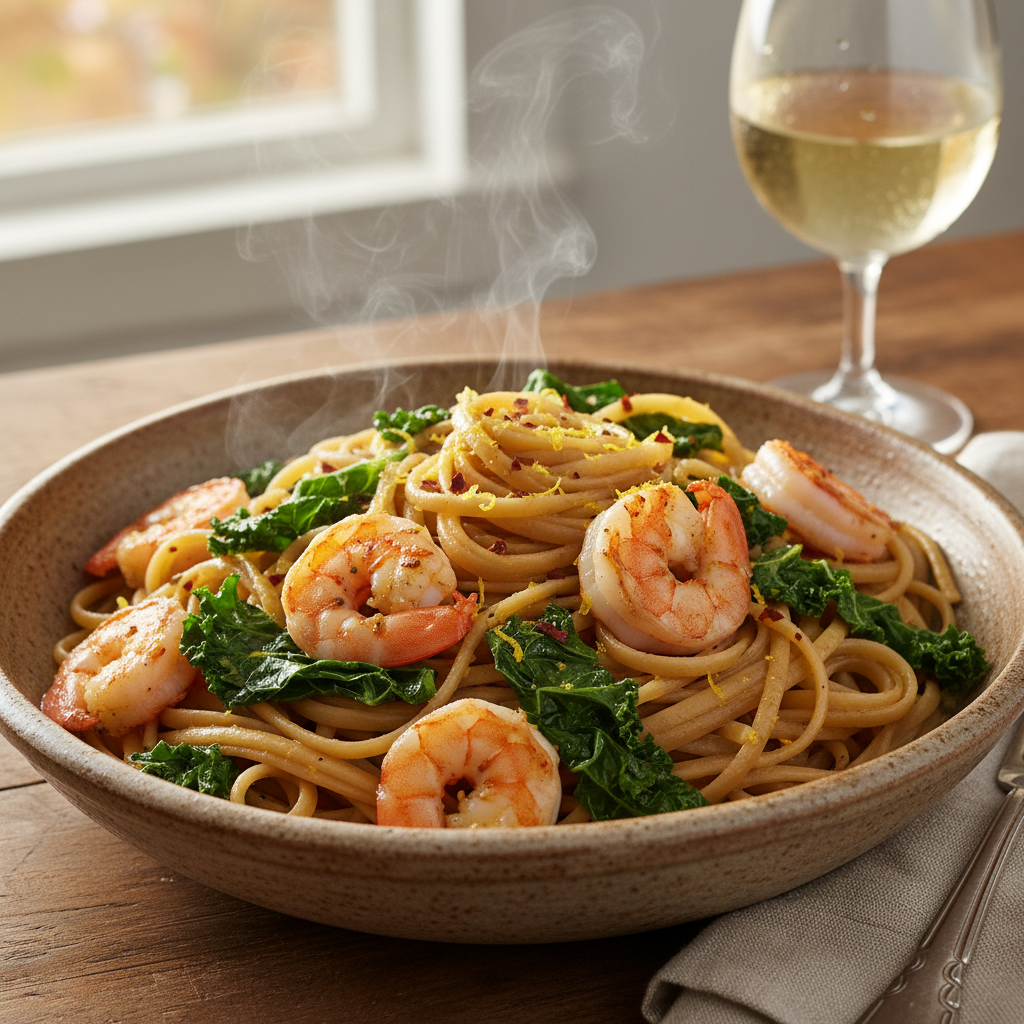
Garlic Lemon Shrimp and Kale Whole Wheat Pasta: A Healthy 20-Minute Dinner
Shrimp And Kale Whole Wheat Pasta Light Recipe
This vibrant Shrimp and Kale Whole Wheat Pasta is the ultimate weeknight savior, combining nutty whole grains with succulent seafood and nutrient-dense greens. Ready in under 25 minutes, it offers a light yet satisfying meal packed with protein, fiber, and zesty lemon-garlic flavor.
10 minutes
15 minutes
25 minutes
4 servings
Main Course
Stovetop
Italian-American
Pescatarian
In the hustle and bustle of modern life, finding a dinner recipe that strikes the perfect balance between speed, health, and flavor can feel like searching for a needle in a haystack. We often find ourselves choosing between a quick meal that leaves us feeling sluggish or a healthy meal that takes hours to prepare. Enter this Shrimp and Kale Whole Wheat Pasta—a dish that refuses to compromise. It is a celebration of fresh ingredients, bringing together the earthy, robust texture of whole wheat grains with the delicate sweetness of shrimp and the vegetal bite of fresh kale.
What makes this recipe truly stand out is its lightness. Unlike heavy cream-based pasta dishes that can weigh you down, this recipe relies on the magic of ‘aglio e olio’ principles—garlic and oil—enhanced with the brightness of fresh lemon juice and the starchy binding power of pasta water. The result is a glossy, emulsified sauce that coats every strand of linguine without the need for heavy dairy. The whole wheat pasta adds a delightful nuttiness and a lower glycemic index, providing sustained energy rather than a sugar crash. Whether you are cooking for a busy family, looking for a post-workout meal, or simply craving a comforting bowl of pasta that fits into a balanced lifestyle, this recipe checks every box. It is vibrant, colorful, and bursting with Mediterranean flair, proving that eating ‘light’ doesn’t mean eating boring.
History & Origins
The concept of pairing pasta with bitter greens and seafood is deeply rooted in the culinary traditions of Southern Italy, particularly in regions like Puglia and Sicily. Historically, Italian cuisine has always championed the concept of ‘cucina povera’ or ‘peasant cooking,’ where simple, locally available ingredients were transformed into feasts. While the classic *Orecchiette con Cime di Rapa* (pasta with turnip tops) is the most famous ancestor of this dish, coastal communities often supplemented these garden greens with the fresh catch of the day, such as shrimp or anchovies, to add protein and salinity.
The specific iteration of using whole wheat pasta, however, is a more modern evolution. For centuries, refined white semolina flour was the gold standard for Italian pasta due to its texture and shelf life. Whole wheat pasta, or *pasta integrale*, was historically consumed by the lower classes who couldn’t afford refined flour, but it fell out of favor as industrial milling improved. It wasn’t until the health-conscious movements of the late 20th and early 21st centuries in the United States and Europe that whole wheat pasta saw a massive resurgence. As nutrition science began to highlight the importance of dietary fiber and complex carbohydrates, home cooks began swapping traditional white noodles for whole grain alternatives. This recipe represents the beautiful intersection of Old World flavor profiles—garlic, olive oil, chili, and greens—with New World nutritional sensibilities, creating a modern classic that honors the past while fueling the future.
Why This Recipe Works
This recipe works because it is a masterclass in balancing the five basic tastes and contrasting textures. First, let’s talk about flavor. The shrimp provides a natural sweetness that is perfectly offset by the slight bitterness of the kale. When you introduce the acidity of fresh lemon juice and the pungency of sautéed garlic, you create a complex flavor profile that hits every note on the palate. The pinch of red pepper flakes adds a background heat that wakes up the taste buds without overwhelming the delicate seafood.
Texturally, the switch to whole wheat pasta is crucial. Whole wheat pasta has a firmer bite and a nuttier flavor profile than white pasta, which allows it to stand up to the hearty texture of kale. If you were to use a delicate angel hair, the kale might overpower it; however, a whole wheat linguine or spaghetti holds its own. Furthermore, the technique of using reserved pasta water is the secret weapon here. The starch released by the whole wheat pasta is essential for emulsifying the olive oil and lemon juice into a cohesive sauce. Without it, you would just have oily noodles; with it, you get a creamy, luxurious mouthfeel without a drop of cream. This synergy of ingredients ensures that the dish feels substantial and satisfying, yet remains light on the stomach.
Why You’ll Love This Recipe
- ✓Ready in under 25 minutes for busy weeknights.
- ✓High in protein and fiber for a satiating meal.
- ✓Uses the ‘pasta water’ technique for a creamy, dairy-free sauce.
- ✓Packed with superfoods: kale, garlic, and whole grains.
- ✓Easily customizable with different greens or proteins.
- ✓Low in saturated fat and heart-healthy.
Equipment You’ll Need
- ✓Large stockpot for boiling water
- ✓Colander
- ✓Large skillet or sauté pan
- ✓Chef’s knife
- ✓Cutting board
- ✓Tongs
- ✓Microplane or lemon zester
- ✓Citrus juicer
Ingredients
- ✓12 oz Whole wheat linguine or spaghetti
- ✓1 lb Large shrimp, peeled and deveined (tails on or off)
- ✓1 large bunch Lacinato (Dino) kale or curly kale, stems removed and leaves chopped
- ✓4 cloves Garlic, thinly sliced
- ✓1/4 cup Extra virgin olive oil, divided
- ✓1/2 tsp Red pepper flakes (adjust to taste)
- ✓1 large Lemon, zested and juiced
- ✓Salt and freshly cracked black pepper to taste
- ✓1/4 cup Grated Parmesan cheese (optional, omit for dairy-free)
- ✓Reserved pasta water (approx. 1 cup)
Instructions
- Bring a large pot of salted water to a rolling boil. Add the whole wheat pasta and cook according to package instructions until al dente. Do not overcook.
- While the pasta boils, prepare your ingredients. Wash and chop the kale, slice the garlic, and pat the shrimp dry with paper towels. Season shrimp with salt and pepper.
- Heat 1 tablespoon of olive oil in a large skillet over medium-high heat. Add the shrimp in a single layer. Cook for 1-2 minutes per side until pink and opaque. Remove shrimp from the pan and set aside on a plate.
- Reduce the heat to medium. Add the remaining olive oil to the same skillet. Add the sliced garlic and red pepper flakes. Sauté for 30-60 seconds until the garlic is fragrant and golden, being careful not to burn it.
- Add the chopped kale to the skillet with a pinch of salt. Sauté for 3-4 minutes until the kale is wilted and tender but still vibrant green. If the pan is too dry, add a splash of the boiling pasta water to help steam the kale.
- Before draining the pasta, carefully reserve about 1 cup of the starchy pasta cooking water.
- Drain the pasta and immediately transfer it directly into the skillet with the kale.
- Add the cooked shrimp back into the skillet. Pour in about 1/2 cup of the reserved pasta water.
- Toss everything vigorously with tongs over medium heat for 1-2 minutes. The starch water and oil should emulsify to create a glossy sauce coating the noodles. Add more pasta water if the dish looks dry.
- Remove from heat. Stir in the lemon zest and fresh lemon juice.
- Taste and adjust seasoning with more salt, pepper, or chili flakes if needed. Top with grated Parmesan cheese if using and serve immediately.
Expert Cooking Tips
- ✓Salt the Water: Make your pasta water taste like the sea. It is the only chance you have to season the pasta itself from the inside out.
- ✓Don’t Overcook Shrimp: Shrimp cook incredibly fast. As soon as they turn pink and form a ‘C’ shape, they are done. If they curl into a tight ‘O’, they are overcooked and rubbery.
- ✓Reserve Extra Water: Always save more pasta water than you think you need. Whole wheat pasta absorbs moisture quickly, and you might need a splash more right before serving.
- ✓Prep is Key: This recipe moves fast once the cooking starts. Have your garlic sliced, lemon zested, and kale chopped before you turn on the stove.
- ✓Kale Texture: If using curly kale, massage the leaves with a little olive oil before cooking to break down the fibers, or chop it smaller than you would lacinato kale.
Substitutions and Variations
This recipe is incredibly versatile and forgiving. If you aren’t a fan of kale, **Swiss chard** or **fresh spinach** are excellent alternatives; just keep in mind that spinach cooks much faster and should be added at the very end. For the protein, **scallops** or diced **chicken breast** work well, though chicken will require a longer cooking time. Vegetarians can swap the shrimp for **cannellini beans** or **chickpeas** for a protein boost. If you are gluten-free, simply use your favorite **brown rice pasta** or **chickpea pasta**, but be mindful that gluten-free pasta water is often starchier, so use less of it when making the sauce. For a dairy-free version, simply omit the Parmesan or use a sprinkle of **nutritional yeast** for that cheesy flavor profile. Finally, if you don’t have lemons, a splash of **white wine vinegar** or **dry white wine** added during the garlic sauté step can provide the necessary acidity.
Common Mistakes to Avoid
The most common mistake with this dish is **overcooking the pasta**. Whole wheat pasta can become gummy and mushy if boiled too long. Aim for al dente, as it will continue to cook slightly when tossed in the sauce. Another pitfall is **burning the garlic**. Garlic turns bitter rapidly once it browns too much; if this happens, it’s best to start over with fresh oil and garlic, or the whole dish will have an acrid taste. Many home cooks also **discard all the pasta water**, leaving them with a dry dish. That starchy water is liquid gold—it creates the bridge between the oil and the solids. Lastly, **overcrowding the pan** when searing shrimp causes them to steam rather than sear. Cook in two batches if your skillet isn’t large enough.
Serving Suggestions
This light pasta dish pairs beautifully with a glass of crisp, dry white wine, such as a **Pinot Grigio**, **Sauvignon Blanc**, or an Italian **Vermentino**, which complements the lemon and seafood notes. For sides, a simple **arugula salad** with a balsamic glaze offers a nice peppery contrast. If you want to make the meal heartier, serve it alongside a slice of **crusty whole grain baguette** or **garlic bread** to sop up any remaining lemon-garlic sauce. For a dinner party, start with a **bruschetta** appetizer topped with tomatoes and basil.
Storage and Reheating Tips
This pasta is best enjoyed fresh, but leftovers can be stored in an airtight container in the refrigerator for up to **3 days**. To reheat, place the pasta in a skillet over medium-low heat. You will notice the pasta has absorbed the sauce, so it is crucial to add a splash of water or vegetable broth and a teaspoon of olive oil to loosen it up and restore the glossy texture. Avoid microwaving shrimp if possible, as it can make them tough and rubbery; if you must microwave, use 50% power and stir frequently. Freezing is not recommended for this dish, as the texture of the shrimp and the whole wheat pasta will degrade significantly upon thawing.
Nutrition Facts (Estimated)
| Serving Size | 1 bowl (approx. 2 cups) |
| Calories | 420 |
| Fat | 14g |
| Saturated Fat | 2g |
| Unsaturated Fat | 11g |
| Trans Fat | 0g |
| Cholesterol | 145mg |
| Sodium | 450mg |
| Carbohydrates | 48g |
| Fiber | 8g |
| Sugar | 2g |
| Protein | 28g |
Frequently Asked Questions
Can I use frozen shrimp?
Absolutely. Frozen shrimp are often flash-frozen at peak freshness. Just ensure you thaw them completely (preferably overnight in the fridge or under cold running water) and pat them very dry before searing to ensure they brown rather than steam.
Is whole wheat pasta really better for you?
Generally, yes. Whole wheat pasta retains the bran and germ of the grain, providing significantly more fiber, iron, and B vitamins than refined white pasta. The fiber helps regulate blood sugar levels and keeps you feeling fuller for longer.
My sauce isn’t thickening, what did I do wrong?
You likely didn’t use enough pasta water or didn’t toss it vigorously enough. The agitation of tossing the pasta with the water and oil creates the emulsion. Keep the heat on medium and keep tossing; if it’s still too thin, let it bubble for another minute to reduce.
Can I use pre-cooked shrimp?
You can, but it’s not ideal. Pre-cooked shrimp are easily overcooked. If you use them, add them at the very end just to warm through, rather than searing them at the beginning.
What if I don’t like spicy food?
Simply omit the red pepper flakes. The dish will still be delicious with just the lemon and garlic flavor profile.
How do I clean the kale?
Strip the leaves from the tough woody stems (you can save stems for veggie stock). Wash the leaves thoroughly in a bowl of water to remove grit, then spin dry in a salad spinner or pat dry with towels before chopping.
Can I use bottled lemon juice?
Fresh is always best for this recipe because the lemon is a primary flavor driver. Bottled juice often contains preservatives that alter the flavor. Plus, you need the zest for the aromatic oils, which you can’t get from a bottle.
Is this recipe gluten-free?
As written, no, because of the whole wheat pasta. However, it is easily made gluten-free by swapping in a certified gluten-free pasta made from brown rice, quinoa, or chickpeas.
Conclusion
There you have it—a Shrimp and Kale Whole Wheat Pasta recipe that proves fast food can be healthy food. This dish is a testament to the power of simple, quality ingredients coming together to create something greater than the sum of their parts. It’s a meal that respects your time without disrespecting your palate or your waistline. Whether you are a novice cook or a seasoned pro, this recipe is a reliable, delicious addition to your culinary repertoire. So, grab that bunch of kale, defrost those shrimp, and get ready to enjoy a restaurant-quality meal right in the comfort of your own kitchen. Bon appétit!