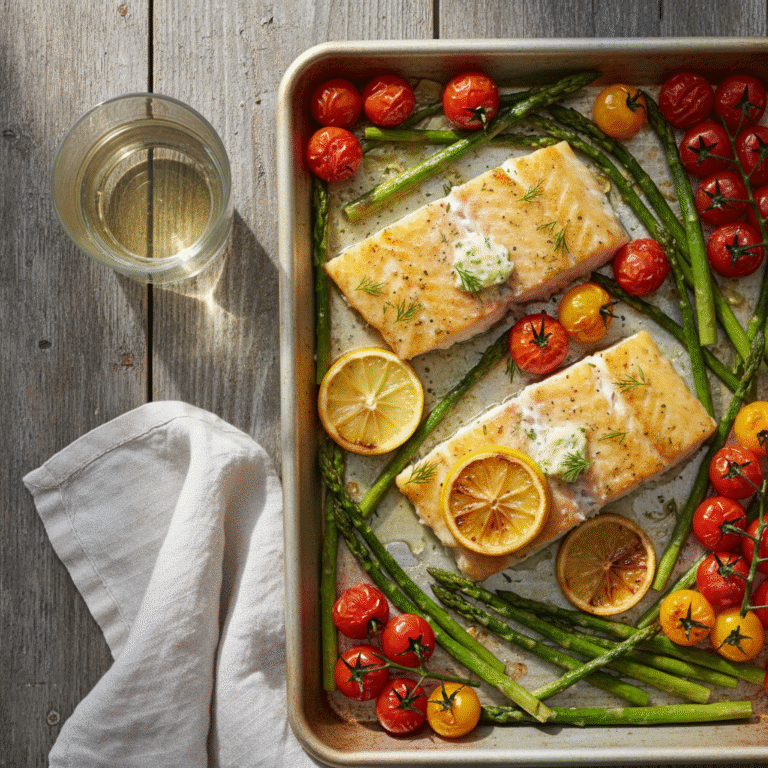
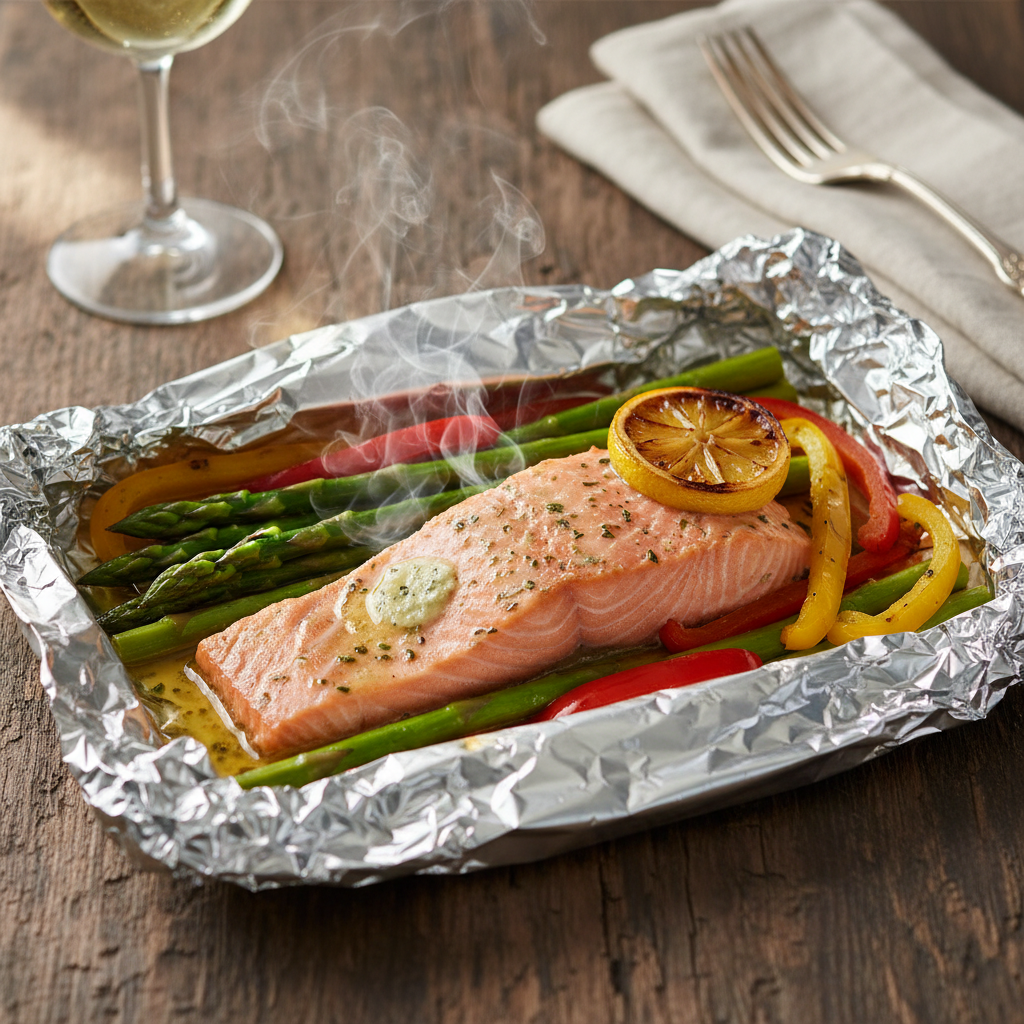
Garlic Butter Baked Salmon in Foil with Asparagus and Lemon
Baked Salmon In Foil With Veggies Healthy Recipe
This 25-minute baked salmon in foil recipe is the ultimate healthy weeknight dinner hack. Featuring tender, flaky salmon fillets steamed to perfection alongside crisp asparagus and bell peppers, it is all smothered in a rich garlic lemon butter sauce with zero cleanup required.
10 minutes
20 minutes
30 minutes
4 servings
Main Course
Baking
American / Mediterranean Fusion
Gluten-Free
In the fast-paced world of modern home cooking, finding a recipe that sits perfectly at the intersection of healthy, delicious, and effortless is like finding a needle in a haystack. Enter the Baked Salmon in Foil with Veggies—a dish that has taken the food blogging world and Pinterest boards by storm, and for good reason. This method, often referred to as the ‘foil packet’ technique, transforms humble ingredients into a restaurant-quality meal with virtually no cleanup. Imagine coming home after a long day, spending less than 10 minutes prepping, and then letting your oven do the heavy lifting while you unwind.
The magic lies in the containment. By sealing the salmon and vegetables inside a foil packet, you create a mini steam oven. This environment locks in moisture, ensuring that the salmon remains incredibly succulent and flaky, never dry or rubbery. Simultaneously, the vegetables—bathed in a mixture of olive oil, melted butter, fresh minced garlic, and zesty lemon juice—absorb the savory juices from the fish, creating a harmonious flavor profile where every bite is seasoned to perfection. The aroma that wafts from the kitchen as the garlic butter melts is simply intoxicating, promising a comforting yet light meal.
Furthermore, this recipe is a visual stunner. Serving individual foil packets adds a rustic, personalized touch to your dinner table, making it fantastic for hosting without the stress of plating complex dishes. Whether you are a seasoned chef looking for a reliable quick fix or a kitchen novice aiming to impress, this baked salmon recipe delivers high-impact flavor with minimal effort. It is keto-friendly, gluten-free, and packed with heart-healthy omega-3 fatty acids, making it a guilt-free indulgence that tastes decadent.
History & Origins
The technique of cooking food inside a sealed wrapper is far from a modern invention; it is a culinary tradition that spans centuries and cultures. In French cuisine, this method is known as ‘en papillote’ (in parchment), a style that dates back to the 17th century. Traditionally, chefs would wrap delicate proteins like fish or chicken in parchment paper along with herbs, vegetables, and wine. The paper puffing up with steam created a dramatic presentation at the table, releasing a cloud of aromatic vapor when cut open.
However, the roots of cooking in wrappers go even deeper. Indigenous cultures around the world have used natural materials like banana leaves, corn husks, grape leaves, and even clay to encase food before cooking over open fires or in earth ovens for thousands of years. This method protected food from direct heat, keeping it moist and tender while infusing it with the subtle flavors of the wrapper itself.
With the advent of aluminum foil in the early 20th century, the ‘en papillote’ method was democratized for the American household. Foil was durable, heat-resistant, and malleable, making it easier to seal than parchment. In the 1950s and 60s, ‘foil packet cooking’ became a staple of outdoor lifestyle movements, particularly within the Boy Scouts and Girl Scouts of America, where ‘hobo packs’ cooked over campfires were a rite of passage. As home cooking evolved in the 21st century to prioritize health and convenience, the foil packet moved from the campfire to the kitchen oven. Today, the Baked Salmon in Foil represents the perfect marriage of classic French technique and modern American convenience, celebrated for its ability to produce healthy meals consistent with the fast-paced digital age.
Why This Recipe Works
This recipe succeeds primarily due to the thermodynamics of steaming within a confined space. When you seal the foil, you trap the natural moisture evaporating from the salmon and vegetables, as well as the added liquids (butter and lemon juice). This steam circulates around the food, cooking it gently and evenly. Unlike roasting on an open sheet pan, where the dry heat can quickly dehydrate the delicate muscle fibers of the fish, the foil environment maintains 100% humidity. This makes it nearly impossible to overcook the salmon, provided you stick to the recommended time, resulting in that desirable, buttery texture that flakes at the touch of a fork.
Secondly, the flavor integration is superior in a foil packet. In an open pan, aromatics like garlic and herbs might burn before the fish is done, or their flavors might not fully penetrate the meat. Inside the packet, the garlic, lemon zest, and herbs are infused into the steam and the melting butter, penetrating the salmon and vegetables deeply. The asparagus and peppers, placed alongside the fish, cook in the rendered salmon fats and butter, becoming tender-crisp rather than dry or soggy. Finally, the use of both butter and olive oil prevents the milk solids in the butter from burning while adding a richness that balances the acidity of the lemon.
Why You’ll Love This Recipe
- ✓Zero Cleanup: Simply toss the foil after eating.
- ✓Heart Healthy: Packed with Omega-3 fatty acids and vitamins.
- ✓Foolproof: The steaming method prevents dry, overcooked fish.
- ✓Versatile: Easily swap veggies based on what is in your fridge.
- ✓Meal Prep Friendly: Packets can be assembled ahead of time.
- ✓Low Carb & Keto: Perfect for low-sugar diets.
Equipment You’ll Need
- ✓Heavy-duty aluminum foil
- ✓Baking sheet
- ✓Small mixing bowl
- ✓Whisk or fork
- ✓Chef’s knife
- ✓Cutting board
- ✓Pastry brush (optional)
Ingredients
- ✓4 salmon fillets (6 oz each), skin-on or skinless
- ✓1 lb asparagus, woody ends trimmed
- ✓1 red bell pepper, sliced into thin strips
- ✓1 yellow bell pepper, sliced into thin strips
- ✓4 tablespoons unsalted butter, melted
- ✓2 tablespoons olive oil
- ✓4 cloves garlic, minced
- ✓1 tablespoon fresh lemon juice
- ✓1 teaspoon lemon zest
- ✓1 teaspoon dried oregano (or Italian seasoning)
- ✓Salt and freshly ground black pepper, to taste
- ✓Fresh parsley or dill, chopped, for garnish
- ✓Lemon slices, for garnish
Instructions
- Preheat your oven to 400°F (200°C). Line a large baking sheet with foil for safety, though the packets will hold the liquid.
- Cut four sheets of heavy-duty aluminum foil, each about 12-14 inches long.
- In a small bowl, whisk together the melted butter, olive oil, minced garlic, lemon juice, lemon zest, oregano, salt, and pepper until well combined.
- Divide the asparagus and sliced bell peppers evenly among the center of the four foil sheets. Arrange them in a flat layer to serve as a bed for the fish.
- Drizzle about 1 teaspoon of the garlic butter mixture over the vegetables on each sheet.
- Place one salmon fillet on top of the vegetable bed on each piece of foil. If using skin-on salmon, place it skin-side down.
- Generously brush or spoon the remaining garlic butter mixture over each salmon fillet, ensuring the top and sides are well coated.
- Top each fillet with two slices of fresh lemon.
- To seal the packets, bring the two long sides of the foil up to meet in the middle. Fold them over twice to create a tight seam. Then, fold up the open ends twice to seal the packet completely, leaving a little room inside for air to circulate.
- Place the sealed packets on the baking sheet and bake for 15-20 minutes. (Note: Bake 15 minutes for thinner fillets, 20 minutes for thicker cuts).
- Carefully open the packets (watch out for hot steam!) and check for doneness. The salmon should flake easily with a fork.
- If you prefer a caramelized top, you can open the foil packets and switch the oven to ‘Broil’ for 2-3 minutes, watching closely to prevent burning.
- Garnish with fresh chopped parsley or dill and serve immediately right in the foil or transferred to a plate.
Expert Cooking Tips
- ✓Use heavy-duty foil to prevent tearing when folding or serving.
- ✓Cut vegetables to a uniform size so they cook at the same rate as the fish.
- ✓Don’t wrap the foil too tightly around the fish; leave a small air pocket for steam to circulate.
- ✓If using thick salmon fillets, you may need to blanch thicker vegetables like carrots beforehand.
- ✓Add a splash of white wine to the butter mixture for a more sophisticated flavor profile.
- ✓Check one packet at the 15-minute mark to ensure you don’t overcook the salmon.
Substitutions and Variations
This recipe is incredibly flexible. If you are not a fan of salmon, this method works beautifully with other firm fish like cod, halibut, or trout, though cooking times may vary slightly. For the vegetables, asparagus and peppers are classic, but you can easily substitute them with zucchini rounds, broccoli florets, green beans, or cherry tomatoes. If you want to add a starch directly to the packet, consider adding pre-boiled baby potatoes or very thinly sliced raw potatoes (so they cook through). For a dairy-free version, simply swap the butter for more olive oil or a high-quality vegan butter alternative. You can also vary the herbs; while oregano and parsley are used here, fresh dill, thyme, or rosemary also pair wonderfully with lemon and seafood.
Common Mistakes to Avoid
The most common mistake is overcooking the salmon. Because the fish continues to cook slightly in the steam even after you remove it from the oven, it’s best to pull it when it is just barely opaque in the center. Another error is using vegetables that take too long to cook, such as large chunks of raw carrots or potatoes, resulting in undercooked sides when the fish is ready. Always slice harder root vegetables very thinly. Additionally, failing to seal the foil packet tightly is a recipe for disaster; if the steam escapes, the fish will dry out and the flavor infusion will be lost. Finally, be careful not to use too much lemon juice directly on the fish before cooking, as the acid can start to ‘cure’ the fish (like ceviche) and change the texture if it sits too long before baking.
Serving Suggestions
While this meal is a complete package with protein and vegetables, it pairs beautifully with a side of fluffy jasmine rice, quinoa, or cauliflower rice to soak up the delicious garlic butter sauce. For a low-carb option, serve it alongside a fresh crisp Caesar salad or a cucumber tomato salad. A glass of crisp white wine, such as a Sauvignon Blanc or Pinot Grigio, complements the lemon and garlic notes perfectly. Crusty garlic bread is also a crowd-pleaser for dipping into the juices left at the bottom of the foil.
Storage and Reheating Tips
Leftover salmon can be stored in an airtight container in the refrigerator for up to 3 days. To reheat, it is best to avoid the microwave if possible, as it can make the fish rubbery and the smell can be overpowering. Instead, place the salmon and veggies back in a piece of foil or a covered baking dish and warm in a 275°F oven for about 10-15 minutes until heated through. If you must use a microwave, use a low power setting and cover the dish to retain moisture. Freezing is not recommended for the cooked vegetables as they will become mushy upon thawing, though the cooked salmon itself can be frozen for up to 2 months.
Nutrition Facts (Estimated)
| Serving Size | 1 packet (1 salmon fillet + veggies) |
| Calories | 450 |
| Fat | 28g |
| Saturated Fat | 9g |
| Unsaturated Fat | 17g |
| Trans Fat | 0g |
| Cholesterol | 95mg |
| Sodium | 380mg |
| Carbohydrates | 8g |
| Fiber | 3g |
| Sugar | 3g |
| Protein | 34g |
Frequently Asked Questions
Can I grill these foil packets instead of baking them?
Absolutely! These packets are perfect for grilling. Preheat your grill to medium-high heat (about 400°F) and place the foil packets directly on the grates. Cook for 10-15 minutes with the lid closed. It’s a great way to keep your kitchen cool in the summer.
How do I know when the salmon is fully cooked?
The salmon is done when it turns an opaque pink color and flakes easily when pressed with a fork. The FDA recommends an internal temperature of 145°F (63°C), but many chefs prefer taking it out at 135°F (57°C) and letting it rest, as it will continue to rise in temperature.
Can I use frozen salmon fillets?
It is best to thaw the salmon completely in the refrigerator overnight before cooking. Cooking from frozen in foil can lead to uneven cooking and excess water in the packet, which steams the veggies into a mushy state and dilutes the butter sauce.
Is the skin safe to eat or should I remove it?
The skin is safe to eat and contains healthy fats, but in foil packets, the skin will become soft and gelatinous rather than crispy. If you dislike this texture, you can easily remove the skin before cooking or simply eat the meat off the skin after baking.
Can I meal prep these packets ahead of time?
Yes, you can assemble the packets up to 24 hours in advance and keep them in the refrigerator. However, do not add the lemon juice or salt until just before baking, as the acid can start to break down the fish texture and the salt can draw out moisture.
What if I don’t have aluminum foil?
You can use parchment paper to create the packets (the traditional ‘en papillote’ method). Parchment works beautifully for baking but cannot be used on a grill or open flame. Staple or fold the edges tightly to ensure a seal.
Why is there white stuff oozing out of my salmon?
That white substance is called albumin; it is a liquid protein that solidifies when heated. It is completely harmless and safe to eat. It usually appears if the fish is cooked too quickly or at too high a temperature.
Can I add potatoes to this recipe?
Yes, but potatoes take much longer to cook than salmon. You should either par-boil the potatoes first or slice them paper-thin so they cook through in the 15-20 minute window.
Conclusion
Baked Salmon in Foil with Veggies is truly a champion of weeknight dinners. It checks every box: nutritious, delicious, quick, and incredibly easy to clean up. By mastering this simple technique, you open the door to endless variations of flavors and ingredients, ensuring that healthy eating never feels like a chore. Whether you are feeding a hungry family or preparing a meal for one, this recipe promises a satisfying, gourmet-style experience right in the comfort of your own kitchen. Give it a try tonight, and you might just find yourself adding it to your weekly rotation permanently.