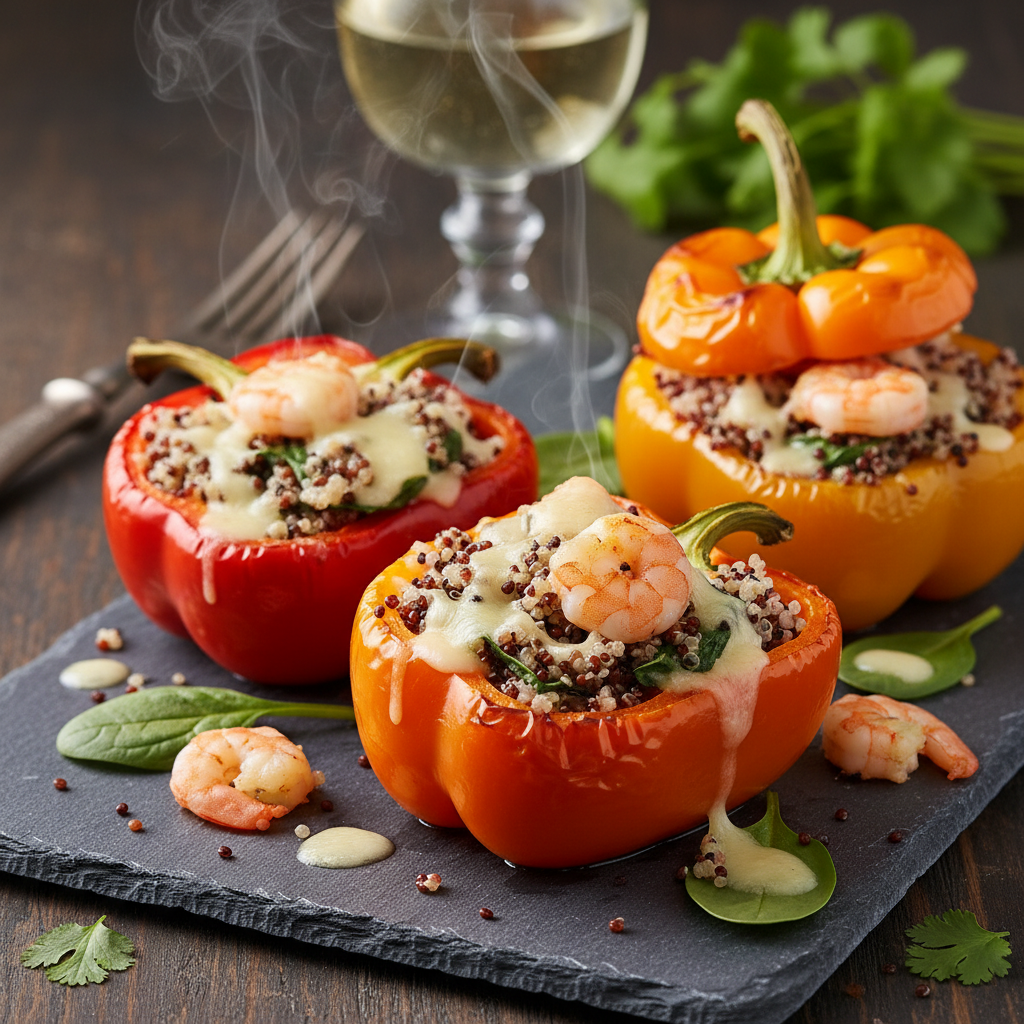
Zesty Shrimp and Quinoa Stuffed Bell Peppers
Shrimp And Quinoa Stuffed Bell Pepper Recipe
Experience the perfect harmony of zesty Cajun-spiced shrimp and fluffy quinoa nestled inside sweet, roasted bell peppers. This vibrant, healthy dinner is packed with protein and bursting with flavor, making it an ideal choice for busy weeknights or meal prep Sundays.
20 minutes
35 minutes
55 minutes
4 servings
Main Course
Baking
American Fusion
Gluten-Free
If there is one dish that perfectly bridges the gap between comforting home cooking and vibrant, health-conscious eating, it is the stuffed bell pepper. But we are moving past the traditional ground beef and rice filling today. Instead, we are elevating this classic vessel with a filling that screams freshness and flavor: succulent shrimp and nutty quinoa. As a food blogger who is constantly scrolling through Pinterest looking for that perfect pop of color to add to my dinner table, I can tell you that this recipe is a showstopper. The sweetness of the roasted peppers provides the perfect counterpoint to the savory, slightly spicy shrimp mixture. The texture is a revelation; while rice can sometimes get mushy inside a pepper, quinoa maintains a delightful little pop that keeps every bite interesting. Plus, the addition of fresh spinach and melting cheese ties it all together into a gooey, nutritious masterpiece. This dish is not just about looking good on a plate, though it certainly does that. It is about fueling your body with lean protein and complex carbohydrates without sacrificing an ounce of satisfaction. Whether you are looking for a light summer dinner that won’t weigh you down or a cozy, warm meal to brighten up a winter evening, these Shrimp and Quinoa Stuffed Bell Peppers are the answer. They are versatile, forgiving, and incredibly delicious. Get ready to impress your family—and your Instagram followers—with a meal that tastes as vibrant as it looks.
History & Origins
The concept of stuffing vegetables is as old as cuisine itself, with roots deeply planted in the culinary traditions of the Mediterranean and the Middle East. The technique, often referred to as ‘dolma’ in Turkish cuisine, which simply means ‘stuffed,’ dates back to the Ottoman Empire. Originally, grape leaves were the vessel of choice, but as the culinary influence spread, so did the variety of vegetables used, eventually including zucchini, eggplant, and tomatoes. The bell pepper, a New World crop, was integrated into these traditions after its introduction to Europe and subsequently the rest of the world. In Greece, ‘Gemista’—tomatoes and peppers stuffed with rice and herbs—became a staple comfort food. Meanwhile, across the Atlantic, quinoa was being cultivated by the Inca civilization in the Andes mountains of South America, revered as the ‘mother of all grains.’ For thousands of years, it was a primary source of nutrition, but it remained relatively unknown to the global stage until the early 21st century. The fusion of these two distinct histories—the Old World technique of stuffing vegetables and the ancient New World supergrain—represents a modern culinary evolution. Adding shrimp to the mix introduces a coastal flair, reminiscent of Creole or Mediterranean seafood stews, but contained within a single, edible package. This specific recipe is a testament to how modern American home cooking adopts and adapts global ingredients to create meals that are nutritionally balanced and historically rich.
Why This Recipe Works
This recipe succeeds where many stuffed pepper recipes fail because of three critical factors: texture management, flavor layering, and moisture control. First, by using quinoa instead of white rice, we introduce a grain that holds its structure beautifully even after being baked inside a humid pepper. Rice can often turn into a starchy paste, but quinoa retains a distinct, nutty bite that complements the tenderness of the shrimp. Second, we pre-cook the peppers slightly (or blanch them) before stuffing. Many recipes skip this step, resulting in a finished dish where the filling is hot but the pepper is still raw and crunchy. By par-cooking the peppers, we ensure that the final bake melds the flavors together rather than just heating them up. Finally, the flavor layering is key. We don’t just mix raw ingredients and hope for the best. We sauté the onions, garlic, and shrimp with spices first to bloom the aromatics and develop a fond (browned bits) in the pan, which is then deglazed with the quinoa. This ensures that the filling is seasoned from the inside out. The cheese acts as the essential binder, holding the loose quinoa and shrimp together so that when you cut into the pepper, the filling doesn’t just tumble out onto the plate.
Why You’ll Love This Recipe
- ✓High-protein meal with over 25g per serving
- ✓Gluten-free and perfect for celiac diets
- ✓Vibrant, colorful presentation ideal for entertaining
- ✓Uses quinoa for a complete amino acid profile
- ✓Meal-prep friendly and reheats beautifully
Equipment You’ll Need
- ✓Large baking dish (9×13)
- ✓Medium saucepan with lid
- ✓Large skillet or frying pan
- ✓Chef’s knife and cutting board
- ✓Mixing bowl
- ✓Measuring cups and spoons
Ingredients
- ✓4 large bell peppers (any color, tops removed and seeded)
- ✓1 cup quinoa, uncooked
- ✓2 cups vegetable or chicken broth
- ✓1 lb raw shrimp, peeled, deveined, and chopped into bite-sized pieces
- ✓1 tablespoon olive oil
- ✓1 medium yellow onion, diced
- ✓2 cloves garlic, minced
- ✓1 teaspoon smoked paprika
- ✓1/2 teaspoon dried oregano
- ✓1/2 teaspoon ground cumin
- ✓1 cup fresh spinach, chopped
- ✓1 cup shredded mozzarella or Monterey Jack cheese, divided
- ✓Salt and black pepper to taste
- ✓Fresh parsley or cilantro for garnish
Instructions
- Preheat your oven to 375°F (190°C). Lightly grease a 9×13 inch baking dish with olive oil or non-stick spray.
- Rinse the quinoa thoroughly under cold water until the water runs clear. In a medium saucepan, combine the quinoa and broth. Bring to a boil, then reduce heat to low, cover, and simmer for 15 minutes or until the liquid is absorbed. Fluff with a fork and set aside.
- While the quinoa cooks, prepare the peppers. You can either blanch them in boiling water for 3 minutes to soften, or place them in the microwave for 3-4 minutes. This ensures they are tender after baking. Place the prepared peppers upright in the baking dish.
- In a large skillet, heat the olive oil over medium-high heat. Add the diced onion and cook for 3-4 minutes until translucent. Add the minced garlic and cook for another 30 seconds until fragrant.
- Add the chopped shrimp, smoked paprika, oregano, cumin, salt, and pepper to the skillet. Sauté for 3-4 minutes, or until the shrimp is pink and opaque. Do not overcook as they will bake further.
- Remove the skillet from heat. Stir in the cooked quinoa and the chopped spinach. The residual heat will wilt the spinach. Stir in half of the shredded cheese (1/2 cup). Taste the mixture and adjust seasoning if necessary.
- Generously stuff each bell pepper with the shrimp and quinoa mixture. Press down gently to pack the filling in.
- Top each pepper with the remaining 1/2 cup of shredded cheese.
- Pour about 1/4 cup of water into the bottom of the baking dish (around the peppers) to create steam and prevent burning.
- Cover the dish with foil and bake for 20 minutes. Then, remove the foil and bake for another 10-15 minutes until the cheese is bubbly and slightly browned, and the peppers are tender.
- Remove from the oven and let cool for 5 minutes before serving. Garnish with fresh parsley or cilantro.
Expert Cooking Tips
- ✓Chop the shrimp into small pieces; this ensures you get shrimp in every bite and makes the peppers easier to stuff.
- ✓Rinse your quinoa thoroughly to remove the natural coating called saponin, which can make the grain taste bitter.
- ✓If your peppers are wobbly in the baking dish, you can slice a very thin layer off the bottom to create a flat base, but be careful not to cut a hole into the pepper cavity.
- ✓For extra flavor, cook the quinoa in seafood stock or chicken bone broth instead of water.
- ✓Don’t skip the foil step; covering the peppers initially helps them steam and soften without burning the cheese on top.
Substitutions and Variations
This recipe is incredibly flexible and allows for numerous substitutions based on dietary needs or pantry availability. If you are not a fan of shrimp, you can easily swap it for ground turkey, chicken sausage, or even crab meat for a different seafood twist. For a vegetarian version, omit the shrimp and use a can of black beans or chickpeas to maintain the protein content. If you don’t have quinoa on hand, brown rice, farro, or couscous work as excellent grain alternatives, though note that couscous and farro contain gluten. The cheese can also be swapped; while mozzarella provides a great melt, feta cheese adds a wonderful tangy kick that pairs beautifully with the shrimp. Dairy-free? Simply use a high-quality vegan melting cheese or skip it entirely and top with sliced avocado after baking. Lastly, the spices can be adjusted; try a Cajun seasoning blend for more heat or Italian seasoning for a milder, herbaceous flavor.
Common Mistakes to Avoid
The most common mistake when making stuffed peppers is ending up with a crunchy, undercooked pepper vessel. This usually happens because the peppers weren’t par-cooked (blanched or microwaved) before stuffing. The baking time alone is often insufficient to fully soften a thick raw pepper without drying out the filling. Another mistake is overcooking the shrimp during the sauté step. Remember, the shrimp will go back into the oven for 30 minutes, so they only need to be just barely opaque in the pan. If you cook them completely hard in the skillet, they will become rubbery after baking. Finally, failing to season the quinoa and the vegetable mixture separately can lead to a bland dish. Make sure your grain is cooked in salted water or broth, and taste your filling before stuffing the peppers.
Serving Suggestions
These stuffed peppers are a complete meal on their own, containing protein, carbs, and vegetables. However, they pair wonderfully with a crisp, green side salad dressed with a lemon vinaigrette to cut through the richness of the cheese. A side of garlic roasted asparagus or green beans also complements the dish well. If you want to lean into the Latin-American fusion vibe, serve these with a side of chips and guacamole or a dollop of sour cream and salsa on top. For a beverage pairing, a crisp Sauvignon Blanc or a light Pinot Grigio pairs excellently with the shrimp and herbs, while a sparkling water with lime is a refreshing non-alcoholic option.
Storage and Reheating Tips
These stuffed peppers store surprisingly well, making them a meal prep favorite. Store leftovers in an airtight container in the refrigerator for up to 3-4 days. To reheat, it is best to use the oven or toaster oven at 350°F for about 15-20 minutes to revive the texture of the cheese and pepper. You can use the microwave for 2-3 minutes, but the pepper may become slightly softer. If you wish to freeze them, let the cooked peppers cool completely, then wrap them individually in plastic wrap and foil. They can be frozen for up to 3 months. Thaw overnight in the refrigerator before reheating. Note that freezing may slightly alter the texture of the pepper, making it softer upon reheating.
Nutrition Facts (Estimated)
| Serving Size | 1 Stuffed Pepper |
| Calories | 385 |
| Fat | 14g |
| Saturated Fat | 5g |
| Unsaturated Fat | 8g |
| Trans Fat | 0g |
| Cholesterol | 145mg |
| Sodium | 650mg |
| Carbohydrates | 38g |
| Fiber | 7g |
| Sugar | 6g |
| Protein | 28g |
Frequently Asked Questions
Can I use frozen shrimp for this recipe?
Absolutely. Frozen shrimp works perfectly. Just ensure they are fully thawed and patted dry with paper towels before sautéing to avoid adding excess water to the filling.
Do I have to cook the quinoa before stuffing?
Yes, the quinoa must be cooked beforehand. There isn’t enough liquid inside the pepper during the baking process to cook raw dry grains, and they would end up crunchy and inedible.
Can I make this recipe ahead of time?
Yes, you can assemble the stuffed peppers up to a day in advance. Store them covered in the fridge and then bake them when you are ready. You may need to add 5-10 minutes to the baking time if they are going in cold.
What color bell pepper is best?
Red, orange, and yellow peppers are sweeter and generally preferred for this recipe. Green peppers have a more bitter, grassy flavor, which some people love, but the sweetness of the colored peppers pairs better with the shrimp.
Is this recipe spicy?
As written, it has a mild kick from the paprika and cumin, but it is not ‘hot.’ If you want heat, add a pinch of cayenne pepper or red pepper flakes to the shrimp mixture.
How do I stop the peppers from falling over?
Choose peppers that have 4 lobes on the bottom as they stand better. If they are uneven, carefully slice a tiny bit off the bottom to flatten it, ensuring you don’t cut into the hollow inside.
Can I use precooked rice packets instead of quinoa?
Yes, precooked rice packets are a great time-saver. Just microwave them according to instructions and mix them in at step 6.
How do I know when the peppers are done?
The peppers should be tender when pierced with a fork, and the cheese on top should be melted and bubbling. The internal temperature of the filling should reach 165°F.
Conclusion
There you have it—a foolproof guide to making the most delicious Shrimp and Quinoa Stuffed Bell Peppers. This recipe truly checks all the boxes: it is healthy, visually stunning, and packed with complex flavors that will satisfy even the pickiest eaters. Whether you are a seasoned home cook or just starting your culinary journey, this dish is a rewarding project that delivers big on taste. I hope this recipe finds a regular spot in your dinner rotation just as it has in mine. Don’t forget to snap a picture and tag me on social media before you dig in; I love seeing your beautiful creations! Happy cooking!