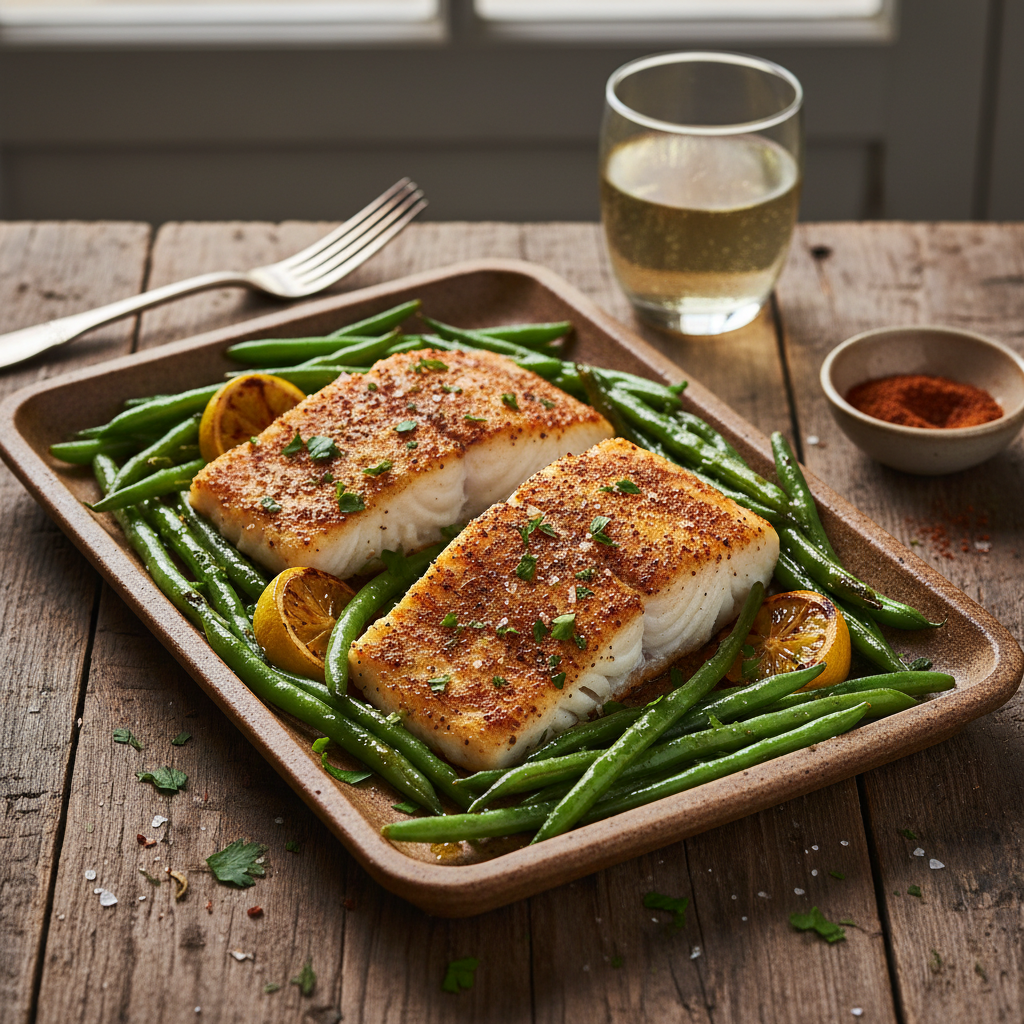
Easy Cajun Baked Cod with Blistered Green Beans: A 30-Minute One-Pan Wonder
Cajun Baked Cod With Green Beans Recipe
Experience the bold, zesty flavors of the South with this incredibly simple Cajun Baked Cod recipe. Perfectly flaky white fish coated in a homemade spice blend sits atop tender, blistered green beans for a healthy, low-carb dinner that comes together in under 30 minutes.
10 minutes
15 minutes
25 minutes
4 servings
Main Course
Baking
American / Cajun
Gluten-Free
If there is one thing that saves a busy weeknight, it is the magic of a sheet pan dinner. But not just any sheet pan dinner—we are talking about a meal that packs a serious punch of flavor without weighing you down. Enter our Cajun Baked Cod with Green Beans. This dish is a celebration of texture and spice, bringing the vibrant soul of Louisiana cooking right into your kitchen with minimal fuss. Cod is a fantastic canvas for bold seasonings; its mild, milky flavor and flaky texture absorb the smoky heat of paprika, cayenne, and garlic beautifully. When paired with fresh green beans that roast until just tender-crisp and slightly caramelized, you create a harmony of flavors that feels gourmet yet requires almost zero effort.
Imagine pulling a sizzling tray out of the oven, the air filling with the aroma of toasted garlic and earthy spices. The fish is perfectly opaque and flakes at the touch of a fork, while the beans offer that satisfying snap. This recipe isn’t just about convenience; it is about proving that healthy eating doesn’t have to be bland. We are ditching the heavy breading often associated with fish dinners and opting for a spice-crusted technique that locks in moisture while delivering a crispy exterior. Whether you are following a keto diet, looking to increase your protein intake, or simply craving something light yet satisfying, this Cajun Baked Cod is the answer. It is a versatile dish that pairs well with rice for the family or stands alone as a low-carb powerhouse. So, preheat your oven and get ready to transform simple pantry staples into a restaurant-quality meal that will have everyone asking for seconds.
History & Origins
To truly appreciate this dish, we must dive into the rich and resilient history of Cajun cuisine. The term ‘Cajun’ originates from ‘les Acadiens,’ the French colonists who settled in the Acadia region of Canada (modern-day Nova Scotia) in the 17th century. In 1755, during the Great Upheaval (Le Grand Dérangement), the British forcibly deported thousands of Acadians. Many found refuge in the swamps and bayous of Southern Louisiana, where they adapted their rustic French cooking techniques to the local ingredients available to them—rice, crawfish, shrimp, and the peppers that grew in the hot, humid climate.
Unlike Creole cuisine, which developed in New Orleans with influences from French, Spanish, African, and Caribbean aristocracy and utilized rich butter-based sauces, Cajun food is country cooking. It was born out of necessity and ingenuity. It relies heavily on smoking, stewing, and one-pot meals like jambalaya and gumbo to feed large families. Spices became a crucial way to preserve food and add flavor to simple ingredients. The spice blend used in this cod recipe pays homage to that tradition, utilizing paprika, cayenne, garlic powder, and onion powder—staples in any Cajun pantry. While cod is a cold-water fish found in the North Atlantic and not native to the Louisiana bayous (where catfish or redfish would be traditional), the method of blackening or spice-baking fish is a quintessential technique popularized globally by Chef Paul Prudhomme in the 1980s. This recipe represents a modern fusion: taking the heart-healthy, widely available Atlantic Cod and dressing it in the soulful, fiery attire of the Deep South.
Why This Recipe Works
This recipe succeeds because it balances three critical elements of cooking: flavor intensity, texture contrast, and moisture retention. First, cod is a very lean fish with a subtle sweetness. If not seasoned properly, it can be boring. By using a Cajun rub, we introduce a complexity of flavors—smokiness from paprika, heat from cayenne, and savory depth from garlic and onion—that penetrates the surface of the fish. The heat of the spices cuts through the richness of the butter or oil used to coat the fish, creating a well-rounded bite.
Secondly, the cooking method is optimized for both the protein and the vegetable. Green beans are a hearty vegetable that requires a bit of time to soften and blister. Cod, on the other hand, cooks relatively quickly. By arranging them on the same sheet pan but managing the spacing, the heat circulates evenly. The moisture released by the fish as it cooks creates a subtle steam that prevents the green beans from drying out completely, while the high oven temperature ensures they still get those delicious, charred edges.
Finally, this recipe works because of its foolproof nature. Baking cod is far more forgiving than pan-searing, where the delicate flesh often sticks or breaks apart. The dry heat of the oven ensures a consistent cook throughout the fillet without the need for flipping. The addition of lemon juice at the end provides the necessary acid to brighten the dish, cutting through the spice and lifting the heavy savory notes, resulting in a perfectly balanced palate experience.
Why You’ll Love This Recipe
- ✓Ready in under 30 minutes for quick weeknight dining.
- ✓High-protein and low-carb, perfect for Keto and Paleo diets.
- ✓Minimal cleanup with a one-pan cooking method.
- ✓Customizable spice level to suit the whole family.
- ✓Budget-friendly ingredients that taste gourmet.
- ✓Packed with Omega-3 fatty acids and essential vitamins.
Equipment You’ll Need
- ✓Large rimmed baking sheet
- ✓Parchment paper or aluminum foil
- ✓Small mixing bowl
- ✓Measuring spoons
- ✓Chef’s knife
- ✓Cutting board
- ✓Pastry brush
Ingredients
- ✓4 (6-ounce) wild-caught cod fillets, patted dry
- ✓1 lb fresh green beans, trimmed
- ✓3 tablespoons olive oil, divided
- ✓1 tablespoon unsalted butter, melted
- ✓1 tablespoon smoked paprika
- ✓1 teaspoon garlic powder
- ✓1 teaspoon onion powder
- ✓1/2 teaspoon dried oregano
- ✓1/2 teaspoon dried thyme
- ✓1/2 teaspoon cayenne pepper (adjust for heat)
- ✓1/2 teaspoon salt
- ✓1/2 teaspoon black pepper
- ✓1 lemon, cut into wedges
- ✓Fresh parsley, chopped (for garnish)
Instructions
- Preheat your oven to 400°F (200°C). Line a large rimmed baking sheet with parchment paper or aluminum foil for easy cleanup.
- In a small bowl, whisk together the smoked paprika, garlic powder, onion powder, oregano, thyme, cayenne pepper, salt, and black pepper to create your Cajun spice blend.
- Place the trimmed green beans in a large bowl or directly onto the baking sheet. Drizzle with 1.5 tablespoons of olive oil and toss to coat evenly. Arrange them in a single layer on one side of the baking sheet.
- Pat the cod fillets very dry with paper towels. This step is crucial for ensuring the spices adhere well and the fish doesn’t steam in its own juices.
- Brush the cod fillets with the melted butter and the remaining 1.5 tablespoons of olive oil. Rub the Cajun spice blend generously over the top and sides of each fillet.
- Place the seasoned cod fillets on the baking sheet next to the green beans. Ensure there is a little space between items for air circulation.
- Bake in the preheated oven for 12-15 minutes. The exact time will depend on the thickness of your fish. The cod is done when it is opaque and flakes easily with a fork. The green beans should be tender-crisp with slightly browned spots.
- Remove from the oven. Squeeze fresh lemon juice over the fish and beans immediately.
- Garnish with chopped fresh parsley and serve hot with extra lemon wedges on the side.
Expert Cooking Tips
- ✓Pat the fish dry thoroughly before seasoning to ensure a crispy spice crust.
- ✓If your green beans are very thick, you might want to roast them for 5 minutes before adding the fish to the pan.
- ✓Use smoked paprika instead of sweet paprika for that authentic, fire-roasted flavor.
- ✓Do not overcrowd the pan; if necessary, use two baking sheets to ensure roasting rather than steaming.
- ✓For extra crispiness, broil the dish for the last 1-2 minutes, but watch closely to prevent burning the spices.
- ✓Check the internal temperature of the fish; it should reach 145°F (63°C).
Substitutions and Variations
This recipe is incredibly versatile. If you cannot find cod, any firm white fish will work beautifully. Haddock, halibut, Pollock, or even thick tilapia fillets are excellent substitutes. For a non-fish option, chicken tenderloins can be used, though you will need to adjust the cooking time to ensure they reach 165°F. If green beans aren’t your favorite or are out of season, asparagus is a perfect 1:1 swap as it has a similar cooking time. Broccoli florets or zucchini spears also work well, though zucchini may release more water. For the fat, you can swap butter for ghee or avocado oil if you are strictly dairy-free or Paleo. If you don’t have all the individual spices, a pre-made Cajun or Creole seasoning blend can be used—just be mindful of the salt content, as many pre-mixed blends are high in sodium.
Common Mistakes to Avoid
The most common mistake with baked fish is overcooking it. Cod is delicate and lean; leaving it in the oven too long will result in a rubbery, dry texture. Start checking it at the 10 or 12-minute mark depending on thickness. Another error is using frozen fish that hasn’t been properly thawed and dried. If the fish retains ice crystals or excess water, it will release a lot of liquid during baking, resulting in soggy beans and boiled-tasting fish. Always thaw completely in the fridge overnight and pat dry with paper towels. Finally, be careful with the cayenne pepper. Cajun spice is meant to be flavorful, not painfully hot. If you are sensitive to spice, start with a pinch and add more later, rather than over-seasoning the raw fish.
Serving Suggestions
While this dish is a complete meal on its own for low-carb eaters, it pairs wonderfully with a variety of sides. For a classic Southern comfort feel, serve it over a bed of dirty rice or quinoa. Roasted sweet potatoes or a creamy cauliflower mash make excellent accompaniments that balance the heat of the Cajun spices. A cool, crisp coleslaw or a cucumber salad with a yogurt dressing can provide a refreshing contrast to the warm, spicy fish. Don’t forget a glass of crisp white wine, like a Sauvignon Blanc or Pinot Grigio, which cuts through the spice perfectly.
Storage and Reheating Tips
Leftover Cajun Baked Cod stores reasonably well, though fish is always best enjoyed fresh. Store any leftovers in an airtight container in the refrigerator for up to 3 days. To reheat, avoid the microwave if possible, as it tends to make fish rubbery and smell strong. Instead, reheat gently in a skillet over low heat with a splash of water or butter, or place it back in a 275°F oven until just warmed through. The green beans can be reheated the same way. We do not recommend freezing the cooked fish, as the texture will degrade significantly upon thawing.
Nutrition Facts (Estimated)
| Serving Size | 1 fillet with beans |
| Calories | 285 |
| Fat | 12g |
| Saturated Fat | 4g |
| Unsaturated Fat | 7g |
| Trans Fat | 0g |
| Cholesterol | 75mg |
| Sodium | 450mg |
| Carbohydrates | 9g |
| Fiber | 4g |
| Sugar | 2g |
| Protein | 32g |
Frequently Asked Questions
Can I use frozen cod for this recipe?
Yes, absolutely. Frozen cod is often flash-frozen at sea and can be fresher than ‘fresh’ fish at the counter. However, it is critical to thaw it completely in the refrigerator overnight and pat it very dry with paper towels to remove excess moisture before baking.
Is this recipe spicy?
It has a kick, primarily from the cayenne pepper. If you prefer a mild version, you can reduce or omit the cayenne pepper entirely and just rely on the paprika and garlic for flavor.
How do I know when the cod is done?
The fish is done when it turns from translucent to opaque white and flakes easily when you twist a fork into the thickest part. The internal temperature should read 145°F (63°C).
Can I make this ahead of time for meal prep?
Yes, this is a great meal prep recipe. You can portion the fish and beans into containers. It stays good for about 3 days. Just be gentle when reheating to avoid drying out the fish.
What if I don’t have smoked paprika?
You can use regular sweet paprika, but you will miss out on that subtle smoky flavor. If you have liquid smoke, a tiny drop mixed with the oil can mimic the effect, or simply proceed with regular paprika.
Can I use fresh herbs instead of dried?
Dried herbs are generally better for spice rubs because they don’t burn as easily at high temperatures. If you want to use fresh herbs, add them after baking as a garnish or mix them with the oil rather than the dry rub.
Why are my green beans rubbery?
Rubbery beans usually mean they didn’t cook fast enough or were old. Make sure your oven is fully preheated to 400°F so they roast rather than dehydrate. Also, ensure they are coated well in oil.
Can I use parchment paper instead of foil?
Yes, parchment paper is actually preferred by many as it prevents sticking without needing extra spray, and it is non-reactive to the lemon juice.
Conclusion
This Cajun Baked Cod with Green Beans is the ultimate proof that you don’t need hours in the kitchen or a culinary degree to create a meal that sings with flavor. It brings the warmth and soul of Southern cooking to your table in a package that is healthy, fast, and incredibly satisfying. Whether you are cooking for a busy family, preparing meals for the week, or hosting a casual dinner with friends, this recipe is sure to impress. The combination of flaky, spicy fish and tender, roasted vegetables is a timeless duo that never gets old. Give this recipe a try tonight, and enjoy the vibrant tastes of the bayou right from your own oven.