The Ultimate Creamy Tomato Basil Soup With Greek Yogurt (No Heavy Cream!)
Creamy Tomato Basil Soup With Greek Yogurt Recipe
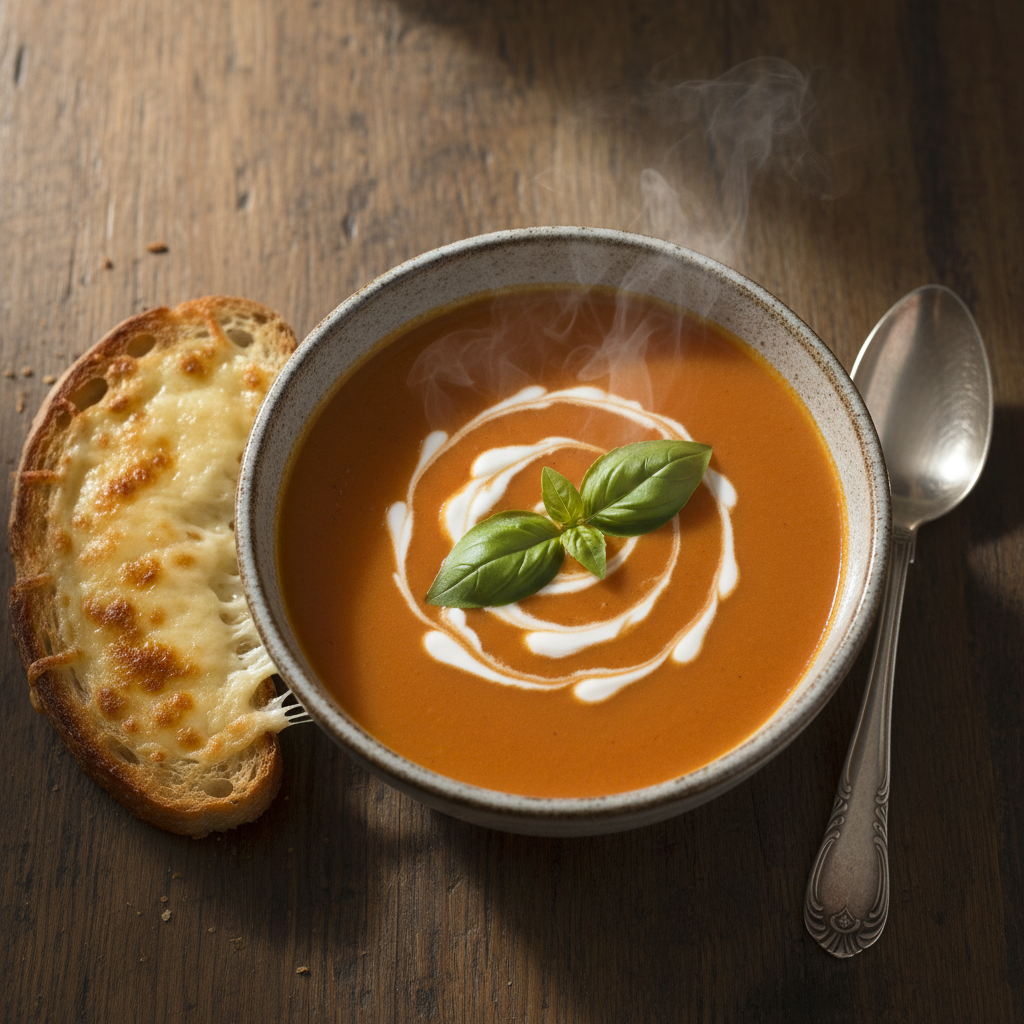
Indulge in the velvety texture of this Creamy Tomato Basil Soup, made luxuriously rich with Greek yogurt instead of heavy cream. It is a protein-packed, guilt-free comfort food that comes together in under 30 minutes, offering a perfect balance of tangy tomatoes and fresh, aromatic basil.
10 minutes
20 minutes
30 minutes
4 servings
Soup
Stovetop
American / Italian Fusion
Vegetarian
There is something undeniably magical about a bowl of tomato soup. It is the culinary equivalent of a warm hug, a nostalgic embrace that transports many of us back to childhood kitchens where a grilled cheese sandwich was never far away. However, as much as we adore the classic cream-laden bisques of our past, our modern palates—and our waistlines—often crave something a bit lighter, yet equally satisfying. Enter this Creamy Tomato Basil Soup with Greek Yogurt. This recipe is a revelation for anyone who loves the velvety texture of a bisque but wants to avoid the lethargy that often follows a heavy, cream-based meal.
By swapping out traditional heavy cream for high-quality plain Greek yogurt, we achieve a stunningly silky consistency that rivals any restaurant version. The yogurt introduces a subtle, sophisticated tang that cuts through the natural sweetness of the San Marzano tomatoes and the earthy aroma of sautéed garlic and onions. This isn’t just a soup; it is a vibrant celebration of flavors where the brightness of fresh basil lifts the entire dish. Whether you are looking for a quick weeknight dinner that feels gourmet, or a cozy lunch to brighten a rainy day, this recipe checks every box. It is wholesome, rich in protein, and bursting with antioxidants, proving that comfort food can indeed be good for you.
History & Origins
The history of tomato soup is as rich and varied as the dish itself. While tomatoes originated in the Americas, it wasn’t until they were brought to Europe that they began to find their way into soups. Early iterations in the 19th century were often watery broths, heavily spiced and thickened with stale bread, a technique borrowed from the Spanish gazpacho or Italian pappa al pomodoro. The soup gained monumental popularity in the United States with the advent of canning technology. In 1897, a chemist at Campbell’s named Dr. John T. Dorrance invented condensed soup, and ‘Tomato’ quickly became one of the flagship flavors. This innovation democratized the dish, making it a staple in American pantries for over a century.
However, the ‘creamy’ variation—often referred to as Bisque—has roots in French cuisine, where shellfish stocks were thickened with cream. Applying this technique to vegetable purées became a sign of elegance. In recent decades, as health-conscious cooking has taken center stage, chefs began experimenting with alternative thickeners. The Greek Yogurt revolution of the early 2000s provided a perfect solution. Unlike regular yogurt, which can be watery, strained Greek yogurt offers a density similar to sour cream or crème fraîche but with a fraction of the fat and a massive boost in protein. This modern twist represents the latest evolution in the centuries-old journey of tomato soup, blending Old World flavors with contemporary nutritional science.
Why This Recipe Works
This recipe succeeds where many ‘healthy’ creamy soups fail because of the specific chemical interaction between the acidity of the tomatoes and the fat and protein content of the Greek yogurt. Tomatoes are naturally acidic. In traditional recipes, heavy cream is used because its high fat content buffers that acidity, creating a mellow flavor profile. Greek yogurt does something even more interesting: it provides the necessary creaminess to soften the tomato’s bite, but its natural lactic acid echoes the brightness of the fruit, creating a flavor profile that is far more complex and less ‘flat’ than cream-based versions.
Furthermore, the texture is achieved through a two-step thickening process. First, we simmer the vegetables (onions, carrots, and garlic) until completely soft before blending. This vegetable pulp acts as a starch-free thickener. Second, the addition of Greek yogurt at the very end creates an emulsion that gives the soup a luxurious mouthfeel. The key technique here is ‘tempering’ the yogurt—mixing a bit of hot soup into the yogurt before adding it to the pot—which prevents the protein from denaturing and curdling, ensuring a perfectly smooth finish every time.
Why You’ll Love This Recipe
- ✓High in Protein: Greek yogurt adds a significant protein boost compared to heavy cream.
- ✓Under 30 Minutes: A quick stovetop method perfect for busy weeknights.
- ✓Gluten-Free & Vegetarian: Suitable for a wide range of dietary needs.
- ✓Budget-Friendly: Uses pantry staples like canned tomatoes and onions.
- ✓Rich & Velvety: Achieves a gourmet texture without high-fat dairy.
Equipment You’ll Need
- ✓Large Dutch Oven or Heavy-Bottomed Pot
- ✓Immersion Blender (Stick Blender) or Standard Blender
- ✓Chef’s Knife
- ✓Cutting Board
- ✓Wooden Spoon
- ✓Measuring Cups and Spoons
Ingredients
- ✓2 cans (28 oz each) whole peeled San Marzano tomatoes
- ✓1 cup plain Greek yogurt (2% or 5% fat recommended)
- ✓1 large yellow onion, chopped
- ✓3 cloves garlic, minced
- ✓2 cups vegetable broth (low sodium)
- ✓2 tablespoons olive oil
- ✓1/2 cup fresh basil leaves, tightly packed
- ✓1 teaspoon dried oregano
- ✓1/2 teaspoon red pepper flakes (optional for heat)
- ✓Salt and freshly cracked black pepper to taste
- ✓1 teaspoon sugar or honey (optional, to balance acidity)
Instructions
- Heat the olive oil in a large Dutch oven or heavy pot over medium heat. Add the chopped onion and a pinch of salt. Sauté for 5-7 minutes until the onions are soft and translucent, but not browned.
- Add the minced garlic, dried oregano, and red pepper flakes. Cook for another minute until fragrant, being careful not to burn the garlic.
- Pour in the canned San Marzano tomatoes (juices and all) and the vegetable broth. Use your wooden spoon to break up the whole tomatoes slightly.
- Bring the mixture to a gentle boil, then reduce the heat to low. Cover and simmer for 15-20 minutes to allow the flavors to meld.
- Remove the pot from the heat. Stir in the fresh basil leaves.
- Use an immersion blender to purée the soup directly in the pot until completely smooth. Alternatively, transfer to a standard blender in batches (venting the lid) and blend.
- To prevent curdling, temper the Greek yogurt: Place the yogurt in a medium bowl. Slowly ladle about 1/2 cup of the hot soup into the yogurt while whisking constantly. Once combined and warm, pour the yogurt mixture back into the main pot of soup.
- Stir well to combine. Taste and adjust seasoning with salt, pepper, and a teaspoon of sugar/honey if the tomatoes are too acidic. Serve immediately, garnished with extra basil and a swirl of yogurt.
Expert Cooking Tips
- ✓Use San Marzano Tomatoes: They are sweeter and less acidic than standard canned tomatoes, making a huge difference in flavor.
- ✓Don’t Boil the Yogurt: Always add the yogurt *after* removing the soup from the heat to prevent it from separating or curdling.
- ✓Fresh Basil is Key: Dried basil works in a pinch, but adding fresh basil right before blending provides that vibrant green speckle and aromatic punch.
- ✓Temper the Yogurt: This step is crucial. Warming the yogurt slowly with hot soup ensures a silky texture.
- ✓Adjust Sweetness: Tomatoes vary in acidity. If the soup tastes too sharp, a teaspoon of sugar, honey, or even a pinch of baking soda can neutralize it.
- ✓Blend Thoroughly: For a truly restaurant-quality texture, blend longer than you think you need to, incorporating air for a fluffy texture.
Substitutions and Variations
This recipe is highly adaptable to whatever you have in your pantry. If you don’t have San Marzano tomatoes, regular whole peeled tomatoes or even crushed tomatoes work, though you may need to adjust the sugar. For a vegan version, substitute the Greek yogurt with a thick coconut cream or a plant-based plain yogurt (like almond or cashew), though this will alter the flavor profile slightly. If you don’t have vegetable broth, chicken broth adds a deeper, savory layer. Fresh basil can be swapped for fresh parsley or cilantro for a different herb profile, although basil is the classic choice. If you are out of onions, a couple of shallots or leeks provide a wonderful, milder allium flavor.
Common Mistakes to Avoid
The most common mistake when making creamy soups with yogurt is curdling. This happens when cold yogurt hits boiling liquid, shocking the proteins. Always remove the pot from the heat and temper the yogurt as described in the instructions. Another mistake is using aluminum cookware; tomatoes are highly acidic and can react with aluminum, giving the soup a metallic taste—stick to stainless steel or enameled cast iron. Finally, don’t skimp on the blending. A chunky soup is fine if intended, but this recipe is meant to be smooth. If using a standard blender, never fill it more than halfway with hot liquid, or the steam pressure can blow the lid off.
Serving Suggestions
This soup begs for a crunchy companion. The classic pairing is, of course, a gooey grilled cheese sandwich—try using sharp cheddar and sourdough for a grown-up version. For a lighter option, serve with garlic-rubbed toasted baguette slices or homemade parmesan crisps. You can also top the soup with croutons, roasted chickpeas for extra crunch, or a drizzle of high-quality balsamic glaze. A side salad of arugula with a lemon vinaigrette cuts the richness perfectly.
Storage and Reheating Tips
This soup stores beautifully, making it great for meal prep. Store leftovers in an airtight container in the refrigerator for up to 4-5 days. Reheat gently on the stove over low heat; do not let it come to a rolling boil, or the yogurt may separate. Freezing is possible but requires care due to the dairy. If you plan to freeze it, it is best to freeze the tomato base *before* adding the yogurt. Thaw the base, heat it up, and then stir in the yogurt fresh before serving. If you must freeze the finished soup, the texture may change slightly upon thawing; blending it again after reheating can help restore the emulsion.
Nutrition Facts (Estimated)
| Serving Size | 1.5 cups |
| Calories | 180 |
| Fat | 6g |
| Saturated Fat | 1.5g |
| Unsaturated Fat | 4g |
| Trans Fat | 0g |
| Cholesterol | 5mg |
| Sodium | 450mg |
| Carbohydrates | 18g |
| Fiber | 4g |
| Sugar | 9g |
| Protein | 12g |
Frequently Asked Questions
Can I use fresh tomatoes instead of canned?
Yes! You will need about 2.5 to 3 pounds of ripe Roma or plum tomatoes. Roast them with olive oil and garlic in the oven at 400°F for 30-40 minutes before adding them to the pot with the broth.
Is this soup spicy?
It has a very mild warmth from the red pepper flakes, but it is not spicy. You can omit the flakes entirely if serving to sensitive palates or children.
Why did my soup curdle?
Curdling usually happens if the soup was boiling when the yogurt was added, or if low-fat yogurt was used without tempering. Use higher fat yogurt (2% or 5%) and always temper it for best results.
Can I make this in a Slow Cooker?
Absolutely. Combine all ingredients except the yogurt and basil in the slow cooker. Cook on low for 6-7 hours or high for 3-4 hours. Stir in basil, blend, and temper in the yogurt just before serving.
Can I make this in an Instant Pot?
Yes. Sauté the onions and garlic using the Sauté function, add tomatoes and broth, and pressure cook on High for 5 minutes. Quick release, then blend and add yogurt.
Is this recipe Keto-friendly?
It can be. Tomatoes do have natural sugars, but the fiber and fat from the yogurt help. Check your specific macro requirements, but generally, it fits into a liberal low-carb diet.
What kind of Greek yogurt should I use?
Plain, unflavored Greek yogurt is essential. Full-fat (5%) or 2% yields the creamiest results. Non-fat (0%) can be used but is more prone to curdling and less rich.
Do I have to peel the tomatoes if using fresh?
It is recommended but not strictly necessary if you have a high-powered blender. Skins can leave a gritty texture, so for a silky soup, peeling is best.
Conclusion
This Creamy Tomato Basil Soup with Greek Yogurt is more than just a recipe; it’s a testament to how simple ingredients can be transformed into something extraordinary with just a little technique. It bridges the gap between healthy eating and comfort food, proving you don’t need heavy cream to achieve luxury in a bowl. Whether you are serving it to guests at a dinner party or enjoying a quiet bowl by yourself on a chilly evening, the vibrant flavors and soothing texture are sure to delight. Don’t forget to leave a comment and rate the recipe if you try it—we love hearing how you make it your own!