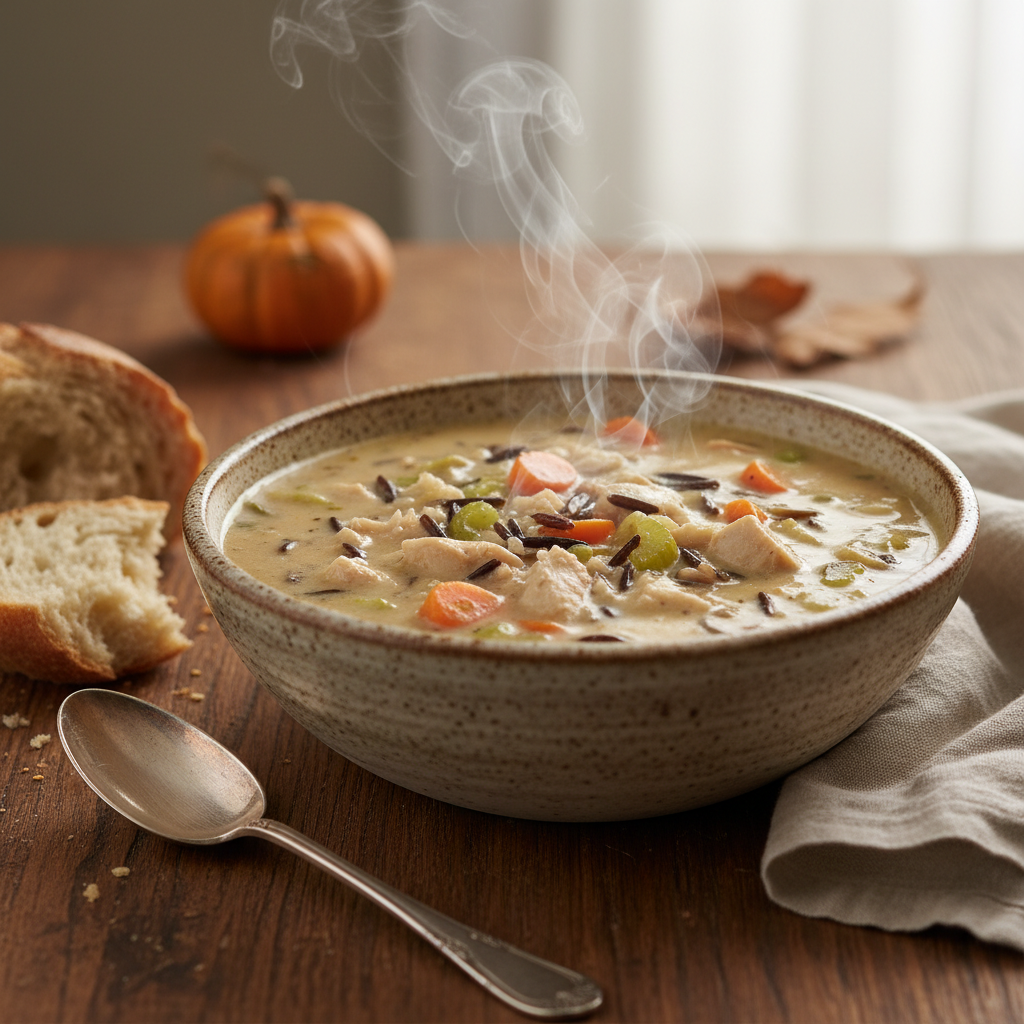
Creamy & Cozy Light Chicken and Wild Rice Soup
Chicken And Wild Rice Soup Light Recipe
This lighter take on the classic comfort food delivers all the creamy, savory satisfaction without the heavy cream. Packed with tender chicken, nutty wild rice, and fresh vegetables, it is the perfect guilt-free bowl for chilly nights.
15 minutes
40 minutes
55 minutes
6 servings
Soup
Stovetop
American
Low-Calorie
As the leaves begin to turn and the air grows crisp, there is nothing quite like wrapping your hands around a warm bowl of soup. However, traditional comfort foods often come laden with heavy creams and excessive calories that can leave you feeling sluggish rather than nourished. Enter this Chicken and Wild Rice Soup Light Recipe—a culinary masterpiece that bridges the gap between indulgent comfort and wholesome nutrition. This soup is a celebration of texture and flavor, featuring the distinctively nutty, chewy bite of authentic wild rice contrasted against tender shreds of lean chicken breast and a medley of garden-fresh vegetables.
What truly sets this recipe apart is the luxurious, velvety broth that mimics the richness of a chowder while remaining surprisingly light. By utilizing a smart roux method and swapping heavy cream for lower-fat dairy alternatives, we achieve a silky consistency that coats the back of a spoon perfectly. It is a soup that invites you to slow down and savor every spoonful, evoking memories of rustic farmhouse kitchens and family gatherings. Whether you are meal-prepping for a busy week ahead or looking for a cozy Sunday supper that won’t derail your health goals, this soup is a testament to the fact that ‘light’ cooking does not mean sacrificing flavor. The aromatics of thyme and rosemary fill the kitchen as it simmers, creating an atmosphere of warmth and hospitality that is simply irresistible.
History & Origins
To truly appreciate a bowl of Chicken and Wild Rice Soup, one must look back to the origins of its star ingredient: wild rice. Contrary to popular belief, wild rice is not actually rice at all; it is the seed of an aquatic grass species (Zizania) native to North America, specifically the Great Lakes region. For centuries, it has been a staple food source for the Indigenous peoples of the area, particularly the Ojibwe and Cree nations, who call it ‘manoomin,’ meaning ‘good berry’ or ‘harvesting berry.’
Historically, the harvesting of wild rice was—and still is in traditional communities—a sacred and labor-intensive process. It typically involves two people in a canoe: one to pole the boat through the dense reeds and the other to gently knock the ripe seeds into the canoe using wooden sticks called ‘knockers.’ This sustainable method ensures that enough seeds fall back into the water to reseed the beds for the following year.
As European settlers moved into the upper Midwest, particularly Minnesota and Wisconsin, they adopted this nutritious grain into their own culinary repertoires. The creamy chicken and wild rice soup we know today is largely a product of this cultural intersection in the American Midwest. It evolved as a hearty, warming dish designed to sustain families through the harsh, freezing winters of the region. Over the decades, it became a diner staple and a church-basement potluck classic, often prepared with heavy cream and butter. This modern ‘light’ iteration pays homage to that rich history while adapting to contemporary dietary preferences, preserving the soul of the dish while making it accessible for everyday wellness.
Why This Recipe Works
This recipe succeeds because it focuses on building layers of flavor rather than relying on fat for palatability. First, we start with a classic mirepoix (onions, carrots, and celery), sautéed slowly to release their natural sugars and aromatics. This provides a robust, savory foundation that permeates the entire broth. Second, the choice of a wild rice blend is crucial. Pure wild rice can be expensive and sometimes too intense in texture for some palates; a blend usually includes brown and red rice, offering a variety of textures—some grains burst open while the wild rice remains chewy and nutty.
Technically, the ‘light’ aspect works through a simple culinary science trick: the roux. By cooking a small amount of flour with a modest amount of olive oil or butter and then slowly whisking in chicken broth and milk, we create a suspension that thickens as it heats. This mimics the viscosity of heavy cream without the high caloric density. Additionally, adding the herbs (thyme and rosemary) early in the cooking process allows their oils to infuse the broth, while a splash of lemon juice at the very end brightens the flavors, cutting through the starchiness and making the soup taste fresh and vibrant. It is a balance of earthiness, creaminess, and acidity that hits all the right notes on the palate.
Why You’ll Love This Recipe
- ✓Under 300 calories per serving
- ✓High in protein and fiber
- ✓Creamy texture without heavy cream
- ✓Freezer-friendly for meal prep
- ✓Uses wholesome, unprocessed ingredients
- ✓Ready in under an hour
Equipment You’ll Need
- ✓Large Dutch oven or soup pot
- ✓Chef’s knife
- ✓Cutting board
- ✓Measuring cups and spoons
- ✓Whisk
- ✓Wooden spoon
Ingredients
- ✓1 lb boneless, skinless chicken breasts
- ✓1 tablespoon olive oil
- ✓1 cup onion, diced
- ✓1 cup carrots, diced
- ✓1 cup celery, diced
- ✓3 cloves garlic, minced
- ✓1 teaspoon dried thyme
- ✓1/2 teaspoon dried rosemary
- ✓1/2 teaspoon salt (plus more to taste)
- ✓1/2 teaspoon black pepper
- ✓6 cups low-sodium chicken broth
- ✓1 cup uncooked wild rice blend
- ✓2 cups 2% milk (or evaporated skim milk for creamier texture)
- ✓3 tablespoons all-purpose flour
- ✓1 tablespoon fresh parsley, chopped (for garnish)
Instructions
- Place a large Dutch oven or soup pot over medium heat and add the olive oil.
- Add the diced onion, carrots, and celery. Sauté for 5-7 minutes until the onions are translucent and the vegetables begin to soften.
- Stir in the minced garlic, dried thyme, rosemary, salt, and pepper. Cook for another minute until fragrant, being careful not to burn the garlic.
- Sprinkle the flour over the vegetables and stir constantly for 1-2 minutes to cook out the raw flour taste. This will form the thickening base.
- Slowly pour in the chicken broth while whisking continuously to prevent any lumps from forming.
- Add the raw chicken breasts (whole) and the uncooked wild rice to the pot. Stir to combine.
- Bring the soup to a boil, then reduce the heat to low. Cover the pot and let it simmer for 25-30 minutes.
- Check the chicken; if it is cooked through (internal temp 165°F), remove it to a cutting board. Continue simmering the soup uncovered if the rice needs more time (rice should be tender).
- While the rice finishes cooking, shred the chicken using two forks.
- Return the shredded chicken to the pot.
- Stir in the milk and let the soup simmer gently (do not boil) for another 5 minutes until heated through and slightly thickened.
- Taste and adjust seasoning with additional salt and pepper if needed. Garnish with fresh parsley before serving.
Expert Cooking Tips
- ✓Rinse your wild rice blend thoroughly before adding it to the soup to remove excess starch and debris.
- ✓If you want an even creamier texture without fat, you can puree a cup of the cooked vegetables and return them to the pot.
- ✓Don’t let the soup boil vigorously once the milk is added, as dairy can curdle at high heat.
- ✓For a deeper flavor profile, use a mix of chicken broth and vegetable broth.
- ✓If the soup becomes too thick after sitting, simply stir in a little extra broth or water to reach your desired consistency.
- ✓Cook the chicken directly in the broth to infuse the meat with flavor and the broth with extra richness.
Substitutions and Variations
This recipe is incredibly versatile. If you are gluten-free, substitute the all-purpose flour with a 1:1 gluten-free flour blend or use cornstarch (dissolved in cold water first) to thicken the soup at the end. For a dairy-free version, swap the cow’s milk for unsweetened almond milk, oat milk, or a can of coconut milk (though coconut milk will change the flavor profile slightly). If you don’t have chicken breasts, rotisserie chicken is a fantastic time-saver; simply skip the step of cooking the raw chicken and add the shredded rotisserie meat in the last 10 minutes of cooking. You can also swap the protein entirely for turkey or even white beans for a vegetarian option. Vegetable substitutions are endless—mushrooms, kale, or spinach make excellent additions. If you cannot find a wild rice blend, pure wild rice works well, though it may require a longer cooking time.
Common Mistakes to Avoid
A common mistake with wild rice soup is undercooking the rice. Wild rice takes longer than white rice; if you rush it, the grains will be hard and unpleasant. Make sure to taste a grain before taking the pot off the heat. Another pitfall is boiling the soup after adding the milk. High heat can cause the proteins in the milk to separate, resulting in a grainy, curdled texture rather than a smooth, creamy broth. Always reduce the heat to low before adding dairy. Additionally, be careful with salt. Store-bought broth can be salty, so it is best to use low-sodium broth and adjust the seasoning yourself at the very end of the cooking process to avoid an overly salty dish.
Serving Suggestions
This soup is a meal in itself, but it pairs beautifully with a side of crusty sourdough bread or a warm garlic knot to soak up the creamy broth. For a lighter pairing, serve it alongside a crisp green salad with a sharp vinaigrette, which helps cut through the richness of the soup. If you are serving this for a dinner party, consider offering toppings like homemade croutons, a sprinkle of parmesan cheese, or even a few drops of truffle oil for an elegant touch. A glass of crisp Chardonnay or a light Pinot Noir complements the earthy flavors of the wild rice perfectly.
Storage and Reheating Tips
Store leftovers in an airtight container in the refrigerator for up to 4 days. As the soup sits, the rice will continue to absorb the liquid, so it will likely be much thicker the next day. When reheating on the stovetop or in the microwave, splash in a little extra broth or water to loosen it up. This soup freezes surprisingly well, although the texture of the dairy may change slightly. To freeze, let the soup cool completely, then transfer to freezer-safe bags or containers. It can be frozen for up to 3 months. Thaw overnight in the refrigerator before reheating gently over low heat.
Nutrition Facts (Estimated)
| Serving Size | 1.5 cups |
| Calories | 285 |
| Fat | 6g |
| Saturated Fat | 2g |
| Unsaturated Fat | 3g |
| Trans Fat | 0g |
| Cholesterol | 45mg |
| Sodium | 650mg |
| Carbohydrates | 32g |
| Fiber | 3g |
| Sugar | 4g |
| Protein | 24g |
Frequently Asked Questions
Can I make this in a slow cooker?
Yes! Sauté the veggies first, then add everything except the milk and flour to the slow cooker. Cook on low for 6-7 hours. Whisk the flour with the milk and stir it in during the last 30 minutes to thicken.
Is wild rice gluten-free?
Yes, pure wild rice is naturally gluten-free. However, if you buy a blend, check the package to ensure no barley or wheat berries are included.
Can I use cooked rice?
Absolutely. If using pre-cooked rice, reduce the broth by about 1 cup and add the rice in the last 10 minutes of cooking just to heat it through.
How can I make this soup thicker?
If you prefer a chowder-like consistency, you can increase the amount of flour in the roux or mash some of the cooked vegetables against the side of the pot.
Can I use heavy cream instead of milk?
You can, and it will be delicious, but it will significantly increase the calorie and fat content, making it a ‘regular’ version rather than a ‘light’ one.
What vegetables can I add for more nutrition?
Chopped spinach, kale, mushrooms, or even diced sweet potatoes are excellent additions that boost the nutritional value.
Why did my milk curdle?
Milk usually curdles due to high heat or high acidity. Ensure the heat is low when adding milk and don’t let it come to a rolling boil.
Can I use turkey instead of chicken?
Yes, this is a perfect recipe for using up leftover Thanksgiving turkey. Just add the cooked meat at the end.
Conclusion
There you have it—a bowl of comfort that nourishes the body as much as the soul. This Light Chicken and Wild Rice Soup proves that you don’t need excessive amounts of butter and cream to create a meal that feels indulgent and satisfying. It is the kind of recipe that earns a permanent spot in your rotation, reliable for busy weeknights yet special enough to share with guests. Whether you are a long-time lover of wild rice or trying it for the first time, the textures and flavors in this pot are sure to delight. So, grab your favorite soup spoon, ladle out a generous portion, and enjoy the warmth of a homemade meal made right.