Creamy Thai Coconut Chicken Soup with Vegetables (Tom Kha Gai)
Thai Coconut Chicken Soup With Vegetables Recipe
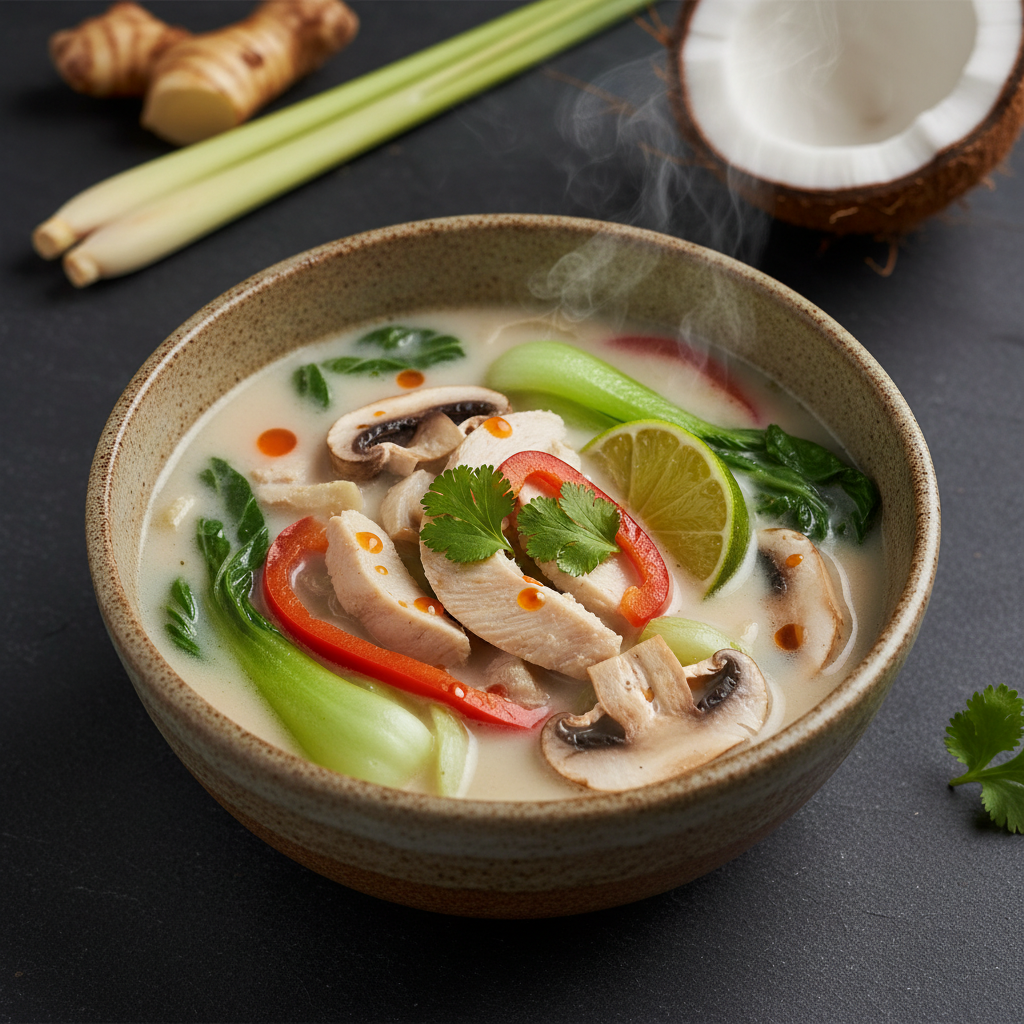
This vibrant Thai Coconut Chicken Soup is the ultimate comfort food, blending creamy coconut milk with zesty lime, aromatic galangal, and a medley of fresh vegetables. Ready in just 35 minutes, it’s a dairy-free, gluten-free dinner that tastes better than takeout.
15 minutes
20 minutes
35 minutes
4 servings
Soup
Stovetop
Thai
Gluten-Free
There is something undeniably magical about the balance of flavors in Thai cuisine, and nowhere is this more evident than in a steaming bowl of Tom Kha Gai. This Thai Coconut Chicken Soup with Vegetables is a symphony of contrasts: creamy yet light, savory yet sweet, and spicy yet soothing. As a food blogger, I have spent years trying to replicate the exact depth of flavor found in Bangkok street stalls, and this recipe is the crowning achievement of that journey. It starts with the aromatics—lemongrass, galangal, and kaffir lime leaves—which infuse the broth with a perfume that instantly transports you to Southeast Asia. Unlike its cousin Tom Yum, which is broth-based and fiery, Tom Kha is gentle, rich with coconut milk, and distinctively tangy.
What sets this particular version apart is the abundance of fresh vegetables. While traditional recipes often stick strictly to mushrooms, we are elevating the nutritional profile and textural variety by adding crisp red bell peppers, tender bok choy, and snap peas. This transforms the soup from a light starter into a hearty, wholesome main course that leaves you feeling nourished rather than weighed down. The interplay of the velvety coconut broth with the crunch of the veggies and the tender bite of poached chicken creates a mouthfeel that is simply addictive. Whether you are battling a cold and need a soothing remedy or you are just craving a burst of tropical sunshine on a rainy Tuesday, this soup delivers on every level.
History & Origins
To truly appreciate this dish, we must look back at the culinary history of Thailand and its neighboring influences. ‘Tom’ means soup, ‘Kha’ refers to galangal (a rhizome similar to ginger but with a distinctively piney, citrusy flavor), and ‘Gai’ means chicken. Historically, Tom Kha was not always a soup; culinary historians suggest that it likely originated as a dipping sauce or a method of simmering meat in coconut milk and galangal to preserve it and tenderize tougher cuts of poultry. Over centuries, as the influence of the Lao people in the Isan region (Northeastern Thailand) blended with Central Thai cuisine, the dish evolved into the soup we know today, with more broth and a refined balance of flavors.
Coconut milk is a staple in Southern Thai cooking due to the abundance of coconut palms, and its use in savory dishes is a hallmark of the region’s gastronomy. The addition of chili peppers is a relatively newer phenomenon in the grand timeline of Thai history, introduced by Portuguese traders in the 16th century. Before that, heat was achieved using peppercorns. Today, Tom Kha Gai is celebrated worldwide as a pillar of Thai cuisine. While the traditional version is often minimalist—focusing purely on the chicken, mushroom, and broth—the modern home kitchen has adapted it to be a vessel for seasonal produce. This vegetable-forward adaptation honors the soul of the ancient recipe while catering to the modern desire for nutrient-dense, one-pot meals.
Why This Recipe Works
This recipe works because it strictly adheres to the scientific principles of flavor balancing while optimizing the cooking process for home kitchens. First, we prioritize the ‘blooming’ of aromatics. By simmering the lemongrass, galangal, and lime leaves in the chicken stock *before* adding the coconut milk, we extract the essential oils without masking them with the heavy fat of the coconut. This creates a foundation of flavor that is deep and complex rather than one-note.
Secondly, the ratio of coconut milk to stock is crucial. Many recipes use too much coconut milk, resulting in a soup that is overly rich and heavy, or too little, making it watery. We use a 1:1 ratio to achieve a texture that is velvety but drinkable. Furthermore, the technique of adding the vegetables in stages ensures that hardier veggies like carrots or peppers soften just enough, while delicate greens like bok choy or spinach retain their vibrant color and crunch. Finally, the most critical step in this recipe is adding the lime juice *after* removing the pot from the heat. Boiling lime juice destroys its fresh, zesty vitamin C profile and can cause the coconut milk to curdle. By stirring it in at the very end, we preserve the bright, electric acidity that cuts through the richness of the coconut fat.
Why You’ll Love This Recipe
- ✓Ready in under 40 minutes
- ✓Naturally Gluten-Free and Dairy-Free
- ✓Packed with nutrient-dense vegetables
- ✓Perfect balance of creamy, salty, sour, and spicy
- ✓Restaurant-quality flavor at a fraction of the cost
- ✓Highly customizable protein and veggie options
Equipment You’ll Need
- ✓Large soup pot or Dutch oven
- ✓Chef’s knife
- ✓Cutting board
- ✓Ladles
- ✓Citrus juicer
- ✓Measuring spoons and cups
Ingredients
- ✓2 cans (13.5 oz each) full-fat coconut milk
- ✓2 cups high-quality chicken bone broth or stock
- ✓1 lb boneless, skinless chicken breast or thighs, thinly sliced
- ✓2 stalks fresh lemongrass, smashed and cut into 2-inch pieces
- ✓2-inch piece of fresh galangal, sliced into rounds (do not peel)
- ✓6-8 kaffir lime leaves, torn slightly to release oils
- ✓2-4 Thai bird’s eye chilies, smashed (adjust for heat)
- ✓1 cup straw mushrooms or button mushrooms, halved
- ✓1 red bell pepper, sliced into thin strips
- ✓1 cup baby bok choy, chopped
- ✓3 tablespoons fish sauce (Nam Pla)
- ✓1 tablespoon palm sugar or brown sugar
- ✓1/4 cup fresh lime juice (approx 2 limes)
- ✓Fresh cilantro, chopped (for garnish)
- ✓Chili oil (optional, for serving)
Instructions
- Prep the Aromatics: Using the back of your knife or a meat mallet, bruise the lemongrass stalks to release their oils. Slice the galangal into coin-sized rounds. Tear the kaffir lime leaves gently.
- Infuse the Broth: In a large soup pot over medium heat, combine the chicken broth, lemongrass, galangal, kaffir lime leaves, and smashed chilies. Bring to a gentle simmer and let it cook for 5-8 minutes. This step is critical for infusing the base flavor.
- Cook the Chicken: Add the thinly sliced chicken to the simmering broth. Poach for about 3-4 minutes until the chicken is opaque and cooked through. Skim off any foam that rises to the top.
- Add Coconut Milk & Veggies: Lower the heat to medium-low. Pour in the coconut milk and stir gently. Add the mushrooms and red bell peppers. Simmer gently (do not boil vigorously) for about 5 minutes until the vegetables are tender-crisp.
- Season: Stir in the fish sauce and palm sugar. Taste the broth. It should be savory and slightly sweet. Add the bok choy and cook for just 1 minute until wilted.
- The Final Touch: Turn off the heat completely. Remove the pot from the burner. Stir in the fresh lime juice. This prevents the soup from curdling and keeps the lime flavor bright.
- Serve: Ladle the soup into bowls. Discard the hard aromatics (lemongrass, galangal, lime leaves) if desired, or warn guests not to eat them. Garnish generously with fresh cilantro and a drizzle of chili oil if you like extra heat.
Expert Cooking Tips
- ✓Don’t Boil the Coconut Milk: Once the coconut milk is added, keep the heat at a gentle simmer. Boiling it rapidly can cause the fat to separate and the soup to look oily.
- ✓Slice Chicken Thinly: To ensure tender chicken, slice it against the grain as thinly as possible. This allows it to poach quickly without becoming rubbery.
- ✓Bruise the Aromatics: Simply placing lemongrass or chilies in the pot isn’t enough. You must smash or bruise them to rupture the cell walls and release the essential oils.
- ✓Fresh Lime is Non-Negotiable: Do not use bottled lime juice. The flavor profile of this soup relies heavily on the floral, zesty notes of fresh limes.
- ✓Adjusting Heat: If you want the flavor of chili without the intense heat, add the chilies whole. For more heat, slice them open or mince them.
Substitutions and Variations
Sourcing authentic Thai ingredients can sometimes be a challenge, but there are workarounds. If you cannot find **galangal**, you can use ginger, though the flavor will be sharper and less citrusy; add a squeeze of extra lime zest to compensate. **Lemongrass** is widely available, but lemon zest or lemon verbena can work in a pinch. **Kaffir lime leaves** are unique, but lime zest mixed with a bay leaf is an acceptable substitute. For a **vegan version**, swap the chicken for firm tofu or extra mushrooms, and use a vegan fish sauce alternative or soy sauce. If you don’t have palm sugar, light brown sugar or maple syrup works perfectly. You can also swap the vegetables for whatever is in your fridge—zucchini, snap peas, baby corn, and spinach all work beautifully in this coconut base.
Common Mistakes to Avoid
The most common mistake people make with Tom Kha Gai is **overcooking the aromatics or eating them**. The chunks of galangal and lemongrass are there for flavor infusion, not consumption; they are woody and tough. Another major error is **adding the lime juice while the soup is boiling**. This almost guarantees that your beautiful creamy soup will curdle and separate. Always remove the pot from the heat first. Lastly, **using ‘light’ coconut milk** will result in a thin, watery soup. This recipe relies on the fat from full-fat coconut milk for mouthfeel and satiety. If you are watching calories, use half full-fat and half broth, but avoid the ‘light’ canned versions.
Serving Suggestions
This soup is robust enough to be a meal on its own, but in Thailand, it is traditionally served alongside other dishes with a plate of steamed jasmine rice. The rice can be spooned into the soup or eaten separately. For a complete dinner party spread, serve this alongside a Thai Green Papaya Salad (Som Tum) and Thai Basil Beef. Beverage-wise, an off-dry Riesling or a crisp Thai lager beer pairs wonderfully with the creamy, spicy flavors. Don’t forget to put out wedges of lime, extra fish sauce, and chili flakes on the table so guests can adjust the seasoning to their own palate.
Storage and Reheating Tips
Tom Kha Gai stores surprisingly well, though the vegetables may lose some crunch. Store leftovers in an airtight container in the refrigerator for up to 3 days. When reheating, do so gently over medium-low heat on the stove; **do not boil it**, or the coconut milk may separate. If you plan to freeze the soup, it is best to do so without the mushrooms and bok choy, as they can become mushy upon thawing. Freeze the broth and chicken base for up to 2 months. When ready to eat, thaw in the fridge overnight, heat gently, and add fresh vegetables and a fresh squeeze of lime juice to revive the flavors.
Nutrition Facts (Estimated)
| Serving Size | 1.5 cups |
| Calories | 420 |
| Fat | 28g |
| Saturated Fat | 22g |
| Unsaturated Fat | 4g |
| Trans Fat | 0g |
| Cholesterol | 65mg |
| Sodium | 980mg |
| Carbohydrates | 14g |
| Fiber | 3g |
| Sugar | 6g |
| Protein | 26g |
Frequently Asked Questions
Is Tom Kha Gai spicy?
It typically has a mild to medium kick, but it is generally milder than Tom Yum soup. The coconut milk tempers the heat of the chilies. You can control the spice level by adjusting the number of bird’s eye chilies you use.
Can I eat the galangal and lemongrass?
No, these ingredients are very tough and fibrous. They are used solely to infuse the broth with flavor. You can strain them out before serving or simply leave them in the bowl and eat around them.
What is the difference between Tom Kha and Tom Yum?
Tom Yum is a hot and sour soup that is usually clear (though creamy versions exist) and very spicy. Tom Kha is specifically a coconut milk soup (‘Kha’ means galangal), making it creamier, sweeter, and generally milder.
Can I make this in a slow cooker?
Yes, but with modifications. Add broth, aromatics, and chicken to the slow cooker and cook on low for 4 hours. Stir in the coconut milk and vegetables during the last 30 minutes to prevent them from getting mushy and the milk from separating.
Why did my soup curdle?
Curdling usually happens if the soup was boiled vigorously after adding the coconut milk, or if the lime juice was added while the soup was still boiling. Always simmer gently and add acid off the heat.
Is this soup keto-friendly?
Yes! Full-fat coconut milk and chicken are very keto-friendly. Just be mindful of the amount of sugar used (you can use a keto-friendly sweetener) and choose lower-carb vegetables like spinach or mushrooms.
Can I use shrimp instead of chicken?
Absolutely. Tom Kha Goong is the shrimp version. Add the shrimp at the very end, as they only need 2-3 minutes to cook. Overcooked shrimp will be rubbery.
Where can I find kaffir lime leaves?
They are often available at Asian grocery stores, sometimes in the frozen section. If you can’t find them locally, you can buy dried leaves online, though fresh or frozen are best.
Conclusion
Mastering this Thai Coconut Chicken Soup with Vegetables is a game-changer for your weeknight dinner rotation. It offers that rare combination of sophisticated, complex flavors with a surprisingly simple preparation method. The creamy coconut bath, scented with the exotic perfume of galangal and lime, turns humble chicken and vegetables into a feast for the senses. I hope this recipe brings a taste of Thailand into your kitchen and warms your soul. If you make it, please leave a comment below and let me know how you customized your bowl—I love seeing your variations!