The Ultimate Almond Butter and Jelly Rice Cake Snack
Almond Butter And Jelly Rice Cake Snack Recipe
Elevate your afternoon snacking with this crunchy, creamy, and satisfying twist on a childhood classic. Featuring crisp brown rice cakes, velvety natural almond butter, and fruit-forward preserves, this 5-minute recipe is the perfect balance of healthy fats, protein, and satisfying sweetness.
5 minutes
0 minutes
5 minutes
1 serving (2 rice cakes)
Snack
Assembly
American / Health Food
Gluten-Free
There is a specific time of day, usually around mid-afternoon, when the energy from lunch has faded, yet dinner feels light-years away. It is in this dangerous window that we often reach for processed sugars or empty calories. Enter the Almond Butter and Jelly Rice Cake—a sophisticated, texture-rich evolution of the humble PB&J that has taken the wellness world and Pinterest boards by storm. While the concept seems deceptively simple, the execution is what separates a dry, flavorless disk from a gourmet snacking experience. This recipe isn’t just about slathering condiments onto a cracker; it is about curating the perfect bite. We start with a base of toasted brown rice cakes, chosen for their superior crunch and nutty undertone. We then layer on high-quality, drippy almond butter which provides a rich, creamy mouthfeel that contrasts beautifully with the airy crispness of the cake. The final layer, a dollop of high-fruit content preserves or homemade chia jam, adds that necessary bright, acidic pop to cut through the richness of the nut butter. Unlike soft bread which can get gummy, the rice cake maintains its structural integrity, offering a satisfying audible crunch with every bite. This snack caters to the modern palate by marrying nostalgia with nutrition. It is gluten-free, easily vegan-adaptable, and packed with the kind of sustained energy that powers you through the rest of your day without the dreaded sugar crash. Whether you are a fitness enthusiast looking for a pre-workout boost or a busy parent needing a quick fix, this guide will teach you how to construct the ultimate rice cake stack.
History & Origins
To understand the modern appreciation for the almond butter and jelly rice cake, we must look back at two distinct culinary lineages that converged in the 21st century: the ancient method of puffing grains and the American obsession with nut butter sandwiches. Puffed rice has been a staple in East Asian cuisine for centuries, often seen in traditional snacks like Chinese ‘mi tong’ or Japanese ‘kaminari-okoshi’. However, the rice cake as we know it in the West gained prominence in the 1980s and 1990s. During the height of the low-fat diet craze, rice cakes were marketed aggressively as the ultimate guilt-free food. Unfortunately, this era often prioritized low calories over flavor, resulting in the ‘styrofoam’ reputation that plagued rice cakes for decades. Simultaneously, the peanut butter and jelly sandwich established itself as an American icon during World War II, when peanut butter, grapes (for jelly), and sliced bread were part of soldiers’ rations. As the wellness movement evolved in the 2010s, the demonization of fats began to fade, and the focus shifted toward whole foods and plant-based protein. Almond butter rose to prominence as a nutrient-dense alternative to sugary commercial peanut butters. Food bloggers and nutritionists began reclaiming the rice cake, not as a diet food, but as a versatile, gluten-free vessel for these high-quality toppings. The convergence of the ‘clean eating’ movement and the visual culture of Instagram and Pinterest transformed the humble rice cake from a sad diet staple into a canvas for culinary creativity, leading to the loaded AB&J rice cake we celebrate today.
Why This Recipe Works
This recipe works because it is a masterclass in sensory contrast and macronutrient balance. First, let’s talk about texture. One of the biggest complaints about snacking is a lack of satisfaction, often caused by uniform textures. Here, you have the extreme, dry crunch of the puffed rice cake immediately followed by the thick, coating viscosity of the almond butter, and finished with the cool, slick texture of the jelly. This complexity keeps the palate engaged. Flavor-wise, the profile hits all the primary pleasure points: salty, sweet, and nutty. The almond butter provides a savory, earthy depth that grounds the sweetness of the fruit preserves. If you use a lightly salted rice cake, that hint of salinity elevates the sweetness of the jelly, similar to the effect of salted caramel. Nutritionally, this pairing is superior to a standard cookie or bag of chips because of the ‘satiety triad’: fiber, fat, and protein. The almond butter offers healthy monounsaturated fats and protein, which slows down the digestion of the carbohydrates from the rice cake and jelly. This results in a slow, steady release of glucose into the bloodstream rather than a spike and crash. It is a snack that actually works for your body, providing sustained energy while satisfying the psychological urge for a treat.
Why You’ll Love This Recipe
- ✓Ready in under 5 minutes for an instant energy boost.
- ✓Naturally gluten-free and easily adaptable for vegan diets.
- ✓Perfect balance of healthy fats, protein, and carbohydrates.
- ✓Highly customizable with various toppings like hemp seeds or fresh fruit.
- ✓Offers a satisfying crunch that soft bread sandwiches lack.
- ✓No cooking required, making it perfect for dorms or office snacks.
Equipment You’ll Need
- ✓Butter knife or offset spatula
- ✓Small spoon
- ✓Toaster or toaster oven (optional)
Ingredients
- ✓2 Brown Rice Cakes (lightly salted or unsalted)
- ✓2 tablespoons Natural Almond Butter (creamy or crunchy)
- ✓1 tablespoon Strawberry or Raspberry Preserves (or Chia Jam)
- ✓1 teaspoon Hemp Hearts (optional garnish)
- ✓1/4 cup Fresh Berries (sliced strawberries or whole blueberries, optional)
Instructions
- Remove the rice cakes from their packaging. For an extra crispy texture, you can briefly toast the rice cakes in a toaster oven for 60-90 seconds, though this is optional.
- Stir your natural almond butter well to ensure the oil is incorporated and the consistency is creamy.
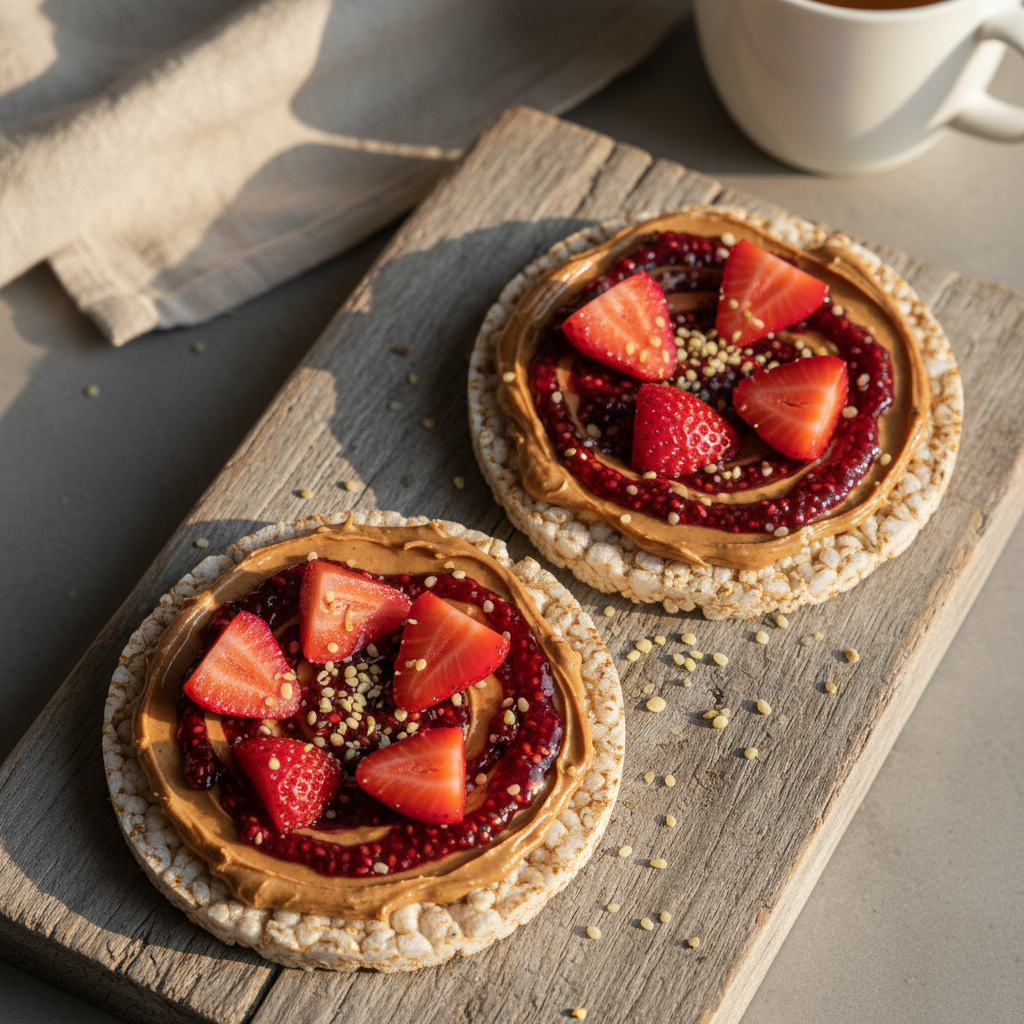
- Using a butter knife or offset spatula, spread one tablespoon of almond butter evenly over the surface of each rice cake. Aim for a thick, swooping layer that covers the holes in the cake.
- Dollop half a tablespoon of your chosen jelly or preserves onto the center of the almond butter layer on each cake.
- Gently swirl the jelly into the almond butter for a marbled effect, or spread it out to the edges depending on your preference.
- Top with sliced fresh berries and a sprinkle of hemp hearts for added texture and nutrition.
- Serve immediately to enjoy the maximum crunch.
Expert Cooking Tips
- ✓Stir your almond butter thoroughly; oil separation is natural, and you want the spread to be thick enough not to drip through the rice cake holes.
- ✓If your rice cakes have been open for a while and feel slightly stale, pop them in a toaster oven or air fryer for 1 minute to revive the crunch.
- ✓Use a ‘lightly salted’ variety of rice cake rather than unsalted; the tiny pinch of salt makes a massive difference in bringing out the almond flavor.
- ✓For a lower sugar option, mash fresh raspberries with chia seeds to make a quick ‘raw jam’ instead of using jarred preserves.
- ✓Apply the almond butter first as a barrier; if you put the jelly directly on the rice cake, it will make the cake soggy almost instantly.
- ✓If packing this for later, keep the cakes separate from the toppings and assemble right before eating.
Substitutions and Variations
This recipe is incredibly flexible and can be adapted to suit any pantry or dietary restriction. If you have a nut allergy, sunflower seed butter or pumpkin seed butter are excellent 1:1 replacements that offer a similar creamy texture. Cashew butter yields a sweeter, milder flavor, while peanut butter offers the classic nostalgic taste. For the base, you can swap brown rice cakes for corn cakes, quinoa cakes, or even thin sourdough crispbreads if you are not strictly gluten-free. Regarding the fruit component, feel free to use any fruit preserves, apple butter, or even fresh sliced bananas or figs if you prefer whole fruit over jam. For a lower-sugar approach, skip the jelly entirely and drizzle with a teaspoon of honey or maple syrup, or simply use sliced strawberries. Toppings can be swapped for chia seeds, flax seeds, bee pollen, or cacao nibs for a chocolatey twist.
Common Mistakes to Avoid
The most common mistake when making rice cake snacks is preparing them too far in advance. Rice cakes are highly hygroscopic, meaning they absorb moisture from the air and toppings rapidly. If you let a loaded rice cake sit for more than 15 or 20 minutes, the delightful crunch turns into a chewy, styrofoam-like texture. Another mistake is using almond butter that hasn’t been stirred properly. If you use the dry, crumbly nut butter from the bottom of the jar, it won’t spread easily and will break the fragile rice cake. Conversely, using only the oil from the top will make a messy, dripping snack. Finally, avoid overloading the cake. While it looks good on Instagram to have a mountain of toppings, rice cakes are brittle; too much weight will cause them to crumble in your hand before you take a bite.
Serving Suggestions
These almond butter and jelly rice cakes are best served immediately as a standalone snack or part of a light breakfast. For a more substantial meal, pair them with a hard-boiled egg or a cup of Greek yogurt to increase the protein content. They also go wonderfully with a crisp apple on the side. Beverage-wise, they pair perfectly with a hot cup of green tea, which cuts through the richness of the nut butter, or a cold glass of oat milk. If serving to children, you can cut the rice cakes into halves to make them easier to handle. For a dessert variation, try sprinkling a dash of cinnamon or dark chocolate shavings on top.
Storage and Reheating Tips
Due to the nature of puffed rice, this is not a recipe suitable for long-term storage once assembled. You cannot store a pre-made almond butter and jelly rice cake in the fridge or on the counter, as it will become soggy within roughly 30 minutes. However, you can meal prep the components. Portion out your almond butter and jelly into small portable condiment containers. Keep your rice cakes in their original airtight packaging or a sealed container to maintain freshness. If your rice cakes do go stale in storage, crisp them up in a 350°F oven for 3-4 minutes before using. Do not freeze rice cakes, as the freeze-thaw cycle destroys their texture.
Nutrition Facts (Estimated)
| Serving Size | 2 loaded rice cakes |
| Calories | 340 |
| Fat | 18g |
| Saturated Fat | 1.5g |
| Unsaturated Fat | 15g |
| Trans Fat | 0g |
| Cholesterol | 0mg |
| Sodium | 110mg |
| Carbohydrates | 38g |
| Fiber | 6g |
| Sugar | 12g |
| Protein | 9g |
Frequently Asked Questions
Why do my rice cakes get chewy and stale so fast?
Rice cakes are very porous and absorb moisture from humidity in the air immediately after the package is opened. To prevent this, seal the package tightly with a clip or transfer them to an airtight glass container immediately after opening.
Is this snack suitable for a weight loss diet?
Yes, it can be. While almond butter is calorie-dense, it provides healthy fats and protein that promote satiety, helping you feel full longer compared to low-fat, high-sugar snacks. Portion control is key.
Can I use frozen berries instead of jelly?
Absolutely. Thaw a handful of frozen berries in the microwave for 30 seconds until they release their juices. Mash them slightly and use this as a warm, natural compote on top of the cold almond butter.
What is the best brand of rice cake to use?
Look for brands that list ‘whole grain brown rice’ as the only ingredient. Lundberg Family Farms and Quaker are popular choices, but store brands often work just as well provided they are whole grain.
Is almond butter healthier than peanut butter?
Almond butter generally has slightly more fiber, vitamin E, and iron than peanut butter, but both are healthy options. The most important factor is choosing a butter with no added hydrogenated oils or excessive sugar.
Can I give this to my toddler?
Yes, but be mindful of the texture. Rice cakes can be a choking hazard for very young children if they break into sharp shards. A thin layer of nut butter is safer than a thick glob. Always supervise while eating.
How can I add more protein to this?
Mix a teaspoon of collagen powder or vanilla protein powder into the almond butter before spreading it, or top the rice cake with a generous sprinkling of hemp seeds, which are complete proteins.
My rice cake crumbled while spreading. What did I do wrong?
You likely pressed too hard or your almond butter was too cold and stiff. Ensure the butter is at room temperature and try dolloping it on and gently pushing it to the edges rather than dragging a knife across.
Conclusion
The Almond Butter and Jelly Rice Cake is proof that you don’t need complicated techniques or a long ingredient list to create a snack that is both nourishing and delicious. It bridges the gap between the comfort foods of our childhood and the nutritional needs of our adult lives. By focusing on quality ingredients—crisp whole grain cakes, rich creamy butter, and bright fruit preserves—you transform a simple pantry staple into a gourmet experience. Next time the afternoon slump hits, skip the vending machine and take five minutes to assemble this perfect balance of crunch and cream. It is a small act of self-care that tastes as good as it makes you feel.