Vibrant Asian Noodle Salad with Edamame & Crunchy Veggies
Asian Noodle Salad With Edamame And Veggies Recipe
Bursting with colorful vegetables and protein-packed edamame, this Asian Noodle Salad is the ultimate meal-prep winner. Tossed in a zesty ginger-sesame dressing, it offers a perfect balance of savory, sweet, and tangy flavors that get even better the next day.
20 minutes
10 minutes
30 minutes
6 servings
Main Course
Stovetop (Boiling)
Asian Fusion
Vegetarian
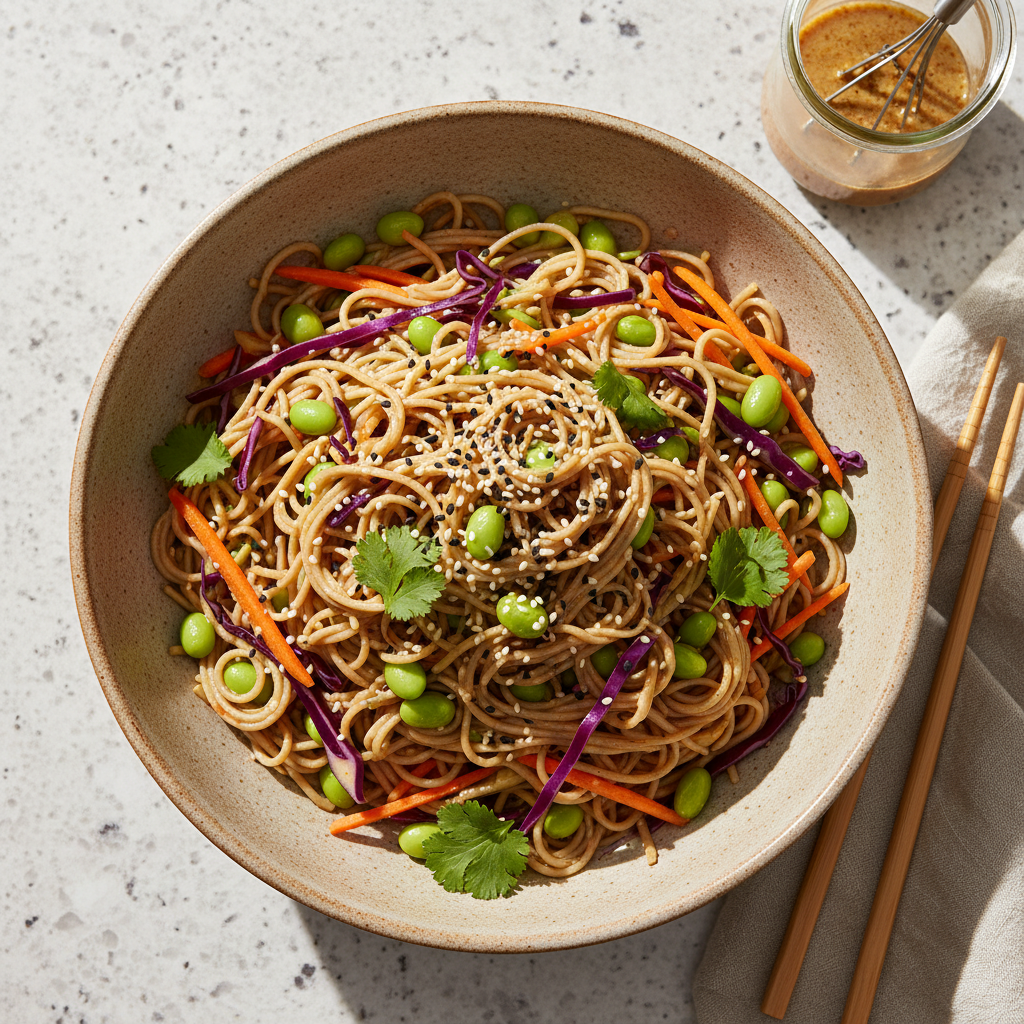
If you are looking for a dish that screams freshness while delivering a satisfying, savory punch, this Asian Noodle Salad with Edamame and Veggies is your answer. It is the culinary equivalent of a bright sunny day—colorful, uplifting, and full of energy. In the world of food blogging, we often talk about ‘eating the rainbow,’ and this recipe takes that concept literally. We are combining the purple hues of red cabbage, the vibrant orange of shredded carrots, the deep green of fresh cilantro and edamame, and the golden tones of perfectly cooked noodles. But the real star of the show here is the dressing. It is a robust emulsion of soy sauce, toasted sesame oil, rice vinegar, fresh ginger, and a hint of sweetness that ties everything together.
Unlike heavy mayonnaise-based pasta salads that can leave you feeling sluggish, this noodle salad is light yet incredibly filling thanks to the fiber-rich vegetables and plant-based protein from the edamame. It serves as a fantastic main course for a light lunch or a stunning side dish for grilled meats and tofu at a potluck. The textures are a major draw here; you get the slippery, chewy bite of the noodles contrasting with the crisp snap of raw peppers and cabbage. It is a sensory experience that keeps you coming back for another forkful. Furthermore, this dish is a savior for busy weeknights. It requires minimal cooking—just boiling water for the noodles and edamame—and relies mostly on chopping and whisking. It caters to a wide variety of dietary needs, easily adaptable for vegan, gluten-free, or nut-free requirements, making it a universal crowd-pleaser.
History & Origins
The concept of a cold noodle salad is deeply rooted in various Asian culinary traditions, though the specific iteration we see in Western health-conscious blogs today is largely a product of fusion cuisine. In China, ‘Liang Mian’ (cold noodles) has been a staple street food and home-cooked meal for centuries, particularly popular during the sweltering summer months. These dishes typically feature wheat noodles tossed in a sesame or peanut-based sauce, garnished with cucumber and bean sprouts to provide a cooling effect on the body. Similarly, Japan boasts ‘Hiyashi Chuka,’ a chilled ramen dish beautifully arranged with colorful toppings like ham, egg, and vegetables, dressed in a soy-vinegar sauce.
So, where does the ‘Asian Noodle Salad’ as we know it in the US come from? It likely gained traction in the late 20th century, coinciding with the rise of California cuisine which emphasized fresh, local produce and global flavors. As Americans became more interested in lighter, vegetable-forward diets, chefs began adapting traditional Asian flavor profiles—ginger, soy, sesame—to the format of a Western pasta salad. The inclusion of edamame is a more recent evolution, popularized alongside the sushi boom in the 1990s and early 2000s. Edamame, or young soybeans, moved from being a simple appetizer in Japanese izakayas to a superfood staple in American grocery stores. Combining these ancient ingredients with a modern desire for nutrient-dense, meal-prep-friendly bowls resulted in this hybrid dish. It respects the flavor architecture of traditional Asian dressings while embracing the abundance of raw vegetables typical of Western salads.
Why This Recipe Works
This recipe succeeds because it is built on the fundamental principles of flavor balancing and textural contrast. First, let’s talk about the dressing. A good vinaigrette needs the right ratio of acid to fat. Here, the rice vinegar and lime juice cut through the richness of the sesame oil and peanut butter (or tahini), creating a dressing that coats the noodles without making them greasy. The addition of fresh ginger and garlic provides aromatics that bloom when mixed with the liquids, ensuring every bite is flavorful.
Secondly, the texture is paramount. Noodles are soft and chewy, which can become monotonous if not paired with something crunchy. By incorporating raw red cabbage, bell peppers, and firm edamame, we introduce a ‘snap’ that keeps the palate engaged. Unlike leafy green salads that wilt within minutes of being dressed, these hardy vegetables hold their structure even after sitting in the dressing for hours. In fact, the salt and acid in the dressing slightly soften the cabbage and carrots over time—a process similar to pickling—which actually enhances their flavor and digestibility. This makes the salad taste even better the next day, solving the common problem of soggy leftovers. Finally, the choice of noodles matters. Whether you use spaghetti, soba, or rice noodles, the key is rinsing them under cold water immediately after cooking. This stops the cooking process to prevent mushiness and washes away excess starch, ensuring the noodles remain distinct and slippery rather than clumping together.
Why You’ll Love This Recipe
- ✓Ready in under 30 minutes
- ✓Packed with plant-based protein
- ✓Perfect for meal prep and leftovers
- ✓Highly customizable vegetables
- ✓Vegan and Dairy-Free
- ✓Explosion of fresh textures
Equipment You’ll Need
- ✓Large pot for boiling water
- ✓Colander
- ✓Large mixing bowl
- ✓Small whisk and bowl (or jar with lid)
- ✓Chef’s knife
- ✓Cutting board
- ✓Tongs
Ingredients
- ✓8 oz dried noodles (soba, rice noodles, or whole wheat spaghetti)
- ✓1.5 cups frozen shelled edamame
- ✓2 cups red cabbage, thinly shredded
- ✓1 large red bell pepper, julienned
- ✓1 cup carrots, julienned or grated
- ✓3 green onions, sliced thinly
- ✓1/2 cup fresh cilantro, chopped
- ✓1/4 cup soy sauce (or tamari for gluten-free)
- ✓2 tbsp rice vinegar
- ✓1 tbsp toasted sesame oil
- ✓1 tbsp olive oil or neutral oil
- ✓1 tbsp maple syrup or honey
- ✓1 tsp fresh ginger, grated
- ✓1 clove garlic, minced
- ✓1 tbsp sesame seeds (for garnish)
- ✓Optional: 1 tbsp peanut butter for creaminess
- ✓Optional: 1 tsp Sriracha for heat
Instructions
- Bring a large pot of salted water to a boil. Add the noodles and cook according to the package instructions until al dente. About 3 minutes before the noodles are done, toss the frozen edamame into the boiling water to cook them simultaneously.
- While the noodles are cooking, prepare your vegetables. Shred the cabbage, julienne the bell pepper and carrots, and slice the green onions and cilantro.
- Drain the noodles and edamame in a colander. Immediately rinse them under cold running water for at least 30 seconds. This stops the cooking process and removes excess starch to prevent sticking. Shake off as much excess water as possible.
- In a small bowl or a mason jar, combine the soy sauce, rice vinegar, sesame oil, olive oil, maple syrup, grated ginger, minced garlic, and peanut butter/Sriracha if using. Whisk or shake vigorously until the dressing is emulsified and smooth.
- Place the cold, drained noodles and edamame into a large mixing bowl. Add the prepared cabbage, bell peppers, carrots, green onions, and half of the cilantro.
- Pour the dressing over the salad. Using tongs, toss everything together thoroughly until the noodles and vegetables are evenly coated in the sauce.
- Taste and adjust seasoning if necessary (add more soy sauce for salt, lime/vinegar for acidity, or maple syrup for sweetness).
- Transfer to a serving platter or individual bowls. Garnish with the remaining cilantro and a generous sprinkle of sesame seeds. Serve immediately or chill in the fridge for 30 minutes to let flavors meld.
Expert Cooking Tips
- ✓Rinse noodles thoroughly with cold water to prevent clumping.
- ✓Use a mandoline slicer for uniform, professional-looking veggie cuts.
- ✓Toast your sesame seeds in a dry pan for 2 minutes to release extra nutty aroma.
- ✓If using soba noodles, handle them gently as they are more fragile than wheat pasta.
- ✓Make extra dressing; the noodles tend to absorb the sauce as they sit.
- ✓Add the dressing gradually; you can always add more, but you can’t take it out.
Substitutions and Variations
This recipe is incredibly flexible, allowing you to swap ingredients based on what is in your pantry or your dietary needs. For the noodles, traditional buckwheat soba adds a nutty flavor, but rice noodles make it gluten-free, and whole wheat spaghetti works in a pinch for a heartier texture. If you are avoiding soy, coconut aminos are a perfect 1:1 replacement for soy sauce. For the vegetables, the sky is the limit; try adding snap peas, thinly sliced cucumber, baby spinach, or blanched broccoli florets. If you don’t have edamame, chickpeas or cubed firm tofu are excellent protein alternatives. For the dressing, if you have a peanut allergy, swap the optional peanut butter for sunflower seed butter or tahini, or simply omit it for a lighter vinaigrette style. Maple syrup can be replaced with brown sugar or agave nectar.
Common Mistakes to Avoid
The most common mistake with noodle salads is overcooking the pasta. Since the salad is served cold, mushy noodles become even more unappealing and break apart when tossed. Always cook to al dente and shock them with cold water immediately. Another pitfall is failing to drain the noodles and veggies properly. Excess water from the colander will dilute your flavorful dressing, resulting in a bland salad. Make sure to shake the colander vigorously or even pat the veggies dry. Lastly, avoid dressing the salad too far in advance if you are using delicate herbs or watery vegetables like cucumbers, as they can release water and make the dish soggy. If prepping for a party, store the dressing separately and toss just before serving.
Serving Suggestions
This Asian Noodle Salad is substantial enough to stand on its own as a light lunch or dinner, especially with the protein from the edamame. However, it pairs beautifully with grilled proteins. Serve it alongside teriyaki glazed salmon, grilled chicken thighs, or satay skewers for a complete feast. It is also a fantastic addition to a bento box style lunch. For a fun appetizer spread, serve this salad in small cups or lettuce wraps. Beverage-wise, it pairs excellently with a crisp Riesling, a cold lager, or an iced jasmine tea to cut through the savory sesame flavor.
Storage and Reheating Tips
This salad is one of the few that stores exceptionally well, making it a meal-prep favorite. Store leftovers in an airtight container in the refrigerator for up to 3-4 days. Note that the noodles will absorb the dressing over time, so the salad might appear dry the next day. To refresh it, simply toss it with a splash of water, a little extra soy sauce, or a squeeze of lime juice to loosen the noodles and wake up the flavors. Do not freeze this salad; the vegetables will lose their crunch and the noodles will become mushy upon thawing. If you want to prep ahead for the week, you can chop all the veggies and make the dressing in advance, storing them in separate containers until you are ready to boil the noodles and assemble.
Nutrition Facts (Estimated)
| Serving Size | 1.5 cups |
| Calories | 380 |
| Fat | 14g |
| Saturated Fat | 2g |
| Unsaturated Fat | 11g |
| Trans Fat | 0g |
| Cholesterol | 0mg |
| Sodium | 520mg |
| Carbohydrates | 52g |
| Fiber | 6g |
| Sugar | 6g |
| Protein | 14g |
Frequently Asked Questions
Can I make this gluten-free?
Absolutely. Simply use 100% buckwheat soba noodles (check the label as some contain wheat) or brown rice noodles. Also, ensure you use Tamari or coconut aminos instead of regular soy sauce.
Can I serve this salad warm?
Yes, you can! While it is designed as a cold salad, you can toss the veggies with the warm noodles and dressing for a stir-fry style meal. However, the vegetables will lose their raw crunch.
What other protein can I add?
Shredded rotisserie chicken, cooked shrimp, cubed baked tofu, or even a soft-boiled egg are all delicious additions that bulk up the meal.
Why are my noodles sticking together?
Noodles stick when the starch isn’t washed off or they sit too long without oil. Rinse them well with cold water and toss with a teaspoon of sesame oil immediately after draining.
Is this dish spicy?
It has a very mild kick from the fresh ginger and garlic. If you want heat, you must add the optional Sriracha or red pepper flakes; otherwise, it is kid-friendly.
Can I use frozen vegetable mix?
Fresh vegetables are highly recommended for the best texture. Frozen veggies (other than edamame and peas) tend to be too soft and watery when thawed for a salad application.
How do I julienne carrots easily?
The easiest way is to use a julienne peeler or buy pre-shredded ‘matchstick’ carrots from the grocery store. Otherwise, slice the carrot into thin planks, stack them, and slice into thin strips.
Can I use zucchini noodles?
Yes, for a low-carb version, swap the pasta for spiralized zucchini noodles. Just be aware that zucchini releases water, so salt and drain them before mixing with the dressing.
Conclusion
This Asian Noodle Salad with Edamame and Veggies is more than just a recipe; it is a reliable, go-to solution for healthy eating without sacrificing flavor. Whether you are a seasoned home cook or a kitchen novice, the simplicity of boiling noodles and chopping fresh produce makes this accessible to everyone. The vibrant colors will brighten up your table, and the savory sesame-ginger dressing will have your family asking for seconds. Give this recipe a try for your next lunch prep or potluck, and enjoy the perfect harmony of chewy noodles, crunchy veggies, and zesty sauce.