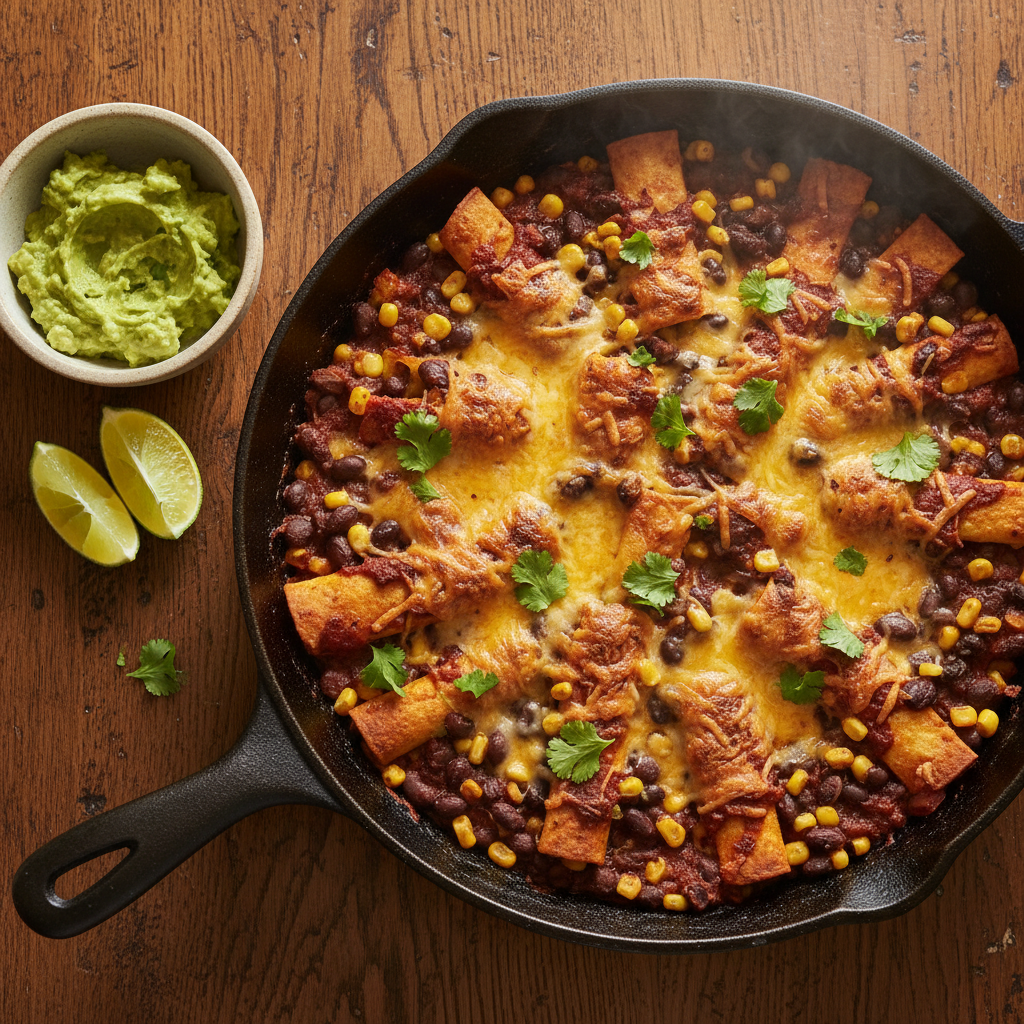
One-Pan Cheesy Black Bean and Corn Enchilada Skillet
Black Bean And Corn Enchilada Skillet Recipe
This 30-minute vegetarian dinner delivers all the cheesy, saucy goodness of traditional enchiladas without the rolling or baking. Packed with protein-rich black beans, sweet corn, and zesty spices, it is a one-pan wonder perfect for busy weeknights.
10 minutes
20 minutes
30 minutes
4 servings
Main Course
Stovetop
Tex-Mex
Vegetarian
There is something undeniably comforting about a bubbling pan of enchiladas, but let’s be honest: the process of frying tortillas, dipping them in sauce, filling them, rolling them, and baking them is a labor of love that we do not always have time for on a chaotic Tuesday evening. This Black Bean and Corn Enchilada Skillet is the ultimate solution for when you crave those bold, Tex-Mex flavors but need dinner on the table in under 30 minutes. By deconstructing the traditional method, we transform a labor-intensive casserole into a vibrant, stovetop masterpiece that requires only a single skillet and zero assembly lines. The beauty of this dish lies in its texture and depth of flavor. Instead of the tortillas becoming mushy—a common pitfall in rushed baked versions—simmering them directly in the sauce allows them to absorb the spices while retaining a satisfying chew. The sweetness of the corn perfectly counterbalances the earthy savoriness of the black beans and the acidity of the tomato-based enchilada sauce. Finished with a generous blanket of melted cheddar and Monterey Jack cheese, every bite offers a gooey, stringy, savory delight. This recipe is also a nutritional powerhouse disguised as comfort food; it is vegetarian, gluten-free friendly, and packed with fiber and plant-based protein. Whether you are cooking for a family of picky eaters or looking for a hearty meal prep option, this skillet dinner checks every box. It is rustic, unpretentious, and unapologetically delicious, proving that you do not need hours in the kitchen to create a meal that tastes like it came from your favorite cantina.
History & Origins
The culinary lineage of the enchilada is as rich and layered as the dish itself, stretching back to the Aztec times in the Valley of Mexico. Historically, corn tortillas were a staple food, and the practice of wrapping them around small fish or bits of game and dipping them in a chili sauce was common among the indigenous people. The word ‘enchilada’ comes from the Spanish participle ‘enchilar,’ which literally means ‘to season with chili.’ When Spanish conquistadors arrived, they documented these feasts, and over centuries, the dish evolved, incorporating ingredients brought from Europe like cheese, onions, and eventually, chicken and beef. However, the specific combination of corn and beans found in this skillet recipe pays homage to the ‘Three Sisters’ agricultural method used by various Native American tribes, where corn, beans, and squash were grown together in a symbiotic relationship. In the context of modern American cooking, the ‘skillet enchilada’ or ‘enchilada casserole’ is a 20th-century innovation born out of the need for convenience. As Tex-Mex cuisine exploded in popularity across the United States in the mid-1900s, home cooks began adapting traditional recipes to fit the faster pace of suburban life. The cast-iron skillet, a workhorse of American kitchens, became the perfect vessel for these one-pot meals, merging the ancient flavors of Mexico with the practicality of modern home cooking. This specific recipe represents the intersection of authentic flavor profiles with the contemporary demand for quick, nutritious, vegetable-forward meals.
Why This Recipe Works
This recipe succeeds where many quick enchilada hacks fail because it focuses on the science of starch absorption and heat distribution. In a traditional baked enchilada, the tortillas are often dipped in oil to create a barrier against the sauce, preventing disintegration. In this skillet version, we skip the oil dip but achieve a superior texture by cutting the tortillas into strips and nesting them into the simmering sauce. As the corn tortillas cook, they release natural starches that help thicken the enchilada sauce, creating a rich, velvety consistency that clings to the beans and corn rather than pooling at the bottom of the pan. Furthermore, using a cast-iron skillet is crucial for this technique. Cast iron retains heat exceptionally well, ensuring that the sauce simmers evenly across the entire surface area, preventing hot spots that could burn the bottom while leaving the center cold. The addition of corn provides a necessary textural contrast; its crisp pop breaks up the softness of the beans and tortillas. Finally, the two-stage cheese application—stirring some into the mixture and melting the rest on top—ensures that every single bite is creamy and cohesive, rather than just having a layer of cheese sitting on top of dry ingredients.
Why You’ll Love This Recipe
- ✓Ready in under 30 minutes from start to finish.
- ✓Uses only one pan for minimal cleanup.
- ✓Packed with plant-based protein and fiber.
- ✓Easily customizable with your favorite toppings.
- ✓Gluten-free friendly (when using certified GF corn tortillas).
- ✓Budget-friendly pantry staple meal.
Equipment You’ll Need
- ✓Large cast-iron skillet (10 or 12 inch) or heavy-bottomed sauté pan
- ✓Chef’s knife
- ✓Cutting board
- ✓Wooden spoon or spatula
- ✓Can opener
- ✓Measuring cups and spoons
Ingredients
- ✓1 tablespoon olive oil
- ✓1 medium yellow onion, diced
- ✓1 red bell pepper, diced
- ✓2 cloves garlic, minced
- ✓1 teaspoon ground cumin
- ✓1 teaspoon chili powder
- ✓1/2 teaspoon smoked paprika
- ✓1 (15 oz) can black beans, drained and rinsed
- ✓1 (15 oz) can sweet corn, drained (or 1.5 cups frozen corn)
- ✓1 (10 oz) can red enchilada sauce (mild or medium)
- ✓1/2 cup vegetable broth
- ✓6 corn tortillas, cut into 1-inch strips
- ✓1.5 cups shredded cheddar or Mexican blend cheese, divided
- ✓Salt and black pepper to taste
- ✓Fresh cilantro, chopped (for garnish)
- ✓1 lime, cut into wedges
- ✓Optional: Diced avocado, sour cream, or jalapeños for serving
Instructions
- Heat the olive oil in a large cast-iron skillet over medium-high heat. Once shimmering, add the diced onion and red bell pepper. Sauté for 4-5 minutes until the vegetables are softened and the onions are translucent.
- Add the minced garlic, cumin, chili powder, and smoked paprika to the skillet. Stir constantly for about 1 minute until the spices are fragrant, being careful not to burn the garlic.
- Pour in the drained black beans, corn, enchilada sauce, and vegetable broth. Stir well to combine all the ingredients.
- Bring the mixture to a gentle simmer. Once bubbling, reduce the heat to medium-low.
- Stir in half of the tortilla strips, ensuring they are submerged in the sauce so they can soften. Let the mixture simmer for 3-4 minutes until the sauce thickens slightly and the tortillas are tender.
- Gently fold in the remaining tortilla strips and 1/2 cup of the shredded cheese. Stir just enough to distribute the cheese.
- Smooth the top of the mixture with your spoon and sprinkle the remaining 1 cup of cheese evenly over the top.
- Cover the skillet with a lid (or aluminum foil) and let it cook for another 2-3 minutes, or until the cheese is completely melted and bubbly.
- Remove from heat. Garnish generously with fresh chopped cilantro and serve immediately with lime wedges and your favorite toppings.
Expert Cooking Tips
- ✓Use high-quality corn tortillas; flour tortillas will become too gummy and dissolve in the sauce.
- ✓If you don’t have a lid for your skillet, you can place the skillet under the broiler for 2-3 minutes to melt the cheese (ensure your skillet is oven-safe).
- ✓Rinse your black beans thoroughly to remove excess sodium and the starchy canning liquid.
- ✓For a smokier flavor, fire-roast your corn in the skillet for a few minutes before adding the onions.
- ✓Grate your own cheese from a block if possible; pre-shredded cheese contains anti-caking agents that prevent it from melting smoothly.
- ✓Adjust the heat level by choosing a spicy enchilada sauce or adding a pinch of cayenne pepper.
- ✓Don’t over-stir once the tortillas are added, or they may break apart too much.
Substitutions and Variations
This recipe is incredibly versatile and welcomes substitutions based on your pantry inventory. If you do not have black beans, pinto beans or kidney beans are excellent alternatives that provide a similar texture. For the corn, you can use fresh, canned, or frozen; if using fresh, cut it directly off the cob. If you are out of vegetable broth, chicken broth works fine for non-vegetarians, or water with a bouillon cube can be substituted. For the protein, you can easily add cooked shredded chicken, ground beef, or chorizo during the sauté step. If you cannot find corn tortillas, you can use grain-free almond flour tortillas, but avoid standard flour tortillas as they get too soggy. The cheese can be swapped for Pepper Jack for a spicy kick, or a vegan cheese alternative to make the dish dairy-free. Lastly, the red enchilada sauce can be replaced with green tomatillo sauce for a ‘Suizas’ style flavor profile.
Common Mistakes to Avoid
The most common mistake with skillet enchiladas is using flour tortillas instead of corn. Flour tortillas act like sponges and will turn into a paste when simmered in liquid, whereas corn tortillas maintain some structural integrity. Another error is overcooking the vegetables initially; remember they will continue to cook while the sauce simmers, so keep them slightly crisp-tender during the sauté phase. Failing to drain the beans and corn properly can lead to a watery sauce that lacks punch. Also, be careful with salt; canned beans, broth, and enchilada sauce all contain sodium, so taste the mixture before adding extra salt. Finally, do not let the skillet boil vigorously once the cheese is added on top, as high heat can cause the cheese oils to separate, resulting in a greasy layer rather than a creamy melt.
Serving Suggestions
This skillet is a complete meal on its own, but it pairs beautifully with a variety of sides. Serve it alongside a crisp romaine salad with a creamy cilantro-lime dressing to cut through the richness of the cheese. Spanish rice or quinoa makes for a hearty accompaniment if you want to stretch the meal further. A dollop of cold sour cream or Greek yogurt on top provides a nice temperature contrast to the hot skillet. For a crunch factor, serve with extra tortilla chips for scooping. Beverage-wise, this pairs perfectly with a cold Mexican lager, a classic lime margarita, or a refreshing agua fresca like horchata or hibiscus tea.
Storage and Reheating Tips
Leftovers of this Black Bean and Corn Enchilada Skillet store surprisingly well. Allow the dish to cool completely before transferring it to an airtight container. It can be refrigerated for up to 4 days. The tortillas will continue to absorb liquid as they sit, so the mixture will be thicker the next day. To reheat, place a portion in a microwave-safe bowl and heat for 2-3 minutes, stirring halfway through. Alternatively, reheat gently in a saucepan on the stove, adding a splash of broth or water to loosen the sauce if it has become too dry. This dish is also freezer-friendly; freeze in individual portions for up to 3 months. Thaw overnight in the refrigerator before reheating for the best texture.
Nutrition Facts (Estimated)
| Serving Size | 1.5 cups |
| Calories | 420 |
| Fat | 18g |
| Saturated Fat | 9g |
| Unsaturated Fat | 8g |
| Trans Fat | 0g |
| Cholesterol | 45mg |
| Sodium | 850mg |
| Carbohydrates | 48g |
| Fiber | 12g |
| Sugar | 6g |
| Protein | 18g |
Frequently Asked Questions
Can I add meat to this recipe?
Absolutely! One pound of ground beef, turkey, or shredded rotisserie chicken makes a great addition. Brown the ground meat with the onions and peppers at the beginning of the recipe.
Is this recipe spicy?
It depends largely on the enchilada sauce you choose. Mild sauce makes it very family-friendly, while medium or hot sauces will add a kick. The jalapeños are optional and can be omitted.
Can I use flour tortillas?
It is not recommended. Flour tortillas tend to disintegrate and become gummy when simmered in sauce. Corn tortillas provide the traditional flavor and hold up much better.
Do I have to use a cast-iron skillet?
No, any large, heavy-bottomed skillet or sauté pan will work. Just ensure it is deep enough to hold all the ingredients and has a lid.
Can I make this vegan?
Yes, simply omit the cheese or use a high-quality vegan melting cheese, and ensure your enchilada sauce does not contain chicken stock.
My sauce is too thin, what should I do?
Let it simmer uncovered for a few extra minutes. The starches from the corn tortillas will naturally thicken the sauce as it cooks.
Can I use dried beans instead of canned?
Yes, but you must cook them completely before adding them to the skillet. You will need about 1.5 cups of cooked beans.
What if I don’t have enchilada sauce?
In a pinch, you can make a quick sauce using tomato sauce, vegetable broth, chili powder, cumin, garlic powder, and oregano.
Conclusion
The Black Bean and Corn Enchilada Skillet proves that you do not need to sacrifice flavor for convenience. It captures the heart of Tex-Mex cooking—bold spices, comforting textures, and communal dining—in a format that fits the modern lifestyle. Whether you are a seasoned home cook or a beginner looking for a foolproof dinner, this recipe delivers high reward for minimal effort. So grab your skillet, open a few cans, and get ready to enjoy a meal that is sure to become a regular in your weekly rotation. Don’t forget to load up on the fresh toppings; they truly elevate the dish from great to unforgettable.